 Cáo Studio
Home › Blog › Pre-Wedding & Elopement
What to wear for couple photos at Hoi An rice paddies
By the Cáo Studio team · Hanoi & Saigon · 2026-11-04
Rice paddies mean mud, water, bright sun, and uneven ground. Wear breathable, long fabrics (linen, cotton) in earth tones, pastels, or white to stand out against green; avoid heavy silks that cling when damp. Bring flat shoes you can remove for water shots, and a second outfit for dry scenes. We typically shoot 4–6 hours with breaks in shade. Book through Cáo Studio to get a detailed packing list on WhatsApp 48 hours before arrival; our team in Hoi An will flag seasonal flooding and suggest styles that survived previous shoots. Factor in fabric replacement costs if pieces absorb mud—ask us for a quote on WhatsApp.
Why pastels and earth tones beat bold colors in paddy light
We've watched couples regret neon pink or deep navy the moment the sun hits the water. Pastels—cream, sage, dusty rose, soft blue—bounce natural light and don't clash with the landscape. Earth tones (tan, terracotta, warm gray) blend visually but photograph as intentional, not camouflaged. On three shoots last month, couples in off-white and khaki required one-tenth the exposure correction; those in jewel tones needed heavy editing to avoid blown-out skies. Bright whites work if you and your partner wear contrasting neutrals—one white, one camel—so you stay distinct. Avoid pure black unless one partner wears it as an accent layer; black absorbs heat and sticks to wet fabric.
How we choose between long dresses and separates on shoot day
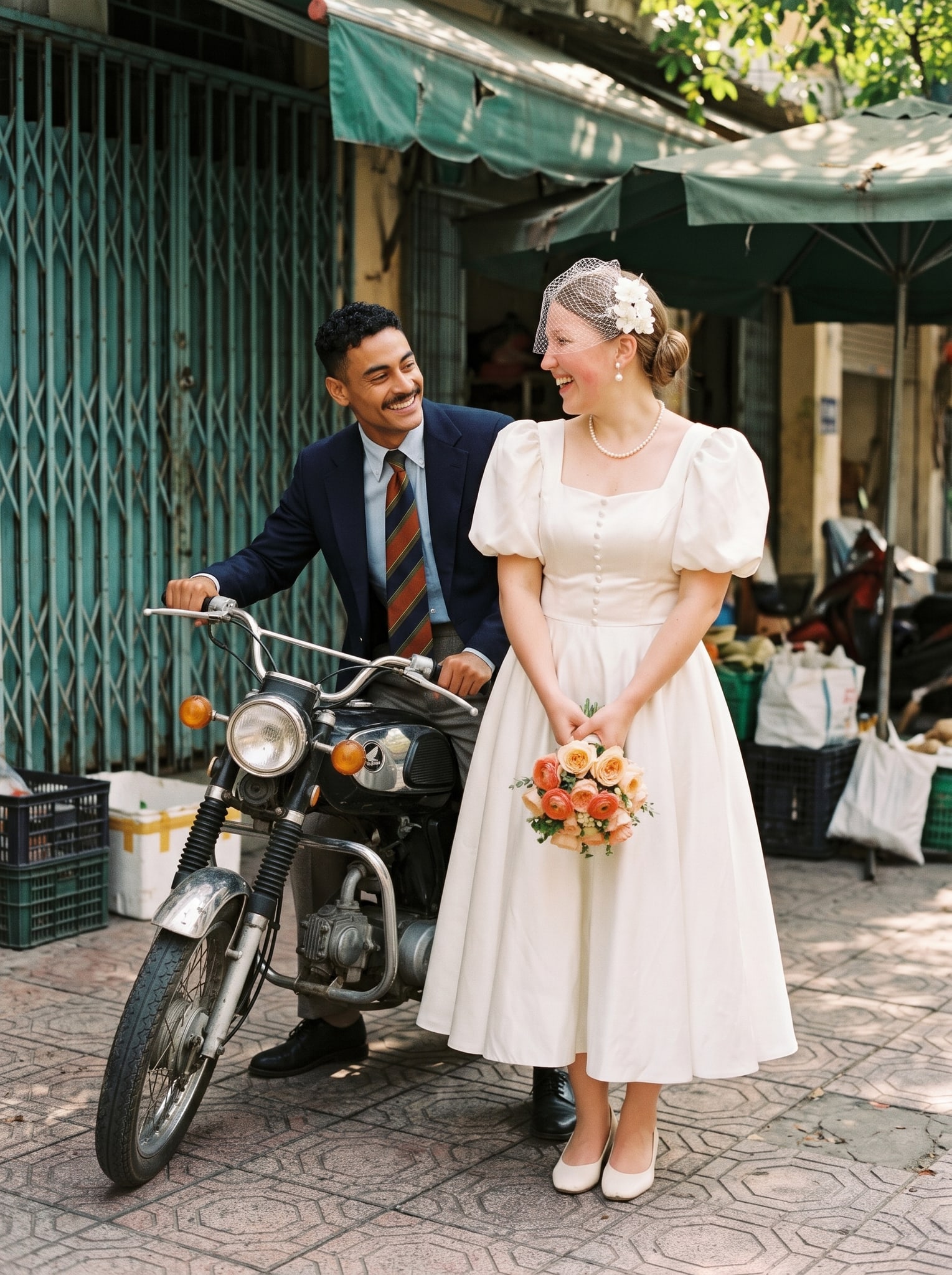
Long loose dresses (linen, cotton, gauze) are the default because they protect shins from mud splash and photograph as a unified shape. But on hot shoots, we've seen couples swap mid-session into linen trousers and a fitted shirt—fabric breathes, movement reads better, and mud washes from flat surfaces faster than from pleats. Separates also let you change the top without restarting hair and makeup. On your WhatsApp chat 24 hours before, tell us your outfit plan; we'll suggest swaps based on that day's water level (measured by our Hoi An team). Avoid maxi dresses with trains or hem ruffles; they snag on paddy ridges and hold water. Wide-legged trousers are safer than slim fits because they dry faster and don't stick to your legs in humidity. A vest or shirt layered over a dress gives you a "second outfit" without a full change.
See packages and prices on vietnamphotoshoot.com
Which fabrics survive mud and how to prep them
| Fabric | Dries in | Mud stain risk | Cost to replace (estimate) | Notes |
|---|---|---|---|---|
| Linen | 2–3 hours | Low—mud brushes off dry | Ask us on WhatsApp | Wrinkles are expected; they're part of the look |
| Cotton (heavy) | 4–5 hours | Moderate—can hold water | Ask us on WhatsApp | Best for fitted shapes because fabric keeps form |
| Silk or satin | 6+ hours | High—water marks | Ask us on WhatsApp | Avoid entirely; fabric stretches and discolors permanently |
| Gauze/cotton blend | 1–2 hours | Very low | Ask us on WhatsApp | Flows beautifully; dries fastest; wrinkles hide movement |
| Denim | 5–6 hours | Moderate | Ask us on WhatsApp | Heavy and hot; brings too much weight in humidity |
Prep any outfit you own by washing and wearing it once before the shoot; new fabric stiffens in the paddy and photographs stiffly. On three late-afternoon shoots, couples in pre-worn linen moved naturally while those in crisp-from-the-store cotton looked tense. We tell couples on our couple photoshoot package to avoid polyester blends entirely—they trap sweat and don't breathe in Hoi An's heat (30–32°C most months).
What footwear strategy keeps you mobile but safe
We see couples arrive in sandals and regret it immediately. Open toes sink in mud and expose skin to leeches (rare but real during monsoon, June–September). Flat sandals you can slip off are essential—wear leather or canvas that dries fast, not suede. Bring them in a bag, not on your feet; walk to the paddy edge in closed shoes (white sneakers, leather slip-ons), then switch. One couple last month wore ankle boots thinking they'd protect; the couple spent 45 minutes cleaning mud from seams. We always recommend arriving in whatever shoes you plan to remove, then packing a second pair (hiking sandals or flip-flops) for walking back to the car.
Barefoot shots in shallow water photograph beautifully but only if your stylist has tested the mudline that day. On our makeup and hair at your hotel consultation, we'll tell you which paddy sites are safest for unshod shots; uneven terrain and hidden roots trip people when they're focused on the camera, not the ground. Pack a towel and a plastic bag for wet feet; moisture in shoes during a 30-minute drive breeds fungus.
Building a capsule: second outfit, layers, and backup pieces
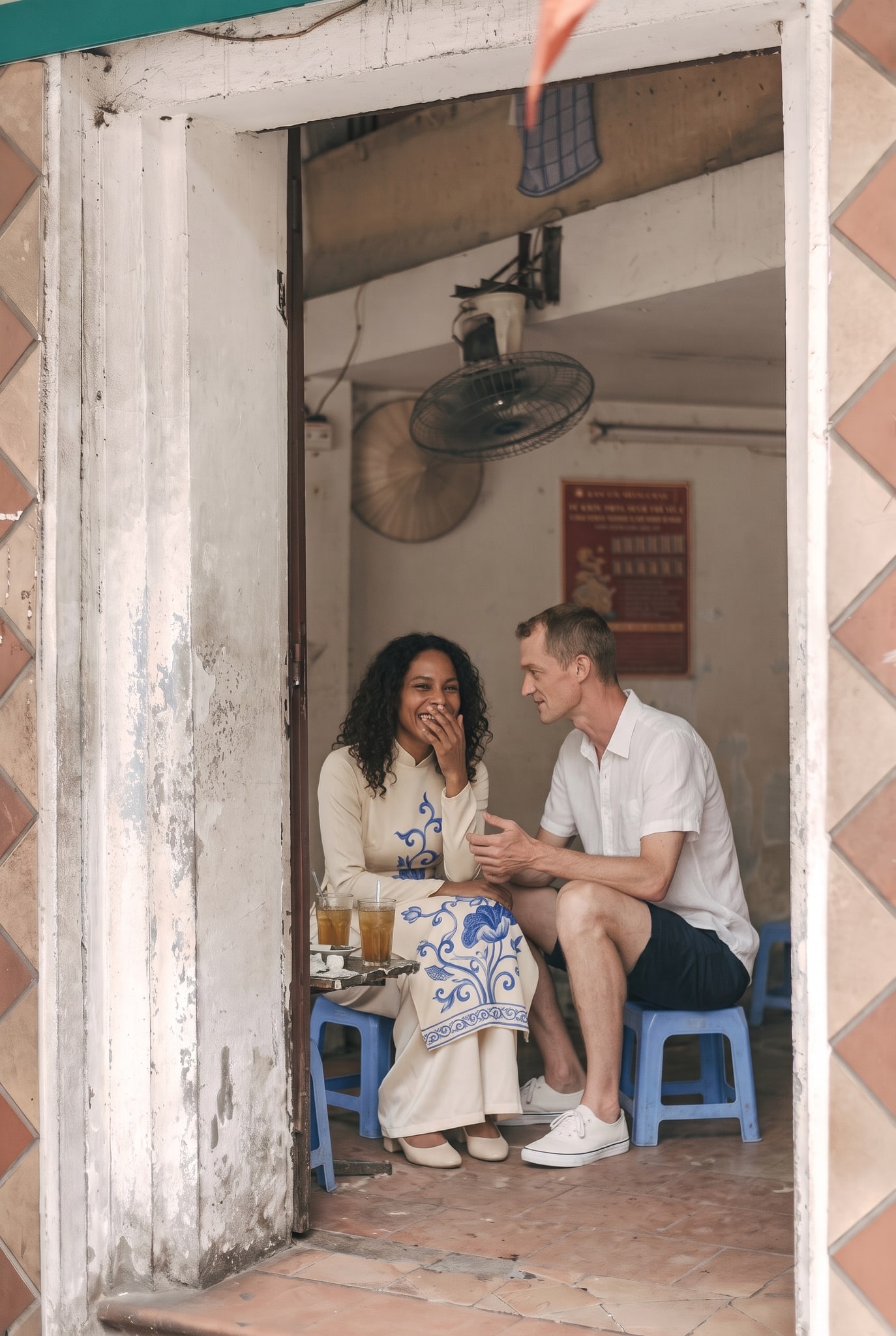
Most couples assume one outfit per location. We push for three: a primary dress or set, a backup top if the first gets muddy, and a completely different look (traditionally áo dài, or a dark linen shirt and light trousers) for the final hour when light softens. On a recent pre-wedding and elopement package, a couple who packed a cream dress, a sage silk-blend blouse, and a borrowed indigo áo dài captured 400 frames across three distinct moods without repeating a silhouette.
Bring a cardigan, oversized linen shirt, or vest in a neutral color. At 5 p.m. the sun hits sideways; adding a layer changes the frame without a costume change. We've used borrowed cardigans and belts to create four outfits from two base pieces. Pack a small belt or sash; cinching at the waist during the final hour adds definition when fabric is tired and damp. On the packing list we send via WhatsApp, always include a moisture-wicking base layer (leggings or a slip dress) under sheer fabrics; wet linen shows every undergarment.
What to check before you book: climate, water level, and pace
Monsoon (June–September) means water depth varies day to day. When you inquire about our special concept shoot or a custom Hoi An session, ask us for the current water level and recent photos from that paddy. A paddy flooded to the knee requires different fabric choices than a dry one (which invites mud but permits movement). We send a specific packing list based on conditions, not a generic checklist.
Hoi An's heat in April–May tops 32°C; anything thick or synthetic will leave you overheated within an hour. November–January is cooler (20–24°C) and permits layering, silk-blends, and dark colors. We also ask couples about their budget and comfort level before recommending whether to bring their own outfits or rent from a local tailor (we can coordinate introductions). Renters save luggage space but lose control over fit and fabric quality. Owners avoid wait times and fit surprises but need to pack carefully.
What goes wrong and how we fix it on the day
Rain during a paddy shoot doesn't stop us—wet fabric photographs beautifully and couples relax once they accept mud. We've learned to bring extra towels, plastic sheeting for gear, and a van nearby for emergency outfit changes. One couple wore wool-blend trousers in a downpour; the fabric absorbed water and became a second skin. We pivoted to a nearby dry stone bridge, changed them into a backup outfit our Hanoi team had packed, and reframed the shoot as an "early evening" session instead. The final gallery was stronger because the couple switched mindset.
Mudstains on white or cream fabric look worse during the shoot than in photos (cameras flatten and soften them). We tell couples this to ease anxiety. Shoes sinking past the ankle is rare but happens on older paddies with softer bases; we scout locations the night before a shoot and warn couples to avoid rubber-soled sneakers that create suction. On one family photoshoot package, a grandfather's shoe stuck in mud; we lightened the mood by capturing a candid of his family pulling him free. It became his favorite frame.
What to check before you buy or pack
- Fabric washability. Can this garment be hand-washed in cold water without shrinking? Mud and paddy minerals stain; delicates often don't survive. Test-wash a thrifted piece in the same fabric before committing.
- Fit in humidity. Does the garment stick to skin when damp? Try on the outfit after a shower and see if it clings. Fitted fabrics in humidity photograph as tight; loose cuts read as relaxed.
- Footwear comfort. Can you walk 200 meters in those shoes without blisters? Paddy edges are rough; test new footwear on gravel first.
- Backup availability. If your primary outfit fails, do you have a second piece in your luggage? Renting adds time; packing a backup is insurance.
- Color in natural light. Photograph your outfit in evening sunlight outdoors before the shoot. Instagram tones differ from midday paddy light; what looks muted indoors may photograph as washed-out.
FAQ
Can we wear matching outfits, or should we contrast?
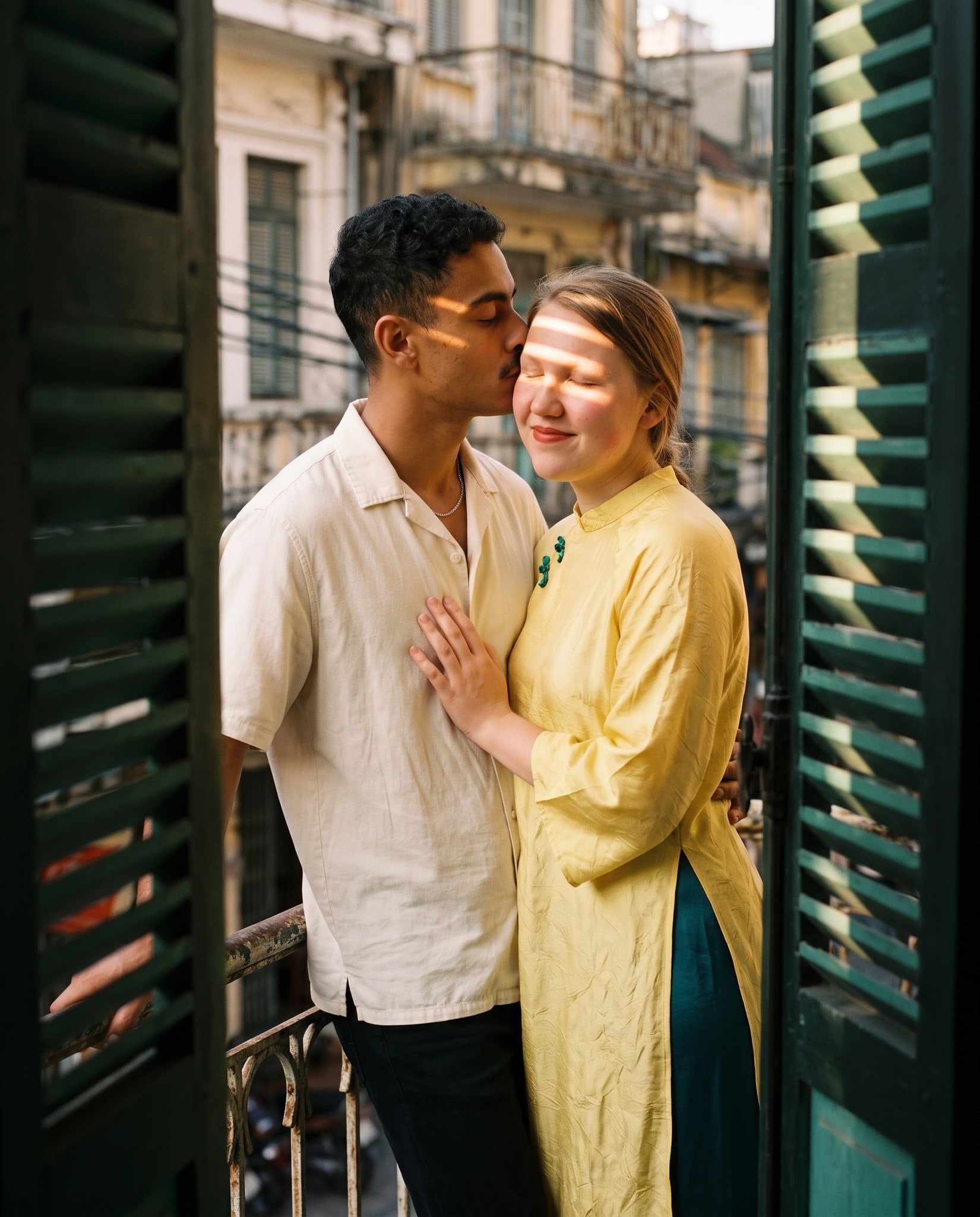
Matching—both cream, both sage—photographs as unified and romantic. Contrasting (one cream, one khaki) reads as intentional and distinct. Both work; decide based on your aesthetic. We'll adjust poses and angles to suit your choice once we see the fabric and fit in person.
What if we rent áo dài for part of the shoot?
Áo dài in Hoi An's traditional districts add cultural weight and photo variety. Rent from a reputable tailor in the Old Town (we can introduce you via WhatsApp) at least 48 hours before your shoot for fitting. Silk áo dài are heavy in heat; linen blends breathe better. Allow time for seamstress adjustments.
Is it ever too wet or muddy to shoot?
Flash flooding (rare, monsoon season) stops us. Shin-deep water and heavy mud are fine—we've shot in both. We scout conditions the evening before and send you a status update. If conditions worsen on shoot day, we reschedule at no additional cost or move to a dry alternative location in Hoi An.
Can we bring clothes that don't fit perfectly if we plan to alter them later?
No. Oversized or undersized fabric photographs as unintentional. Alterations at home weeks after a shoot are too late for emotional connection. Rent or borrow pieces that fit properly the day of the shoot.
How do we protect jewelry and accessories in mud?
Remove delicate pieces before entering the paddy. Metal oxidizes in mineral-rich water; fabric-based jewelry (scarves, wraps) works better than chains. We've seen couples apply clear nail polish to earring posts to prevent tarnish. Bring a waterproof pouch for phones, rings, and earrings.
Should we worry about insects or leeches in the paddies?
Insects are normal; leeches are rare and only present June–September in stagnant water. We choose paddies with good water flow. Wear closed shoes until you're in the water, and check your feet and legs afterward. Pack a small bottle of salt or insect repellent if you're concerned.
Pre-Wedding & Elopement
Inclusions, prices and booking are on our booking site.
FAQ
Can we wear matching outfits, or should we contrast?
Matching—both cream, both sage—photographs as unified and romantic. Contrasting (one cream, one khaki) reads as intentional and distinct. Both work; decide based on your aesthetic. We'll adjust poses and angles to suit your choice once we see the fabric and fit in person.
What if we rent áo dài for part of the shoot?
Áo dài in Hoi An's traditional districts add cultural weight and photo variety. Rent from a reputable tailor in the Old Town (we can introduce you via WhatsApp) at least 48 hours before your shoot for fitting. Silk áo dài are heavy in heat; linen blends breathe better. Allow time for seamstress adjustments.
Is it ever too wet or muddy to shoot?
Flash flooding (rare, monsoon season) stops us. Shin-deep water and heavy mud are fine—we've shot in both. We scout conditions the evening before and send you a status update. If conditions worsen on shoot day, we reschedule at no additional cost or move to a dry alternative location in Hoi An.
Can we bring clothes that don't fit perfectly if we plan to alter them later?
No. Oversized or undersized fabric photographs as unintentional. Alterations at home weeks after a shoot are too late for emotional connection. Rent or borrow pieces that fit properly the day of the shoot.
How do we protect jewelry and accessories in mud?
Remove delicate pieces before entering the paddy. Metal oxidizes in mineral-rich water; fabric-based jewelry (scarves, wraps) works better than chains. We've seen couples apply clear nail polish to earring posts to prevent tarnish. Bring a waterproof pouch for phones, rings, and earrings.
Should we worry about insects or leeches in the paddies?
Insects are normal; leeches are rare and only present June–September in stagnant water. We choose paddies with good water flow. Wear closed shoes until you're in the water, and check your feet and legs afterward. Pack a small bottle of salt or insect repellent if you're concerned.
More from the team
Elopement Photos at Mui Ne Fishing Village: What We Shoot
Mui Ne fishing village offers intimate sand dunes, colourful boats, and golden-hour light that feel timeless for elopement photography. We've shot dozens of couples there—here's what we learned.
Pre-wedding photoshoot in Hue in November: weather, light and crowds
November in Hue is one of Vietnam's most predictable months for outdoor photography. We've run dozens of sessions there and want to share what actually happens on the ground—the light, the crowds, and the decisions we make hour by hour.
Pre-wedding photoshoot in Hue in August: weather, light and crowds
August in Hue brings intense heat and unpredictable afternoon rain. We've run dozens of pre-wedding shoots there and learned what time of day works, which locations stay dry longest, and how to keep your hair and makeup perfect in the humidity.