 Cáo Studio
Home › Blog › Pre-Wedding & Elopement
What to wear for couple photos at Hon Chong promontory
By the Cáo Studio team · Hanoi & Saigon · 2026-11-04
Hon Chong Promontory, a rocky peninsula twenty kilometers south of Nha Trang city center, hosts dramatic limestone formations and turquoise water—perfect for couple photography. Most shoots run two to three hours between sunrise (5:30–7:00 a.m.) and golden hour (4:30–6:00 p.m.). At Cáo Studio, we recommend one primary outfit (usually an áo dài or casual linen set) plus one backup for variety. The site involves climbing wet rocks, strong sun reflection off water, and salt spray, so fabric choice matters: heavy silk áo dài can stick to skin and limit movement, while breathable cotton blends dry fast and move freely. Avoid all-white on overcast days (it flattens in soft light) and dark colors in midday heat. Ask us for a quote on WhatsApp for a customized session. Chat with us on WhatsApp
Why áo dài works best on the rocks, even if it seems risky?
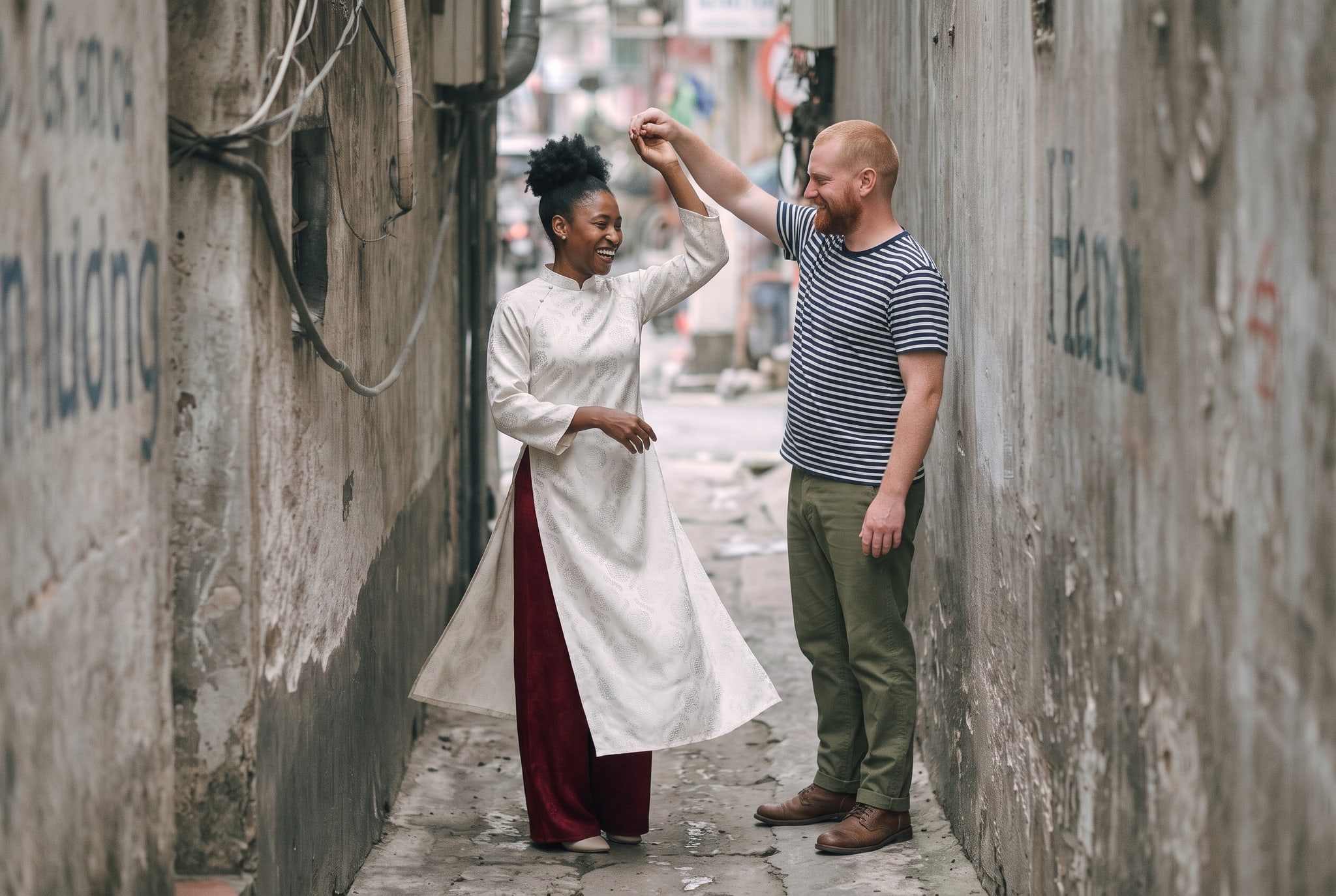
Most couples assume áo dài is too formal or fragile for a rocky coastal shoot. We've done over forty áo dài sessions at Hon Chong and learned the opposite: traditional silk or cotton áo dài photographs with far more grace and storytelling power than casual wear when styled right. The floor-length silhouette moves fluidly in sea breezes, creating leading lines in photographs; the contrast between the intricate brocade and raw rock surfaces reads beautifully in frame. The real secret is fabric choice. Heavy silk (8–10 momme weight) sticks and restricts climbing; we brief couples to choose medium-weight cotton áo dài (4–6 momme) or silk-cotton blends that breathe and dry quickly. Hemming matters—we ask tailors to add one centimeter above traditional length so the hem clears spray and sharp rocks. Wear leggings underneath (skin tone or neutral) rather than going bare-legged; the rock surface is abrasive and salt water stings. Our stylists notice that couples feel more confident in áo dài on rocks than they expect, because the garment's structure keeps them upright on uneven terrain. Book our áo dài photoshoot package if this appeals to you.
See packages and prices on vietnamphotoshoot.com
Should you wear swimwear or beachwear instead?
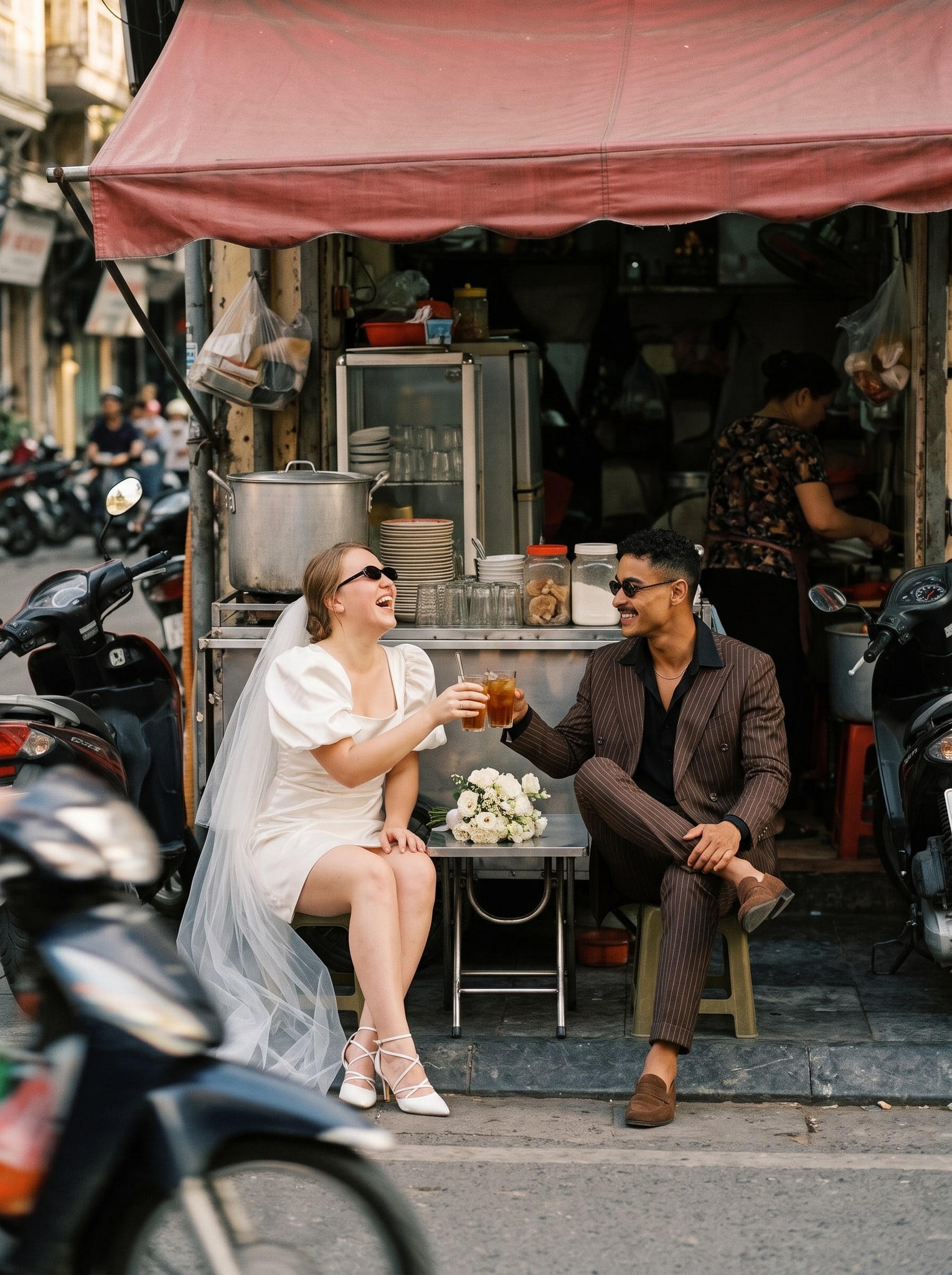
Swimwear and beach cover-ups are tempting at a coastal location, but we steer couples away from them at Hon Chong for three reasons: the rocks are sharp and unsuitable for exposed skin; the location reads as a geological landmark, not a beach resort; and the narrow tide pools and spray zones make swimwear impractical for movement. That said, couples who want a water-immersion shot sometimes combine one outfit change—for example, a formal áo dài for the clifftop sequences, then a casual linen shirt and shorts for the tidal pool closer to water. The linen dries fast, protects your skin, and photographs with texture and depth. If you do wear beachwear, bring a lightweight cover-up (loose linen jacket, unbuttoned shirt, or kimono) for the ninety percent of time you're not in water. We've found that cover-ups do double duty: they keep couples warm during long waits for light, and they add visual layers that make compositions richer. Avoid bikinis or swim briefs as your main look; they read as too casual for the drama of the location. Our stylists always ask: Where will you feel most like yourself here? Confidence matters more than fashion rules on wet rocks.
What colors actually stand out against limestone and sea?
We've photographed couples in every color combination at Hon Chong, and the rocks and water teach a hard lesson about contrast. Pastels (pale pink, lavender, cream) disappear into overcast skies and pale rock; they work only in strong direct sun, and even then they flatten quickly. Deep jewel tones—emerald, sapphire, plum, burgundy—hold their own against the gray limestone and blue-green water. Coral and terracotta pop against the cooler tones of rock and sea, and they look warm even in harsh midday light. Navy and charcoal are safe but risk blending with shadows; pair them with a metallic accent (gold or silver jewelry, a beaded clutch) to break up the dark. White and cream work beautifully in golden hour (4:30 p.m. onward) but look washed out before 3 p.m. If one partner wears áo dài and the other wears casual wear, we recommend complementary tones rather than matchy-matchy: for instance, a turquoise áo dài pairs well with a cream linen shirt, or a burgundy brocade pairs with charcoal linen. Test your color choices in your phone camera at the actual time you plan to shoot; afternoon light at Hon Chong is unforgiving, and what looks good in your bedroom mirror often reads differently in harsh sun. Our photographers have learned to shoot with slightly warmer white balance to compensate for the blue-heavy environment—but your outfit choice can do half that work.
How do you balance formality with movement on uneven ground?
This is the core tension every couple faces at Hon Chong. Formal wear (silk áo dài, tailored trousers, dress shoes) photographs beautifully in still poses but limits movement and risks damage on wet, sharp rocks. Casual wear (linen, cotton, sandals) allows freedom and comfort but can read flat in photographs without strong styling. We've developed a framework that balances both:
| Outfit Type | Best For | Movement Feel | Photo Impact | Sun / Spray Risk |
|---|---|---|---|---|
| Silk áo dài + leggings + flat sandals | Formal couple portraits, cultural narrative | Limited but graceful | High (drapes, color, tradition) | Medium (salt can stain) |
| Cotton áo dài + linen under-shirt + water shoes | Formal-casual hybrid, mixed sequences | Free movement, still elegant | High (breathes, moves with breezes) | Low (quick-dry blend) |
| Linen shirt + shorts + reef shoes | Playful, candid, water immersion | Complete freedom | Medium (texture reads well, solid colors less so) | Low (designed for wet) |
| Dress pants + silk blouse + casual loafers | Semi-formal, tonal shots | Moderate (restricted by fabric weight) | Medium (tailoring reads, but rocks dominate) | High (silk stains, loafers slip) |
Our stylists ask couples: What moment matters most in your story? If it's the ceremonial first look, áo dài wins. If it's playfulness and water, linen wins. Most couples choose one primary outfit (usually cotton áo dài) and one change for variety. The second outfit doesn't need to be as formal; a clean linen set often feels fresh for the final hour. Wear water-appropriate footwear—reef shoes or flat sandals with ankle straps, never heels or slippery soles. We've seen couples in heels slip on wet rocks and it's genuinely dangerous.
What time of day changes your outfit strategy most?
Sunrise (5:30–7:00 a.m.) and golden hour (4:30–6:00 p.m.) are the two best windows at Hon Chong, and they demand different clothing strategies. At sunrise, light is soft and cool-toned, so pale and jewel-tone áo dài read beautifully; the rock is wet and slippery, so wear secure footwear and avoid long hemlines that pool on damp stone. Sunrise shoots are quieter (fewer tourists), so formal wear feels appropriate. Midday (11:00 a.m.–3:00 p.m.) is harsh and hot; light bounces off water and rock, creating blown-out backgrounds and unflattering shadows under eyes. We rarely recommend midday unless you specifically want bright, punchy energy. Dark colors absorb heat and make you uncomfortable; light, breathable fabrics and neutral tones work better. Golden hour (4:30–6:00 p.m.) is the most forgiving time and draws more tourists, so the vibe feels less intimate. Here, deeper colors and layered textures (textured áo dài, patterned fabrics) photograph with richness. The light is warm and directional, so even simple outfits read with dimension. By golden hour, the rocks have dried and are safer; you can move more freely. Our photographers always ask: How much editing tolerance do you have? If you want minimal color correction, shoot at golden hour with deeper tones. If you trust us to grade aggressively, sunrise in pastels can feel dreamlike. Time of day shapes outfit choice as much as personal style does.
What to check before you book your Hon Chong session?
Before you commit to an outfit plan, verify these details with the Cáo Studio team:
- Tide timing. Hon Chong's tidal pools and accessible rocks shift with the tide. Low tide (roughly 8:00–11:00 a.m. or 5:00–8:00 p.m., depending on the date) exposes more rocks and pools; high tide restricts movement. We check tide tables when you book; this affects where you can walk and what outfit risks you run. Tell us your preferred shoot time and we'll confirm tide conditions.
- Weather forecast. Salt spray and wind intensify on cloudy or blustery days. Heavy clouds flatten light and make pale colors look gray; wind tangles áo dài and soaks fabric faster. We monitor forecasts and may suggest outfit adjustments or time shifts.
- Your fitness level. The climb from the beach to the main promontory is steep and involves scrambling on wet rock. Flat sandals are essential; heels or stiff shoes are dangerous. If mobility is limited, tell us beforehand; we work with local guides who know easier paths.
- Salt water tolerance. Spray reaches up to ten meters inland on windy days. Silk áo dài and delicate jewelry can suffer salt damage; we recommend securing valuable pieces or leaving them at your hotel.
- Transportation to the site. Hon Chong is twenty kilometers south of Nha Trang center. If you hire a taxi or private car, book it at least one hour before your session to allow for traffic. Ride-share apps are less reliable in this area; we recommend asking us for a trusted driver recommendation when you book.
Our couple photoshoot package includes a pre-shoot consultation where we discuss all these details on WhatsApp. This conversation prevents last-minute outfit panic and ensures you feel prepared.
How do we handle outfit mishaps and rescues on the day?
After fifty shoots at Hon Chong, our team has developed real-time fixes for common outfit emergencies. Salt stains on silk appear mid-shoot; we carry lint rollers and a small spray bottle of fresh water to rinse affected areas and dry them quickly with microfiber cloths. Hem dips in tidal pool water; we ask couples to hike the áo dài slightly higher or we pin it temporarily with fashion tape (we carry a kit). Sandal straps rub and cause blisters; our makeup artist carries blister pads and athletic tape. Wind tangles hair and áo dài; our stylist secures longer hemlines with small bobby pins hidden under folds, and uses light hairspray to tame flyaways without weighing hair down. Sunscreen melts makeup; we use waterproof formulas and reapply every ninety minutes, blotting with blotting papers rather than powder to avoid caking. Couples get cold in ocean spray; we bring lightweight wraps and have hot tea ready in a thermal flask for breaks. If an outfit simply isn't working—say, the áo dài is too heavy and you're overheating—we problem-solve on the spot. One couple once borrowed a lightweight linen shirt from our assistant and wrapped it as a cover-up; it became one of the shoot's best images. We expect mishaps and plan for them. This is why experience matters more than perfect planning.
Our pre-wedding photoshoot package includes two outfit changes and a dedicated stylist who manages all of this. We also offer makeup and hair at your hotel the morning of your shoot, so you can arrive at Hon Chong looking and feeling confident.
See packages and prices on vietnamphotoshoot.com
FAQ
Can we wear matching outfits at Hon Chong?
Yes, but we usually recommend complementary colors over exact matches. Matching áo dài (both partners in the same color and style) photographs beautifully but risks looking formal or costume-like. We suggest one partner in a jewel-tone áo dài and the other in a neutral linen shirt, or both in linen but different cuts. This keeps visual harmony while showing individuality.
How much salt water damage should we expect on silk áo dài?
Light spray stains fade with fresh water rinse after the shoot; our team rinses outfits immediately afterward. Heavy immersion (falling into pools, prolonged spray exposure) can cause permanent salt staining or discoloration on delicate silk. If your áo dài is heirloom or irreplaceable, rent or borrow a backup for the shoot rather than risking your own.
Is there a dress code or cultural sensitivity issue at Hon Chong?
Hon Chong is a public beach and tourist site; there's no formal dress code. Áo dài is culturally appropriate and celebrated by locals. Swimwear alone is acceptable on beach areas but less common on the rocks. We dress for the location and light, not for external judgment.
What if we want a second outfit change—how many do you recommend?
Two outfit changes are standard in our couple photoshoot package. The first (usually áo dài or formal wear) captures your arrival and formal portraits; the second (usually linen or casual) captures candid moments and playfulness. Three or more changes compress the session timeline and leave little time for each look; we don't recommend it at a single-location shoot like Hon Chong.
Should we buy new outfits for this shoot or use what we already own?
Use pieces you own if they fit the color and fabric guidelines above. New áo dài often feel stiff and photograph more formally; well-worn linen has better texture. If you do buy new items, wear them at home for at least one day to break them in. Ask us on WhatsApp for styling advice on specific pieces you're considering.
How do you protect cameras and gear from salt spray?
Our photographers use weather-sealed camera bodies and lenses; we wipe equipment with microfiber cloths every thirty minutes. Couples often ask if their phones are safe—yes, modern phones are splash-resistant, but we recommend keeping them in a waterproof pouch during water immersion sequences. Salt residue can damage charging ports over time; rinse your phone with fresh water after the shoot.
Pre-Wedding & Elopement
Inclusions, prices and booking are on our booking site.
FAQ
Can we wear matching outfits at Hon Chong?
Yes, but we usually recommend complementary colors over exact matches. Matching áo dài (both partners in the same color and style) photographs beautifully but risks looking formal or costume-like. We suggest one partner in a jewel-tone áo dài and the other in a neutral linen shirt, or both in linen but different cuts. This keeps visual harmony while showing individuality.
How much salt water damage should we expect on silk áo dài?
Light spray stains fade with fresh water rinse after the shoot; our team rinses outfits immediately afterward. Heavy immersion (falling into pools, prolonged spray exposure) can cause permanent salt staining or discoloration on delicate silk. If your áo dài is heirloom or irreplaceable, rent or borrow a backup for the shoot rather than risking your own.
Is there a dress code or cultural sensitivity issue at Hon Chong?
Hon Chong is a public beach and tourist site; there's no formal dress code. Áo dài is culturally appropriate and celebrated by locals. Swimwear alone is acceptable on beach areas but less common on the rocks. We dress for the location and light, not for external judgment.
What if we want a second outfit change—how many do you recommend?
Two outfit changes are standard in our [couple photoshoot package](/go/couple-photoshoot). The first (usually áo dài or formal wear) captures your arrival and formal portraits; the second (usually linen or casual) captures candid moments and playfulness. Three or more changes compress the session timeline and leave little time for each look; we don't recommend it at a single-location shoot like Hon Chong.
Should we buy new outfits for this shoot or use what we already own?
Use pieces you own if they fit the color and fabric guidelines above. New áo dài often feel stiff and photograph more formally; well-worn linen has better texture. If you do buy new items, wear them at home for at least one day to break them in. Ask us on WhatsApp for styling advice on specific pieces you're considering.
How do you protect cameras and gear from salt spray?
Our photographers use weather-sealed camera bodies and lenses; we wipe equipment with microfiber cloths every thirty minutes. Couples often ask if their phones are safe—yes, modern phones are splash-resistant, but we recommend keeping them in a waterproof pouch during water immersion sequences. Salt residue can damage charging ports over time; rinse your phone with fresh water after the shoot.
More from the team
Pre-wedding photoshoot in Phu Quoc June: weather, light, crowds
June is Phu Quoc's monsoon season. Our studio has shot dozens of couples there in early summer—here's what weather and crowds really mean for your pre-wedding day.
Pre-wedding photoshoot in Phu Quoc July: weather, light, crowds
July is Phu Quoc's wet season, but it opens creative possibilities: moody skies, empty beaches after storms, and dramatic backlighting. We'll walk you through what happens on the ground.
Pre-wedding photoshoot in Phu Quoc November: weather, light, crowds
November is peak season for pre-wedding shoots in Phu Quoc: weather is stable, light is soft, but crowds peak mid-month. We share what our team sees on the ground.