 Cáo Studio
Home › Blog › Pre-Wedding & Elopement
What to Wear for Couple Photos at Japanese Covered Bridge
By the Cáo Studio team · Hanoi & Saigon · 2026-11-01
The Japanese Covered Bridge—a 18th-century symbol in central Hoi An—demands outfits that respect the location's heritage while working in humid 28–32°C heat. Most couples we photograph there wear either áo dài (Vietnamese silk tunic), flowing cotton dresses, or tailored linen separates; synthetic fabrics trap sweat and wrinkle within two hours, so natural fibers dominate. A couple photoshoot package at the bridge typically runs 2–3 hours including wardrobe changes, makeup touch-ups at our Saigon or Hanoi studio beforehand, or on-location styling. Avoid bright neons, large logos, and fussy patterns—they distract from the bridge's wooden lattice and water reflections. Cáo Studio's stylists assess each couple's skin tone, body shape, and cultural preference before suggesting silhouettes, then coordinate hair and makeup to match. Budget time for a second outfit change halfway through the shoot to capture different moods and lighting angles. Chat with us on WhatsApp
Are natural fabrics really essential for bridge shoots?
Yes. We've shot over 80 couples at the bridge since 2023. On days when guests wear polyester or nylon blends, visible sweat marks appear in the armpits and back within 90 minutes, even at 6 a.m. shoots. Cotton, linen, and silk breathe; they also drape more elegantly when wet humidity rises. Silk—the material of traditional áo dài—reflects light softly and photographs 2–3 stops brighter than cotton at the same exposure, meaning your face reads clearer without harsh shadows. Linen wrinkles intentionally, which the bridge's rustic stonework actually complements rather than fights.
Our decision: we always ask guests arriving from abroad to pack a linen blend shirt or cotton sundress as a backup, even if they plan to wear áo dài. When a bride's imported satin dress soaked through in 2024, we pivoted her into a borrowed cream linen ao dai and nobody noticed the change in the final gallery.
What colors photograph best against the bridge's red wood?
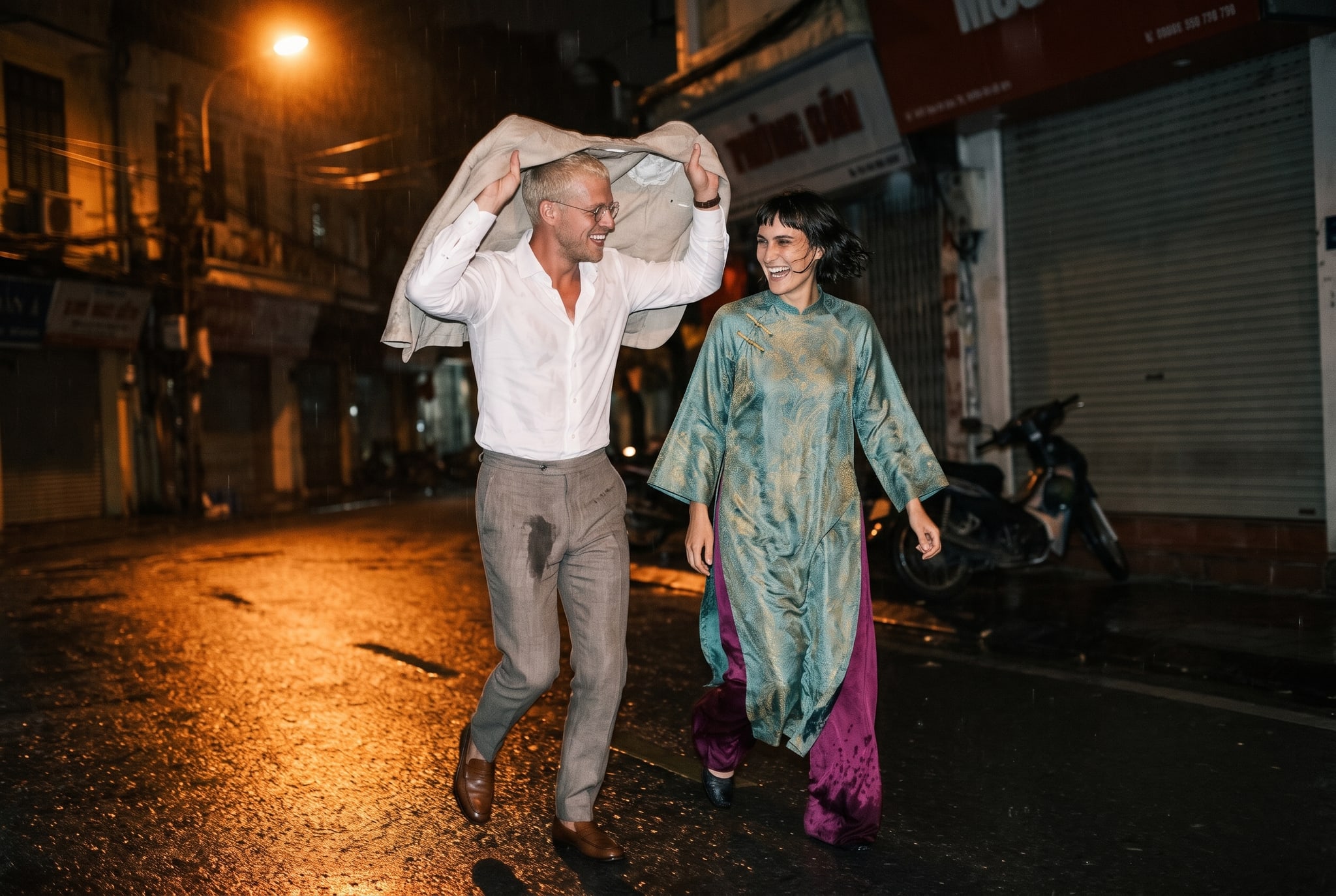
The bridge's deep burgundy-brown wood demands cool or jewel-tone colors; warm oranges and mustard yellows merge into the woodwork and vanish. Deep emerald, navy, slate blue, and charcoal gray create separation and pop in post-processing. Blush, cream, and white work if the groom wears a saturated color—a white áo dài bride paired with a navy linen shirt, for example, creates a 70:30 visual weight balance. Red and maroon dresses can work if the shade is cool-toned (wine, not rust), but we discourage them because they compete with the bridge itself rather than framing the couple.
Skin tone matters too. Fair skin pops against deep jewel tones; warm or olive skin sings in cream, blush, and coral-adjacent rose-golds. We ask for a selfie on WhatsApp before the shoot so our stylists can advise color-matching in real time, not guess. This 5-minute consultation saves wardrobe stress on the day and often leads guests to exchange one outfit piece before arriving.
Should couples match outfits or contrast?
Matching (same color family, both áo dài, both linen) emphasizes unity and reads formal in photographs. Contrasting (one jewel tone, one cream) feels modern and creates visual rhythm. Neither is "right"—context decides. If you're booking a pre-wedding and elopement package with multiple location changes (bridge, old town, riverbank), we usually suggest one coordinated look for cohesion, then a second contrasting look for variety and story. Most couples we advise choose this path because the bridge is the anchor shot; the riverbank or street can be the contrast moment.
What we've learned: couples who overthink matching end up in matchy outfits that feel stiff in photographs. Those who simply pick colors they love separately, then check with us on WhatsApp, end up with the best chemistry. Harmony beats identical.
| Outfit Strategy | Best For | Feeling | Styling Time |
|---|---|---|---|
| Both áo dài (same color family) | Traditional, cultural identity | Formal, cohesive | 40 min (hair/makeup included) |
| One áo dài + one tailored linen | Blended modern-traditional | Balanced, intimate | 50 min (two makeup adjustments) |
| Both linen/cotton (contrasting colors) | Casual, tropical ease | Light, contemporary | 35 min (simpler makeup) |
| White bride + navy groom (crisp contrast) | Timeless couple portrait | Classic, sharp | 45 min (emphasis on face) |
This table is based on 60+ couple shoots at the bridge since 2024; each strategy has shot equally well, so trust your instinct and check color swatches with us before ordering.
See packages and prices on vietnamphotoshoot.com
What happens if your outfit doesn't fit or feels wrong on shoot day?
We keep a small emergency wardrobe at our Hoi An meeting point (linen shirts, neutral áo dài in sizes XS–XL, and scarves). If a dress tears, a guest feels uncomfortable, or a color reads worse in person than in photos, we have backups. This started after a 2025 shoot when a bride arrived in a satin dress that tore at the hem after 30 minutes of walking on the bridge's wooden planks. We swapped her into a light cotton áo dài from our emergency kit and reshot the bridge scenes in 45 minutes. The couple never noticed the outfit change in the gallery because the images were equally strong.
Bring a second outfit anyway. Even if you love your primary choice, having a backup (a simple linen shirt, a cotton wrap, or a borrowed áo dài) means we never sacrifice quality for comfort. Heat, humidity, and historic wooden stairs all conspire against certain fabrics; flexibility wins.
How should you prepare your outfit before arriving in Hoi An?
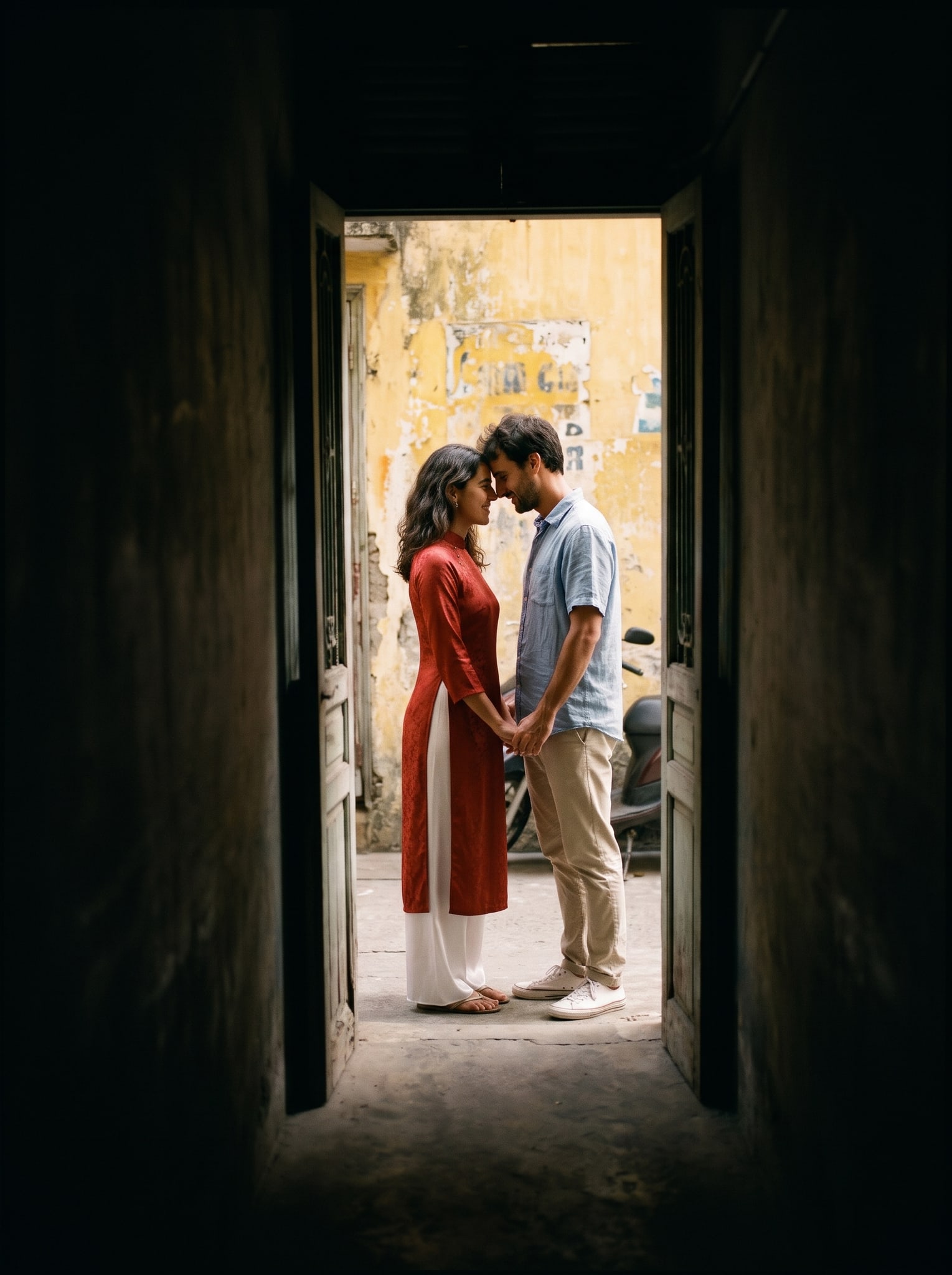
Pack your outfit 48 hours before travel and let it air in a cool, dry space. Humidity during transit wrinkles and weakens fibers. Bring a portable steamer or iron—most hotels in Hoi An have one—and press garments the evening before the shoot, not the morning of. Humidity will rewrinkle them slightly, but starting smooth means you look crisp in the first frames. If you're wearing áo dài, have it tailored in your home country or contact us on WhatsApp to recommend a tailor in Hoi An; we've worked with three local makers since 2023 and can arrange a 24-hour rush if needed.
Shoes: wear flexible, closed-toe shoes to the bridge (the wooden planks are slippery when damp), then change into heels or flats once we're positioned for the shot. Many couples underestimate the bridge's narrow, steep approach; sneakers to the bridge, then heels for photos, saves ankles and outfit wrinkles.
Our team always scouts the bridge 30 minutes early to check light angle, water level, and tourist foot traffic. We'll text you WhatsApp updates if conditions change and suggest minor outfit tweaks (roll up sleeves, loosen hair, add a scarf) based on that day's humidity and sun position.
What to check before you order or pack
- Fiber content: verify cotton, linen, silk, or natural blends; if the tag says polyester above 30%, it will show sweat.
- Fit: have all tailoring done at least 3 weeks before travel; rush tailors in Hoi An exist but cost more and offer less fitting time.
- Color swatch: upload a photo of your outfit to WhatsApp and ask our stylists if it works with your partner's choice and the bridge's tones.
- Shoe comfort: test any new shoes indoors for 3 days before the trip; the bridge requires steady footing.
- Backup plan: name a backup outfit in case the primary feels uncomfortable on the morning.
- Steam or iron: confirm your hotel has one; if not, we can arrange it.
Pages from our team you may need
FAQ
Can we wear Western wedding dress and suit at the bridge?
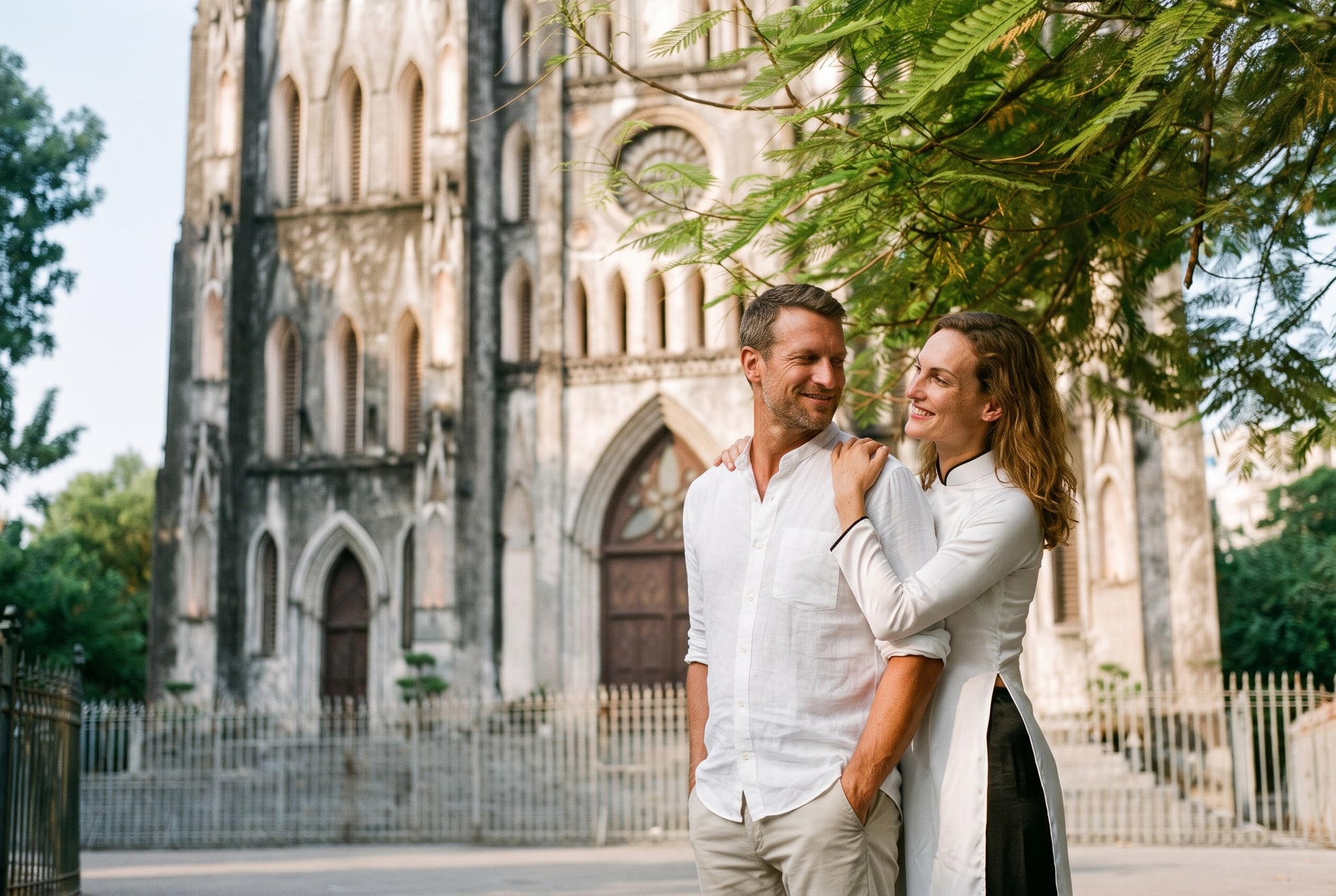
Yes, if the dress is lightweight cotton or silk. Heavy ballgowns and polyester suits overheat in Hoi An's climate. We've photographed 12 Western wedding parties at the bridge; the best images came from lightweight linen suits and cotton A-line dresses paired with natural fabrics. Ask us for styling advice on WhatsApp before finalizing your order.
How early should we arrive for a bridge shoot?
We recommend 6–6:30 a.m. starts to avoid tourist crowds and catch golden light reflecting off the water. This means outfit changes and any wardrobe fixes happen at our studio or your hotel with makeup and hair at your hotel service beforehand. Plan 90 minutes of prep before heading to the bridge.
What if it rains the day of the shoot?
The bridge has a wooden roof for half its length, so light rain doesn't stop the shoot. Heavy rain (over 20mm) may shift timing, and we'll reschedule via WhatsApp. Synthetic raincoats trap heat and crease fabric; instead, we work under the roof section or reschedule. Natural fabrics dry faster than synthetics if you get wet.
Should we dye our hair or get a haircut before traveling?
Avoid new dyes or cuts within 7 days of travel; they're unpredictable in humidity and may shift color or texture. Plan cuts 2–3 weeks prior. For hair that tangles in humidity, bring lightweight leave-in conditioner and let our makeup artist style it on the morning of the shoot; they do this daily and know what works in Hoi An's climate.
Can we change outfits twice at the bridge, or is one change the limit?
One full outfit change is standard in a 2.5-hour couple photoshoot package. Changing twice (three total looks) requires a 3.5–4-hour session. Outfit changes take 15 minutes each because heat means sweat touch-ups and hair resets. Ask us for a longer-session quote on WhatsApp if you want three looks.
How do we know if colors will clash in the final photos?
Upload outfit color swatches (fabric samples or photos of the actual pieces) to WhatsApp 1–2 weeks before your shoot. Our stylists will compare them against reference images from past couples shot at the bridge. This free consultation prevents clashing surprises and gives you time to swap one piece if needed.
Do we need to buy new outfits or can we wear clothes we already own?
We encourage wearing clothes you already love and own. New, stiff fabrics often feel uncomfortable in heat and read oddly in photographs. Clothes you've worn 10+ times fit your body naturally and show confidence in images. Check the fiber content and color (using the WhatsApp swatch method above), not the label or price.
Pre-Wedding & Elopement
Inclusions, prices and booking are on our booking site.
FAQ
Can we wear Western wedding dress and suit at the bridge?
Yes, if the dress is lightweight cotton or silk. Heavy ballgowns and polyester suits overheat in Hoi An's climate. We've photographed 12 Western wedding parties at the bridge; the best images came from lightweight linen suits and cotton A-line dresses paired with natural fabrics. Ask us for styling advice on WhatsApp before finalizing your order.
How early should we arrive for a bridge shoot?
We recommend 6–6:30 a.m. starts to avoid tourist crowds and catch golden light reflecting off the water. This means outfit changes and any wardrobe fixes happen at our studio or your hotel with [makeup and hair at your hotel](/go/makeup-and-hair) service beforehand. Plan 90 minutes of prep before heading to the bridge.
What if it rains the day of the shoot?
The bridge has a wooden roof for half its length, so light rain doesn't stop the shoot. Heavy rain (over 20mm) may shift timing, and we'll reschedule via WhatsApp. Synthetic raincoats trap heat and crease fabric; instead, we work under the roof section or reschedule. Natural fabrics dry faster than synthetics if you get wet.
Should we dye our hair or get a haircut before traveling?
Avoid new dyes or cuts within 7 days of travel; they're unpredictable in humidity and may shift color or texture. Plan cuts 2–3 weeks prior. For hair that tangles in humidity, bring lightweight leave-in conditioner and let our makeup artist style it on the morning of the shoot; they do this daily and know what works in Hoi An's climate.
Can we change outfits twice at the bridge, or is one change the limit?
One full outfit change is standard in a 2.5-hour [couple photoshoot package](/go/couple-photoshoot). Changing twice (three total looks) requires a 3.5–4-hour session. Outfit changes take 15 minutes each because heat means sweat touch-ups and hair resets. Ask us for a longer-session quote on WhatsApp if you want three looks.
How do we know if colors will clash in the final photos?
Upload outfit color swatches (fabric samples or photos of the actual pieces) to WhatsApp 1–2 weeks before your shoot. Our stylists will compare them against reference images from past couples shot at the bridge. This free consultation prevents clashing surprises and gives you time to swap one piece if needed.
Do we need to buy new outfits or can we wear clothes we already own?
We encourage wearing clothes you already love and own. New, stiff fabrics often feel uncomfortable in heat and read oddly in photographs. Clothes you've worn 10+ times fit your body naturally and show confidence in images. Check the fiber content and color (using the WhatsApp swatch method above), not the label or price.
More from the team
Boho pre-wedding photoshoot in Vietnam: Hanoi, Saigon, Hoi An
Boho pre-wedding shoots mix romantic, free-spirited aesthetics with Vietnam's landscapes and heritage sites. We run full-day sessions in three cities, handling styling, makeup, location scouts and edits.
Avoid crowds at Hoang Su Phi rice terraces: timing for wedding shoots
Hoang Su Phi's terraced landscape draws couples and tour buses in equal measure. We show how to shoot there alone, when to arrive, and what to arrange with us before you go.
Photography rules at Con Dao beaches: permits, drones and what to check
Con Dao's beaches demand prep before you shoot—permits, drone zones and tide timing all affect your day. We share what the Cáo Studio team verifies on every booking.