 Cáo Studio
Home › Blog › Pre-Wedding & Elopement
What to wear for couple photos at Ke Ga lighthouse
By the Cáo Studio team · Hanoi & Saigon · 2026-11-04
Ke Ga lighthouse demands fabrics that won't cling, tear or fade under salt spray and 20+ knot wind. We dress couples in cotton-silk blends, linen, or technical fabrics; loose sleeves, relaxed fits, and layers over tight pieces. Avoid heavy velvet, stiff tulle, or white silk—salt stains, wind wraps it around you, and sunburn-bright whites blow out in afternoon light. Deep jewel tones, earth neutrals, or soft pastels photograph best on the grey stone jetty. Plan two outfits: one flowing for movement shots, one tailored for close-ups. Cáo Studio couples bring a change halfway through the 3-hour couple photoshoot package to match the light shift and give you variety. Chat with us on WhatsApp
Why does Ke Ga's wind make fabric choice critical?
Ke Ga lighthouse sits at the point where the South China Sea funnels between the cape and open water. Wind hits 15–25 knots even on calm days, stronger offshore. Heavy fabrics—silk charmeuse, structured taffeta, pleated skirts—will wrap around legs, billow overhead, or catch salt spray and become impossible to move in within 20 minutes. Light, natural-fiber fabrics drape close to the body when wind pushes, then release when it eases. We've watched couples in stiff wedding gowns spend half a shoot fighting fabric instead of standing close together; linen, cotton-silk, and open weaves let you focus on connection, not wardrobe management. Loose sleeves also work—they move, they don't restrict arm placement for embrace shots, and they photograph as soft, romantic shapes.
What fabrics pass the Ke Ga test:
- Linen (wrinkles beautifully, breathes, dries fast if spray hits)
- Cotton-silk blends (structure + flow)
- Rayon or viscose (moves, doesn't cling)
- Fine cotton voile or poplin
- Breathable synthetic blends (if you want no wrinkles)
Avoid dense velvet, polyester taffeta, stiff tulle overlays, and anything coated or sequined—salt air dulls shine, wind shreds details, and cleanup is a nightmare.
What color palette works on grey stone and blue water?
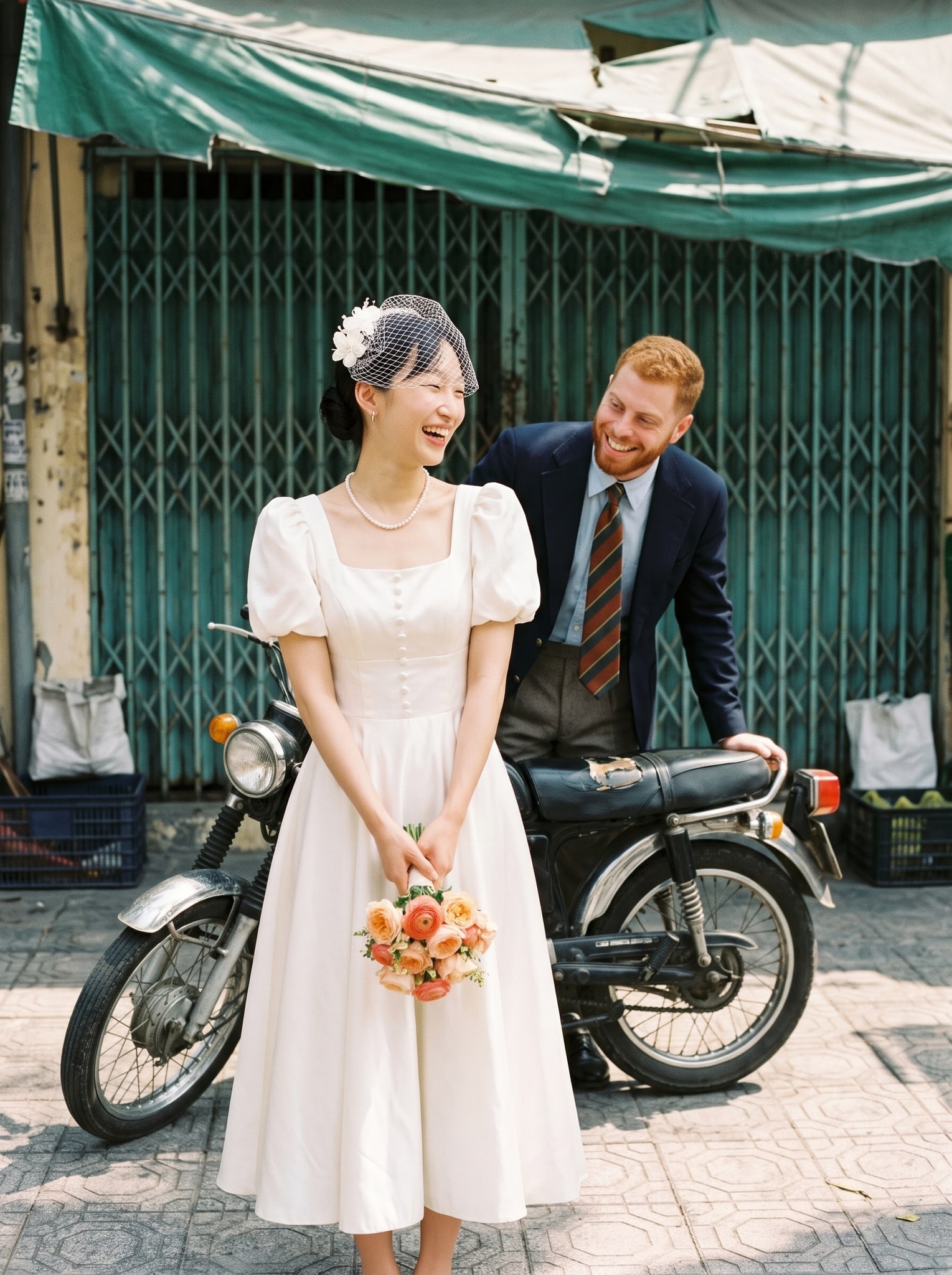
The lighthouse sits on pale grey granite. Sky and sea shift from deep blue (morning) to washed-out grey (midday) to golden-lit navy (afternoon). Bright white reflects too much light and creates exposure problems in our cameras; pastels can disappear. We ask couples to think in jewel tones, warm earth neutrals, or soft saturated colors that hold their own against the landscape.
Color combinations we've shot:
- Deep emerald + cream linen (reads as rich, not washed out)
- Warm taupe + burnt orange (sunset-ready, flatters all skin tones)
- Navy + blush (classic, photographs in any light)
- Sage green + warm grey (harmonizes with stone, feels modern)
- Rich plum + gold undertones (jewel-tone power couple look)
Avoid pastels like pale pink or baby blue unless you're shooting at golden hour—midday, they vanish. Black reads sharp but can feel formal; save it for evening shoots or winter sessions. Patterned fabrics (small florals, stripes, checks) work if scale is fine and color contrast is soft; avoid large, busy prints that fight the landscape. The goal: your outfits complement the lighthouse, not compete with it. One partner can wear a cooler tone (blue, sage), the other warmer (rust, ochre), and they'll frame each other while the grey stone anchors both.
Should we coordinate exactly or wear contrasting looks?
This is where we lean into your dynamic as a couple. We've shot 50+ Ke Ga sessions, and exact-match outfits (both in navy, both in cream) flatten the frame—the eye doesn't know where one person ends and the other begins in a two-shot. Subtle contrast works: one wears jewel-tone linen, the other earth-tone cotton. Same palette, different saturation. This gives photographers depth—each person reads as distinct—while the colors still harmonize. If one partner loves a bolder shade, put it on the person with the shorter frame or quieter posture; the other wears a neutral that lets them step forward emotionally. We discuss this on WhatsApp before shoot day so you're not deciding at 5am at the lighthouse.
Coordination approach | Who it suits | Why it works on stone --- | --- | --- Same color, slightly different fabrics (one linen, one silk-blend) | Couples who want visual unity, minimal decisions | Monochrome reads calm; texture adds depth; stone background stays neutral Warm tone + cool tone (taupe + sage) | Couples with contrasting skin undertones or personalities | Creates visual rhythm; complements both cool and warm light times; lighthouse grey accepts both One bold, one neutral (emerald + cream) | Extroverted partner + reflective partner | Bold color pops; neutral grounds; works across all hours Pastels only at golden hour (blush + soft grey) | Spring or soft-aesthetic couples | Golden light lifts pale tones; midday light would wash them out (avoid)
We nudge couples toward contrast-in-harmony over exact match. It photographs warmer, feels less costume-y, and gives you visual interest when you print large.
What layers and accessories survive salt spray?
Salt air corrodes metal, stains fabrics, and frizzes hair. Accessories either work or they don't. Jewelry that's plated or painted will spot; solid metals (gold, silver, stainless steel) or real pearls hold up. Fabric accessories—scarves, shawls, belts—need to be natural fiber, washable, and non-delicate. We've had couples wear cashmere wraps (disaster: salt-stiffened, impossible to clean), silk scarves (spot-stained), and heavy wool (too hot, wilts in humidity).
Accessories we recommend:
- Simple gold or silver rings, necklaces, earrings (no costume jewelry)
- Pearl studs or drops (salt-resistant, elegant)
- Linen or cotton scarves loosely tied (removable if wind is brutal, reusable)
- Soft leather shoes or sandals (bring backups; salt splashes)
- Sunglasses (dark, polarized; tie them with a breakaway cord if waves are near)
Skip heavy costume necklaces, dangly earrings that catch wind, silk scarves, beaded belts, and anything glued or painted. Bring a small bag (canvas, leather, or neutral fabric) to hold phones, hair ties, and a fresh layer if you want to change mid-shoot. We carry microfiber towels and sea spray can be rinsed off after; your clothes don't need professional cleaning if fabrics are natural fiber and colors are colorfast.
One more: hair accessories. Bobby pins work (metallic, simple). Ornate clips or beaded hairpieces will tangle in wind or fall into the sea. We always advise couples to keep hair down or in a loose braid unless they have very short hair. Salt air curls even straight hair; a braid or loose wave works with the environment instead of fighting it.
What's the hour-by-hour clothing checklist before shoot day?
We send WhatsApp reminders 48 hours before. Here's what we ask couples to confirm:
Two weeks out:
- Confirm outfit 1 colors and fabric types (we'll QA over video call if you're unsure)
- Check fabric care: can it be salt-sprayed? Will it wrinkle badly? (Honest answers help us plan shots)
- Bring a backup top in case the first gets soaked or stained (spray dries fast but better safe)
One week out:
- Try on complete outfits with shoes (lighthouse rocks are uneven; sandals or flats only)
- Check that nothing is too tight to move in (we shoot embrace, walk, sit on rocks—clothes need room)
- Confirm whether you want to change halfway (we build it into the timeline)
Day before:
- Confirm weather and tide time (we shoot around low tide for safe access; you wear accordingly—no heels, water-resistant shoes)
- Wash hair, let it dry natural (salt air will curl it anyway; fresh texture photographs better)
- Lay out both outfits, check for stains, pills, or tears (wrinkles are fine; they add texture)
Morning of shoot:
- Eat breakfast (three hours on exposed rocks, you'll need energy)
- Wear layers for the drive (lighthouse is 15–20°C cooler than Phan Thiet town; we pack a light cardigan or jacket for comfort before/after)
- Arrive 30 minutes early so we can see the light and adjust poses around how your clothes move
We text reminders as a team. If someone forgets a backup or shows up in unsuitable shoes, we problem-solve on site—we've lent clothes, wrapped layers, even cut tags off tight pieces. But prevention is easier: confirm, try on, and trust the checklist.
See packages and prices on vietnamphotoshoot.com
What do we avoid seeing couples wear—and why?
After 50+ Ke Ga shoots, we've documented what doesn't work:
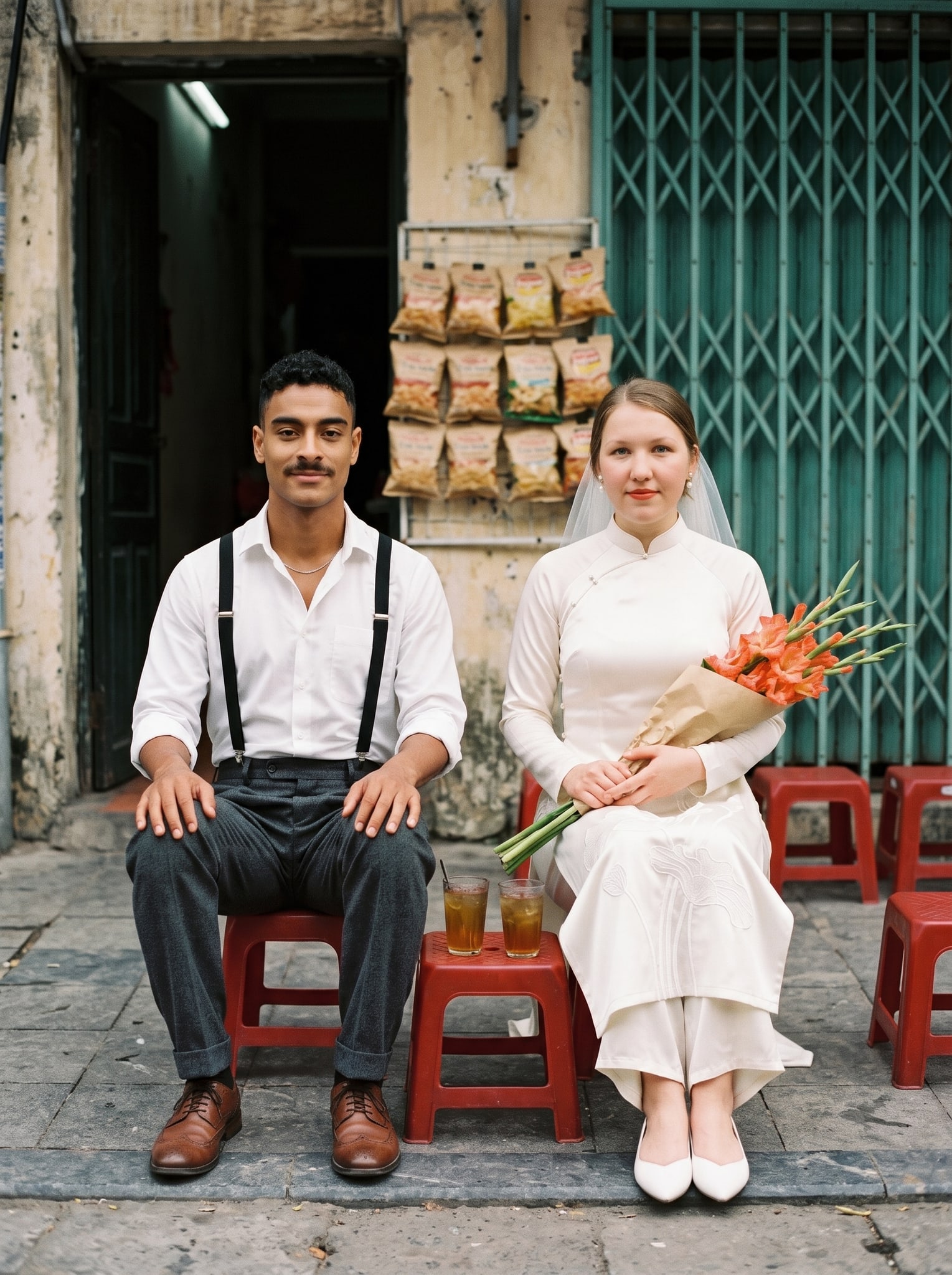
- Heavy wedding gowns (tulle, satin, beading). Wind + rocks + spray = a nightmare. Trains get muddy, beads snag, fabric tangles around legs. Save the gown for a studio or calm-location shoot. Consider a pre-wedding photoshoot in a protected garden for formal looks.
- Stiff, structured fabrics (taffeta, thick linen, quilted jackets). They don't move with wind; they fight it. In photos, you look stiff, not peaceful.
- Bright white or pastels at midday. Exposure issues, light bounces off stone, skin tones go flat. Golden hour only if you commit to it.
- Costume jewelry or cheap metallics. They tarnish visibly within one hour; salt spray speeds corrosion. Keep it minimal and real.
- Long, loose hair with nothing to contain it. Three hours of wind-blown strands in your face. Braid, bun, or accept frizz and plan to edit it in post.
- Delicate or white accessories (silk scarves, lace shawls, beaded belts). They stain, snag, or get lost. We've had couples leave items behind on rocks—not recoverable.
If you're set on a formal look, ask us about a special concept shoot at a protected location instead. Ke Ga is pure wild; dress for it.
How does our team prep you from WhatsApp to the rocks?
We operate shoot day in four phases:
Phase 1: Confirmation (WhatsApp, 48 hours before) We send photos of the lighthouse in current weather, ask outfit questions, confirm you've read the Ke Ga brief. We describe the rocks (uneven, slippery, small pools—waterproof shoes or sandals). We ask: "Have you worn these clothes before? Do they wrinkle? Can we get them wet?" Real answers help us plan lighting and poses.
Phase 2: Pre-shoot call (WhatsApp video, 6 hours before) We walk through what we'll shoot: approach shots, walking together, sitting on rocks, embrace close-ups, detail shots (hands, rings, lighthouse in background). We ask to see final outfits on video. We adjust poses if fabrics look too stiff or if someone's anxious about movement. We confirm weather and adjust start time if needed.
Phase 3: On-site setup (1 hour before shoot time) We scout the best light angle. Tide charts matter—low tide gives us safe, photogenic rocks and dramatic stone texture. We check wind direction so we can position you to avoid spray in your face (and to make wind work for the photo, not against). We test meter light on your outfit colors to make sure they're not blown out or underexposed. We set up backup shoes, a robe or jacket for between-outfit breaks, and water bottles.
Phase 4: Shoot and pivot (3 hours) We watch how your fabrics move in real wind. If something's too tight or too loose, we suggest poses that hide or highlight it. Around the 90-minute mark, energy dips and light shifts slightly—this is when outfit 2 goes on. We always have a backup plan: if spray is heavy or wind is brutal, we move to the lee side of the rocks or shift to tighter poses that control fabric. We keep a towel nearby. Salt air is honest; we work with it rather than pretend it's going away.
We've learned that couples who trust the checklist and communicate honestly beforehand stay relaxed on shoot day. The clothes become second nature; you focus on each other.
What to check before you book your Ke Ga couple shoot
Timing: Ke Ga is best April–October (cooler weather, more stable light, lower chance of rough seas). Midday summer heat is brutal; we often shoot 6am–9am or 4pm–7pm. Winter monsoons can close the lighthouse access. Ask us for seasonal availability.
Fabric reality check: If you're unsure whether your outfits will work, send photos or video over WhatsApp. We'll give honest feedback. If they won't survive wind or spray, we suggest alternatives or recommend a different location (gardens, urban streets, indoor temples all work if Ke Ga isn't right for your aesthetic).
Physical comfort: Rocks are uneven, tide pools exist, and you'll walk 500m across them. Wear shoes or sandals you can move in. If you have joint issues or are pregnant, discuss accessibility with us beforehand—we can adapt the shoot or suggest a gentler location.
Budget and timing: A couple photoshoot at Ke Ga runs the same length as any location session. Ask us for a quote on WhatsApp so you know what's included (outfit changes, how many final images, prints, digital files).
Weather backup: If weather is dangerous (typhoon risk, high winds beyond safe), we reschedule. We don't shoot in conditions where your safety is compromised. Clear reschedule policies are part of your booking.
Pages from our team you may need
FAQ
Will salt spray stain my clothes permanently?
No. Fresh salt water rinses out with tap water if you wash clothes within a few hours. Dry salt stains are harder to remove. We bring microfiber towels and rinse spray off on shoot day. Wear washable fabrics (cotton, linen, rayon) and natural-fiber blends; stains lift easily. Polyester or coated fabrics may hold stains longer.
Can we wear formal wedding attire to Ke Ga, or is casual only?
Formal fabrics (heavy silk, tulle, beading) are risky—wind tangles them, spray damages embellishments, and rocks snag trains. If you want a formal aesthetic, choose formal style (tailored linen shirt, elegant trousers) in casual-friendly fabrics. Or book a pre-wedding photoshoot in a protected garden for gowns and formal wear, then do Ke Ga in relaxed pieces.
What if we arrive and our clothes don't feel right?
We troubleshoot on site. We've lent jackets, wrapped sarongs, adjusted poses to hide tight areas, and even safety-pinned loose fabrics. We always carry backup fabrics and styling tools. Being flexible saves the shoot. Text us immediately if you're nervous beforehand—we can brainstorm alternatives before you arrive.
Should we match or contrast our outfit colors?
Subtle contrast (one warm, one cool tone in the same saturation range) photographs better than exact match. It gives visual depth and lets each person read distinctly. We'll advise based on your skin tones and dynamic once we see your outfit choices. Same palette, different energy.
How do we prepare hair and makeup for salt spray and wind?
Hair: braid it loosely, or expect natural curls from salt air (some couples love the texture). Use a salt-resistant spray if you want hold. Makeup: go for long-wear formula, waterproof mascara, and matte lip color (glossy gets sticky with salt). Bring blotting papers and a lip pencil for touch-ups. We work with a makeup and hair team if you want professional prep beforehand; they know how to build looks that survive Ke Ga conditions.
Can we do a Ke Ga shoot in winter (November–March)?
Possible but risky. Winter monsoons bring rough seas, strong wind, and unpredictable weather. Access to the lighthouse can be closed. Spring (April–May) and autumn (September–October) are ideal. Ask us about seasonal options and weather guarantees when you book.
Pre-Wedding & Elopement
Inclusions, prices and booking are on our booking site.
FAQ
Will salt spray stain my clothes permanently?
No. Fresh salt water rinses out with tap water if you wash clothes within a few hours. Dry salt stains are harder to remove. We bring microfiber towels and rinse spray off on shoot day. Wear washable fabrics (cotton, linen, rayon) and natural-fiber blends; stains lift easily. Polyester or coated fabrics may hold stains longer.
Can we wear formal wedding attire to Ke Ga, or is casual only?
Formal fabrics (heavy silk, tulle, beading) are risky—wind tangles them, spray damages embellishments, and rocks snag trains. If you want a formal aesthetic, choose formal *style* (tailored linen shirt, elegant trousers) in casual-friendly fabrics. Or book a [pre-wedding photoshoot](/go/pre-wedding-photoshoot) in a protected garden for gowns and formal wear, then do Ke Ga in relaxed pieces.
What if we arrive and our clothes don't feel right?
We troubleshoot on site. We've lent jackets, wrapped sarongs, adjusted poses to hide tight areas, and even safety-pinned loose fabrics. We always carry backup fabrics and styling tools. Being flexible saves the shoot. Text us immediately if you're nervous beforehand—we can brainstorm alternatives before you arrive.
Should we match or contrast our outfit colors?
Subtle contrast (one warm, one cool tone in the same saturation range) photographs better than exact match. It gives visual depth and lets each person read distinctly. We'll advise based on your skin tones and dynamic once we see your outfit choices. Same palette, different energy.
How do we prepare hair and makeup for salt spray and wind?
Hair: braid it loosely, or expect natural curls from salt air (some couples love the texture). Use a salt-resistant spray if you want hold. Makeup: go for long-wear formula, waterproof mascara, and matte lip color (glossy gets sticky with salt). Bring blotting papers and a lip pencil for touch-ups. We work with a [makeup and hair](/go/makeup-and-hair) team if you want professional prep beforehand; they know how to build looks that survive Ke Ga conditions.
Can we do a Ke Ga shoot in winter (November–March)?
Possible but risky. Winter monsoons bring rough seas, strong wind, and unpredictable weather. Access to the lighthouse can be closed. Spring (April–May) and autumn (September–October) are ideal. Ask us about seasonal options and weather guarantees when you book.
More from the team
Pre-wedding photoshoot in Phu Quoc June: weather, light, crowds
June is Phu Quoc's monsoon season. Our studio has shot dozens of couples there in early summer—here's what weather and crowds really mean for your pre-wedding day.
Pre-wedding photoshoot in Phu Quoc July: weather, light, crowds
July is Phu Quoc's wet season, but it opens creative possibilities: moody skies, empty beaches after storms, and dramatic backlighting. We'll walk you through what happens on the ground.
Pre-wedding photoshoot in Phu Quoc November: weather, light, crowds
November is peak season for pre-wedding shoots in Phu Quoc: weather is stable, light is soft, but crowds peak mid-month. We share what our team sees on the ground.