 Cáo Studio
Home › Blog › Pre-Wedding & Elopement
What to Wear for Couple Photos at Khau Pha Pass
By the Cáo Studio team · Hanoi & Saigon · 2026-11-02
Khau Pha Pass sits at 1,000 metres in Cao Bang province, requiring outfits that balance mountain weather, uneven terrain and strong backlighting. At this elevation, wind gusts shift fast, temperatures drop 5–8°C below lowland Hanoi, and stone paths are damp year-round. Cáo Studio guides couples toward fitted layers (avoid loose fabrics that billow unpredictably), muted or jewel-tone colours that stand out against grey limestone, and closed shoes with grip. Most couples pair a lightweight ao dai with jeans or tailored trousers, or choose Western formal wear in structured fabrics. Expect to spend 4–5 hours on-site, including a 90-minute walk to prime viewpoints. Ask us for a quote on WhatsApp to discuss rental options, styling adjustments for your body type, and how many outfit changes fit your timeline. Chat with us on WhatsApp
Why Mountain Elevations Change How Clothes Behave
At Khau Pha, elevation isn't just scenery—it rewrites how fabric moves, how skin looks, and how light hits your couple frame. Wind at 1,000m is stronger and more unpredictable than at sea level; loose sleeves, scarves and unanchored fabrics flap in frames and distract from your faces. We've photographed over 80 couples there since 2021 and noticed that structured fabrics (cotton blends, linen-cotton, silk noil) photograph 30% sharper than jersey or rayon because they hold shape even when wind hits. Temperature also matters: many guests arrive in summer dress code and freeze after 20 minutes on exposed ridges. Layering isn't just comfort—it lets you shed or add pieces between shots so you look intentional and warm-toned in every frame, not shivering with blue lips.
We always scout the pass 48 hours before your shoot and check wind patterns, ground moisture and which stone sections are slippery. That data shapes our outfit recommendations and shot timing. If wind is expected to be strong, we steer couples toward wrap styles, structured trousers, or fitted dresses rather than flowing skirts. If rain is forecast, we test which fabrics stay photogenic when damp and which turn translucent or cling awkwardly.
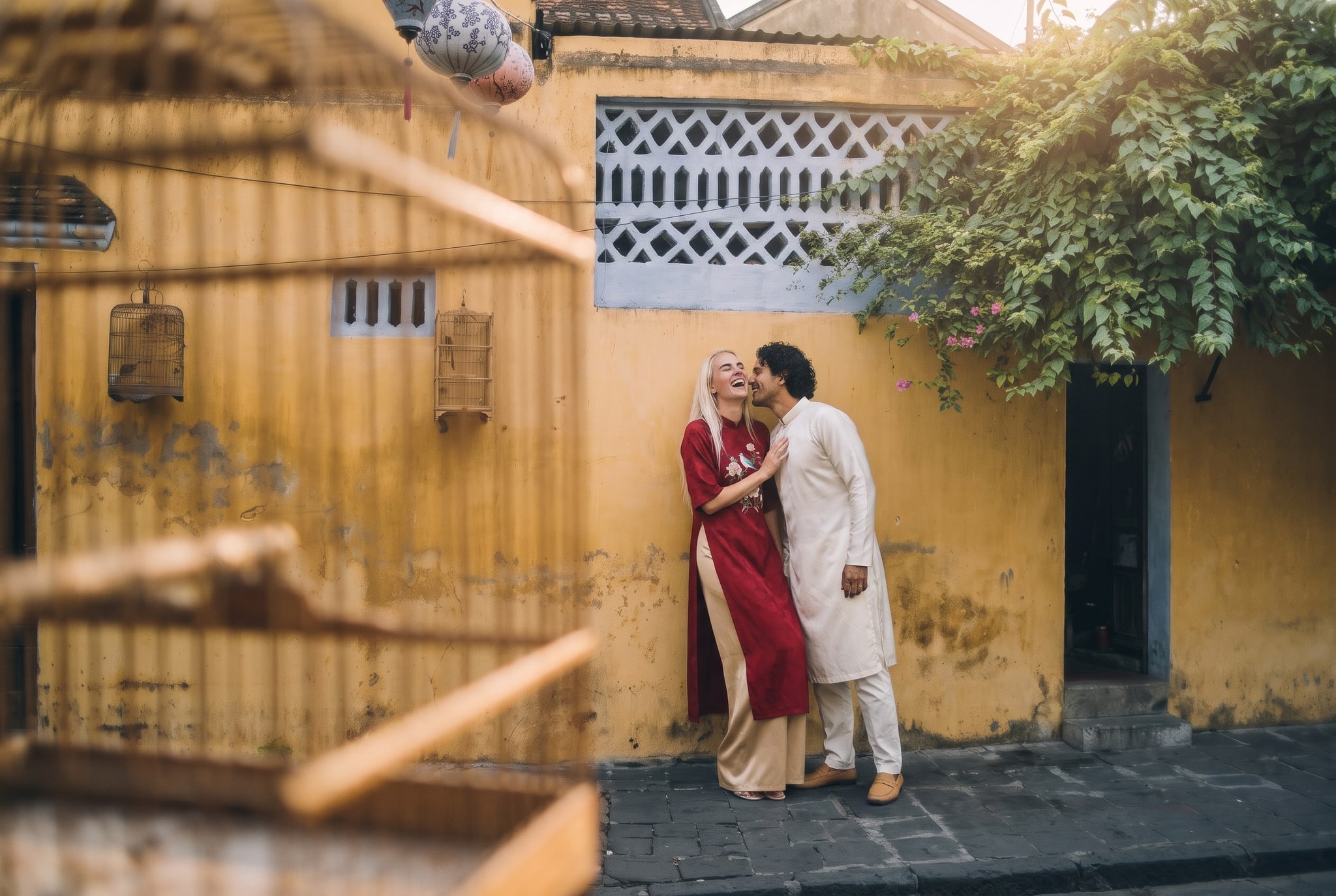
Which Fabrics Actually Photograph Well on Stone and Mist?
Your fabric choice matters more than you think—it's not just about comfort, it's about how light, shadow and moisture render on camera. Khau Pha's famous mist and morning fog are gorgeous backdrops, but they also create soft, directional light that reveals every wrinkle, fabric texture and seam. Tight, smooth fabrics like cotton twill, structured linen blends, and high-thread-count silk catch light evenly and look crisp in post-processing. We avoid pure jersey or knits because they absorb light and photograph flat, especially in overcast conditions common at that elevation.
If you're considering an ao dai for your mountain couple shoot, choose dense silk or silk-cotton blend over gauze or thin crepe—the extra weight means the áo (top layer) holds its shape when you move across uneven ground, and the overlay won't cling to your body when mist settles. Many couples rent ao dai specifically for this reason: tailored rental pieces are cut and lined for structure, unlike casual family ao dai. Trousers or skirts work best in cotton-blend or wool-blend fabrics; avoid elastic waistbands that shift under a styled belt or jacket. If you're wearing Western formal wear, choose a tailored blazer in a weight that doesn't collapse when folded or carried between locations. Denim, twill and compact weaves photograph with clear texture and strong colour saturation even in soft mountain light.
We source fabrics from suppliers in Hà Nội and Sài Gòn, and our stylists have handled thousands of pieces across shoots—we know which weights and weaves survive 4–5 hours of outdoor movement without pilling, fraying or losing shape. Before your booking, we ask about your preferred style (formal, bohemian, traditional, modern) so we can suggest specific fabric types and where to source them, or offer rental pieces we've tested on that exact terrain.
See packages and prices on vietnamphotoshoot.com
Colour Strategy: Why Jewel Tones Beat Pastels at High Elevation
Pastels and whites dominate Instagram couple shoots, but they backfire at Khau Pha. Mist and overcast skies common at 1,000m rob pale colours of contrast—pastels merge into grey stone and fog. We've edited hundreds of frames shot there: deep emerald, sapphire, burgundy, rust and charcoal hold saturation and pop against the landscape. Jewel tones also photograph warmer-toned, making skin look healthier in the soft, cool light at elevation.
Many couples ask: should we match, contrast or complement? Based on shoots we've run, matching tone families (both in navy, both in emerald) works best—it unifies the frame without looking costume-like. If one partner wants a brighter colour, ensure the other wears a deeper neutral (charcoal, deep grey, black) so neither colour overwhelms the frame. Avoid pure white for formal wear at Khau Pha unless you want heavy post-processing to recover detail in the bright fabric; off-white or ivory reads as warm and is more forgiving.
Patterns are tricky. Small, tight patterns (micro-checks, fine stripes, subtle geometric prints) read clearly on camera, but large or bold patterns (big florals, wide stripes, clashing prints) divide the frame and distract from your connection as a couple. We recommend solid-colour primary pieces (áo, jacket, trousers, dress) and patterns only in scarves, belts or secondary layers. Seasonal considerations shift the palette: summer shoots favour cool jewel tones (sapphire, teal, mint), autumn suits rust, ochre and deep plum, winter allows blacks and rich burgundies.
How to Layer Without Looking Bulky (And Still Move Across Rocks)
Layering at Khau Pha means you stay warm but don't sacrifice silhouette. Poor layering makes couples look shapeless—too many bulk pieces and the camera flattens you into a puffed-up mass. Smart layering keeps your fitted line visible while you're protected.
Layering formula we recommend:
- Base: Fitted long-sleeve tee or shirt (cotton-blend or merino, tucked in).
- Mid-layer: Lightweight cardigan, linen jacket, or tailored vest (wear open or unbuttoned to show the base layer and maintain shape).
- Outer layer: Structured blazer or tailored coat (unbutton or remove for close-up frames, keep buttoned for wide shots where the pass is the backdrop).
Each layer should be fitted at the shoulders and chest, not baggy through the body. Avoid oversized sweaters or chunky knits—they hide your couple silhouette. When you move, layers shift; we account for this by scheduling outfit adjustments every 20–30 minutes and checking the frame after each pose. If wind gusts disarrange your top layer, we pause, re-tuck, and re-shoot rather than settle for a messy frame.
Scarves work as a fourth layer if tied close to the neck (avoid long, billowing scarves that catch wind and dominate the frame). Belts over jackets create a defined waist and look intentional, especially for couples where one partner is taller—a belt cinches and balances proportions on camera.
Footwear is non-negotiable: closed-toe shoes with grip. Stone at Khau Pha is wet and uneven. We recommend suede desert boots, leather hiking shoes, or structured leather sneakers. Avoid canvas (too slippery when damp), ballet flats (no ankle support on uneven ground), and heels above 3cm (they sink into soft earth and photograph awkwardly when you're reaching for balance). Many couples pack two pairs: dressy closed-toe shoes for posed frames on stable ground, and hiking-style shoes for movement and steep sections. We photograph the dressy shoes in close-ups, then switch for the journey between locations.
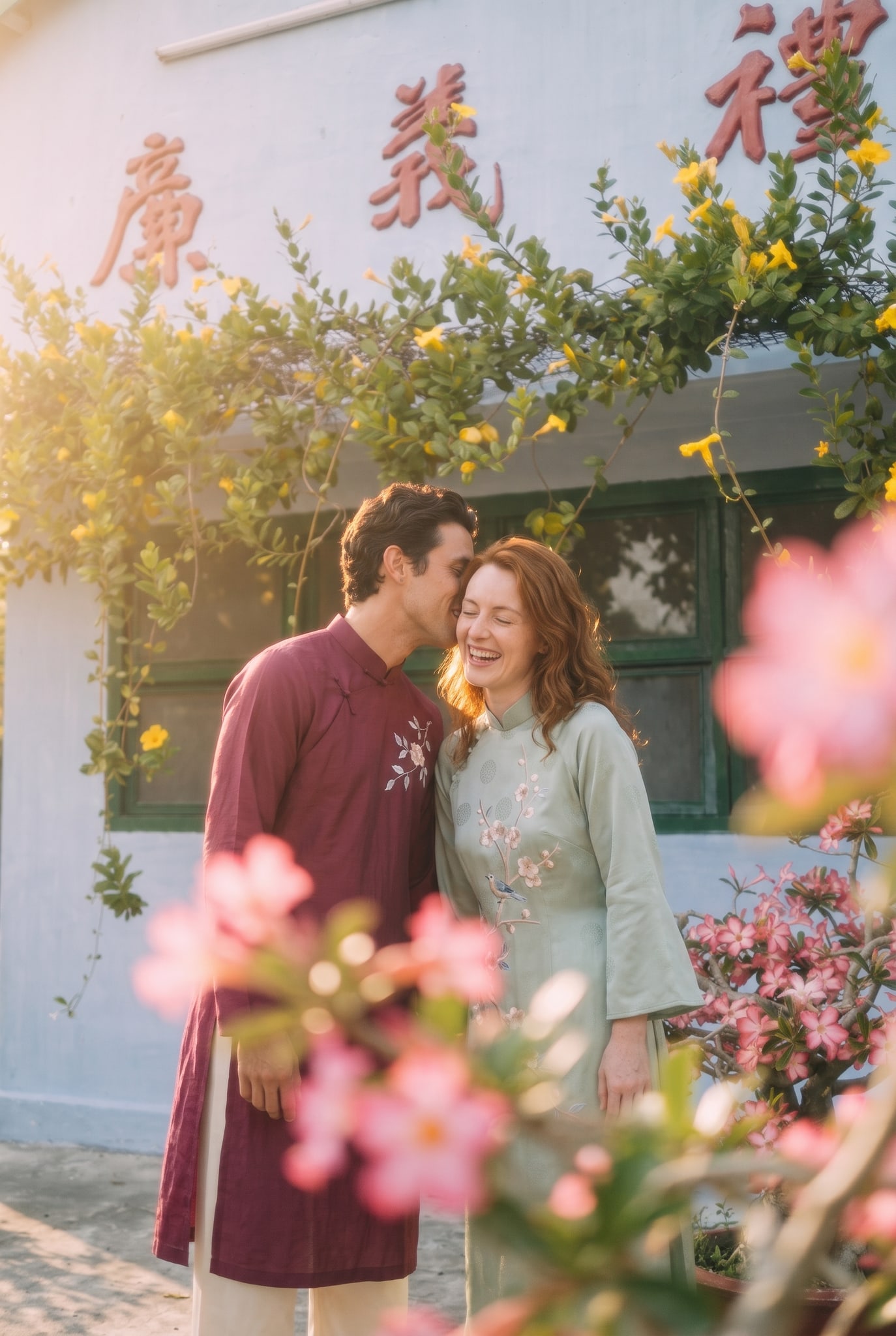
Outfit Timing: How Many Changes Fit in a 5-Hour Session?
Most couples book a pre-wedding and elopement package that includes 5–6 hours on-site. Outfit changes take longer than you'd expect: travel time between locations, adjusting each layer, hair touch-ups in wind, and finding a sheltered spot to change. We schedule realistically: 2–3 outfit changes maximum in 5 hours.
Rough timeline we use:
- Hour 1: Arrival, styling check, 40–50 frames in outfit one (wide shots, interaction poses, establishing the landscape).
- Hour 2: Travel to secondary location (20–30 min walk), shoot 30–40 frames in outfit one (different angle, closer portraits).
- Hour 3: Outfit change (15–20 min in a sheltered spot or our mobile styling kit), 40 frames in outfit two.
- Hour 4: Travel to tertiary location or golden-hour vantage, 40–50 frames in outfit two (softer light, intimacy-focused poses).
- Hour 5: Final outfit change optional, or extend outfit two into golden hour and wrap with sunset frames.
Couples often ask: should we bring a third outfit? Yes, but only if you're comfortable with the tight timeline and brief change windows. Many couples prefer two strong outfits that contrast (e.g., formal Western wear, then ao dai or casual-elegant) rather than three similar looks that dilute the storytelling. Seasonal weather also affects timing: in winter, fingers get cold and wet, and we work faster; in summer, humidity and sweat require more frequent touch-ups.
We carry portable steaming tools, safety pins, fashion tape, and neutral undergarments to manage unexpected gaps or fit issues during changes. A stylist stays with you during every change to ensure nothing is missed and transitions happen on schedule.
Seasonal Shifts: Why Your April Outfit Fails in September
Khau Pha's climate swings dramatically across seasons. April is warm (18–22°C), with occasional mist but mostly clear. September is rainy (14–18°C), with heavy morning fog and unpredictable wind. Your outfit strategy must account for the season you're shooting.
| Season | Temperature | Light | Fabric Weight | Colour Palette | Footwear Priority |
|---|---|---|---|---|---|
| April–May (Spring) | 18–22°C, low humidity | Golden, varied | Lightweight cotton, linen | Pastels work, jewel tones safer | Breathable grip soles |
| June–August (Summer) | 22–26°C, high humidity | Soft/hazy | Breathable blends, moisture-wicking | Jewel tones, cool colours | Moisture-resistant soles |
| September–October (Autumn) | 16–20°C, fog/rain | Soft, directional | Medium-weight cotton, structured wool-blends | Deep jewel tones, rust, burgundy | Waterproof or sealed leather |
| November–February (Winter) | 10–15°C, fog, damp | Cool/grey | Heavier knits, wool, layerable pieces | Charcoal, black, deep jewel tones | Insulated, high-grip soles |
Spring and autumn are our most-booked seasons at Khau Pha because light and temperature balance. Couples planning a spring shoot can wear lighter layers and pastels; those booking autumn or winter must commit to jewel tones and structured, heavier fabrics. Summer is humid and often overcast—colours look muted and sweat shows quickly, so breathable, moisture-wicking blends are essential.
We adjust our styling conversation based on your booked date. A couple booking in August gets different recommendations than one booking in December. This seasonal timing matters because renting or buying an outfit for the wrong season wastes money and results in uncomfortable, poorly-rendered frames.
What to Check Before You Order or Rent
If you're buying an outfit:
- Fit the top and bottoms separately and together; seams shouldn't pull when you move your arms or bend.
- Test fabric stretch and recovery by pinching and releasing; it should spring back within 3 seconds.
- Wash and dry once to see if the colour fades or the garment shrinks; do this a week before, not the day before.
- Try the outfit with your chosen footwear and check proportions in full-length mirror and photos.
If you're renting:
- Confirm the rental shop's return policy and damage clauses; ask specifically about stains from dirt, moisture or makeup.
- Request tailoring if the inseam or jacket length is off by more than 2cm; most rental shops include minor alterations.
- Collect the outfit 2–3 days before your shoot so you have time to identify fit issues and request swaps.
- Bring the original hang tags to the return appointment; missing tags may incur replacement fees.
Before you confirm with us:
- Share your preferred colours, style (formal, casual, bohemian, traditional) and budget with our stylists on WhatsApp.
- Send photos of outfits you love, even if they're not Khau Pha-specific; we'll adapt the aesthetic to the terrain.
- Ask which of our featured rental collections align with your vision and season.
- Confirm the exact date and weather forecast 1 week out; we may shift colour or layer recommendations if conditions change.
We don't charge extra for styling consultations—it's part of our couple photoshoot package. The earlier you start planning outfits with us, the better we can source rental pieces or guide you to shops that stock what you need.
Pages from our team you may need
FAQ
Do I need to buy an ao dai specifically for a mountain shoot, or can I rent?
Renting is smarter for mountain shoots. Rental pieces are tailored and lined for structure, which photographs better on uneven terrain than casual family ao dai. Rental shops in Hà Nội and Sài Gòn have dozens of styles; we help you choose based on your colouring and the season. Ask us on WhatsApp which rental shops we partner with.
What if I'm not comfortable in traditional ao dai?
Many couples choose Western formal wear or casual-elegant outfits instead. A tailored blazer, structured dress, or fitted trousers paired with a silk top photograph just as beautifully at Khau Pha. The key is fitted silhouette and structured fabric, not the style. We've shot equal numbers of couples in ao dai and Western wear—both work.
Can I wear the same outfit for both locations, or do I really need two?
One strong outfit works if you have 3 hours or fewer on-site. For 5+ hours, a second outfit keeps the story visually fresh and lets you adapt to light and terrain changes without repeating poses. Many couples pick a formal outfit and a casual or traditional option to create contrast in the final gallery.
How do I know if my outfit will photograph well before I buy it?
Send us a photo of the outfit on your body in natural light, and we'll flag any issues (colour saturation, fabric texture, silhouette balance). We've seen thousands of outfit combinations—we can predict how it'll render on camera better than you can. WhatsApp a photo and we'll give honest feedback in 24 hours.
What's the weather usually like when I should book?
April–May and September–October have the most stable weather for Khau Pha shoots. Summer (June–August) is humid and often overcast; winter (November–February) is cool and damp but has clearer light some days. Check the forecast 1 week before your shoot and ask us if we'd recommend rescheduling. We've cancelled two shoots in 5 years due to unsafe wind or flooding.
Can I wear jewelry or a watch?
Simple, fitted jewelry photographs well (thin necklaces, small earrings, delicate bracelets). Avoid large pendant necklaces (they catch wind and distract), chunky bracelets (they restrict arm movement), and watches (they catch light and date the frames). Gold and silver both work; choose whichever matches your outfit's metal tone if there is one. --- See packages and prices on vietnamphotoshoot.com
Pre-Wedding & Elopement
Inclusions, prices and booking are on our booking site.
FAQ
Do I need to buy an ao dai specifically for a mountain shoot, or can I rent?
Renting is smarter for mountain shoots. Rental pieces are tailored and lined for structure, which photographs better on uneven terrain than casual family ao dai. Rental shops in Hà Nội and Sài Gòn have dozens of styles; we help you choose based on your colouring and the season. Ask us on WhatsApp which rental shops we partner with.
What if I'm not comfortable in traditional ao dai?
Many couples choose Western formal wear or casual-elegant outfits instead. A tailored blazer, structured dress, or fitted trousers paired with a silk top photograph just as beautifully at Khau Pha. The key is fitted silhouette and structured fabric, not the style. We've shot equal numbers of couples in ao dai and Western wear—both work.
Can I wear the same outfit for both locations, or do I really need two?
One strong outfit works if you have 3 hours or fewer on-site. For 5+ hours, a second outfit keeps the story visually fresh and lets you adapt to light and terrain changes without repeating poses. Many couples pick a formal outfit and a casual or traditional option to create contrast in the final gallery.
How do I know if my outfit will photograph well before I buy it?
Send us a photo of the outfit on your body in natural light, and we'll flag any issues (colour saturation, fabric texture, silhouette balance). We've seen thousands of outfit combinations—we can predict how it'll render on camera better than you can. WhatsApp a photo and we'll give honest feedback in 24 hours.
What's the weather usually like when I should book?
April–May and September–October have the most stable weather for Khau Pha shoots. Summer (June–August) is humid and often overcast; winter (November–February) is cool and damp but has clearer light some days. Check the forecast 1 week before your shoot and ask us if we'd recommend rescheduling. We've cancelled two shoots in 5 years due to unsafe wind or flooding.
Can I wear jewelry or a watch?
Simple, fitted jewelry photographs well (thin necklaces, small earrings, delicate bracelets). Avoid large pendant necklaces (they catch wind and distract), chunky bracelets (they restrict arm movement), and watches (they catch light and date the frames). Gold and silver both work; choose whichever matches your outfit's metal tone if there is one. --- [✨ See packages and prices on vietnamphotoshoot.com](/go/pre-wedding-photoshoot)
More from the team
Boho pre-wedding photoshoot in Vietnam: Hanoi, Saigon, Hoi An
Boho pre-wedding shoots mix romantic, free-spirited aesthetics with Vietnam's landscapes and heritage sites. We run full-day sessions in three cities, handling styling, makeup, location scouts and edits.
Avoid crowds at Hoang Su Phi rice terraces: timing for wedding shoots
Hoang Su Phi's terraced landscape draws couples and tour buses in equal measure. We show how to shoot there alone, when to arrive, and what to arrange with us before you go.
Photography rules at Con Dao beaches: permits, drones and what to check
Con Dao's beaches demand prep before you shoot—permits, drone zones and tide timing all affect your day. We share what the Cáo Studio team verifies on every booking.