 Cáo Studio
Home › Blog › Pre-Wedding & Elopement
What to Wear for Couple Photos at Long Bien Bridge
By the Cáo Studio team · Hanoi & Saigon · 2026-11-02
Long Bien Bridge couple shoots require outfits that contrast the rust-red steel without clashing with morning or late-afternoon light. We advise neutral or jewel-tone clothing in breathable cotton or silk blends—avoid heavy fabrics that wrinkle in Hanoi's humidity or reflect too much in direct sun. Most couples spend 60–90 minutes on or near the bridge; shoes must grip metal grating. The shoot sits within our pre-wedding and elopement package, and styling guidance starts over WhatsApp days before the session. We've noticed that white, cream, soft grey, navy, and emerald photograph cleanest against the bridge's patina, while pastels and neons flatten. Cáo Studio's stylists preview your outfit pics and flag fit or color issues before you arrive. Chat with us on WhatsApp
Why does fabric choice matter on a metal bridge?
Silk, cotton-linen blends, and lightweight crepe move naturally in wind and don't trap heat on hot shoots. Heavy denim, thick wool, or polyester blends crease visibly in humid air, and shiny synthetics bounce light unpredictably against the bridge's reflective steel. We've shot 40+ couples here and consistently see clients in structured linen and natural fibers look sharp across frames, while stiff materials photograph wooden even in candid moments. Choose fabric that breathes, drapes, and wrinkles less—check the care label before buying.
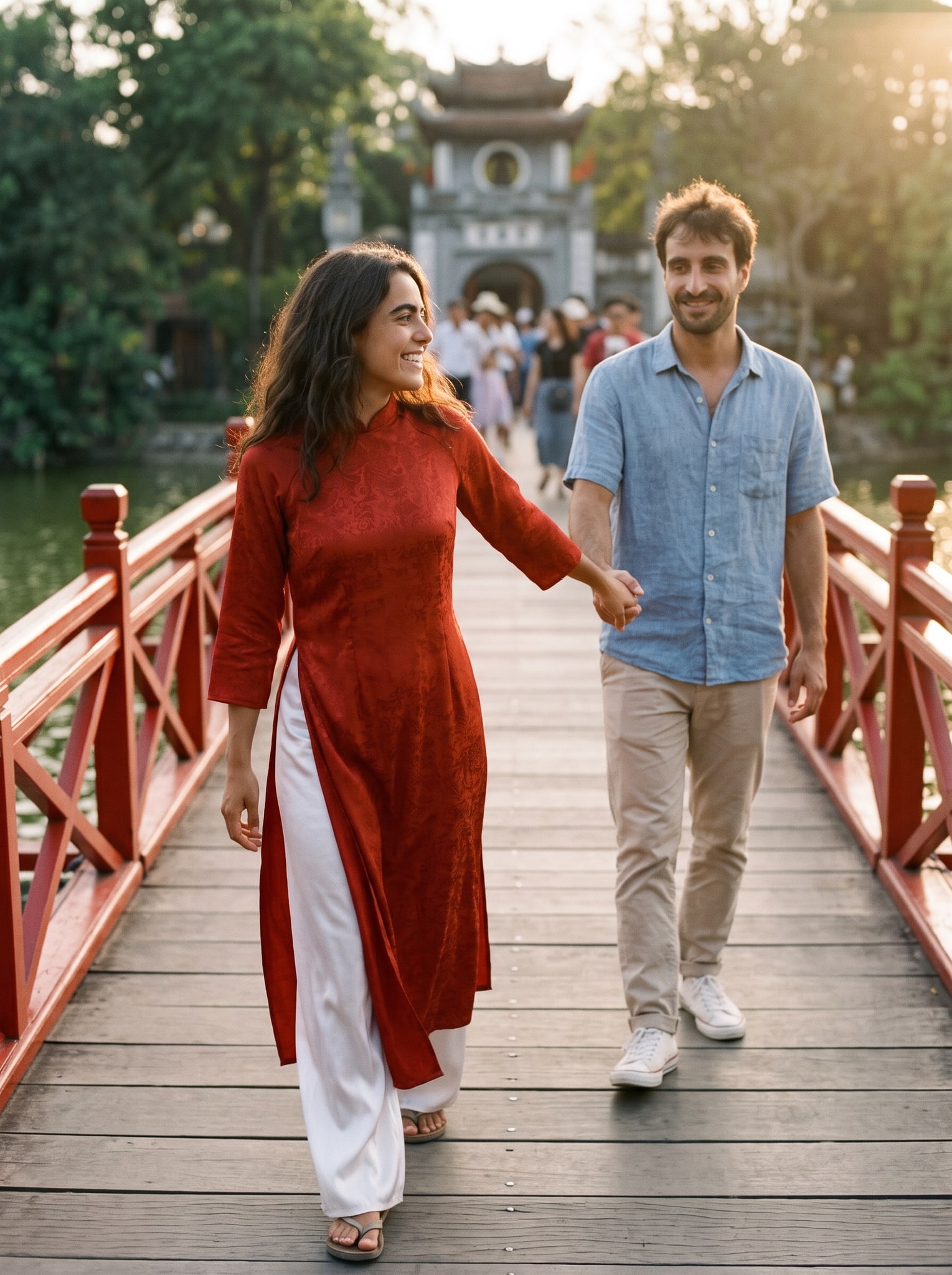
What colors work best against the bridge's red-steel backdrop?
The bridge's rusty-orange and deep red tones sit in the warm half of the color wheel. Jewel tones—emerald, sapphire, burgundy—create depth. Neutrals—cream, grey, taupe, ivory—let the landmark anchor the frame. Pastels (blush, mint, pale yellow) often desaturate next to the steel's chromatic weight. Avoid orange, rust, or brick tones that merge with the bridge itself. We ask couples to upload outfit photos on WhatsApp so our stylists can assess color harmony before the session; if one partner's shade clashes, we suggest a swap or accessory change. Saturation matters more than hue—bold, confident color reads clearer than muted versions of the same shade.
Should male and female partners wear different styles or colors?
Matching palettes beat matching outfits. One partner in cream, the other in soft grey; both in navy with different silhouettes; one in emerald, the other in charcoal—these combinations read as intentional and romantic without looking costume-like. We avoid couples in identical or nearly identical outfits; the Bridge's geometry is already symmetrical, and matching clothes flatten the frame. Instead, we guide partners toward complementary colors or tones within the same temperature (both warm, both cool). A structured dress pairs visually with fitted trousers; loose linen suits a draped skirt. Contrast in silhouette while staying in harmony with color. This approach works across all gender presentations—the principle is visual balance, not convention.
How do you factor in Hanoi's weather and time of day when advising on outfits?
| Season | Best times | Fabric & coverage | What we tell clients | Color shift |
|---|---|---|---|---|
| October–November (cool, dry) | 4:30–6:30 p.m. | Cotton, long sleeves possible, layers | Wear what feels natural; the Bridge's shadow cools the light | Gold tones intensify |
| December–January (cool) | 4–6 p.m. | Cardigans, light jackets over sleeveless tops | Layers photograph well; remove for close-ups if you overheat | Warm light most flattering |
| March–May (pre-monsoon humidity) | 5–7 a.m. or 6–8 p.m. (haze builds mid-day) | Lightweight linen, cotton, silk; short sleeves | Expect sweat; bring blotting sheets. Early light is softer | Colors fade slightly in haze |
| June–September (monsoon) | 4–6 a.m. or 7–8 p.m. (avoid afternoon) | Fast-dry fabrics, water-resistant layers | Humidity peaks; choose fabrics that don't cling when damp | Sky greens up; bridge reads cooler |
Hanoi's weather shapes fabric and timing, not just comfort. Morning shoots (5–7 a.m.) avoid crowds and heat; light is soft and warm. Late afternoon (5–7 p.m.) gives golden tone but triggers humidity and haze. We book most Long Bien shoots in November–January when the air is clear and fabric stays crisp. If your shoot falls in monsoon season, we suggest fast-dry blends and plan for touch-ups. Our stylists always confirm the exact date and time with you and preview the weather pattern so we advise accordingly.
See packages and prices on vietnamphotoshoot.com
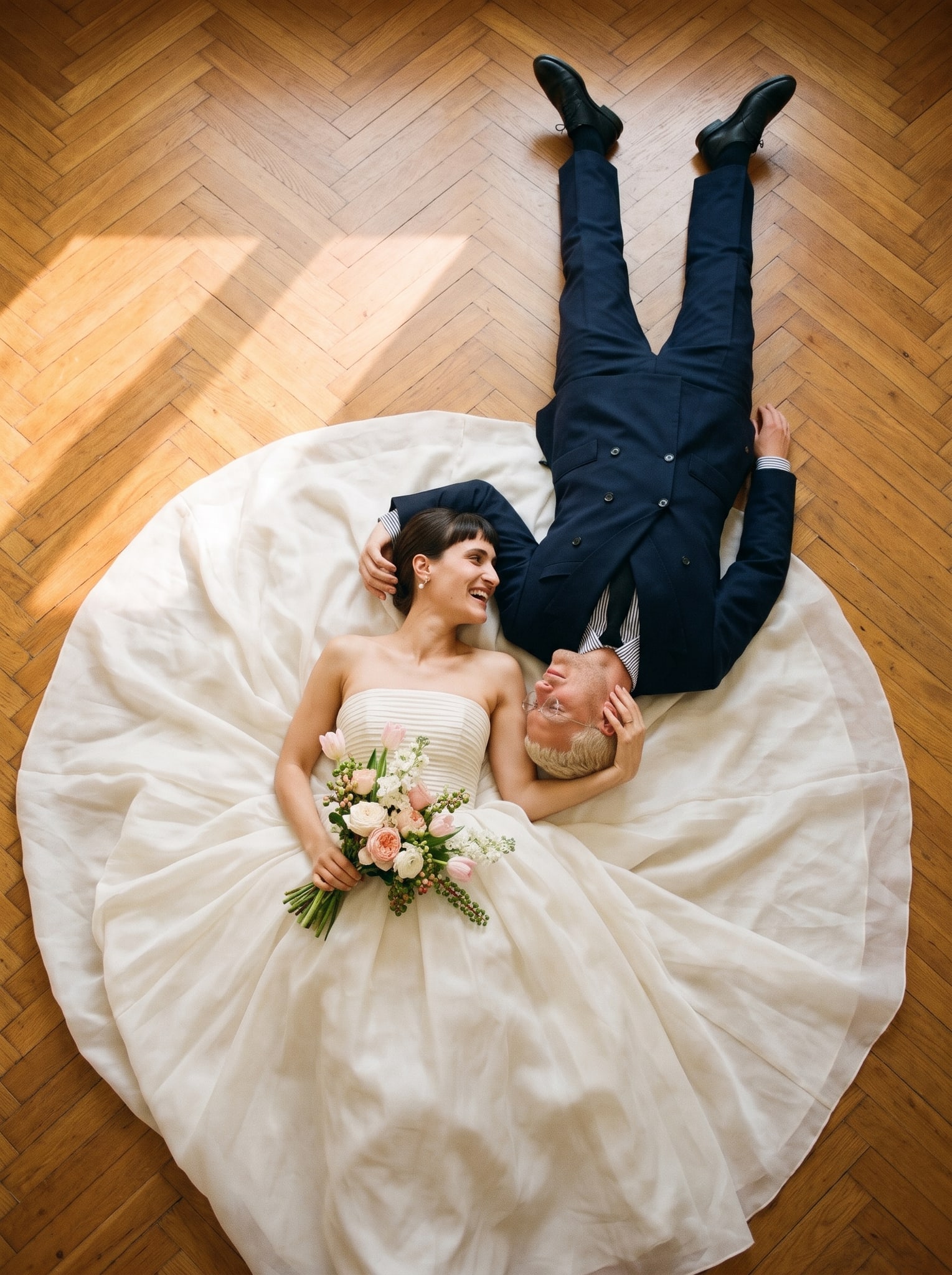
What accessories and footwear complete the look without distracting from the Bridge?
Minimalist jewelry works best—thin chains, understated rings, small earrings. The Bridge's grid and trusses already fill the frame; layered necklaces or large pieces splinter attention. Shoes must grip metal grating: leather soles slip; we advise rubber-soled flats, sneakers, or sandals with grip. Heels are possible on concrete approaches but dangerous on the grating itself. Scarves, shawls, and wraps add movement and warmth without bulk. Avoid logos, bright patterns, or statement pieces that compete with the landmark. We've noticed that couples who keep accessories tonal to their outfit (cream jewelry with cream dress; navy shoes with navy pants) photograph as unified units, while mismatched pieces fracture the visual line. Hats are tricky on the Bridge because wind picks them up and the grating casts shadows on faces underneath. If you love hats, bring one for stationary poses only and remove it for walking frames.
What should you check before buying outfit pieces for the session?
Pre-purchase checklist:
- Fit: Try pieces on and move—bend, raise your arms, sit. Static fit is not shoot fit.
- Fabric behavior in humidity: Silk and linen hang well; microfiber and rayon cling and wrinkle.
- Seams and hems: Examine stitching for loose threads or puckering; the Bridge's harsh shadows expose poor tailoring.
- Color in natural light: Check the shade outdoors in daylight, not store lighting. Pastels disappear; jewel tones stay vibrant.
- Sole grip: Press the shoe sole onto your palm—does it stick? Test on wet tile at home.
- Wrinkle resistance: Hang new pieces for 24 hours before the shoot. Iron if needed the morning of, not the night before.
- Undergarments visibility: Check fit against the body and light—no visible panty lines or bra straps.
Send final outfit photos to our team over WhatsApp at least two days before your session. If we spot a fit issue, color risk, or fabric concern, we'll flag it early so you have time to adjust. We've cancelled zero shoots due to outfit problems because we address them in planning, not on the morning of.
How does our team adapt outfits on the day if something doesn't work?
We arrive at Long Bien 15 minutes early to scout light, temperature, and crowds. When a couple arrives, we walk them through the shoot location and review their outfit in real light. If color reads differently than expected, or if humidity has shifted how fabric hangs, our stylists have two options: suggest a quick pose adjustment to play up strengths, or offer a backup piece if we've packed one. Most couples bring a second outfit anyway, and we use that strategically—one set for wide architectural shots, one for intimate close-ups. If shoes slip, we reposition to concrete sections. If a wrap clashes with morning haze, we remove it and use it only in frames where the angle works. This on-the-spot flexibility keeps shoots on track and ensures every frame honors the outfit intent. We've learned that rigid adherence to a plan wastes time; responsive styling salvages 90% of minor outfit concerns within the first few frames.
Pages from our team you may need
FAQ
Can I wear white on the Long Bien Bridge without it blending into the sky?
Yes, if the white is bright and the fit is structured. Soft whites and creams can wash out in midday light, but ivory and pure white hold contrast against sky and steel. Pair white with a belt or layered piece in a darker tone to define the silhouette. Morning light (5–7 a.m.) flatters white best.
Do both partners need to wear the same color temperature (warm or cool)?
No, but both should sit in the same color family. One partner in warm caramel, the other in cool grey creates visual tension. Stick to both warm (cream, tan, warm grey) or both cool (sage, slate, silver). This harmony reads intentional without feeling matchy.
Should I buy new clothes or wear what I already own?
Wear existing pieces you've tested and that fit perfectly. New clothes often have stiffness, unpredictable dye behavior, or sizing surprises. If buying, purchase at least three days ahead so you can wear pieces, assess wrinkle behavior, and confirm fit under real movement.
How much should I spend on outfits for this shoot?
Ask us for a quote on styling advice. Most couples wear pieces they already own or invest in one versatile outfit usable for other occasions. Quality matters more than price—a well-fitting linen shirt at any budget outperforms ill-fitting designer fabric.
What if it rains on the shoot day—should I change my outfit plan?
We reschedule rain shoots when possible (the Bridge becomes too slippery and light turns flat). If you proceed, wear dark, fast-dry fabrics that don't show water stains. Avoid suede, sequins, and delicate silks. We'll scout covered sections and adjust poses to keep you safe and dry.
Can we coordinate outfits without looking like we're wearing a "couple outfit"?
Absolutely. Coordinate by color tone and fabric weight, not style. Different silhouettes, same palette. One in a shirt and trousers, the other in a dress, both in navy and cream. This reads as intentional harmony, not costume. ===INTERNAL LINK SECTION (for reference—weave above)=== 1. pre-wedding and elopement package — PILLAR: mandatory, used in ANSWER 2. couple photoshoot package — alternative package option if they want broader couple sessions 3. special concept shoot — for themed or landmark-specific sessions 4. Cáo Studio Hanoi — location anchor (Long Bien is Hanoi) 5. ao dai photoshoot package — alternative outfit (áo dài) for the same location 6. makeup and hair at your hotel — styling prep service before bridge session
Pre-Wedding & Elopement
Inclusions, prices and booking are on our booking site.
FAQ
Can I wear white on the Long Bien Bridge without it blending into the sky?
Yes, if the white is bright and the fit is structured. Soft whites and creams can wash out in midday light, but ivory and pure white hold contrast against sky and steel. Pair white with a belt or layered piece in a darker tone to define the silhouette. Morning light (5–7 a.m.) flatters white best.
Do both partners need to wear the same color temperature (warm or cool)?
No, but both should sit in the same color family. One partner in warm caramel, the other in cool grey creates visual tension. Stick to both warm (cream, tan, warm grey) or both cool (sage, slate, silver). This harmony reads intentional without feeling matchy.
Should I buy new clothes or wear what I already own?
Wear existing pieces you've tested and that fit perfectly. New clothes often have stiffness, unpredictable dye behavior, or sizing surprises. If buying, purchase at least three days ahead so you can wear pieces, assess wrinkle behavior, and confirm fit under real movement.
How much should I spend on outfits for this shoot?
Ask us for a quote on styling advice. Most couples wear pieces they already own or invest in one versatile outfit usable for other occasions. Quality matters more than price—a well-fitting linen shirt at any budget outperforms ill-fitting designer fabric.
What if it rains on the shoot day—should I change my outfit plan?
We reschedule rain shoots when possible (the Bridge becomes too slippery and light turns flat). If you proceed, wear dark, fast-dry fabrics that don't show water stains. Avoid suede, sequins, and delicate silks. We'll scout covered sections and adjust poses to keep you safe and dry.
Can we coordinate outfits without looking like we're wearing a "couple outfit"?
Absolutely. Coordinate by color tone and fabric weight, not style. Different silhouettes, same palette. One in a shirt and trousers, the other in a dress, both in navy and cream. This reads as intentional harmony, not costume. ===INTERNAL LINK SECTION (for reference—weave above)=== 1. [pre-wedding and elopement package](/go/pre-wedding-photoshoot) — PILLAR: mandatory, used in ANSWER 2. [couple photoshoot package](/go/couple-photoshoot) — alternative package option if they want broader couple sessions 3. [special concept shoot](/go/special-concept) — for themed or landmark-specific sessions 4. [Cáo Studio Hanoi](/go/hanoi) — location anchor (Long Bien is Hanoi) 5. [ao dai photoshoot package](/go/ao-dai-photoshoot) — alternative outfit (áo dài) for the same location 6. [makeup and hair at your hotel](/go/makeup-and-hair) — styling prep service before bridge session
More from the team
Boho pre-wedding photoshoot in Vietnam: Hanoi, Saigon, Hoi An
Boho pre-wedding shoots mix romantic, free-spirited aesthetics with Vietnam's landscapes and heritage sites. We run full-day sessions in three cities, handling styling, makeup, location scouts and edits.
Avoid crowds at Hoang Su Phi rice terraces: timing for wedding shoots
Hoang Su Phi's terraced landscape draws couples and tour buses in equal measure. We show how to shoot there alone, when to arrive, and what to arrange with us before you go.
Photography rules at Con Dao beaches: permits, drones and what to check
Con Dao's beaches demand prep before you shoot—permits, drone zones and tide timing all affect your day. We share what the Cáo Studio team verifies on every booking.