 Cáo Studio
Home › Blog › Pre-Wedding & Elopement
What to Wear for Couple Photos at Mui Ne Fishing Village
By the Cáo Studio team · Hanoi & Saigon · 2026-11-02
Mui Ne fishing village shoots need light, breathable fabrics that move in salt-laden wind and don't wrinkle visibly in 90-minute sessions. Cotton blends, linen, and raw silk work; thick, stiff synthetics trap sweat and catch harsh rim-light. Neutral earth tones—cream, tan, soft grey—complement the rust-red salt ponds and blue water without competing. Avoid pure white (glare), black (heat sink, no separation from shadow), and busy prints. We dress one partner in a solid, flowing layer and the other in tone-on-tone texture; this creates depth without visual chaos at the 15–25mm focal lengths we use in tight fishing-village alleys. Cáo Studio stylists help pairs coordinate on WhatsApp before arrival; most guests rent áo dài for one outfit and bring casual wear for the second. Ask us for a quote on WhatsApp for outfit consultation included in our pre-wedding and elopement package. Chat with us on WhatsApp
Why Fabric Matters More Than Color in Coastal Humidity
Mui Ne in March–May hits 35°C with 70% humidity. Cotton-poly blends stay wrinkle-resistant for 90 minutes; 100% linen creases within the first 20 minutes of walking salt-pan paths. We've watched guests' silk dresses pool at the hem when they sit on fishing nets because the fabric doesn't have body. Synthetic fabrics like polyester and rayon trap sweat and show water marks under our flash. Natural breathables—cotton, linen-cotton mixes, raw silk—let air move and dry fastest if you splash in tidal pools (which happens often). Our stylists pack a hand steamer and check fits every 15 minutes; wrinkled fabric reads as sloppy in close-ups. Choose garments with a soft drape, not stiff structure. Avoid anything dry-clean-only; salt spray stains it permanently.
Which Colors Actually Read Well Against Rust Ponds and Nets
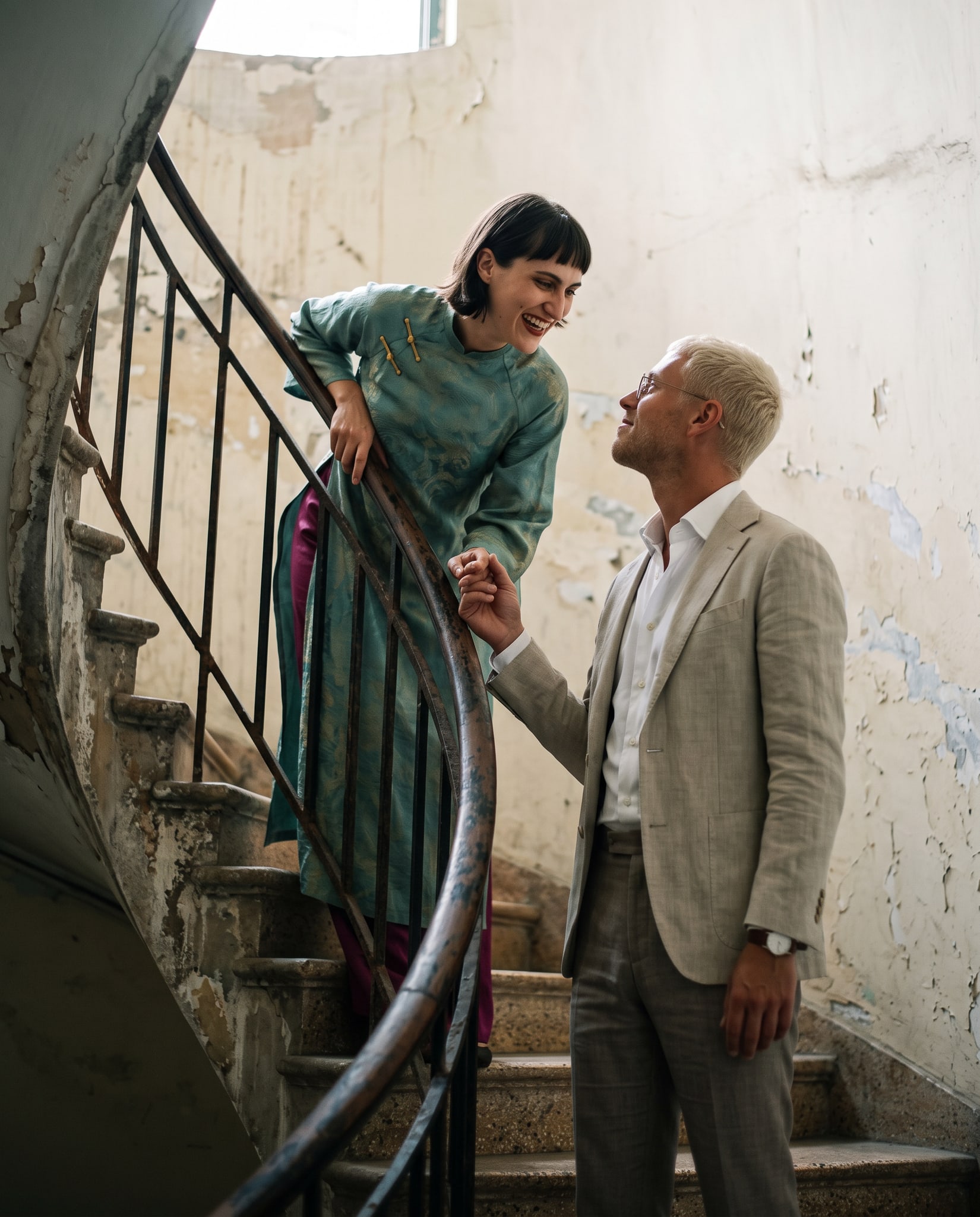
Mui Ne's salt ponds are burnt orange-red. Dark blue water sits behind wooden fishing boats painted brown and grey. A couple in solid cream stands out naturally; one in pale blush next to one in warm sage creates tonal harmony without matching. We avoid matching outfits—it reads as costume-y in editorial frames. Bright colors (hot pink, electric blue) over-saturate in our post-processing because the scene is already vivid. Jewel tones—emerald, sapphire, burgundy—work for one partner but need a neutral opposite. We've shot couples in all-white linen; it works only if one wears a unbuttoned overshirt in taupe or grey to add shape. Blacks and deep navies absorb light; in the 5:30 am start times we prefer, they become silhouettes. Warm greys, taupes, warm whites, and dusty earth tones photograph as intentional, not washed-out. Our color mood board for Mui Ne always leans towards ochre, sage, cream, soft grey, and warm brown—the palette of driftwood and salt-dried vegetation.
See packages and prices on vietnamphotoshoot.com
Layering Strategy: Why One Flowing Piece Beats Two Tight Layers
Our stylists layer deliberately at Mui Ne. A fitted tank or slip dress under an open, oversized linen shirt creates movement and shape without bulk. The outer layer catches wind and creates leading lines in wide shots; the fitted layer anchors the silhouette in tight frames. Avoid two fitted pieces (tight dress + denim jacket)—they flatten your form under humidity. A loose cotton tunic over neutral pants reads as editorial; a tight top under a tight overshirt reads as resort casual (fine for some couples, not editorial). We style the female partner in one flowing piece (slip dress, loose trousers, linen shirt dress) and the male partner in tonal texture (open linen shirt over a simple tank, lightweight chinos). This asymmetry photographs better than his-and-hers coordinating outfits. Layers also solve the 90-minute comfort problem: one guest sheds the outer layer by minute 60 when sun heat peaks, and the outfit still reads complete in photos.
What to Check Before You Order or Rent Anything
| Item Type | Who It's For | What to Verify | Why It Matters |
|---|---|---|---|
| Linen shirt (men) | Any body type; flowing look needed | Seam quality, color fastness to salt spray | Cheap linen pills after one wear; salt fades reds and blacks fast |
| Slip dress or tank dress (women) | Lean to curvy frames; dress code comfort | Hem length on you (don't order without trying), undergarment visibility | Salt shrinks cotton; hems ride up when wet |
| Linen trousers | Both partners; neutral base | Inseam accuracy, linen blend % (avoid 100% unless pre-washed) | 100% linen wrinkles in 10 minutes; blends stay presentable |
| Casual button overshirt | Both partners; layering piece | Oversized fit (chest 2–4 inches loose), sleeve length | Tight sleeves limit arm movement in walking shots |
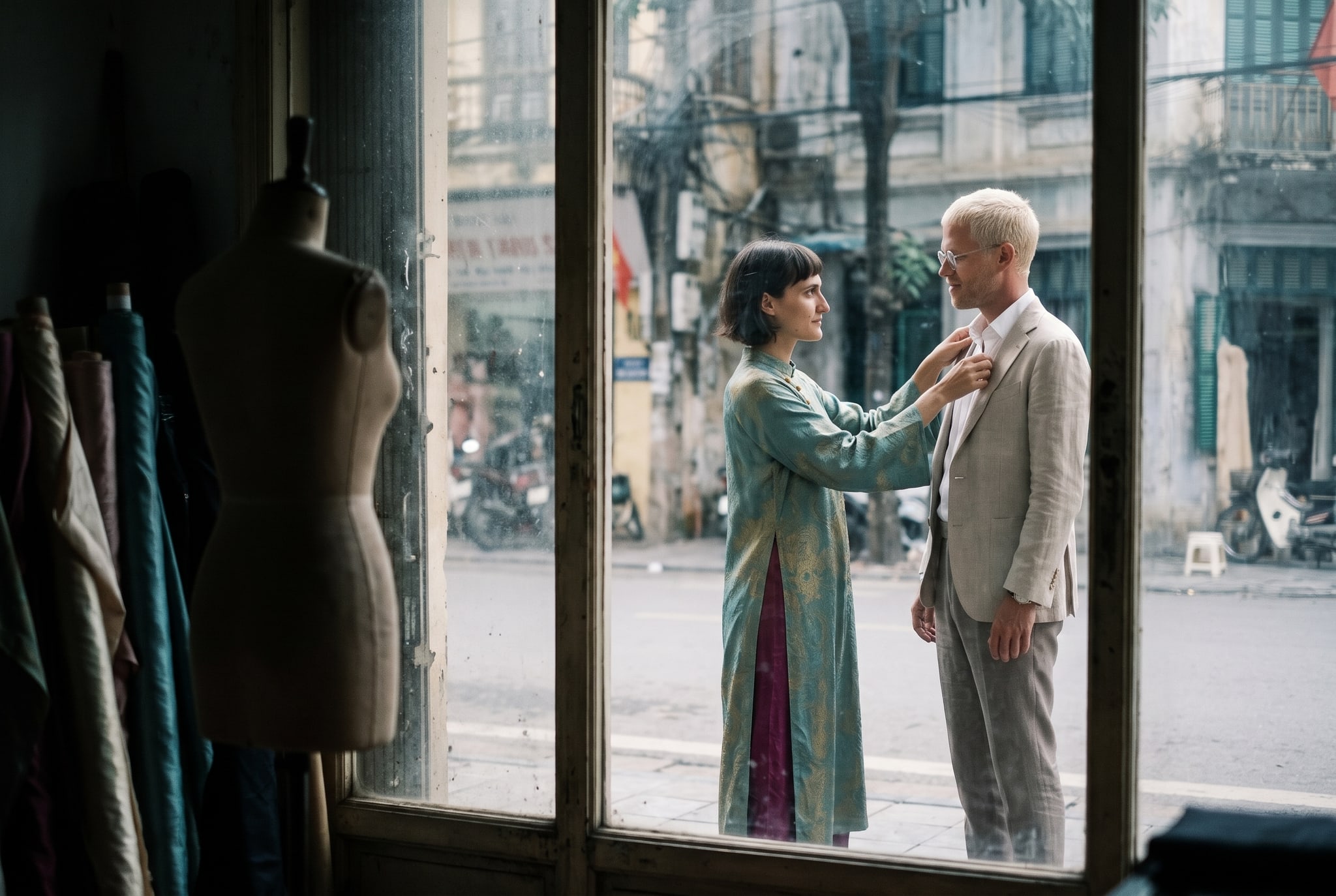
| Rental áo dài | Couples wanting cultural outfit | Tailor fit in person (don't mail order); color in sunlight | Loose áo dài moves beautifully; tight ones restrict posing |
Check before ordering: Is the fabric a natural breathable blend (at least 60% cotton, linen, or silk)? Can you move your arms fully? Does the hem sit where you want after a squat? Will the color hold in sun—test by holding it to daylight, not indoor light. For rentals, confirm the tailor will alter hem and bust the week before your shoot, not the morning of. We've had guests arrive with unaltered áo dài and we spend 30 minutes pinning instead of shooting.
Real Timeline: What We See Hour by Hour and How Outfit Choices Play Out
We arrive at Mui Ne fishing village at 5:15 am. The couple meets us in casual wear. By 5:45 am, we're in the salt marshes; light is low and soft. Fitted dark clothes absorb this light and read as silhouettes; flow and light colors pop. By 6:30 am, the couple changes into a second outfit (often an áo dài, sometimes coordinated casual wear). We shoot until 7:30 am, then break for coffee and outfit swap. The third outfit—if booked—goes on by 8:00 am, and we shoot until 9:00 am, when heat and light become harsh. Here's where outfit choice fails: tight synthetic fabrics begin clinging by 7:30 am; wrinkles set in around outfit change two; bright colors that looked fresh at 5:45 am appear blown-out by 8:30 am. We've learned to bring a misting bottle and cold press cloth; stylists use them every 20 minutes. Linen and cotton-blend outfits stay camera-ready; tight or synthetic pieces don't. One couple wore matching white polyester shirts; by 7:00 am, visible sweat marks appeared despite cool morning air. Another wore linen separates with a flowing overshirt; zero wrinkles, no sweat show, three complete outfit changes—all because the fabric breathed.
Should You Rent or Bring Your Own? When Each Makes Sense
Renting an áo dài in Saigon or Hanoi costs less than airfreight and fits better when tailored locally. We recommend renting for one outfit if you don't own áo dài; the tailoring takes one week and ensures proper fit. Bring your own casual wear—most guest clothes travel fine and fit better than typical rental inventory. If you own linen or silk pieces, bring them; if you're buying new, source locally in Vietnam (Saigon's Bến Thành Market or Hanoi's Old Quarter have linen shops cheaper than shipping from abroad). Rental stores near our Saigon studio can deliver áo dài to your hotel by day two. For Hanoi pre-wedding shoots in rural areas (Ninh Bình, Hà Giang), rent locally or bring neutral casual wear; there's less tourism infrastructure outside the city. Never order wedding attire online from abroad without a final fitting; sizing runs tight, and alterations take weeks we don't have.
What to Check Before You Buy
Fabric content: At least 60% natural fiber (cotton, linen, silk). Avoid polyester-heavy blends.
Fit test: Raise arms fully, squat, sit cross-legged. The garment must move with you.
Wrinkle recovery: Hang overnight after wear. If creases persist, it's not linen-blend or cotton.
Color in daylight: Hold it to a window, not indoor light. Does it match your photo mood?
Rental lead time: Book áo dài tailoring two weeks before your shoot date. Local tailors need one week.
Salt-water resilience: If unsure, text us a photo on WhatsApp; our stylists spot high-risk fabrics instantly.
How We Style You on the Day
We send outfit photos and fabric swatches via WhatsApp three days before your shoot. Our stylists confirm colors, fit, and layering strategy with you live. If something doesn't read well in daylight, we source a backup from our styling rails (we hold neutral, earth-tone basics in all sizes). On arrival, you change into your first outfit in a private hotel space or car. We steam, check fit, adjust undergarments, and add accessories (minimal—one necklace, one bracelet per person). By 5:45 am, you're ready. We photograph for 45 minutes, then review frames on the camera. If wrinkles or sweat show, we fix them before outfit two. Most couples need zero outfit changes after setup—the planning works. Occasionally, we swap one piece (swap a fitted shirt for a loose overshirt if the fit reads tight) mid-shoot; this takes five minutes and happens in 10% of sessions. We've learned that couples who follow our fabric and color guidance need no fixes. Those who ignore feedback and bring synthetic or tight clothing need constant steaming and restyling.
For your couple photoshoot package, outfit planning is included. We guide every step on WhatsApp—no surprises on the day.
FAQ
Can I wear jeans and a T-shirt to a Mui Ne fishing village shoot?
Yes, if they're quality basics: soft denim, cotton T-shirt, and a linen overshirt for flow. Avoid stiff, dark denim; it reads as tourist casual, not intentional. Pair them with earth-tone tones and you'll photograph well.
Will my white linen outfit get dirty in the salt marshes?
Not permanently. Salt dries light and brushes off. We've shot hundreds of guests in cream and white linen; washing with fresh water at your hotel removes salt completely. Avoid white on very damp paths where you'll sink into mud; salt marshes are shallow and dry underfoot.
Should both of us wear the same color?
No. One solid, one texture or one solid in a different tone photographs better. Matching outfits read as costume-like in editorial frames. We recommend one neutral, one warm tone (cream and tan, grey and sage, white and warm brown).
How many outfits do I need?
Our standard pre-wedding shoot includes two outfit changes. Most couples do one casual wear and one áo dài. Three outfits takes 90 minutes and works only if you arrive rested; we don't recommend three unless you've shot before.
Can I bring clothes from home or do I need to buy new ones?
Bring good basics from home. If you own linen, cotton blends, or silk in earth tones, pack them. Buy only if you don't have breathable fabrics. Vietnam's fabric markets (Saigon, Hanoi) are cheaper than shipping new clothes from abroad.
What accessories should I wear?
Minimal. One delicate necklace or earrings per person. Avoid large jewelry, watches, or rings (they distract and catch light). Simple is editorial; bold is tourist. We carry backup necklaces and bracelets on set if you want to add texture.
Pre-Wedding & Elopement
Inclusions, prices and booking are on our booking site.
FAQ
Can I wear jeans and a T-shirt to a Mui Ne fishing village shoot?
Yes, if they're quality basics: soft denim, cotton T-shirt, and a linen overshirt for flow. Avoid stiff, dark denim; it reads as tourist casual, not intentional. Pair them with earth-tone tones and you'll photograph well.
Will my white linen outfit get dirty in the salt marshes?
Not permanently. Salt dries light and brushes off. We've shot hundreds of guests in cream and white linen; washing with fresh water at your hotel removes salt completely. Avoid white on very damp paths where you'll sink into mud; salt marshes are shallow and dry underfoot.
Should both of us wear the same color?
No. One solid, one texture or one solid in a different tone photographs better. Matching outfits read as costume-like in editorial frames. We recommend one neutral, one warm tone (cream and tan, grey and sage, white and warm brown).
How many outfits do I need?
Our standard [pre-wedding shoot](/go/pre-wedding-photoshoot) includes two outfit changes. Most couples do one casual wear and one áo dài. Three outfits takes 90 minutes and works only if you arrive rested; we don't recommend three unless you've shot before.
Can I bring clothes from home or do I need to buy new ones?
Bring good basics from home. If you own linen, cotton blends, or silk in earth tones, pack them. Buy only if you don't have breathable fabrics. Vietnam's fabric markets (Saigon, Hanoi) are cheaper than shipping new clothes from abroad.
What accessories should I wear?
Minimal. One delicate necklace or earrings per person. Avoid large jewelry, watches, or rings (they distract and catch light). Simple is editorial; bold is tourist. We carry backup necklaces and bracelets on set if you want to add texture.
More from the team
Boho pre-wedding photoshoot in Vietnam: Hanoi, Saigon, Hoi An
Boho pre-wedding shoots mix romantic, free-spirited aesthetics with Vietnam's landscapes and heritage sites. We run full-day sessions in three cities, handling styling, makeup, location scouts and edits.
Avoid crowds at Hoang Su Phi rice terraces: timing for wedding shoots
Hoang Su Phi's terraced landscape draws couples and tour buses in equal measure. We show how to shoot there alone, when to arrive, and what to arrange with us before you go.
Photography rules at Con Dao beaches: permits, drones and what to check
Con Dao's beaches demand prep before you shoot—permits, drone zones and tide timing all affect your day. We share what the Cáo Studio team verifies on every booking.