 Cáo Studio
Home › Blog › Pre-Wedding & Elopement
What to Wear for Couple Photos at Nam O Beach
By the Cáo Studio team · Hanoi & Saigon · 2026-11-02
Nam O Beach, 30 km south of central Hanoi, works best for couple shoots in late afternoon when the sun sits low over the water. You'll spend 2–3 hours there: arriving, changing into first outfit, 45–60 minutes shooting, then switching clothes for a second look. Salt spray damages delicate fabrics, so we steer couples toward cotton, linen, and lightweight blends that dry fast and hide water marks. Avoid silk, heavy velvet, and tight knits—they absorb salt, wrinkle badly, and take hours to dry. For pre-wedding photoshoots, many couples book a hotel hair and makeup session beforehand, then we collect you for the beach. Budget for two complete outfits (one loose and flowing, one that hugs slightly); accessories like hats, scarves, and rings photograph beautifully but can snag on sand. Ask us for a quote on WhatsApp for a beach couple session—we'll walk you through fabric rules and outfit pairing before you buy anything new. Chat with us on WhatsApp | See packages and prices on vietnamphotoshoot.com
Should you wear light colors or dark ones at Nam O?
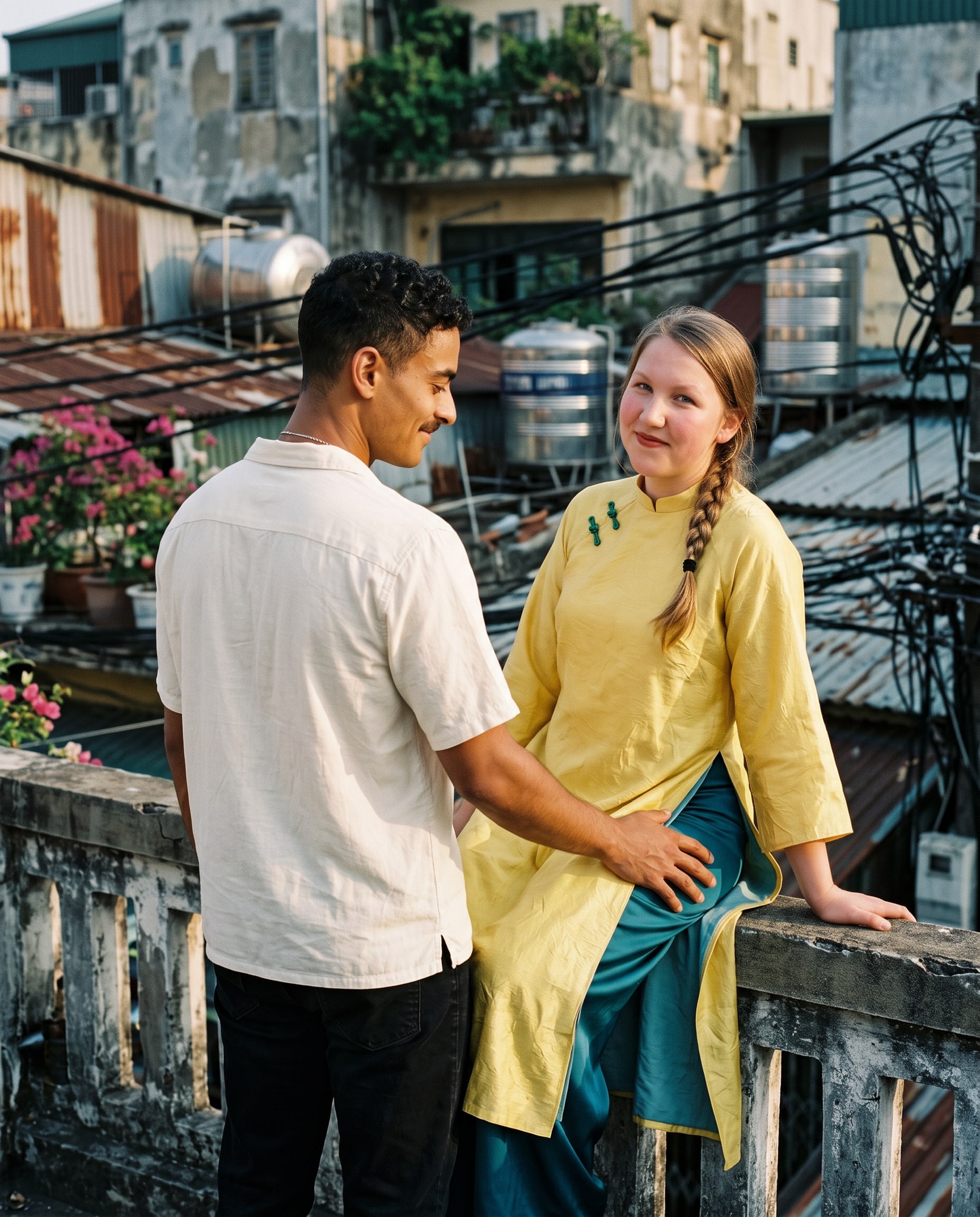
Light colors—cream, pale yellow, soft gray, white—bounce the low coastal sun and photograph cleaner against the blue water and sand. Dark clothes absorb heat and disappear into shadow once the sun drops after 5 p.m. Our stylists always test the pairing on phone preview before we shoot: light fabric in shade reads as almost white in the camera, while dark fabric in the same spot loses all detail. We've noticed couples in cream linen and pale blue cotton get 20–30% more usable shots than those in navy or black—not because the clothes are "better," but because the beach's natural light favors them. Conclusion: choose cream, pale pink, soft orange, or white for the main outfit; reserve darker tones for layering pieces like scarves or oversized shirts you'll remove mid-shoot.
What fabrics survive salt water without staining or shrinking?
Cotton (100% or high-blend), linen, and cotton-linen blends dry fast and rinse clean with fresh water—we always carry bottles and damp towels. Viscose and rayon absorb salt and often stain permanently; we've seen couples' new dresses ruined by one splash. Silk creases under salt spray and takes two days to dry properly. Polyester holds salt residue even after washing. Denim works but feels heavy when wet; lightweight cotton trousers or palazzo pants are better. If you wear anything with elastic (waistbands, hems), salt can corrode it, so check seams before you buy. Our rule: rub fabric between wet fingers—if it feels slick and dries fast, it's safe; if it clings and stays damp, skip it. Conclusion: stick to 100% cotton or linen blends labeled "breathable" or "quick-dry" on the product tag.
Chat with us on WhatsApp | See packages and prices on vietnamphotoshoot.com
How many complete outfit changes fit into a Nam O session?
We typically shoot two looks per couple in 2.5–3 hours on-site. A third outfit means you need extra drying time between shoots, which eats into light—Nam O's best window is 4–6 p.m., and after 6 p.m. the beach turns gray. Some couples bring four items (two outfits, two pairs of shoes, accessories) in one bag and change behind our car or a nearby shelter. Others coordinate with makeup and hair at your hotel that morning, then arrive at the beach with one polished look and change into a second on-site. That two-look structure works best: one romantic/flowing, one modern/fitted. If you want a third outfit, plan for a longer sunset session or accept that the third look will be in lower light. We keep a changing room setup in our vehicle, so fabric doesn't touch sand during swaps. Conclusion: plan two outfits; a third requires at least 4 hours on-site and adds logistical stress.
What shoes and accessories photograph well and don't sink into sand?
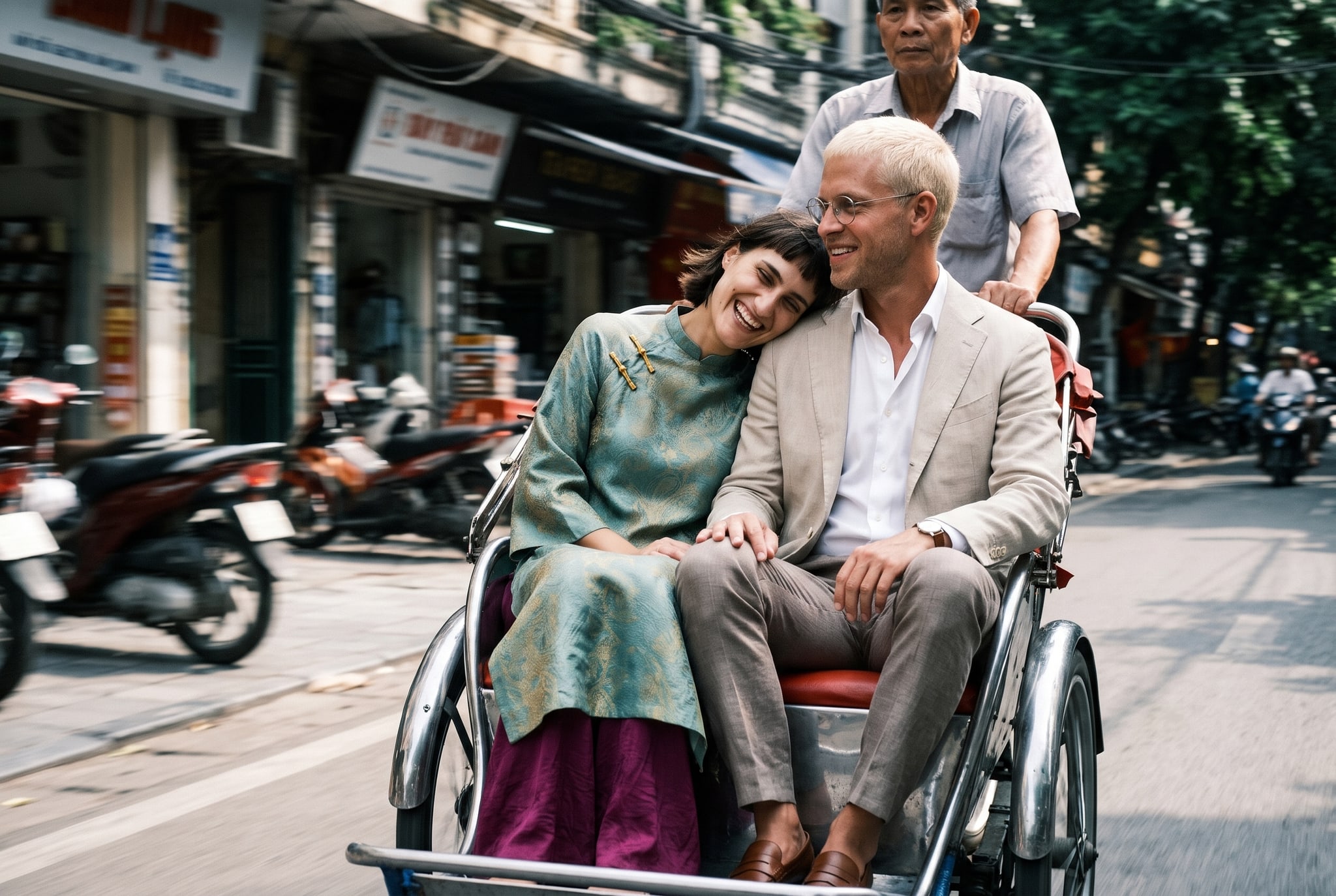
Shoes: flat leather sandals, canvas sneakers, or dressy flat slides work. Avoid heels—they sink, slow movement, and are torture after 20 minutes on sand. Wet sand is slippery, so sole grip matters; we've seen couples in smooth-soled dress flats slip badly. Accessories: sunglasses (dark frames read better than clear), light scarves (they float in wind beautifully), simple metal rings and bracelets (avoid heavy costume jewelry that bounces oddly), and wide-brimmed hats if you like them. Avoid necklaces that clang against your chest during movement; they distract in audio playback. Bags should be small crossbody styles or clutches; large totes read as "tourists" and clutter the frame. We always ask couples to leave bags in the car before shooting. A light shawl or linen overshirt works as both an accessory and a drying layer post-shoot. Conclusion: bring minimal, lightweight, functional pieces; leave bags and heavy jewelry behind.
What's the real difference between buying new clothes versus using what you own?
We've shot thousands of couples; roughly 60% buy one new outfit and wear their own favorites for the second look. New clothes often feel stiff and unfamiliar—couples move differently, stand awkwardly, touch the fabric constantly. Owned clothes feel natural; you've sat, walked, and breathed in them, so you move freely and the photos read relaxed. The trade-off: your old white linen shirt might have small stains or wear marks, but it photographs you, not a mannequin in new fabric. New clothes photograph the garment, not the moment. Our styling tip: if you buy new, wear it at home for 3–4 days before the shoot. Wash it once so it softens. Then pair it with your favorite pair of old trousers or shorts you genuinely love. That blend—one new piece, one trusted piece—works better than two brand-new outfits. For couples on a budget, this approach saves money and confidence. Comparison: a new outfit gives a "special occasion" look but risks stiffness; favorite owned clothes feel relaxed but may show age. Conclusion: mix one new statement piece with owned basics you trust.
| Outfit Choice | Best For | What to Watch | Outcome |
|---|---|---|---|
| Two new outfits | Couples wanting a "fresh start" look | Stiffness, discomfort, over-thinking movement | Polished but sometimes tense |
| One new, one owned | Budget-conscious, comfort-first couples | Finding the right new piece that complements owned favorites | Natural relaxation + intentional style |
| Both owned favorites | Couples prioritizing ease and confidence | Ensuring fabrics are salt-safe and colors harmonize | Genuine, relaxed, authentic presence |
| Rental (ao dai or formal wear) | Couples wanting cultural or formal statement | Sizing, fit, and return logistics | Dramatic but sometimes uncomfortable |
What to check before you buy couple outfits for Nam O
Fabric content: Hold the tag. If it says 100% cotton, 100% linen, or cotton-linen blend (70/30 or higher cotton), it's safe. Avoid anything with "silk," "viscose," "rayon" alone, or "acetate." Quick-dry polyester blends are okay if clearly labeled "swim" or "beach."
Fit and movement: Try the outfit on and walk, raise your arms, sit down, bend forward. Your partner should be able to do the same without tugging, tightening, or exposing skin you didn't intend. Loose linen and cotton trousers or skirts let you move; tight jeans don't.
Color against your skin: Look in daylight (outdoors, not indoor fluorescent). Light colors should feel warm and flattering, not washed-out. If cream makes you look gray, choose pale yellow or soft pink instead. Dark-skinned couples often photograph beautifully in jewel tones (emerald, sapphire, deep coral) on beaches with blue water; test this before buying.
Water absorption: Wet a small corner of the fabric and time how long it takes to dry. If it's still damp after 2 minutes of air exposure, salt will cling to it. Good beach fabric dries in under 60 seconds.
Seams and elastic: Rub your thumb along waistbands, sleeve cuffs, and hems. If elastic feels rough or cracked, salt will corrode it further. New elastic is worth the cost.
Second outfit coordination: Once you've chosen your first outfit, ensure the second is visibly different in silhouette (if the first is flowing, choose fitted; if it's plain, add texture or pattern) and doesn't clash in color tone.
Chat with us on WhatsApp | See packages and prices on vietnamphotoshoot.com
For a full couple session at Nam O including styling help, check our couple photoshoot options. Many couples pair a beach shoot with a pre-wedding photoshoot package to cover multiple locations and outfits in one day. If you'd like professional styling and outfit consultation before you buy, we can arrange a video call—message us on WhatsApp with photos of outfits you're considering, and our team will give honest feedback on fabric, fit, and beach-readiness.
FAQ
Can we wear swimsuits or beach dresses for our couple shoot at Nam O?
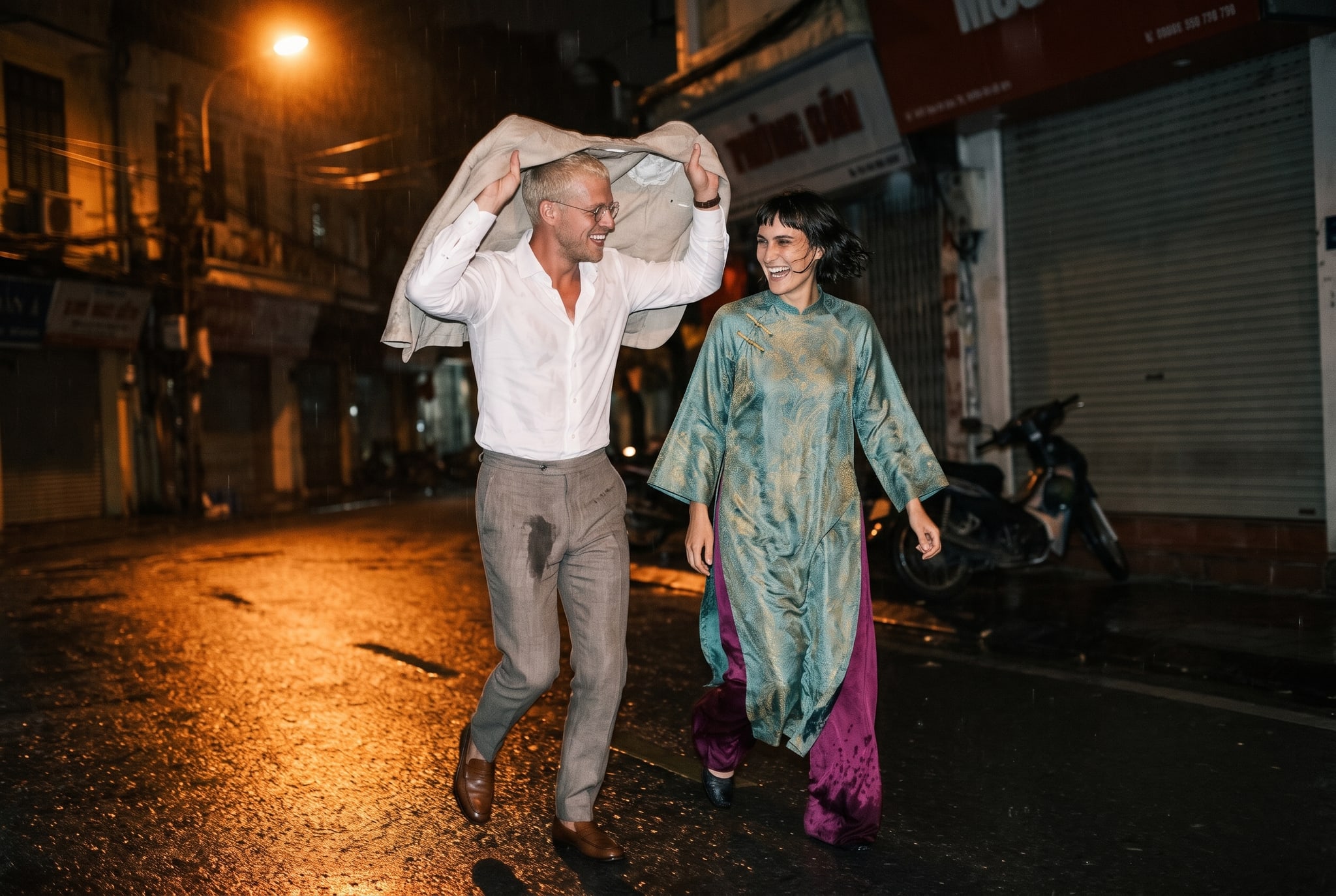
Beach dresses (lightweight, below-knee, breathable cotton) work well. Swimsuits alone feel too casual unless you're planning a playful, modern aesthetic. If you want to include a swimsuit moment, wear a loose overshirt or sarong overtop for the main portraits, then remove it for 5–10 playful frames in the water. Salt water doesn't damage swimwear, but couples usually prefer clothed portraits at Nam O.
Should we buy matching outfits or wear completely different styles?
Matching colors (both cream, both navy) work beautifully; matching exact styles look costume-like. Aim for a color harmony—neutral with accent, or two warm tones—but let each person's fit and silhouette feel individual. Our stylists see couples in coordinated cream and pale blue, or soft gray and white, photograph best together.
How do we dry and prepare clothes the night before the shoot?
Wash any new fabric in cool water the night before to soften it and remove dye residue. Dry flat (don't hang—water spots can form). The morning of the shoot, wear your outfit for two hours before we meet you; this breaks in stiffness. Avoid ironing right before photos—steam-dampened fabric photographs poorly under beach light.
Is it okay to wear jewelry or watches into the salt water at Nam O?
Metal jewelry is fine in salt water for a few hours; rinse it with fresh water immediately after. Avoid delicate chains or precious pieces you'd be upset to lose—sand and movement can snag them, and salt will tarnish uncoated metals over time. Simple silver or stainless-steel rings and bracelets photograph well. Watches should stay in your beach bag.
What if our chosen fabrics feel uncomfortable or we don't like how they photograph during the shoot?
We bring backup options: we carry a loose linen overshirt, a neutral scarf, and lightweight layers in cream and white. If your outfit isn't working—too tight, wrong color, or photographing flat—we swap in a backup piece for 10–15 minutes and reshoots that section. Most couples don't need this, but it's there. Alert us during our WhatsApp chat before the shoot if you're unsure about comfort; we can problem-solve in advance. Chat with us on WhatsApp | See packages and prices on vietnamphotoshoot.com
Pre-Wedding & Elopement
Inclusions, prices and booking are on our booking site.
FAQ
Can we wear swimsuits or beach dresses for our couple shoot at Nam O?
Beach dresses (lightweight, below-knee, breathable cotton) work well. Swimsuits alone feel too casual unless you're planning a playful, modern aesthetic. If you want to include a swimsuit moment, wear a loose overshirt or sarong overtop for the main portraits, then remove it for 5–10 playful frames in the water. Salt water doesn't damage swimwear, but couples usually prefer clothed portraits at Nam O.
Should we buy matching outfits or wear completely different styles?
Matching colors (both cream, both navy) work beautifully; matching exact styles look costume-like. Aim for a color harmony—neutral with accent, or two warm tones—but let each person's fit and silhouette feel individual. Our stylists see couples in coordinated cream and pale blue, or soft gray and white, photograph best together.
How do we dry and prepare clothes the night before the shoot?
Wash any new fabric in cool water the night before to soften it and remove dye residue. Dry flat (don't hang—water spots can form). The morning of the shoot, wear your outfit for two hours before we meet you; this breaks in stiffness. Avoid ironing right before photos—steam-dampened fabric photographs poorly under beach light.
Is it okay to wear jewelry or watches into the salt water at Nam O?
Metal jewelry is fine in salt water for a few hours; rinse it with fresh water immediately after. Avoid delicate chains or precious pieces you'd be upset to lose—sand and movement can snag them, and salt will tarnish uncoated metals over time. Simple silver or stainless-steel rings and bracelets photograph well. Watches should stay in your beach bag.
What if our chosen fabrics feel uncomfortable or we don't like how they photograph during the shoot?
We bring backup options: we carry a loose linen overshirt, a neutral scarf, and lightweight layers in cream and white. If your outfit isn't working—too tight, wrong color, or photographing flat—we swap in a backup piece for 10–15 minutes and reshoots that section. Most couples don't need this, but it's there. Alert us during our WhatsApp chat before the shoot if you're unsure about comfort; we can problem-solve in advance. [📸 Chat with us on WhatsApp](https://wa.me/84338762340) | [✨ See packages and prices on vietnamphotoshoot.com](/go/)
More from the team
Boho pre-wedding photoshoot in Vietnam: Hanoi, Saigon, Hoi An
Boho pre-wedding shoots mix romantic, free-spirited aesthetics with Vietnam's landscapes and heritage sites. We run full-day sessions in three cities, handling styling, makeup, location scouts and edits.
Avoid crowds at Hoang Su Phi rice terraces: timing for wedding shoots
Hoang Su Phi's terraced landscape draws couples and tour buses in equal measure. We show how to shoot there alone, when to arrive, and what to arrange with us before you go.
Photography rules at Con Dao beaches: permits, drones and what to check
Con Dao's beaches demand prep before you shoot—permits, drone zones and tide timing all affect your day. We share what the Cáo Studio team verifies on every booking.