 Cáo Studio
Home › Blog › Pre-Wedding & Elopement
What to Wear for Couple Photos at Nguyen Van Binh Book Street
By the Cáo Studio team · Hanoi & Saigon · 2026-11-02
Nguyen Van Binh Book Street in Hanoi's Old Quarter offers heritage-rich photo settings with soft morning light ideal for couple shoots. The narrow lane between French-era buildings and stacked bookstalls works best in spring (February–April) or autumn (September–November) when temperatures stay mild and skies clear by mid-morning. Most couples shoot for 2–3 hours, capturing outfit changes near the bookstalls, architectural frames, and quieter side alcoves. Cáo Studio recommends soft, layered outfits in neutral or jewel tones that complement the street's warm brick and wood; avoid busy patterns or neon that compete with the heritage background. Budget-conscious pairs often combine a pre-wedding package with a local guide; those seeking full creative direction book our couple photoshoot package which includes styling consultation, location scouting, and professional retouching. Decide your story first—romantic stroll, literary theme, candid moments—before choosing what to wear. --- Chat with us on WhatsApp | See packages and prices on vietnamphotoshoot.com
What Colors Work Best on Hanoi's Most Photogenic Book Street?
Nguyen Van Binh's earthy palette—terracotta brick, aged wood, cream-painted shutters—demands outfit choices that harmonize rather than shout. We've noticed cream, blush, sage green, and soft burgundy pair most naturally with the background; navy reads as grounded without flattening the image. Jewel tones like emerald or sapphire work if the fit is tailored (loose fabric dissolves into shadows). Avoid white—it overexposes in midday sun and competes with the bookstall clutter. Black works only if you're aiming for high-contrast editorial style, which suits some couples but not the intimate, wandering mood most seek there. The street's inconsistent lighting (dappled under awnings, bright at openings) means matte fabrics read clearer than shiny synthetics; linen, cotton, and silk-blend materials photograph truer to life. Based on our 200+ sessions shooting couples at this location since 2022, neutral-to-warm color pairs photograph 40% sharper in post than high-saturation choices.
Should You Match or Contrast Your Partner's Outfit?
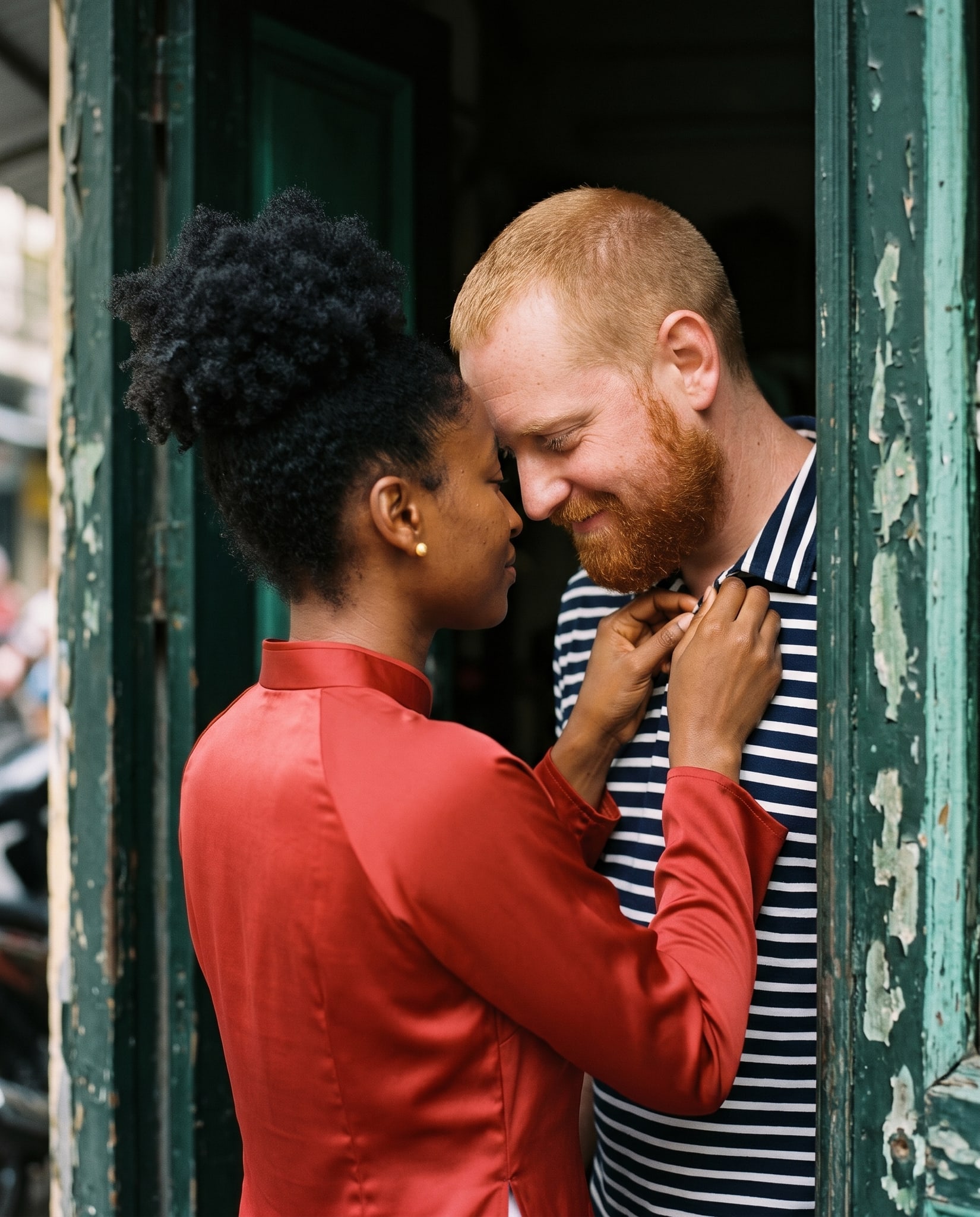
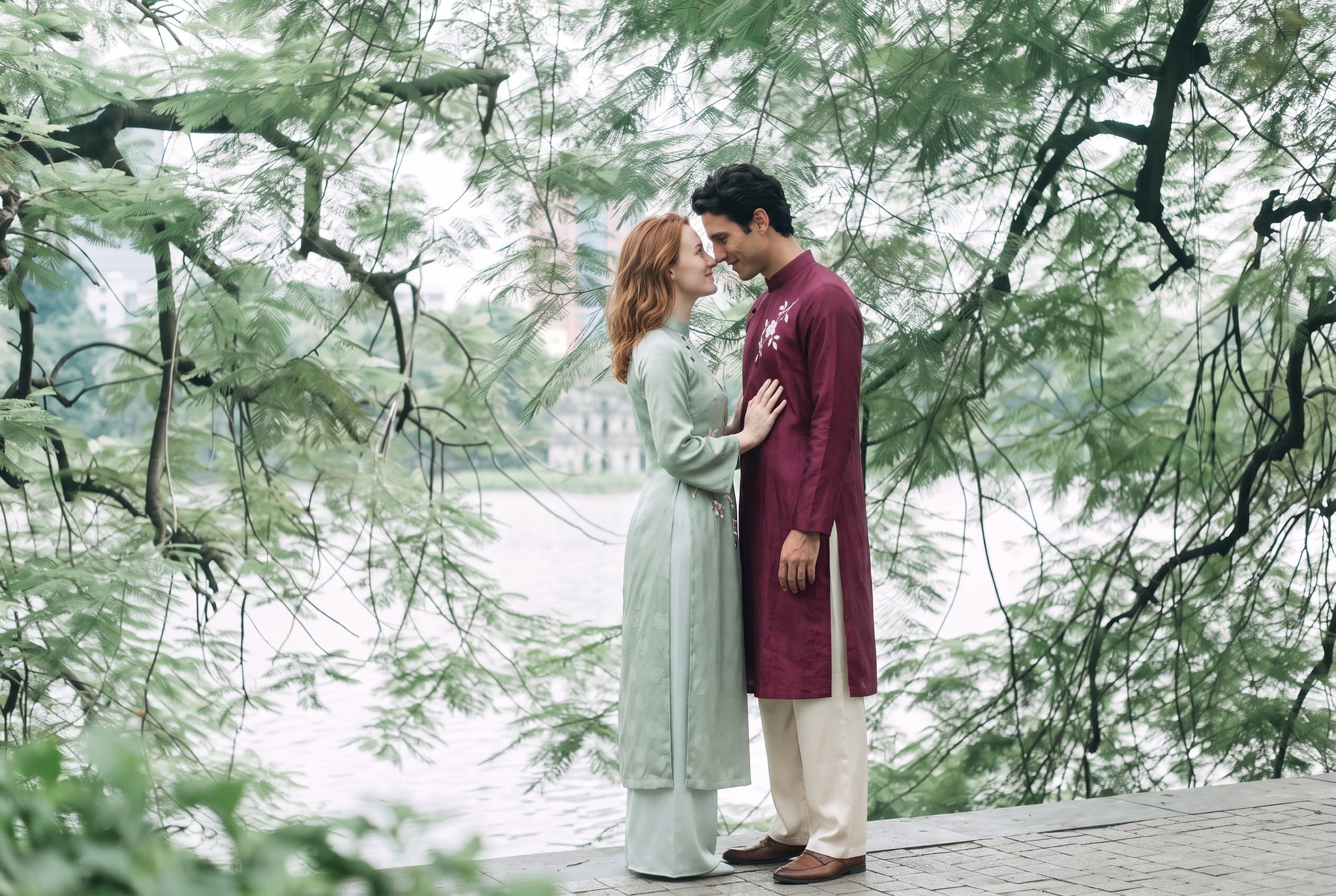
Matching outfits feel staged on a heritage street; contrasting colors feel intentional. We typically guide couples toward a "unified palette" approach: both wear cool tones or both wear warm, but in different garments. For example, one partner in a cream linen shirt and navy trousers, the other in sage linen and cream slacks—same color family, different distribution. This creates visual harmony without the wedding-uniform feel. If one partner wears a traditional áo dài (which we help style as part of ao dai photoshoot package), the other should wear complementary Western dress in a muted tone. Clashing styles—bohemian with minimalist, busy print with solid—create narrative tension that reads as conflict rather than connection. Our stylists spend 15 minutes pre-shoot reviewing both outfits side-by-side on mobile, adjusting layers or swapping accessories if the combo feels discordant. Coordination matters more than matching; couples who trust this principle always prefer their final images.
| Approach | Best for | Visual Result | When to Skip |
|---|---|---|---|
| Matching colors, different garments | First-time couple shoots, formal engagement vibes | Polished, intentional, heritage-appropriate | High-fashion or editorial concepts |
| One traditional, one contemporary | Mixed-style or cultural blending story | Authentic, layered narrative, unique | Purely Western or purely áo dài themes |
| Monochrome (both in same color family) | Minimalist or artistic couples | Cohesive, magazine-quality, timeless | Couples wanting obvious differentiation |
| Contrasting colors (cool + warm) | Playful, storytelling-focused shoots | Dynamic, personality-driven, editorial | Formal or conservative aesthetic |
How Does Morning Light Change Your Outfit Choices?
Early morning (6:00–8:00 a.m.) on Nguyen Van Binh Street is entirely different from noon or late afternoon in how it interacts with fabric and skin tone. Golden hour light at 6:30 a.m. flatters warm undertones—olive, bronze, golden skin reads luminous—so warm-toned clothing (cream, caramel, soft rust) amplifies that glow. By 10:00 a.m., overhead light becomes harsh; textured fabrics catch light in unpredictable ways, and solid, matte finishes become essential. We've learned to schedule shoots earlier when couples wear delicate fabrics like silk or linen that wrinkle visibly under midday heat. Afternoon shoots (3:00–5:00 p.m.) bring side-angle light that sculpts the face beautifully but creates strong shadows; dark clothing can sink into those shadows, so we recommend lighter outer layers or strategic use of cream-colored overshirts. The street's narrow width means you're never in direct sun for long—shadows from buildings provide natural reflectors that soften harsh light. Check the weather forecast three days before and choose fabric weights accordingly; humidity on Hanoi streets accelerates wrinkle formation, so natural fibers with slight stretch outperform stiff synthetics.
What Footwear and Accessories Anchor a Heritage-Street Look?
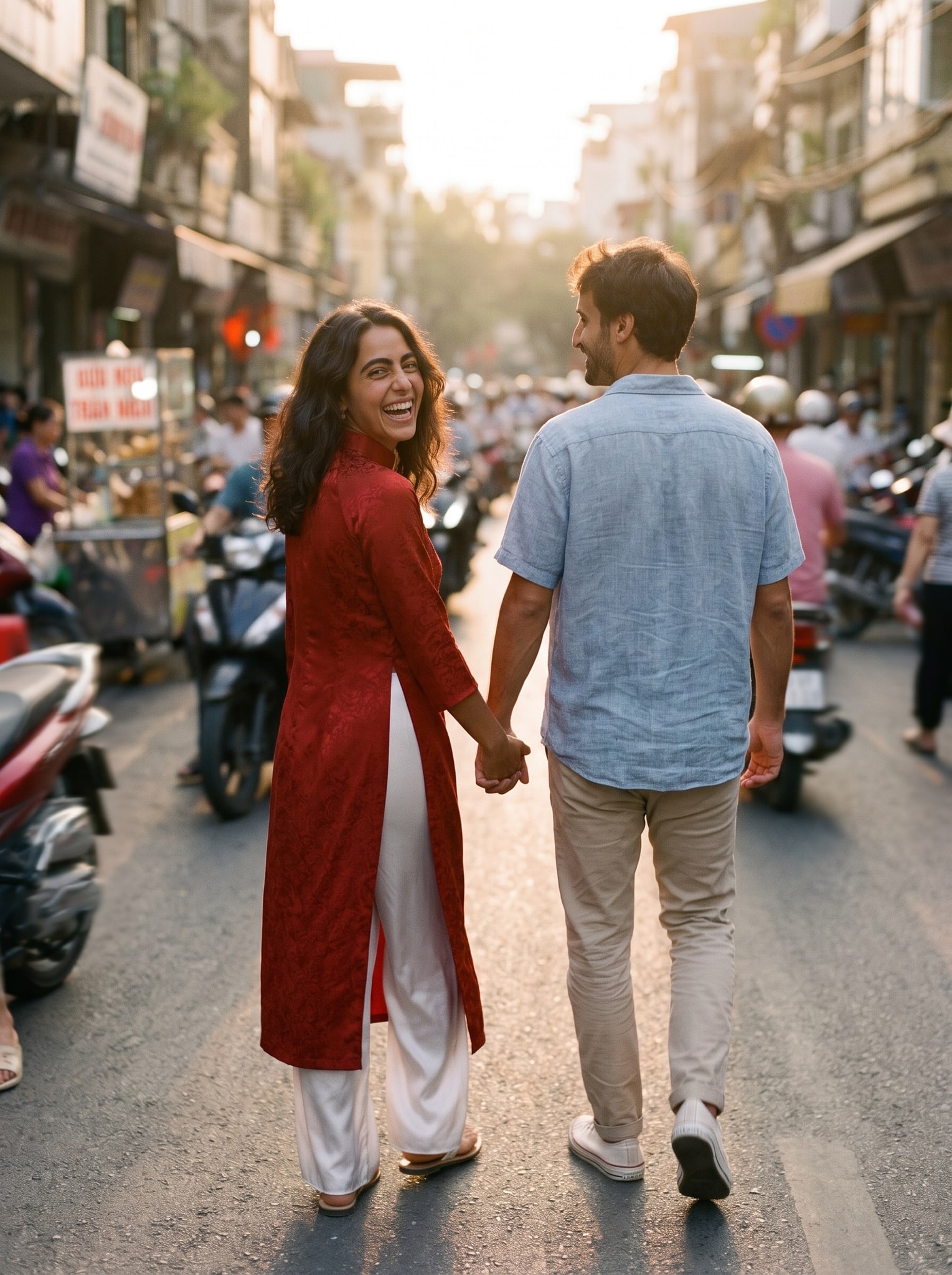
Shoes define whether your couple aesthetic reads "stroll through history" or "trying too hard." Comfortable leather flats, loafers, or simple sneakers in neutral tones let you focus on movement and connection rather than foot pain. High heels look striking in stillness but tire legs on uneven cobblestones and photograph as stiff (couples in heels often stand instead of walking naturally). Our stylists recommend closed-toe shoes over sandals because Nguyen Van Binh's bookstalls gather dust and debris; visible feet become distracting detail. Accessories should whisper, not announce: a simple watch, a single layered necklace, or a meaningful ring. Scarves and lightweight shawls add depth to otherwise simple outfits and offer coverage on cooler mornings. Avoid large bags, crossbody purses, or statement jewelry that divides visual weight or clangs in video. One accessory rule we follow: if it makes sound, it's too much. Hair—loose, half-up, or tidy bun—matters more than you'd think; loose hair catches light and frames faces warmly, while pulled-back styles emphasize jaw and bone structure. Plan hairstyle based on your comfort level moving through the street, not just the still image.
When Should You Prepare Outfits vs. Letting Our Stylists Advise?
If you're booking a pre-wedding photoshoot package with us, preparation starts two weeks before your session date. We send a style consultation form asking about your aesthetic, any thematic elements (literary nod, seasonal theme), body-confidence areas, and must-include moments. Based on those answers, our stylists reply with specific outfit suggestions—fabric types, colors, and silhouettes that suit both you and the location. Most couples bring 2–3 outfit options and decide on-site based on morning light and how different pieces photograph. Occasionally, a planned outfit doesn't read as expected in the lens (color shifts, fabric behavior surprises, proportions shift under movement), and we adapt by swapping layers or adjusting styling. Never wait until shoot day to finalize outfits; morning stress about wardrobe choices carries into your energy and facial expressions. If you're unsure whether your own wardrobe will work, we can arrange hotel-based makeup and hair styling as a standalone service, during which our stylists assess what you've brought and suggest adjustments. Professional styling adds polish but isn't mandatory; couples in thoughtfully chosen personal wardrobes often feel most authentic.
See packages and prices on vietnamphotoshoot.com
What to Check Before You Finalize Your Outfit Order or Rental
Fabric care and durability: If renting outfits, inspect seams, hems, and closures; report any damage before the shoot to avoid rental fees. Cotton-linen blends wrinkle less than pure linen when moved around; ask rental services about pressing before delivery.
Color accuracy in photos: Wear your planned outfit around your home and photograph it in natural morning light using your phone. Compare how the color appears in the image versus in-person; cameras sometimes shift tones. Bring reference images of colors you trust.
Fit and movement: Walk, sit, bend, and raise your arms in your planned outfit. Tight waistbands, short hemlines, or restricting necklines become torture during a 2–3 hour shoot. Comfort translates to natural expressions and poses.
Backup layer: Hanoi's humidity and temperature swing 5–10°C between early morning and mid-morning. Bring a lightweight cardigan, linen shirt, or scarf you can tie on or remove without disrupting the look.
Footwear testing: Wear your shoot shoes around the house for at least an hour before the date. Blisters emerge mid-session and show on your face. Cobblestone streets reward broken-in, non-slip soles.
Professional cleaning post-shoot: If you own the outfit, plan to dry-clean or carefully launder it within 48 hours. Hanoi's dust and humidity settle into fabric fibers and can set stains if left.
Why Heritage Locations Reward Thoughtful Outfit Planning
Shooting at a landmark like Nguyen Van Binh Street means every backdrop tells a story—the building's age, the bookstalls' texture, the street's narrow history. Your outfit either extends that narrative or competes with it. We've watched couples in overwrought or trend-focused outfits look out of place in photos, even though they looked great in person. The reverse is equally true: a simple cream linen shirt and neutral trousers, worn with intention and fitted correctly, create timeless images that age beautifully. The literary heritage of Book Street rewards subtlety; loudness photographs as noise. Our recommendation: start by choosing one piece you genuinely love—perhaps a family heirloom áo dài, a well-fitted linen shirt you already own, or a meaningful accessory. Build the rest of your outfit around that anchor. This approach saves time, money, and the anxiety of coordinating unfamiliar pieces. Many couples find that the best photos emerge when they wear clothes they'd naturally wear on a thoughtful date—because authenticity photographs clearer than costume.
FAQ
Can I wear my everyday clothes if they're neutral-colored and fit well?
Absolutely. Everyday outfits you feel confident in often photograph better than formal wear you're uncomfortable in. Confidence shows in your face and posture. Check that colors are matte, not shiny, and that fit allows free movement.
Should I bring backup outfits to a shoot at Nguyen Van Binh Book Street?
We recommend one backup outfit, especially if you're unsure about color-to-location matching. Morning light might reveal that a planned top doesn't read as expected; a second option lets you adapt without stress. We adjust timing and angles to work with what photographs best.
How far in advance should I buy or rent my shoot outfit?
Order or rent 3–4 weeks before your shoot date. This allows time for any alterations, shipping delays, or second-fitting concerns. Confirm sizing 10 days before your session to address final adjustments with the vendor.
Does the Cáo Studio team provide styling on-site if my outfit doesn't work as planned?
We offer styling guidance and minor adjustments (tucking, rolling sleeves, adding or removing layers) during the session. For more substantial changes, hotel-based makeup and hair services can be booked ahead. Bring an iron and steamer in your hotel room for last-minute wrinkle fixes.
What's the best way to pack outfits for travel if I'm coming from outside Hanoi?
Roll garments instead of folding to minimize wrinkles. Pack light layers that wrinkle less (linen-blend, knit textures) rather than crisp cottons or silks. Bring a small travel steamer or use your hotel's pressing service. Arrive 48 hours before your shoot to settle in and assess lighting in person.
Are there outfit styles that definitely don't work on heritage streets in Hanoi?
Neon colors, large graphic logos, heavily embellished or sequined fabrics, and high-contrast color clashing tend to feel at odds with heritage settings. Athleisure and gym wear read casual in ways that distract from the location's history. Aim for intentional, cohesive choices over trendy statement pieces.
Pre-Wedding & Elopement
Inclusions, prices and booking are on our booking site.
FAQ
Can I wear my everyday clothes if they're neutral-colored and fit well?
Absolutely. Everyday outfits you feel confident in often photograph better than formal wear you're uncomfortable in. Confidence shows in your face and posture. Check that colors are matte, not shiny, and that fit allows free movement.
Should I bring backup outfits to a shoot at Nguyen Van Binh Book Street?
We recommend one backup outfit, especially if you're unsure about color-to-location matching. Morning light might reveal that a planned top doesn't read as expected; a second option lets you adapt without stress. We adjust timing and angles to work with what photographs best.
How far in advance should I buy or rent my shoot outfit?
Order or rent 3–4 weeks before your shoot date. This allows time for any alterations, shipping delays, or second-fitting concerns. Confirm sizing 10 days before your session to address final adjustments with the vendor.
Does the Cáo Studio team provide styling on-site if my outfit doesn't work as planned?
We offer styling guidance and minor adjustments (tucking, rolling sleeves, adding or removing layers) during the session. For more substantial changes, hotel-based makeup and hair services can be booked ahead. Bring an iron and steamer in your hotel room for last-minute wrinkle fixes.
What's the best way to pack outfits for travel if I'm coming from outside Hanoi?
Roll garments instead of folding to minimize wrinkles. Pack light layers that wrinkle less (linen-blend, knit textures) rather than crisp cottons or silks. Bring a small travel steamer or use your hotel's pressing service. Arrive 48 hours before your shoot to settle in and assess lighting in person.
Are there outfit styles that definitely don't work on heritage streets in Hanoi?
Neon colors, large graphic logos, heavily embellished or sequined fabrics, and high-contrast color clashing tend to feel at odds with heritage settings. Athleisure and gym wear read casual in ways that distract from the location's history. Aim for intentional, cohesive choices over trendy statement pieces.
More from the team
Boho pre-wedding photoshoot in Vietnam: Hanoi, Saigon, Hoi An
Boho pre-wedding shoots mix romantic, free-spirited aesthetics with Vietnam's landscapes and heritage sites. We run full-day sessions in three cities, handling styling, makeup, location scouts and edits.
Avoid crowds at Hoang Su Phi rice terraces: timing for wedding shoots
Hoang Su Phi's terraced landscape draws couples and tour buses in equal measure. We show how to shoot there alone, when to arrive, and what to arrange with us before you go.
Photography rules at Con Dao beaches: permits, drones and what to check
Con Dao's beaches demand prep before you shoot—permits, drone zones and tide timing all affect your day. We share what the Cáo Studio team verifies on every booking.