 Cáo Studio
Home › Blog › Pre-Wedding & Elopement
What to Wear for Couple Photos at Sapa Stone Church
By the Cáo Studio team · Hanoi & Saigon · 2026-11-02
Sapa Stone Church couples shoots demand fabrics that move in wind, colors that pop against grey stone and white mist, and layers for 10–15°C mornings. We recommend lightweight wool blends, silk or cotton over synthetics—they photograph better and keep you warm without bulk. Darker tones (charcoal, navy, burgundy) contrast the pale church; pastels fade into fog. Avoid pure white (blends with mist), stiff polyester (reads flat on camera), and loose scarves (tangle in wind gusts). Plan a coat or shawl you'll remove for close-ups—the church's architecture demands clean lines. Cáo Studio books most Sapa sessions for pre-wedding couples who arrive with 2–3 outfit changes; budget 4–5 hours on-site for setup, multiple locations around the church, and wardrobe switches. Check the weather 48 hours before and bring a backup indoor option if rain is forecast. Chat with us on WhatsApp | See packages and prices on vietnamphotoshoot.com
Sapa Stone Church sits 1,600m high in misty mountains—your clothes need to work with cold, wind and stone textures. We recommend lightweight wool blends, silk or cotton over synthetics—they photograph better and keep you warm without bulk. Darker tones (charcoal, navy, burgundy) contrast the pale church; pastels fade into fog. Avoid pure white (blends with mist), stiff polyester (reads flat on camera), and loose scarves (tangle in wind gusts). Plan a coat or shawl you'll remove for close-ups—the church's architecture demands clean lines. Cáo Studio books most Sapa sessions for pre-wedding couples who arrive with 2–3 outfit changes; budget 4–5 hours on-site for setup, multiple locations around the church, and wardrobe switches. Check the weather 48 hours before and bring a backup indoor option if rain is forecast.
Why Stone Church Light Changes How Color Reads On Film
The church's white stone acts as a natural reflector, bouncing cool morning light onto your faces and clothes. Bright whites and pale pastels wash out under this reflected light; our photographers have to overexpose to keep facial detail, which leaves your outfit washed too. Navy, deep grey, forest green and burgundy stay rich and hold depth in the frame. We learned this after a 2024 winter shoot where a bride wore ivory silk—the camera caught beautiful texture on her groom's charcoal suit, but her dress became nearly invisible against the stone walls in wide shots. Now we brief couples: if you want to wear light colors, pair them with a darker layer (coat, shawl, or vest) that frames your body and separates you from the background. A single-color outfit in mid-tone or dark shade photographs as a cohesive shape; mixed light and dark reads as intentional contrast.
See packages and prices on vietnamphotoshoot.com
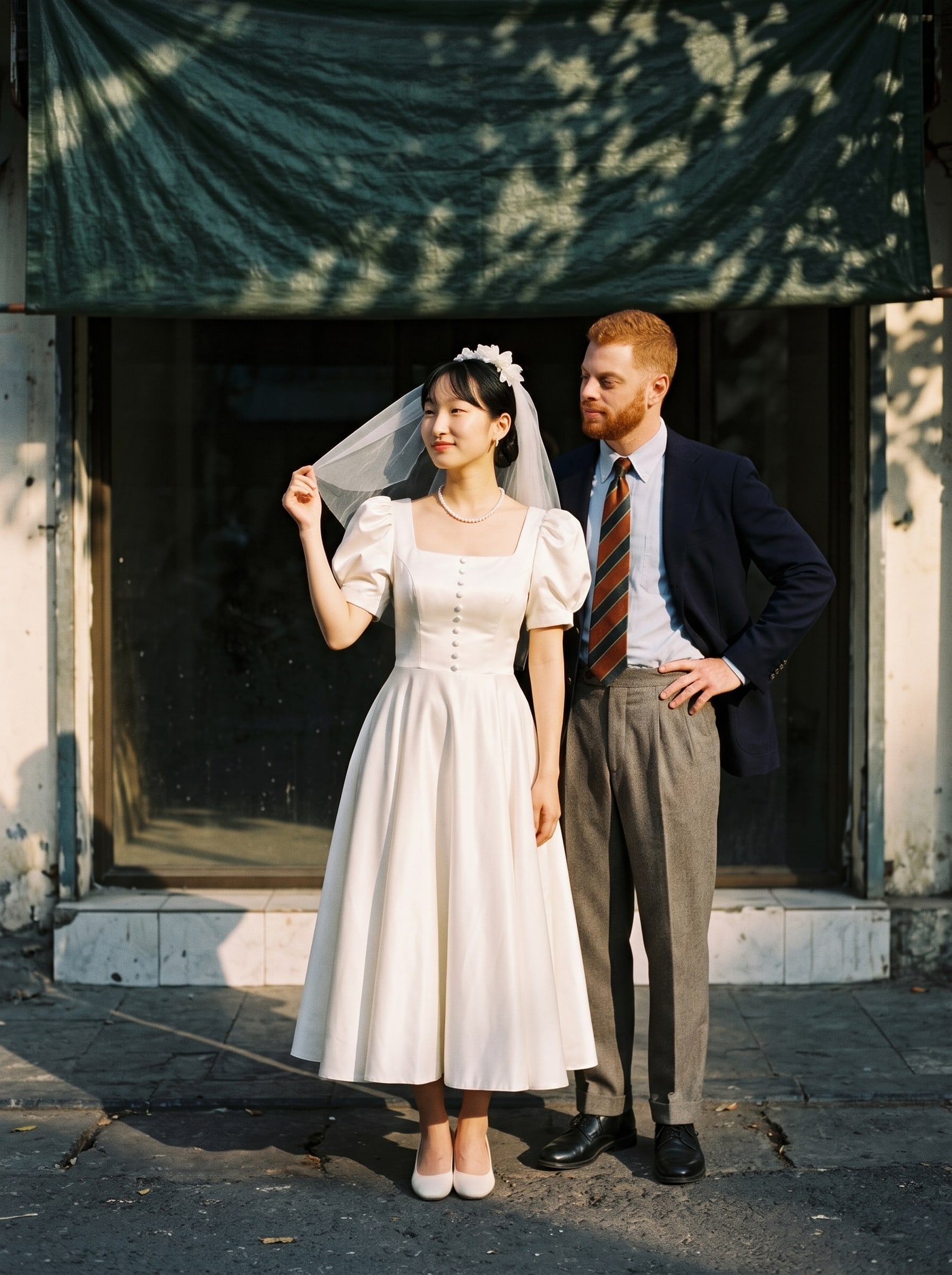
What Fabrics Actually Survive Wind Without Looking Crumpled
Sapa wind at 1,600m altitude is constant—not violent, but steady enough to move cloth all session. Synthetic fabrics (polyester satin, cheap nylon blends) billow unpredictably and catch light in a way that reads cheap on camera. Silk, wool, linen and cotton blends move fluidly and catch light softly. We've noticed that a silk dupioni dress (thicker than charmeuse, with subtle texture) photographs like luxury even in overcast light, while a polyester satin reads flat and plasticky in the same conditions. Weight matters: a 6 oz silk crepe holds its shape as wind moves it; a 3 oz chiffon becomes a sail and your face disappears behind fabric. For men, a wool or wool-blend blazer or sweater-vest over a fitted cotton shirt layers well—you can unbutton or remove the outer layer for close-ups and still look polished underneath. Linen wrinkles visibly (we iron between shots, which eats time), so reserve linen for trousers or a vest, not a jacket or dress. Avoid anything with loose embellishments (beaded trim, dangly jewelry, scarves that tie on)—the wind will tangle them and you'll spend ten minutes per setup untangling instead of posing.
Layering Strategy: Remove Pieces for Different Shot Types
We structure Sapa shoots in three phases: arrival and wide-shots in full layers, mid-session close-ups with one outer layer removed, and intimate portraits with minimal layers. This workflow lets you stay warm between setups while still delivering variety to the final gallery. A typical couple brings: a base outfit (fitted dress or shirt + trousers/skirt), a sweater or lightweight blazer, and a heavier coat or shawl. You start in all three layers for the grand church facade shots—the coat/shawl frames your silhouette and the layered look suits the formal architecture. Thirty minutes in, we move to a more intimate stone detail or garden corner, you remove the heavy coat (we tuck it behind a bush or hand it to our assistant), and now the sweater + base outfit shows more of your body without the bulk. Last, for sit-down or very close portrait work, you might remove the sweater too—but keep it within arm's reach because the wind picks up in afternoon. We've had couples regret removing layers too early and then shiver through sunset portraits; the trick is timing: remove one layer every 60–90 minutes as your body warms from movement and the sun (if it breaks through mist) climbs higher.
Color Choices That Pop Against Mist and Stone
| Outfit Type | Who It Suits | Why Sapa Works | What to Check |
|---|---|---|---|
| Dark solid dress + neutral coat | Brides wanting classic elegance | Contrast reads clean; coat adds drama for wide shots | Seams lay flat; hem doesn't catch wind; sleeves aren't too loose |
| Charcoal suit + burgundy shirt | Grooms, formal couples | Jewel tone shirt pops without being flashy; suit holds shape | Jacket fits shoulders; no pulling across chest when arms are at sides |
| Forest green dress + cream sweater | Couples favoring nature tones | Green echoes Sapa's pine trees; cream softens formality | Sweater is fitted, not slouchy; dress is tapered below knee |
| Navy + blush or powder blue layering | Couples wanting soft sophistication | Navy reads rich; pale accent keeps it romantic, not severe | Inner layer is fitted; outer layer doesn't hide the silhouette |
| Burgundy or deep plum dress + grey shawl | Alternative brides, formal couples | Both colors hold in overcast light; shawl adds movement for wind | Shawl is structured (wool wrap, not chiffon); dress has internal support (not clinging) |
Avoid matching outfits exactly—it reads costume-like. Instead, choose a dominant color for each person (e.g., you in navy, partner in grey) and repeat one accent (both wear burgundy scarves, or both choose cream sweaters). This creates visual harmony without looking staged. Pure white photographs as grey or off-white in Sapa mist; if you love white, layer it over darker pieces so the white frames your face and neck but darker cloth grounds your body. Pastels (blush, sage, pale yellow) recede into the overcast sky; they work only if you're wearing them as a small accent (pocket square, tie, undershirt) with a darker primary color. We've had exactly one bride pull off a pale pink dress at Sapa—she wore a deep teal coat that stayed on for 80% of the shoot, and we removed it only for extreme close-ups where her face filled the frame.
Practical Checklist: What to Confirm 48 Hours Before
Weather forecast is non-negotiable—Sapa at 1,600m can shift from 12°C sunny to 5°C foggy in two hours. Check the five-day outlook 72 hours before your shoot date, then confirm the 48-hour forecast the morning of your session. If rain is >60% probability, our team will suggest moving to a covered backup location (a local farmhouse interior, or an indoor civic building) and your outfit brief changes entirely—you can wear more delicate fabrics and lighter colors indoors. If fog is forecast (which is common), embrace it: dark colors and layered silhouettes become even more striking in mist. Test your outfit at home in daylight similar to your shoot time—if your shot is 7 am, try on your clothes at 7 am and move around for 15 minutes to confirm nothing rides up, gaps, or feels binding when you're posturing. Bring one backup outfit piece (a second sweater, a different dress, or an extra blazer) in your car—if the primary outfit doesn't feel right on-site, having a swap-in saves 30 minutes of regret. Confirm all buttons, zippers and seams are secure; we can't fix a broken zipper or popped button mid-shoot without reshooting that section. Wear shoes you've walked in for at least two hours—Sapa church grounds include uneven stone and stairs, and a shoe that pinches will show in your posture and facial expression. Our stylists notice when couples are uncomfortable; it reads as tension, not romance.
Final Fit: How Our Team Checks Outfits On-Site
You'll arrive at the church at your scheduled time (usually 6:30 am or 8 am for best light), and our stylist will spend 15 minutes reviewing your outfit against the actual light, stone, and weather. This is where reality meets planning. We ask you to stand near the church entrance in full morning light, and we photograph you in your camera (not our camera—your phone) against the actual stone to see how the colors and fit read. If the sweater is bunching under the arms or a shirt is gaping at the collar, we adjust it then or recommend you change if you brought a backup. If the color reads too pale or too dark in person, we might suggest swapping an accessory or removing a layer sooner than we'd planned. This 15-minute check has saved us from wasted shots more times than we can count. The only outfit we've ever had to completely swap out on-site was a groom's polyester blazer that caught light so harshly we couldn't expose for his face and his jacket at the same time—his backup blazer (a wool blend) solved it in five minutes. Bring two complete outfits if you're unsure, and let our team make the call based on the actual conditions that morning.
See packages and prices on vietnamphotoshoot.com
Where to Source Fabrics and Fits for Sapa Shoots
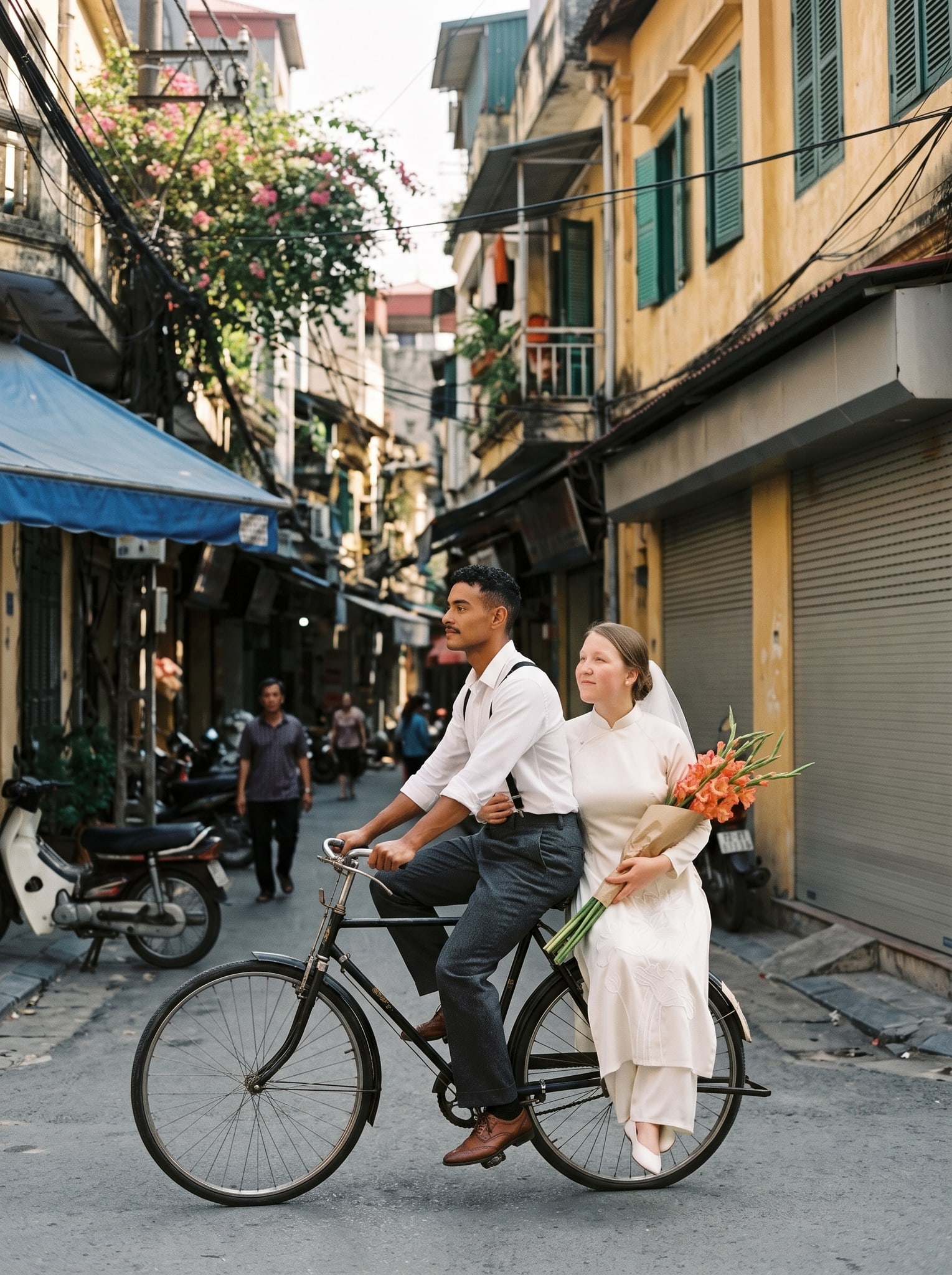
We recommend shopping for Sapa couple outfits 4–6 weeks before your session. Tailor-made áo dài (traditional Vietnamese silk tunics) are a stunning option if you want cultural roots—silk áo dài photograph beautifully at Sapa, and we partner with tailors in Hanoi who can deliver in 3 weeks. Modern Western silhouettes (tailored dresses, fitted blazers, structured trousers) work equally well; focus on seams that don't pucker, fabric that has weight, and sleeves or necklines that don't gap. A fitted sheath dress with a structured coat photographs better than a loose A-line dress with a flowy cardigan at Sapa. Men's tailored pieces are critical—an ill-fitting shirt under a blazer reads sloppy on camera, while a well-fitted shirt with a structured sweater-vest reads intentional even in candid moments. Check the return policy before ordering: we've had couples buy outfits online, try them the morning of the shoot, and regret the choice—if returns aren't free and fast, you're stuck. If your outfit arrives and doesn't fit or photo as hoped, you have at most 4 days to exchange it. Shop from retailers offering 48-hour returns or keep a second outfit rental option in your back pocket (some formal-wear rental shops in Hanoi offer short-term loans). Ensure all items are clean, pressed, and tried on at home before your Sapa session date.
Chat with us on WhatsApp | See packages and prices on vietnamphotoshoot.com
For detailed guidance on what to wear and how to prepare for your Sapa Stone Church shoot, explore our pre-wedding photoshoot packages, or reach out to our Hanoi studio team directly—we're happy to review your outfit choices via WhatsApp photos before the day. If you're planning a broader pre-wedding experience that includes hair and makeup services, our makeup and hair at your hotel option ensures you're styled by professionals who know Sapa's light and weather. For couples considering couple photoshoot sessions in other locations (Hanoi, Saigon, or Hoi An), the same fabric and layering principles apply—adjust colors based on each location's background.
FAQ
Can I wear white at Sapa Stone Church?
Pure white washes to grey in mist and blends with the pale church stone. If you love white, layer it over darker pieces (dark coat, forest green dress) so it frames your face and neck while darker fabric grounds your body. We've seen white work only as a small accent—undershirt, pocket square, sweater worn over a dark dress.
How cold is it at Sapa Stone Church in the morning?
Temperatures range 8–15°C depending on season. Winter (December–February) is coldest; summer (June–August) is warmest. Always bring at least one heavy layer (wool coat, padded jacket) that you can remove for close-ups. Our stylists check the 48-hour forecast before every shoot and recommend outfit swaps if conditions change.
What shoe style works best at Sapa Stone Church?
The church grounds have uneven stone and stairs. Flat shoes (ballet flats, loafers, flat sandals) work better than heels for safety and comfort—you'll move around too much for heels without pain showing in your posture. Choose neutral colors (black, grey, nude, or tan) that won't distract in wide shots. Test your shoes at home for at least two hours before the shoot date.
Can I bring and change between multiple outfits?
Yes, we budget 4–5 hours for Sapa shoots partly to allow outfit changes. Bring 2–3 complete looks if you want variety. Each change costs about 15–20 minutes (removal, repositioning, light adjustment), so plan accordingly. We recommend a primary formal outfit, a secondary lighter outfit, and one backup piece you're unsure about.
What fabrics should I avoid for Sapa?
Avoid stiff synthetics (polyester satin, cheap nylon blends)—they read cheap and billow unpredictably in wind. Avoid loose embellishments (beaded trim, dangling scarves, long chains) that tangle in wind. Linen wrinkles visibly, so skip linen for jackets or dresses. Pure chiffon is too light and blows around. Stick to wool, silk, cotton, and structured blends.
Should my partner and I wear matching or coordinating outfits?
Matching reads costume-like. Instead, choose a dominant color for each person (you in navy, partner in grey) and repeat one accent (both burgundy scarves, both cream sweaters) for harmony. This creates visual unity without looking staged and reads more romantic in final photographs.
What's the best time of year to shoot at Sapa Stone Church for outfits?
Spring (March–May) and autumn (September–November) offer mild temperatures (12–18°C), less fog, and consistent light—easier for outfit choices. Summer is warmest but cloudiest; winter is coldest but clearest. Plan your outfit weight based on the season, not personal preference. We recommend confirming the specific forecast 48 hours before regardless of season.
Can I wear jewelry or accessories at Sapa?
Yes, but keep it simple and secure. Loose scarves tangle in wind; dangly earrings can catch light unpredictably. Rings, watches, and simple necklaces photograph well. Avoid anything that will distract or require frequent adjustment—wind and movement will shift it constantly, eating into pose time.
Pre-Wedding & Elopement
Inclusions, prices and booking are on our booking site.
FAQ
Can I wear white at Sapa Stone Church?
Pure white washes to grey in mist and blends with the pale church stone. If you love white, layer it over darker pieces (dark coat, forest green dress) so it frames your face and neck while darker fabric grounds your body. We've seen white work only as a small accent—undershirt, pocket square, sweater worn over a dark dress.
How cold is it at Sapa Stone Church in the morning?
Temperatures range 8–15°C depending on season. Winter (December–February) is coldest; summer (June–August) is warmest. Always bring at least one heavy layer (wool coat, padded jacket) that you can remove for close-ups. Our stylists check the 48-hour forecast before every shoot and recommend outfit swaps if conditions change.
What shoe style works best at Sapa Stone Church?
The church grounds have uneven stone and stairs. Flat shoes (ballet flats, loafers, flat sandals) work better than heels for safety and comfort—you'll move around too much for heels without pain showing in your posture. Choose neutral colors (black, grey, nude, or tan) that won't distract in wide shots. Test your shoes at home for at least two hours before the shoot date.
Can I bring and change between multiple outfits?
Yes, we budget 4–5 hours for Sapa shoots partly to allow outfit changes. Bring 2–3 complete looks if you want variety. Each change costs about 15–20 minutes (removal, repositioning, light adjustment), so plan accordingly. We recommend a primary formal outfit, a secondary lighter outfit, and one backup piece you're unsure about.
What fabrics should I avoid for Sapa?
Avoid stiff synthetics (polyester satin, cheap nylon blends)—they read cheap and billow unpredictably in wind. Avoid loose embellishments (beaded trim, dangling scarves, long chains) that tangle in wind. Linen wrinkles visibly, so skip linen for jackets or dresses. Pure chiffon is too light and blows around. Stick to wool, silk, cotton, and structured blends.
Should my partner and I wear matching or coordinating outfits?
Matching reads costume-like. Instead, choose a dominant color for each person (you in navy, partner in grey) and repeat one accent (both burgundy scarves, both cream sweaters) for harmony. This creates visual unity without looking staged and reads more romantic in final photographs.
What's the best time of year to shoot at Sapa Stone Church for outfits?
Spring (March–May) and autumn (September–November) offer mild temperatures (12–18°C), less fog, and consistent light—easier for outfit choices. Summer is warmest but cloudiest; winter is coldest but clearest. Plan your outfit weight based on the season, not personal preference. We recommend confirming the specific forecast 48 hours before regardless of season.
Can I wear jewelry or accessories at Sapa?
Yes, but keep it simple and secure. Loose scarves tangle in wind; dangly earrings can catch light unpredictably. Rings, watches, and simple necklaces photograph well. Avoid anything that will distract or require frequent adjustment—wind and movement will shift it constantly, eating into pose time.
More from the team
Boho pre-wedding photoshoot in Vietnam: Hanoi, Saigon, Hoi An
Boho pre-wedding shoots mix romantic, free-spirited aesthetics with Vietnam's landscapes and heritage sites. We run full-day sessions in three cities, handling styling, makeup, location scouts and edits.
Avoid crowds at Hoang Su Phi rice terraces: timing for wedding shoots
Hoang Su Phi's terraced landscape draws couples and tour buses in equal measure. We show how to shoot there alone, when to arrive, and what to arrange with us before you go.
Photography rules at Con Dao beaches: permits, drones and what to check
Con Dao's beaches demand prep before you shoot—permits, drone zones and tide timing all affect your day. We share what the Cáo Studio team verifies on every booking.