 Cáo Studio
Home › Blog › Pre-Wedding & Elopement
What to Wear for Couple Photos at Son Tra Peninsula and Linh Ung
By the Cáo Studio team · Hanoi & Saigon · 2026-11-04
Son Tra Peninsula (Tay Thanh Pagoda) and Linh Ung Pagoda are two distinct locations in Danang with opposite light, crowds and sightlines—and our team treats their styling completely differently. At Son Tra, elevation and open sky mean brighter colors pop but wind wrinkles silk; at Linh Ung, dense golden interiors flatten pale tones but jewel hues glow. Most couples book one or both as part of a pre-wedding or concept shoot, bringing 2–4 outfit changes across a full day. You'll want easy-to-move-in pieces that photograph well in both direct sun and temple shade, resist humidity and don't snag on stone steps. Weight your choices toward jewel tones, soft neutrals or saturated reds—pastels wash out here—and plan layers for the 10-minute temple interiors where temperatures dip. Ask us for a quote on WhatsApp if you need styling guidance before arrival. Chat with us on WhatsApp
Why temple lighting beats studio light for some couples
Son Tra's 70-meter elevation gives overhead sun that sculpts faces with clean shadows; Linh Ung's interior gold leaf bounces warm tones onto skin without harsh contrast. We've shot both locations hundreds of times and notice that couples dressed for "neutral backdrop" studios often underdress here—the light itself carries the story, so your outfit can be bolder. Jewel tones (emerald, sapphire, burgundy) sing in golden pagoda light; pastels (blush, lavender, pale mint) turn grey. At Son Tra, whites and cream pop in the open courtyard, but by 2 p.m. the shadows grow blue-tinted and unflattering unless you've added warmth through fabric texture or jewelry. Our stylists always ask: are you shooting before 11 a.m. (golden) or after 2 p.m. (sculptural)? The answer changes our color call completely.
See packages and prices on vietnamphotoshoot.com
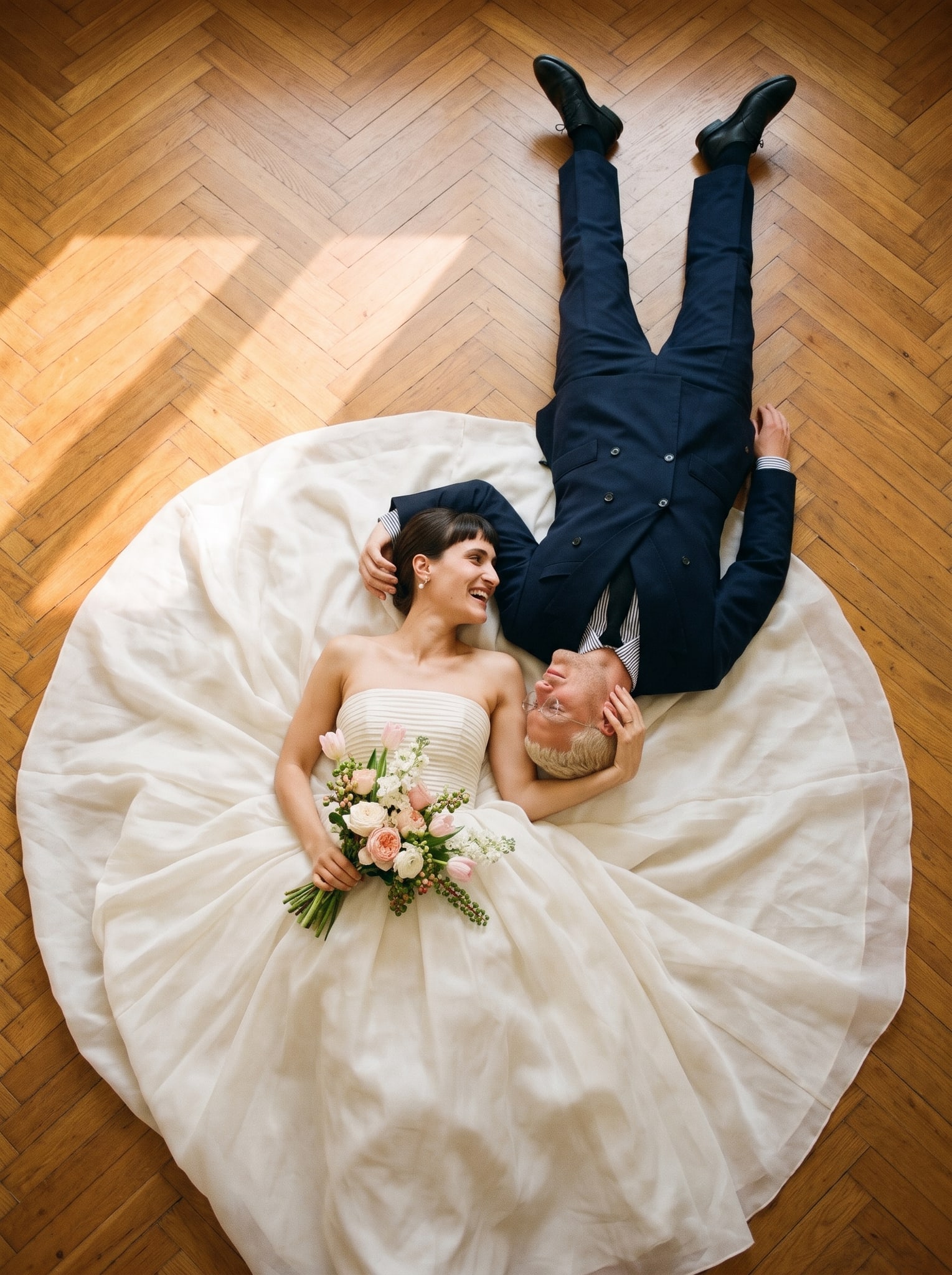
How wind, humidity and stone steps shape what really works
In five years of son-tra shoots, we've watched silk dresses snag on temple edge stones, lightweight linens turn transparent in the 3 p.m. sun glare, and loose scarves tangle in pagoda railings. Danang's humidity (often 75%+) also frizzzes hair and wilts delicate fabrics by hour four. We steer couples toward structured cotton, silk-linen blends, and densely woven pieces that hold their shape after climbing 200 steps. Linh Ung's stairs are narrower and greasier from incense smoke; non-slip footwear matters more than aesthetics here, and skirts longer than knee-length can drag. If you're renting an áo dài (traditional silk tunic), choose a reinforced hem and confirm the tailor has tested it on stairs—we've had to safety-pin three dresses mid-shoot. Bring a small repair kit: double-sided hem tape, a sewing needle, clear thread. What photographs flawlessly in hour one often needs invisible touch-ups by hour three.
| Fabric Type | Wind Resistance | Humidity Hold | Steps/Stair Safety | Jewel Tone Depth | Best Time of Day |
|---|---|---|---|---|---|
| Heavy silk | Poor | Poor | Medium | Excellent | Before 11 a.m. |
| Silk-linen blend | Good | Good | Good | Excellent | All day |
| Structured cotton | Excellent | Excellent | Excellent | Good | After 2 p.m. |
| Sheer chiffon | Poor | Poor | Poor | Moderate | Sunrise only |
| Tailored wool blend | Excellent | Good | Excellent | Excellent | Before 1 p.m. |
What colors fail and which ones own these temples
After shooting 80+ couple sessions at these two pagodas, our photographer's eye has become ruthless about color: pastels (mint, peach, lavender, pale yellow) flatten against gold leaf and turn sickly under tungsten temple lights. Blacks absorb the warmth and read as "formal funeral" in the soft glow. Jewel tones rule here—deep emerald, teal, burgundy, sapphire, and rich coral all photograph as strong, romantic, and naturally complementary in post-processing. Neutrals work only if layered: a cream dress with a cognac or gold shawl, or grey trousers with a wine silk shirt. Reds are tricky—true reds (not orange-reds) sing in both locations, but we ask couples to bring a backup because reds can shift pink in golden light and maroon in shadows. Skin tone matters too: our team has noticed that warm undertones photograph better in jewel tones here, while cool undertones need muted jewels (sapphire over teal, burgundy over coral). One couple wore matching pastel blue shirts and later said the photos felt "washed out"—they'd chosen based on Instagram trends, not the actual light we knew they'd shoot in.
How to coordinate outfits without matching like a theme park
We see couples arrive with identical shirts or "couple colours" that create visual confusion rather than harmony in photos. The best results come from coordinated texture and palette*, not sameness. One partner in deep emerald, the other in cream or gold—they pop as a unit without looking like a twin set. Our stylists suggest picking one shared colour (say, burgundy) and assigning one person jewel tone and the other a neutral that contains that warmth (charcoal with burgundy accents, not pure black). Layering is your friend: if you both wear the shared palette in different weights and textures, cameras read you as intentional without staged. Three-piece coordination works for some: matching vests over different-colored shirts. Avoid stripes, logos, or text—these date images and draw the eye away from faces. If you're bringing an áo dài for one shot and Western wear for another, ensure the colour logic flows across your four outfit changes; we've had to edit "jarring outfit jump" out of timelines because a couple switched from deep colours to pastels mid-shoot.
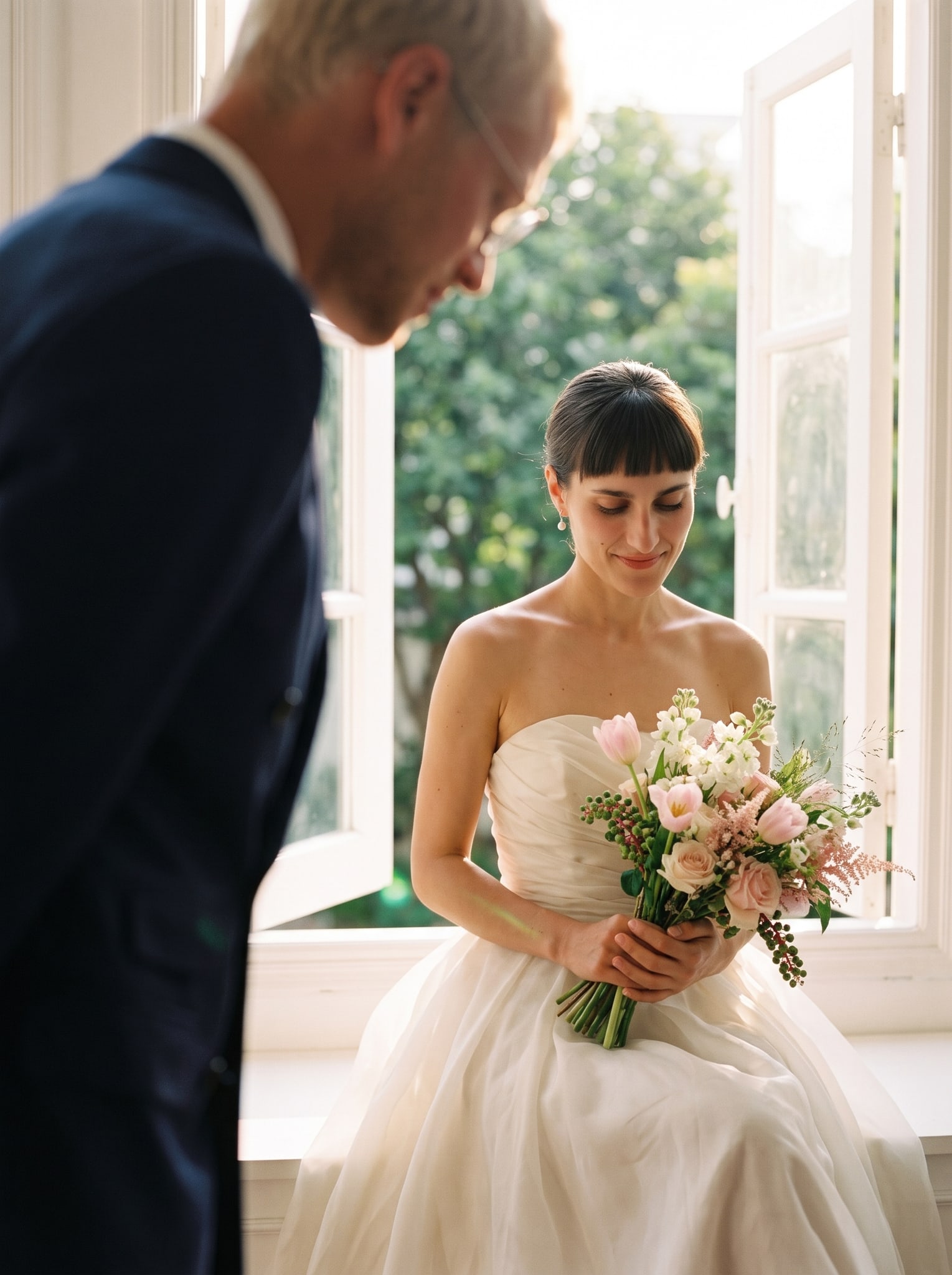
Packing and prep: what to finalize before you arrive in Danang
Two weeks before your shoot date, we ask couples to send outfit photos on WhatsApp so we can flag risks early. Bring at least one backup for each outfit—fabrics split, stains happen, a stylist might see something that reads grey in person but photographs off. Pack small: a lightweight crossbody bag or none at all; large backpacks snag on railings and photograph as visual clutter. Shoes matter more here than in city shoots—temple tiles are slippery when damp, and we've had to swap footwear on the morning of. Jewellery should be simple, secure, and non-reflective (avoid heavy chains that catch sunlight and create lens flares). Bring a hair tie and bobby pins; even couples with short hair need anchors when wind picks up at the peninsula. If you're traveling and don't have physical clothing, our team can recommend local rental shops in Danang who specialize in shoot-day pieces, but we don't handle rentals directly. Ask us for a quote on WhatsApp at least three weeks before arrival if you want our stylist to source pieces on your behalf.
Real decisions on the day: what our team notices and changes
When you arrive at Son Tra, we assess the actual light (clouds shift quickly), humidity (visible on skin and fabric) and crowd density (which determines angles). If it's hazier than expected, we might nudge you toward warmer, more saturated jewel tones instead of the pale emerald you'd planned. If humidity is extreme (80%+), we'll suggest shorter shoot segments with indoor breaks rather than the four-hour full day, or shift to Linh Ung's partially covered spaces. Temperature swings are real—Son Tra can be 10°C cooler at the summit than Danang city; layers or a shawl you didn't think you'd need often come out by hour three. Our photographer will also ask you to move certain pieces—a loose scarf, a long necklace—if it's casting odd shadows or catching the wind in an unflattering way. On the day, trust our team's real-time calls. We've shot these locations in every season and weather; your outfit was chosen for an imagined condition, but the pagoda's actual light might demand a small adjustment.
Where to book and what to expect from the full experience
Most couples book a pre-wedding or elopement package that includes Son Tra and Linh Ung as locations, often with a second outfit change at a city or beach backdrop. Sessions run 6–8 hours depending on your package. If you're in Hanoi or Saigon and traveling to Danang solo, we can coordinate styling prep via WhatsApp before you arrive, or arrange makeup and hair at your hotel the morning of the shoot for a full prep experience. Our Hanoi and Ho Chi Minh studios don't shoot at these Danang locations directly, but we coordinate sessions through trusted Danang-based photographers in our network. Ask us for a quote on WhatsApp and we'll walk you through the exact timeline—when to arrive, where hair and makeup happen, what outfit order works best given the light, and how we handle weather pivots. Couples often ask if they can bring their own clothes or rent locally; both are possible, but our team's eye for colour and fabric durability here makes a styling consultation valuable even if you dress yourself.
See packages and prices on vietnamphotoshoot.com
Pages from our team you may need
FAQ
Can I wear white or cream at Linh Ung's interior without looking washed out?
White works in direct pagoda sun but turns grey under tungsten indoor lighting. Cream fares better because it holds warmth, but we always suggest a jewel-tone shawl or outer layer for interior shots. Test your exact outfit in a dim, warm room at home before arrival.
What's the best time of day to shoot at both locations?
Son Tra photographs best 7–11 a.m. (golden, sculptural light) or 4–6 p.m. (warm, long shadows). Linh Ung works all day but interiors benefit from overcast conditions to avoid harsh shadows on faces. If you must shoot midday, expect flatter light everywhere.
Should we match outfits or wear coordinating colours?
Coordinating texture and palette photographs stronger than matching. One jewel tone, one complementary neutral—for example, emerald and cream—creates visual unity without appearing staged.
Do I need to worry about áo dài sizing for stairs and movement?
Yes. Confirm the tailor has tested the hem on steps, ensure there's no dragging fabric, and request reinforced seams at stress points. Bring needle and thread if renting. We've had to safety-pin dresses mid-shoot.
Can I book a styling consultation before my trip?
Yes. Send outfit photos on WhatsApp at least two weeks before your shoot date. Our stylists will flag colour, fabric and durability risks and suggest adjustments. If you're flying in without clothes, we can recommend local rental partners or coordinate prep with our team.
What if the weather changes on the day of the shoot?
We adjust in real time—heavier clouds might shift our colour recommendations toward warmer tones; extreme heat prompts more breaks and shaded locations. Trust our team's calls; we know these pagodas in all seasons.
Pre-Wedding & Elopement
Inclusions, prices and booking are on our booking site.
FAQ
Can I wear white or cream at Linh Ung's interior without looking washed out?
White works in direct pagoda sun but turns grey under tungsten indoor lighting. Cream fares better because it holds warmth, but we always suggest a jewel-tone shawl or outer layer for interior shots. Test your exact outfit in a dim, warm room at home before arrival.
What's the best time of day to shoot at both locations?
Son Tra photographs best 7–11 a.m. (golden, sculptural light) or 4–6 p.m. (warm, long shadows). Linh Ung works all day but interiors benefit from overcast conditions to avoid harsh shadows on faces. If you must shoot midday, expect flatter light everywhere.
Should we match outfits or wear coordinating colours?
Coordinating texture and palette photographs stronger than matching. One jewel tone, one complementary neutral—for example, emerald and cream—creates visual unity without appearing staged.
Do I need to worry about áo dài sizing for stairs and movement?
Yes. Confirm the tailor has tested the hem on steps, ensure there's no dragging fabric, and request reinforced seams at stress points. Bring needle and thread if renting. We've had to safety-pin dresses mid-shoot.
Can I book a styling consultation before my trip?
Yes. Send outfit photos on WhatsApp at least two weeks before your shoot date. Our stylists will flag colour, fabric and durability risks and suggest adjustments. If you're flying in without clothes, we can recommend local rental partners or coordinate prep with our team.
What if the weather changes on the day of the shoot?
We adjust in real time—heavier clouds might shift our colour recommendations toward warmer tones; extreme heat prompts more breaks and shaded locations. Trust our team's calls; we know these pagodas in all seasons.
More from the team
Photography rules at Ta Phin village: permits, drones and what to check
Ta Phin village in Sapa draws photographers for its Hmong culture and layered mountain light. We've shot dozens of sessions there—here's what actually works and what stops shoots cold.
Pre-Wedding Photo Ideas and Poses at O Quy Ho Pass
O Quy Ho Pass sits on the Hanoi–Sapa border at 1,200 metres. Our couples shoot there for its curves, mist and isolation—but the weather and logistics demand a different approach than valley shoots.
Is O Quy Ho Pass Good for Pre-Wedding Photos? Pros, Cons, Alternatives
O Quy Ho pass in Sapa draws couples seeking high-altitude drama, but tight timelines, unpredictable fog, and logistics make it risky for pre-wedding shoots. We've scouted it; here's what actually works. #