 Cáo Studio
Home › Blog › Pre-Wedding & Elopement
What to wear for couple photos at Ta Van village
By the Cáo Studio team · Hanoi & Saigon · 2026-11-04
Ta Van sits in Sapa's northern hills, where rice paddies cascade down slopes and morning mist hangs until midday. The village attracts couple photoshoot sessions because of its raw landscape and fewer tourists than Fansipan base. Shoots last 3–4 hours, with two outfit changes typical. Wear neutral tones (cream, grey, earth tones, black) or jewel colours that read well in mist; avoid busy prints and white (it bleeds into overcast skies). The terrain is uneven—stone steps, mud paths after rain, steep slopes—so bring flat shoes or hiking boots in your bag. Weather shifts fast: pack a light layer. Cáo Studio clients often choose one romantic outfit (áo dài or linen dress + neutral shirt) and one casual look (jeans, shirt, trainers). Expect cool temperatures (8–15°C in winter, 18–22°C in summer) and plan your pre-wedding photoshoot for late spring or early autumn when mist is strongest.
What colours work best in Ta Van's mountain light?
Neutral palettes dominate Ta Van shoots because the landscape already carries visual weight. Creams, soft greys, olive and charcoal read as timeless; jewel tones (deep teal, burgundy, forest green) pop against rice paddies without competing. We avoid pure white because it merges with overcast skies and bright whites flatten in our edits. Black absorbs light on grey-mist days but works beautifully for contrast shots at golden hour if you shoot in late afternoon. Pastels fade; saturated, natural tones hold their own. Our stylists recommend one partner in a warm neutral (cream, sand, warm grey) and the other in a cool one (charcoal, slate) to create visual rhythm without clashing. The rice terraces are a living colour palette—let them be the hero and your clothes be the frame.
Should you wear traditional áo dài or modern casual clothes?
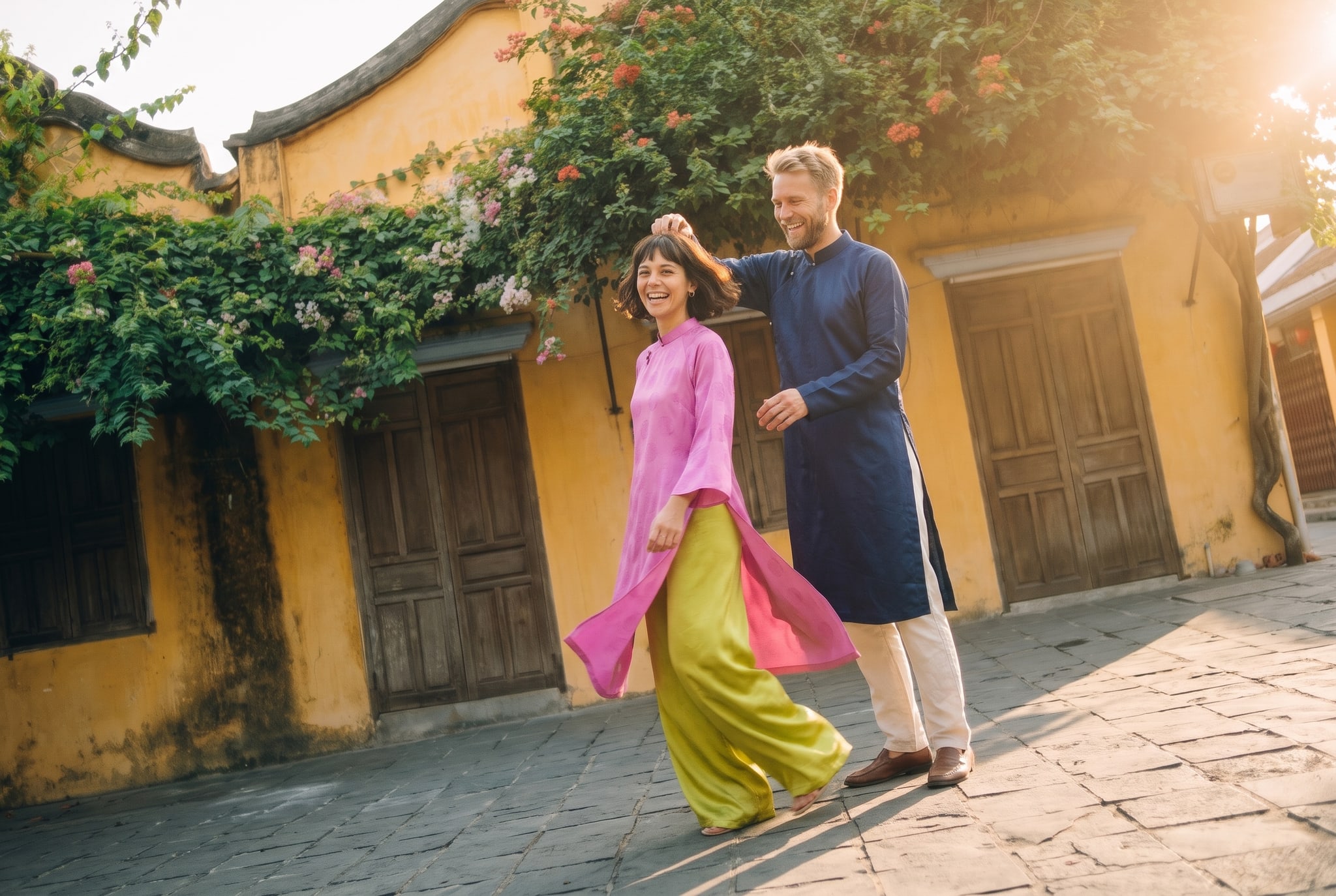
Both work, but serve different moods. Áo dài—the flowing tunic—suits the romantic, timeless feel Ta Van offers; we see many couples choose silk or linen áo dài in cream or jewel tones for one outfit change. The garment moves beautifully on stone steps and in wind, and photographs as a strong visual statement. Modern casual (well-fitted jeans, linen shirt, trainers) reads as intimate and authentic for the second look. On shoots we've run, mixing a dài with casual jeans-and-shirt pairing gives clients two entirely different moods from one location. If you book an ao dai photoshoot package, we can coordinate a dài shoot at another Sapa site and reserve Ta Van for casual or mixed dress. The choice depends on your vision: romantic and formal, or relaxed and playful. Both photograph equally well if the fabrics and colours align with the landscape.
What footwear handles Ta Van's terrain without ruining photos?
Stone steps, mud trails and steep descents mean footwear is both practical and visual. We tell clients to bring two pairs: hiking boots or flat trainers for walking between shots, and a second option for posed frames. Ballet flats, loafers or minimalist leather shoes work in photos without screaming "hiking gear." Bare feet work on dry stone if you're confident, though paths after rain are slick. Avoid heels entirely—they sink into soft ground and pose a safety risk on slopes. Couples often wear matching trainers (white leather, grey canvas, black minimal) for casual shots, which reads cohesively. One guest wore vintage brown leather boots and brown-toned clothes; the boots became a design detail rather than a distraction. Bring your photo shoes in a small bag; we pause between locations so you can change. The terrain is genuinely steep—a five-minute walk to our best overlook site requires proper footing.
How do layers and jackets fit into the outfit plan?
Ta Van's weather is unpredictable. Morning shoots (7–9 a.m.) are often cold and misty; afternoon light (3–5 p.m.) can warm up or stay grey. We advise two layers: a fitted base (long-sleeve thermal or thin cotton) under an open shirt, light sweater or oversized linen jacket. Jackets create visual interest in photos—an open linen overshirt in cream or grey works as both warmth and design. Avoid bulky puffers; they overwhelm the frame. One couple wore matching lightweight overshirts (partners in different earthy tones) and removed them for intimate close-ups, then layered again for wide landscape shots—this gave us five distinct looks from two outfit changes. Bring a small backpack or crossbody bag to carry layers; we'll work around it or leave it out of frame. Wind is common at higher elevations, so lighter fabrics that move (linen, cotton, silk) photograph better than stiff materials. If you're unsure, ask us on WhatsApp before your shoot date and we'll send a weather forecast and packing note.
What's the outfit checklist before you arrive in Ta Van?
Before booking or during planning, confirm three things: (1) Do you own or plan to rent an áo dài, and if so, in what colour? Renting locally in Sapa town adds flexibility but costs a small amount—ask us for rental contacts. (2) Have you checked the weather forecast for your shoot date? Early morning is 3–5°C cooler than afternoon; dress accordingly. (3) Can you walk comfortably in your chosen shoes for 20–30 minutes across uneven ground? If not, bring a second pair. On the day, arrive at the meeting point with both outfit changes already packed, shoes in a separate bag, and one backup top in case something gets marked. We've had guests spill water or get mud splashes—it happens. One couple's linen shirt tore on a stone edge; we had them change early to their second outfit and extended the shoot in a different location. Honest preparation beats scrambling on-site. Confirm your couple photoshoot date at least two weeks ahead so we can send a detailed packing guide and weather forecast specific to that week.
| Outfit Type | Who It's For | Visual Mood | Terrain Suitability | Season |
|---|---|---|---|---|
| Áo dài (silk/linen) + neutral shirt | Couples wanting formal romance | Timeless, flowing, elegant | Good (fabric moves on steps) | Spring–autumn (winter may need layers) |
| Jeans + neutral overshirt + trainers | Couples wanting casual intimacy | Relaxed, authentic, playful | Excellent (designed for uneven ground) | All seasons |
| Matching casual layers (both partners similar tones) | Couples prioritising visual unity | Cohesive, modern, intimate | Excellent | Summer–autumn |
| Mix: one dài, one casual | Couples wanting contrast between shots | Diverse emotional range | Good (if careful shoe choice) | Spring–autumn |
See packages and prices on vietnamphotoshoot.com
What to check before you book or buy outfits
Fit and comfort. Áo dài should allow arm movement for walking; jeans should not restrict stepping over rocks. Try on your outfit with your intended shoes before the shoot day—discomfort shows in photos and slows you down.
Colour clash with partner. Photograph your outfit pairing on your phone in natural daylight. If the colours feel competing rather than complementary, swap one piece.
Fabric weight. Thin linen and cotton breathe and move well; heavy denim can feel stiff in photos. Check weight descriptions if ordering online.
Rental or purchase? If renting an áo dài in Sapa, confirm the rental shop's opening hours and request neutral colours (cream, grey, charcoal) at least three days before your shoot. If buying, order now—shipping to Vietnam takes time.
Backup plan. Bring one extra top in a neutral tone. Weather and accidents happen; this takes pressure off.
Ready to plan your Ta Van couple session? We'll send outfit inspiration, weather forecasts and packing notes once you book. Message us with your shoot date, preferred season and outfit style (romantic, casual, mixed). We've worked with over a hundred couples at this location and know what photographs well in every light condition. See our pre-wedding photoshoot packages and book your date—or read more stories from shoots across Vietnam.
Pages from our team you may need
FAQ
Can I wear the same outfit for both halves of the Ta Van shoot?
Yes, though two changes give more visual variety in your gallery. If one outfit is perfect for the location, we'll focus on posing and light angles to keep the visual story fresh. Let us know in advance and we'll plan accordingly.
What if the weather is rainy on my shoot day?
Rain at Ta Van creates moody mist and dramatic light—it photographs beautifully. Wear darker, water-resistant fabrics (denim, heavier linen) and bring a lightweight rain jacket or poncho. Wet stone paths are slippery, so wear boots or trainers with good grip. We reschedule only if lightning is a safety risk.
Should I buy new clothes or wear what I own?
Wear what fits you well and makes you feel confident. New clothes often feel stiff in photos. If buying, order a month ahead and test-wear it several times. Worn-in fabrics photograph more naturally.
Can I wear shorts or sleeveless tops?
Shorts work in summer (May–September) but long trousers photograph as more sophisticated in Ta Van's landscape. Sleeveless tops risk looking underdressed in cool mountain light. Layering—even a thin overshirt—adds visual interest and keeps you warm.
How much space should I leave in my bag for a second outfit?
Pack a small crossbody bag (5–10 litres). Rolled clothes, flat shoes and a light jacket fit easily. We'll store it between locations or leave it out of frame during shoots.
Do I need to coordinate colours with my partner's outfit?
Not mandatory, but cohesion reads better. Choose complementary tones (warm + cool, or both neutral) rather than clashing. If unsure, message us with photos of both outfits and we'll advise on the pairing.
Pre-Wedding & Elopement
Inclusions, prices and booking are on our booking site.
FAQ
Can I wear the same outfit for both halves of the Ta Van shoot?
Yes, though two changes give more visual variety in your gallery. If one outfit is perfect for the location, we'll focus on posing and light angles to keep the visual story fresh. Let us know in advance and we'll plan accordingly.
What if the weather is rainy on my shoot day?
Rain at Ta Van creates moody mist and dramatic light—it photographs beautifully. Wear darker, water-resistant fabrics (denim, heavier linen) and bring a lightweight rain jacket or poncho. Wet stone paths are slippery, so wear boots or trainers with good grip. We reschedule only if lightning is a safety risk.
Should I buy new clothes or wear what I own?
Wear what fits you well and makes you feel confident. New clothes often feel stiff in photos. If buying, order a month ahead and test-wear it several times. Worn-in fabrics photograph more naturally.
Can I wear shorts or sleeveless tops?
Shorts work in summer (May–September) but long trousers photograph as more sophisticated in Ta Van's landscape. Sleeveless tops risk looking underdressed in cool mountain light. Layering—even a thin overshirt—adds visual interest and keeps you warm.
How much space should I leave in my bag for a second outfit?
Pack a small crossbody bag (5–10 litres). Rolled clothes, flat shoes and a light jacket fit easily. We'll store it between locations or leave it out of frame during shoots.
Do I need to coordinate colours with my partner's outfit?
Not mandatory, but cohesion reads better. Choose complementary tones (warm + cool, or both neutral) rather than clashing. If unsure, message us with photos of both outfits and we'll advise on the pairing.
More from the team
Pre-wedding photoshoot in Phu Quoc June: weather, light, crowds
June is Phu Quoc's monsoon season. Our studio has shot dozens of couples there in early summer—here's what weather and crowds really mean for your pre-wedding day.
Pre-wedding photoshoot in Phu Quoc July: weather, light, crowds
July is Phu Quoc's wet season, but it opens creative possibilities: moody skies, empty beaches after storms, and dramatic backlighting. We'll walk you through what happens on the ground.
Pre-wedding photoshoot in Phu Quoc November: weather, light, crowds
November is peak season for pre-wedding shoots in Phu Quoc: weather is stable, light is soft, but crowds peak mid-month. We share what our team sees on the ground.