 Cáo Studio
Home › Blog › Pre-Wedding & Elopement
What to wear for couple photos at Temple of Literature
By the Cáo Studio team · Hanoi & Saigon · 2026-11-01
Couples shooting at the Temple of Literature need clothes that handle Hanoi's humidity, won't crease badly in three hours, and won't clash with 700-year-old architecture. Natural fabrics (cotton, linen, silk blends) work better than synthetics; solid colors and subtle patterns photograph cleaner than busy prints. Avoid all-white (glares badly), neon brights, and oversized silhouettes that hide body lines. The temple's stone paths get slippery when wet, so closed shoes matter. Cáo Studio stylists usually suggest one formal outfit (áo dài, tailored suit, or structured dress) for opening shots, then a lighter backup for mid-shoot. Plan for 2–3 hours on-site; bring a small bag with water, a light scarf for sun, and flats or soft soles. Ask us for a quote on WhatsApp if you want styling help or pre-shoot outfit consultation—many couples book a makeup and hair session the morning of. Chat with us on WhatsApp
Why the Temple of Literature demands specific outfit rules
The Temple of Literature sits in central Hanoi with high stone walls, narrow brick paths, and direct sun from 7 a.m. to 5 p.m. We've shot there in every season, and light behaves differently each hour. Morning shoots (6–8 a.m.) are softer; midday (10 a.m.–2 p.m.) creates hard shadows and washes out pale colors; late afternoon (3–5 p.m.) turns the courtyards golden but also makes walking tricky. Fabric choice matters because heavy materials stick to skin in 28–30°C heat, wrinkle fast, and look damp in photos. Cotton and linen breathe; polyester holds heat and photographs shiny. The temple's stone and brick also reflect light upward, which means a light dress can look overexposed while a dark suit might turn muddy. We learned early that bright reds photograph well here, jewel tones pop, and pastels wash out unless the couple stands in shade. The site is living heritage, not a studio—you'll meet visitors, so outfits should be elegant enough to feel intentional, not costume-y.
Should we wear traditional áo dài or Western formal wear?
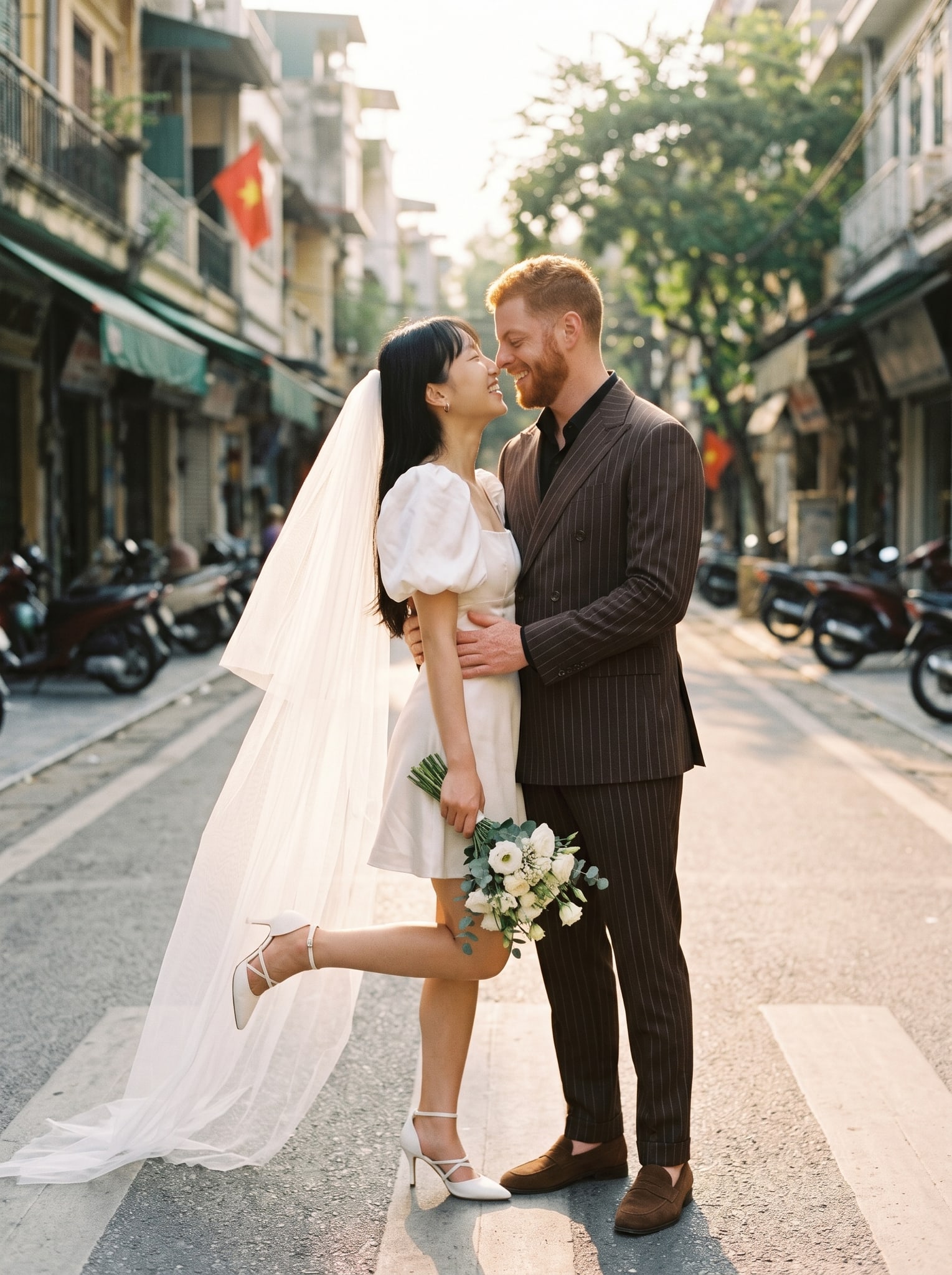
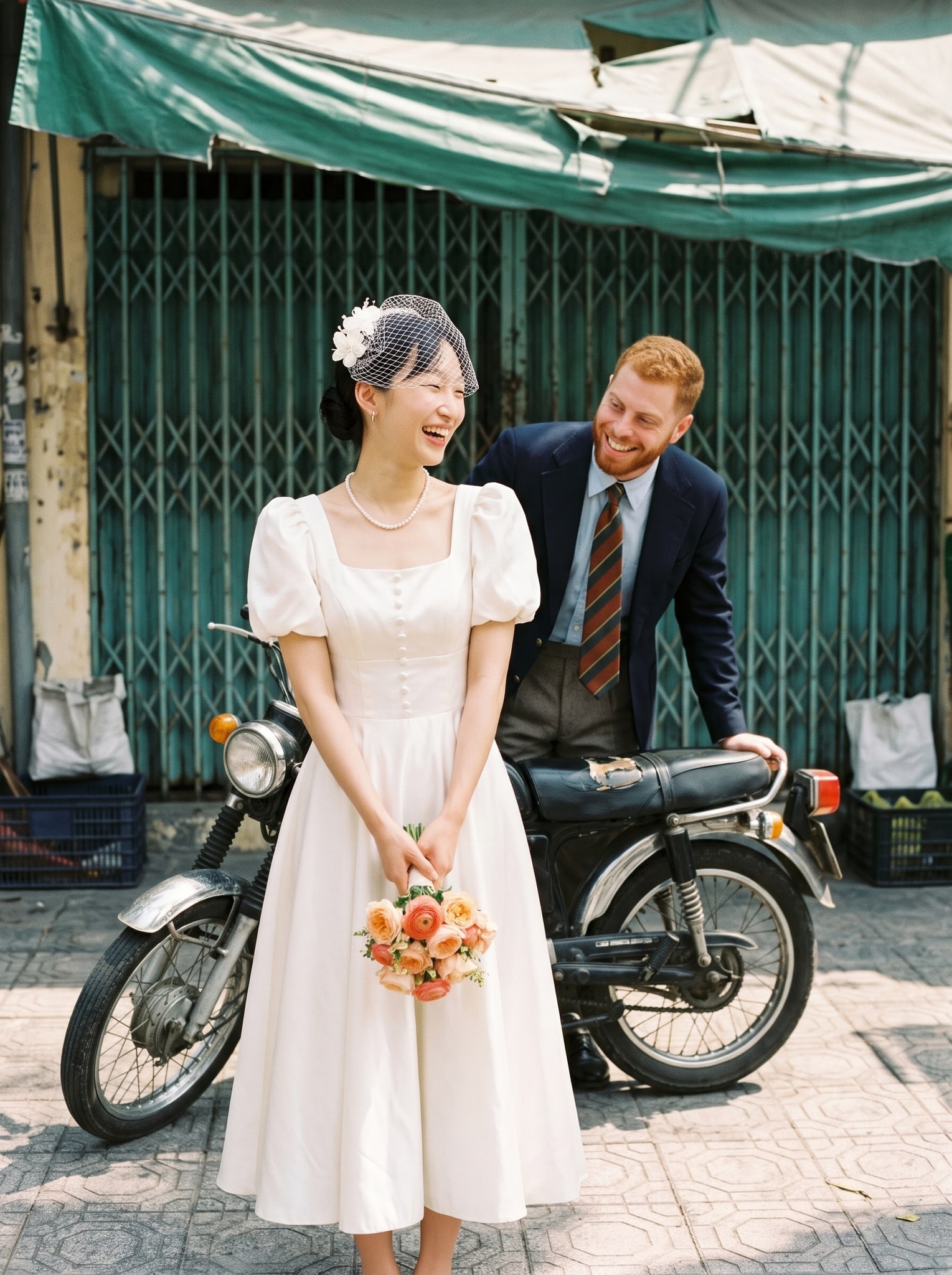
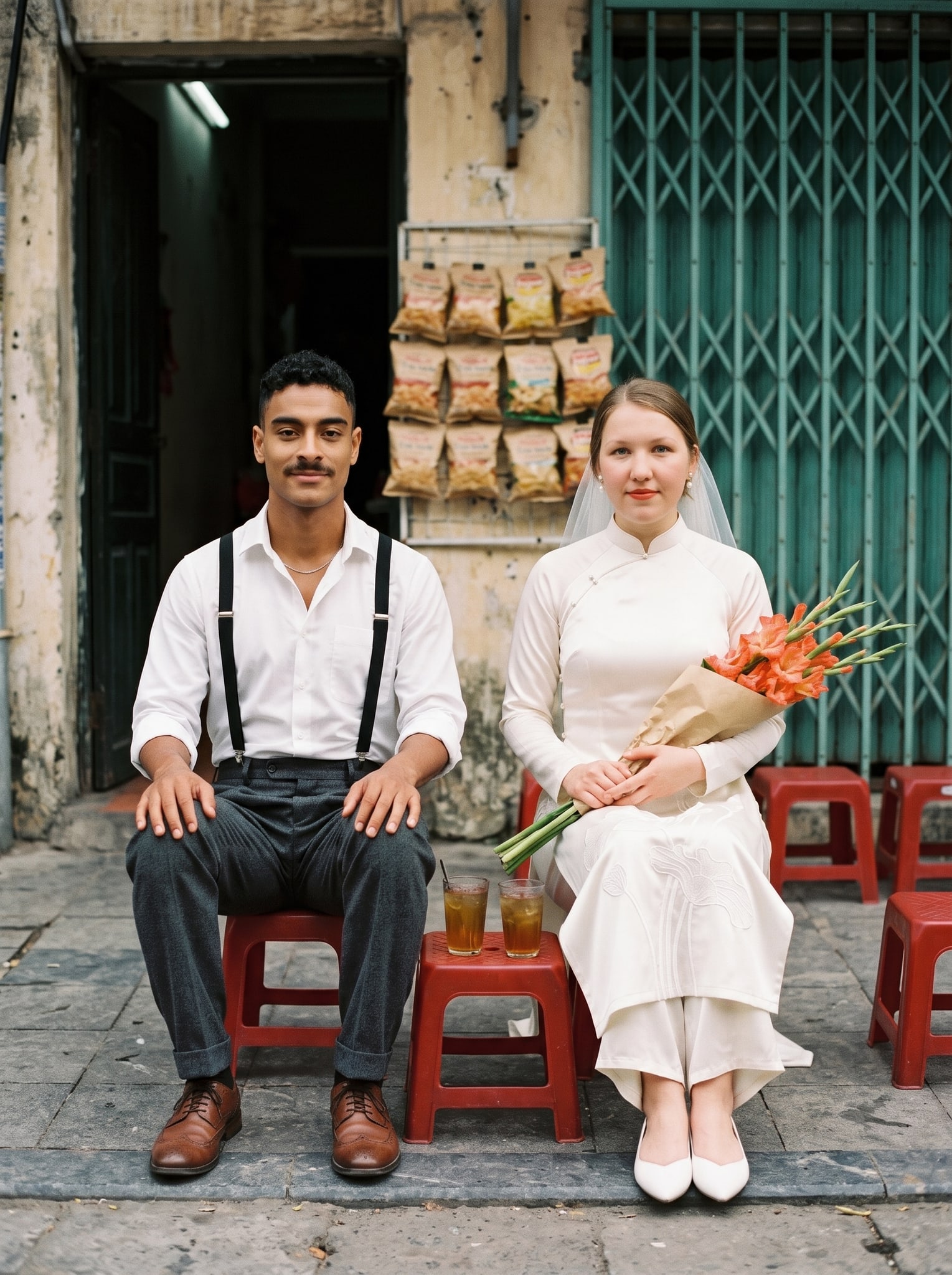
Both work beautifully at the Temple of Literature, and the choice depends on what feels true to you. An áo dài (Vietnamese silk tunic and pants) reads as homage to the setting and flows naturally around the architecture. We've shot hundreds of couples here in áo dài, and the photos always feel culturally rooted. Western formal—tailored suits, structured dresses, tuxedos—photographs sharply and offers more contrast if your partner picks áo dài. The mix often looks most compelling: one person in áo dài, one in a dark suit, creates visual balance and tells a story of two traditions meeting. If you choose áo dài, have the áo taylored to fit snugly at the waist; loose áo dài can read shapeless in photos. Silk áo dài wears better in heat than polyester blends but costs more. Ask us for a quote on WhatsApp to discuss tailoring timelines if you're renting. Most couples book a makeup and hair at your hotel session beforehand so they arrive camera-ready and don't sweat out styling during travel to the temple.
How do we choose colors that won't clash with stone and old wood?
Colors at the Temple of Literature need to stand apart from gray stone, ochre brick, and weathered timber without screaming. We use a simple test: hold your outfit next to a photo of the temple's courtyard. If it disappears, pick a richer shade or stronger contrast. Jewel tones—deep emerald, sapphire, wine red—photograph crisp against stone. Soft pastels (blush, sage, powder blue) work only if you're shooting in open shade; in direct sun they flatten. Blacks and deep navies photograph well but can read funereal if both partners wear them. A better pairing: one person in a solid dark color, one in a jewel tone or cream. Neons and hot pinks, even if they feel fashionable, photograph garish near heritage architecture. Metallics (gold, silver, sequins) attract light and distract. Patterns matter too—small, tight patterns (tiny check, fine stripe) read busier than large prints and lose detail in distance shots. For the Temple of Literature, solid or subtle is almost always right. We often suggest one partner in cream or pale gold, the other in deep burgundy or forest green; that pairing balances warm and cool and respects the setting.
See packages and prices on vietnamphotoshoot.com
What about fabrics—do they really matter that much?
Yes. We've watched linen keep its shape through a 3-hour shoot while polyester blends wrinkle, stain with sweat, and photograph dull. Hanoi's humidity is relentless in most months; synthetics trap moisture and show wet patches by hour two. Silk, cotton, and linen-blend fabrics breathe, feel lighter in heat, and photograph with better texture. Silk áo dài, for instance, catches light naturally and drapes in ways that flatter on camera. Cotton suits hold a crisp line better than polyester-cotton blends. Linen creases—that's its nature—but those soft wrinkles often look romantic in photos, not messy. If you pick linen, expect it to wrinkle slightly and plan for touch-ups mid-shoot. We carry a small steamer and iron on set for quick fixes. Avoid anything too stiff (heavy brocade, heavily starched cotton) because you'll look uncomfortable walking the temple's uneven paths. Fabric weight also affects movement: a light silk or cotton drapes and flows in photos, while heavy materials hang static. For a couple shoot, choose fabrics that move with you, not against you. This is one reason we recommend booking a styling consultation before the shoot so you and your partner can try pieces together and see how they move.
| Fabric type | Best for | Why | What to watch |
|---|---|---|---|
| Silk áo dài / formal | Traditional elegance, cultural rooted feel | Photographs with depth, flows beautifully, breathes | Can wrinkle; needs steam touch-ups |
| Cotton-linen blend suit | Comfort + structure, all-day wear | Breathes, holds shape, soft sheen | Winkles faster than pure cotton |
| Lightweight cotton dress | Movement, romantic feel | Flows in breeze, soft texture, cool | Sticks if damp with sweat |
| Heavy brocade or satin | Special occasions, jewel tones | Bold color, formal read | Too stiff, hard to move, overheats |
| Polyester blends (generic) | Budget-friendly rentals | Cheap, easy care | Photographs dull, shows sweat, hot |
What shoes and accessories actually work on temple paths?
The Temple of Literature has uneven stone paths, narrow brick stairs, and occasional wet patches—especially early morning. We've shot couples in heels (usually a mistake) and in sneakers (breaks the elegance). The middle ground is a soft-soled closed shoe: leather flats, ballet flats, embroidered silk slippers (traditional Vietnamese style), or dressy loafers. If you want formality with comfort, consider a dressy flat sandal with ankle straps or a embroidered traditional slipper. Avoid flip-flops and open sandals; they look casual and are unsafe on wet stone. Heels over 2 cm sink into mortar gaps and make you walk stiffly—not good for movement shots. Accessories should echo the temple's aesthetic: simple gold or silver jewelry, a light silk scarf, a small bag. Avoid huge shoulder bags, costume jewelry, or anything that clinks or catches light distractingly. A scarf is practical too—wrap it loosely if the sun gets harsh or you need a quick cover. Sunglasses (quality ones with a subtle frame) work for some shots but we usually ask couples to remove them for close-ups so emotion reads in the eyes. Flowers (a small posy for the bride, a boutonniere) photograph well and add color without clashing. We keep them minimal so they don't distract from faces and clothes.
How far in advance should we plan outfits, and what if we're renting?
Plan outfits 2–4 weeks before your shoot date. If you're renting áo dài or formal wear, order early (most tailors and rental shops in Hanoi need 7–14 days for custom tailoring). If you're buying locally, Hanoi's Hàng Gai Street (Old Quarter) has fabric shops and made-to-order tailors; Saigon's Nguễn Huệ area has formal-wear boutiques. If you're flying in and can't bring formal pieces, many hotels can direct you to same-day rental services, though choice is narrower. We often coordinate with guests via WhatsApp to see photos of what they're considering, and we'll give honest feedback on color, fit, and fabric. A few couples have felt uncertain about áo dài fit—too loose, too tight—so we sometimes suggest a fitting session a few days before the shoot. If you're booking a pre-wedding photoshoot with us, mention in your inquiry if you want styling help; many of our team have worked with tailors and can suggest trusted shops. The Temple of Literature shoot usually takes 2–3 hours, so comfort and fit compound: a tight áo dài or ill-fitting suit will show tension in your face by the end.
What do we need to check before we finalize our outfit choices?
Before you commit, run through this checklist:
Fit and movement. Walk around in your full outfit (shoes included) for 20 minutes. Can you sit, turn, lean against a wall, and walk stairs without discomfort or seams pulling? If not, it's not ready for a 3-hour shoot.
Fabric performance. If you can, sit on a stone or bench outdoors in similar heat to test if the fabric wrinkles or shows sweat. Linen will wrinkle; that's okay. Polyester showing wet patches is not.
Color against your skin tone. Ask a friend or partner to photograph you in natural light, indoors and outdoors, in the outfit. Does the color drain your face or enliven it? This matters in photos more than in mirrors.
Shoe safety on uneven ground. Walk on old tile, gravel, or garden paths in your shoes. Are they stable? Do they pinch? Will they slow you down or make you anxious?
Coordination with your partner. See yourselves together in the outfit pairing. Do colors clash? Does one person look formal and the other casual? Does one outfit overwhelm the other?
Styling and touch-ups. Know how to fix your outfit if it wrinkles or comes loose. Bring bobby pins, a small sewing kit, a steamer pen, or accept that we'll have touch-up tools on set.
Timing and heat. If you're shooting midday, test your outfit in midday sun and heat, not in air conditioning. What feels fine in a cool shop might be overwhelming outside.
If any of these feels uncertain, we're happy to advise via WhatsApp. Many couples book a quick makeup and hair consultation with us a week before to also discuss outfit pairings and get professional tips on what reads well on camera.
Pages from our team you may need
FAQ
Can we wear all white or all black to the Temple of Literature?
All white washes out in midday sun and reads blank in photos against stone. All black is safe but can feel somber unless there's strong texture (silk weave, embroidery) to catch light. A single person in black, paired with the other in cream or jewel tone, works well.
Is renting an áo dài cheaper than buying one, and how long do we need?
Rental usually costs less for a single wear, but quality rental shops in Hanoi need 3–7 days for fittings and alterations. If you're buying, polyester blends are cheaper but photograph less well than silk or silk-blend áo dài. Ask us for a quote on WhatsApp if you want recommendations.
What if the weather turns rainy—do we need different outfits?
Rain is rare at the Temple of Literature except in monsoon season (May–September), but it happens. Light cotton or linen can handle light drizzle, but heavy rain usually means rescheduling. We always check forecast 48 hours before and alert you early if conditions look risky.
Do we have to match our outfits in color or style?
No. Matching can look formal but also costume-y; coordinating (similar vibe, complementary colors) usually photographs more naturally and gives each person space to feel like themselves. One person in áo dài and one in a suit is a classic, respected pairing.
Should we bring a backup outfit or change of clothes?
Yes, especially if you have time for a 2-3 hour shoot. A lighter, more casual second outfit (jeans and a nice shirt, or casual summer dress) gives variety to the gallery and lets you move differently. We often suggest a formal first outfit, then a light backup for the final hour.
What if we're not sure about sizing or fit before we arrive in Hanoi?
Order rental or made-to-measure pieces 3–4 weeks early if possible. Most Hanoi tailors (Hàng Gai area) can take rush orders with 5–7 days' notice. Send measurements or photos of what fits you well. If you're arriving with only carry-on luggage, confirm that what you're wearing is already fitted and comfortable before you book your shoot date.
Pre-Wedding & Elopement
Inclusions, prices and booking are on our booking site.
FAQ
Can we wear all white or all black to the Temple of Literature?
All white washes out in midday sun and reads blank in photos against stone. All black is safe but can feel somber unless there's strong texture (silk weave, embroidery) to catch light. A single person in black, paired with the other in cream or jewel tone, works well.
Is renting an áo dài cheaper than buying one, and how long do we need?
Rental usually costs less for a single wear, but quality rental shops in Hanoi need 3–7 days for fittings and alterations. If you're buying, polyester blends are cheaper but photograph less well than silk or silk-blend áo dài. Ask us for a quote on WhatsApp if you want recommendations.
What if the weather turns rainy—do we need different outfits?
Rain is rare at the Temple of Literature except in monsoon season (May–September), but it happens. Light cotton or linen can handle light drizzle, but heavy rain usually means rescheduling. We always check forecast 48 hours before and alert you early if conditions look risky.
Do we have to match our outfits in color or style?
No. Matching can look formal but also costume-y; coordinating (similar vibe, complementary colors) usually photographs more naturally and gives each person space to feel like themselves. One person in áo dài and one in a suit is a classic, respected pairing.
Should we bring a backup outfit or change of clothes?
Yes, especially if you have time for a 2-3 hour shoot. A lighter, more casual second outfit (jeans and a nice shirt, or casual summer dress) gives variety to the gallery and lets you move differently. We often suggest a formal first outfit, then a light backup for the final hour.
What if we're not sure about sizing or fit before we arrive in Hanoi?
Order rental or made-to-measure pieces 3–4 weeks early if possible. Most Hanoi tailors (Hàng Gai area) can take rush orders with 5–7 days' notice. Send measurements or photos of what fits you well. If you're arriving with only carry-on luggage, confirm that what you're wearing is already fitted and comfortable before you book your shoot date.
More from the team
Boho pre-wedding photoshoot in Vietnam: Hanoi, Saigon, Hoi An
Boho pre-wedding shoots mix romantic, free-spirited aesthetics with Vietnam's landscapes and heritage sites. We run full-day sessions in three cities, handling styling, makeup, location scouts and edits.
Avoid crowds at Hoang Su Phi rice terraces: timing for wedding shoots
Hoang Su Phi's terraced landscape draws couples and tour buses in equal measure. We show how to shoot there alone, when to arrive, and what to arrange with us before you go.
Photography rules at Con Dao beaches: permits, drones and what to check
Con Dao's beaches demand prep before you shoot—permits, drone zones and tide timing all affect your day. We share what the Cáo Studio team verifies on every booking.