 Cáo Studio
Home › Blog › Pre-Wedding & Elopement
What to wear for couple photos at Thanh Toan bridge
By the Cáo Studio team · Hanoi & Saigon · 2026-11-04
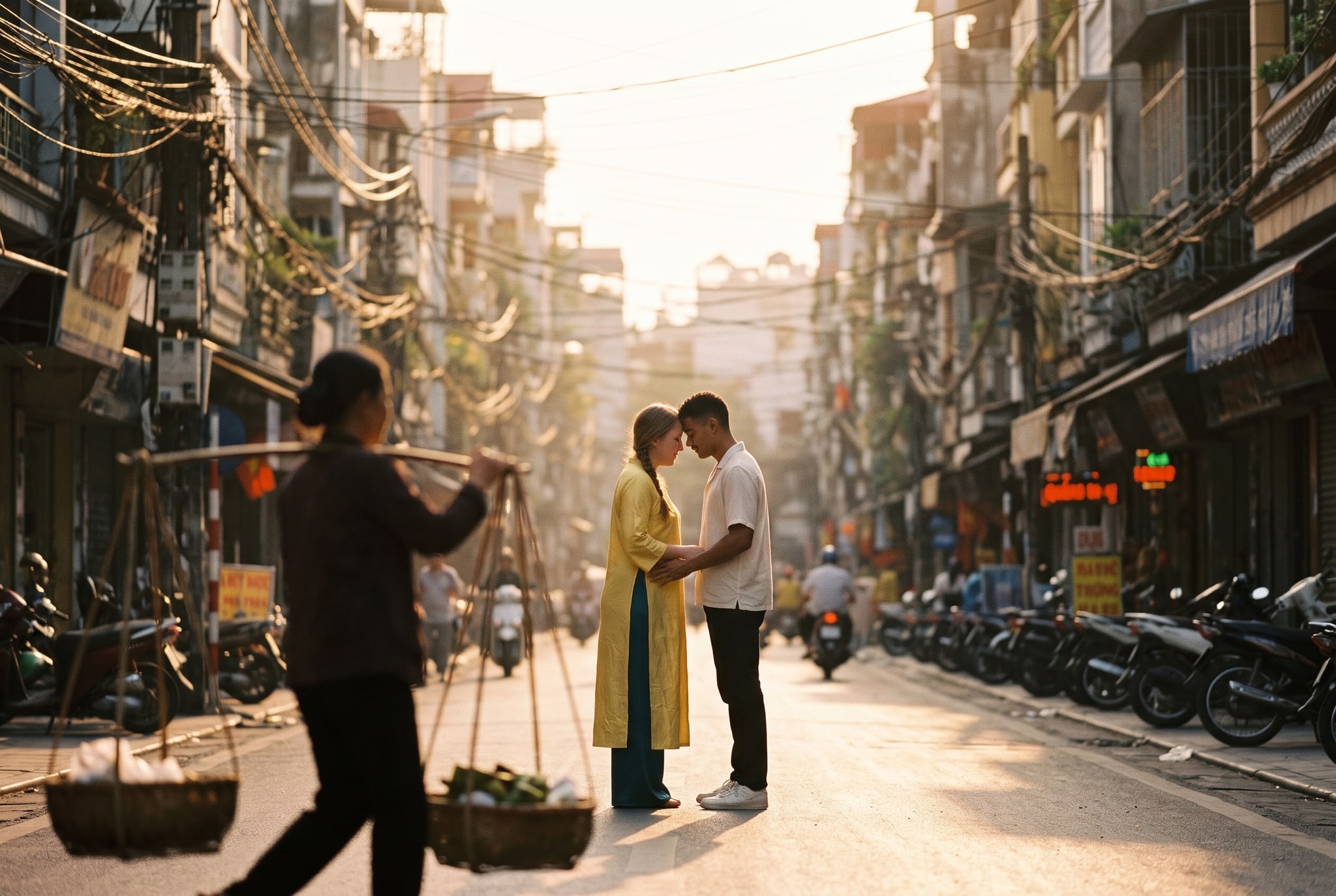
Thanh Toan tile-roofed bridge sits in Hoi An and rewards soft, historically grounded outfits. Most couples choose between ao dai (the silk Vietnamese tunic, flattering in the rustic amber light), tailored casual wear (linen, cotton, cream or jewel tones), or a layered look mixing modern and traditional pieces. The bridge's weathered wood, low ceilings (6–7 feet in the center), and narrow walkway mean tight spaces—avoid wide skirts, heavy jewelry, or anything that catches on the wooden railings. Cáo Studio typically shoots here from 6–7 p.m. when golden-hour sun bounces through the bridge's openings; outdoor humidity and dust mean breathable fabrics and minimal makeup touch-ups between shots. Ask us for a quote on WhatsApp for a couple photoshoot package that includes Thanh Toan styling and location scouting. Chat with us on WhatsApp
Why ao dai works best at Thanh Toan
Ao dai—the floor-length silk tunic with side slits—photographs like it was made for this bridge. The soft drape catches the reddish-amber cast from the roof tiles and lanterns; sleeves float in the breeze when you walk the narrow center path. We've shot here with tunic-and-pants combos in cream, dusty rose, sage, and pale gold, and every frame has that timeless, slightly dreamlike quality. The fabric's natural movement solves the "what do I do with my hands?" problem—fabric always reads as intentional on camera. Choose lightweight silk or silk-blend to stay cool; temperatures inside hover near 32°C (90°F) even at sunset because the thick roof traps heat. Avoid heavy embroidery on the chest if you're sensitive to humidity—sweat can darken silk. Pair with simple gold earrings or jade; ornate necklaces get lost in the tunic's vertical lines and often catch on the ao dai's collar when you tilt your head.
Our stylists always recommend ao dai for this location because you don't need to worry about posture or angles—the garment's cut does the work. If you're unsure about wearing one, we offer ao dai photoshoot packages that include styling and rental; many couples choose this even if they've never worn the tunic before.
See packages and prices on vietnamphotoshoot.com
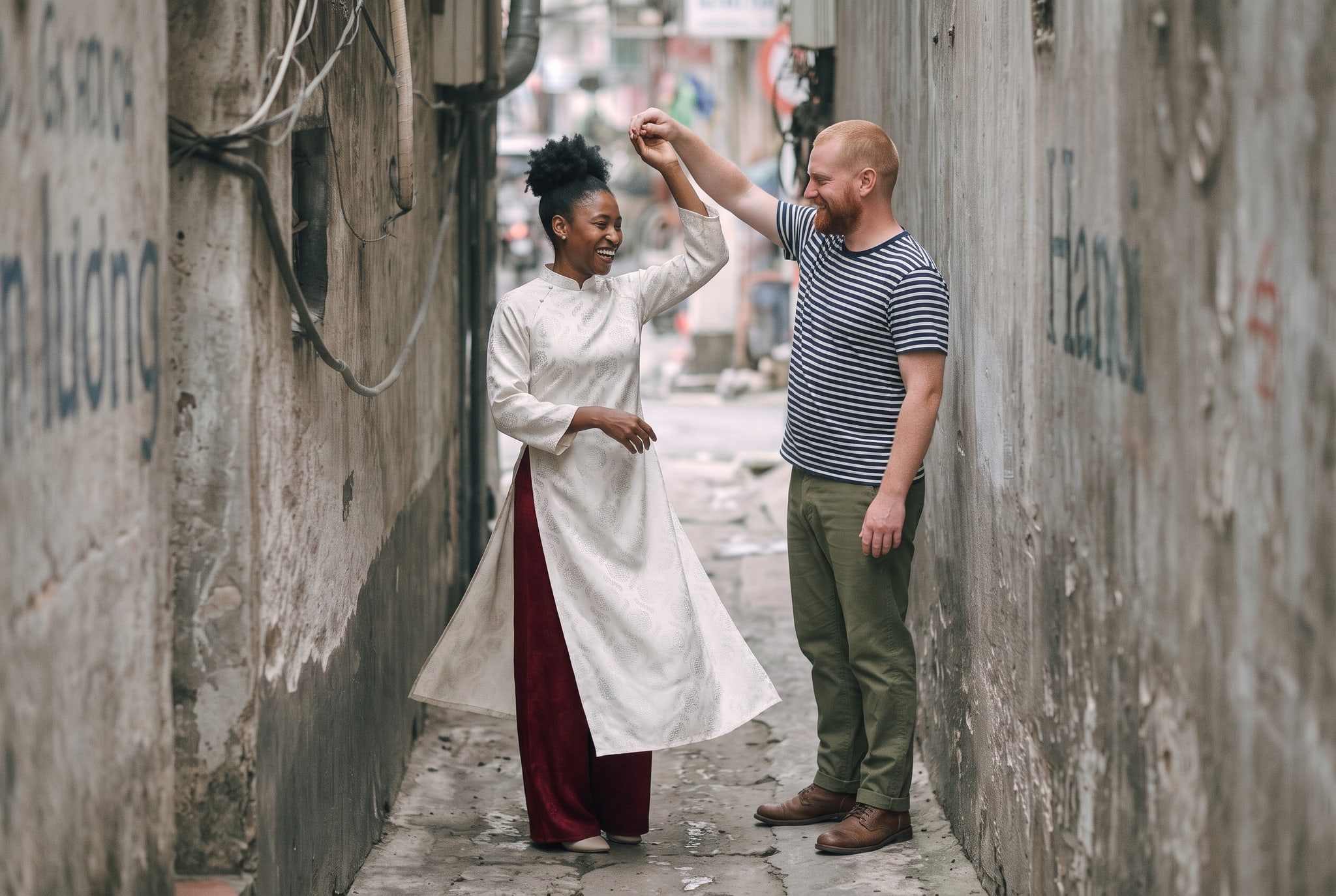
What happens when couples wear casual western clothes
We see plenty of pairs in jeans, linen shirts, and casual dresses at Thanh Toan—and it works if you're intentional. The bridge's rustic backdrop actually suits understated, neutral tones. Cream linen, soft grays, and warm beiges read beautifully against the oxidized roof; navy or forest green add depth without clashing. The catch: tight or structured clothing shows sweat in humidity, and fabric wrinkles fast on the wooden walkway where people brush against posts. We always carry a hand steamer in our gear bag because linen pants creased after fifteen minutes of sitting for shots are a common fix on-site.
Denim works only if it's fitted and styled deliberately—oversized or distressed reads casual in a way that competes with the bridge's character. Avoid horizontal stripes (they flatten figures in the bridge's narrow passages) and anything sleeveless if you're self-conscious; the low light means bare shoulders can look washed out without careful lighting.
Cotton or linen blend fabrics breathe best. Bring a light scarf or shawl even if the forecast doesn't show rain—the bridge's interior stays cool and damp, and a draped fabric adds dimension without bulk.
Layering options that photograph in the bridge's low light
The bridge's interior is dim—roughly 30% of outdoor brightness—so layering textures helps your outline read clearly on camera. We've had success with these combinations: a fitted long-sleeve base layer under a sleeveless tunic, a thin cardigan over a fitted dress, or a structured vest over a smooth shirt. The texture contrast (knit against silk, matte against sheen) creates visual interest without needing bright colors.
Layering also solves the temperature problem; many couples shed their outer layer after fifteen minutes indoors, and that transition moment often yields unguarded, natural shots. Avoid chunky knits or oversized blazers—they add bulk that reads heavy in the tight space and often catch on the bridge's wooden railings when you move.
Dark layers underneath light pieces work well here; a black tank under an ivory linen shirt creates a sleek line without requiring you to wear all white (which often overexposes in the bridge's mixed light). Metallics—copper, bronze, rose gold accessories—complement the tile roof better than silver, which can look cold against the warm wood tones.
Footwear: comfort and visual balance
The bridge's wooden walkway is uneven and often wet from humidity and the Hoai River spray. Wear shoes with grip—leather-soled dress shoes are slippery and unsafe. Our couples typically choose flat leather sandals, simple loafers, or soft ballet flats. Heels are difficult; we've had two near-falls in the past six months from couples in block heels, so we now tell people upfront on WhatsApp before the shoot.
Avoid white or very pale shoes unless they're intentionally part of your outfit plan; dusty brown and warm neutrals photo better against the floor and coordinate with ao dai and casual wear alike. If you're barefoot (some traditional shoots use this), the wooden planks stain easily—be ready for a thorough cleaning afterward.
Visible shoe texture (suede, quilted fabric, embroidery) reads on camera; minimal, clean designs let the focus stay on your face and the bridge's architecture.
What to check before you book your Thanh Toan shoot
| Consideration | Why it matters | What to do |
|---|---|---|
| Fabric breathability | Humidity is 70–80% inside bridge; synthetic fabrics trap sweat visibly | Choose cotton, linen, silk, or blends; avoid polyester |
| Outfit weight | Heavy layers cause fatigue and slouching over 60–90 minutes | Lightweight fabrics and one base + one outer layer maximum |
| Color temperature | Cool tones (blue, silver) wash out in warm tile-roof light | Wear warm neutrals, gold-toned metallics, jewel tones |
| Sleeve length | Arms are visible in most Thanh Toan poses | Long sleeves or styled tanks; plan for visual balance |
| Footwear grip | Wooden planks are slippery when damp | Non-slip soles; avoid smooth leather |
| Jewelry movement | Rings, bracelets catch on railings; necklaces tangle in ao dai collars | Simple pieces; avoid dangling chains longer than 12 inches |
| Rental vs. purchase | Ao dai rental takes 2–3 days; custom tailoring takes 2–3 weeks | Book style consultation early if you're renting through us |
Our team typically reviews these points with you over WhatsApp a week before your shoot—we ask about fabric choices, any physical concerns (joint pain, heat sensitivity), and whether you're renting or bringing your own clothes.
Seasonal adjustments: Hoi An gets warmer and wetter
Thanh Toan in May through September (hot season) requires maximum breathability; silk ao dai and loose linen are nearly mandatory. In cooler months (November–January), you can layer with thin knits and wear slightly heavier fabrics like structured cotton or linen-blend.
Rainy season (September–October) means the bridge's interior smells of damp wood and moss—bring clothes that won't water-stain visibly. Dark and jewel-toned fabrics are safer bets. Our makeup and hair at your hotel service includes humidity-prep makeup, which helps your look stay intact if the forecast shows rain.
Tet holidays (late January) bring thousands of visitors; the bridge gets crowded by 5 p.m. We schedule shoots for early morning or late evening to avoid crowds and get clearer backgrounds.
Before you order or rent
Check fabric care labels. Rented ao dai often requires dry cleaning after the shoot; confirm who pays. Our pre-wedding photoshoot package includes styling advice, but rental terms are separate—ask on WhatsApp.
Bring a change or two. We often shoot two outfit changes at Thanh Toan, so pack a second set in case the first wrinkles or gets dusty. The bridge's floor collects rust particles from the tiles.
Confirm weather 48 hours prior. If rain is forecast, let us know early; we have alternative Hoi An locations nearby (Ancient Town, Japanese Bridge, riverside paths) that photograph equally well in wet conditions.
Measure doorways and space. The bridge's center passage is 4–5 feet wide and 6–7 feet tall. If you're tall or wearing very wide skirts, we discuss this beforehand so poses work safely.
Plan for humidity damage. Hair curl relaxes; silk wrinkles faster; makeup fades quicker. We carry face blotters, setting spray, and a hand steamer. Let your hair stylist know about the location when you book; Hoi An's 80% humidity is different from Hanoi's or Saigon's drier air.
See packages and prices on vietnamphotoshoot.com
FAQ
Can I wear pants and a shirt instead of an ao dai?
Yes. Avoid tight jeans; choose fitted linen or cotton in cream, neutral, or jewel tones. The bridge rewards understated, breathable fabrics. Bring a steamer for wrinkles.
How early should I arrive to get ready?
Arrive 30 minutes before shoot time. The bridge location is in central Hoi An, a 5–10 minute walk from the Ancient Town parking area. We do on-site touch-ups but recommend getting ready at your hotel or with our makeup team beforehand.
Is Thanh Toan bridge indoors or outdoors?
It's a covered bridge (indoors at the center, open at the ends). Light is 30–40% dimmer than outside, with warm amber cast from roof tiles. This creates moody, romantic photos but requires careful fabric choices to avoid looking washed out.
What happens if it rains during the shoot?
The bridge's interior stays dry. Rain outside adds mist and atmosphere. We reschedule only if heavy rain makes access unsafe; light rain usually works in our favor for mood and texture.
Should I rent an ao dai or buy one?
Rental is faster and less costly upfront; ownership lets you keep it forever. Rental usually takes 2–3 days for fitting. Ask us on WhatsApp for rental partners and styling advice; we help many first-time ao dai wearers choose their fit and color.
What colors photograph best inside Thanh Toan?
Warm neutrals (cream, ivory, soft gold, blush, dusty rose), jewel tones (emerald, sapphire, burgundy), and muted earth tones (sage, taupe, warm gray). Avoid stark white or very cool blues; they clash with the rust-tile roof light.
Pre-Wedding & Elopement
Inclusions, prices and booking are on our booking site.
FAQ
Can I wear pants and a shirt instead of an ao dai?
Yes. Avoid tight jeans; choose fitted linen or cotton in cream, neutral, or jewel tones. The bridge rewards understated, breathable fabrics. Bring a steamer for wrinkles.
How early should I arrive to get ready?
Arrive 30 minutes before shoot time. The bridge location is in central Hoi An, a 5–10 minute walk from the Ancient Town parking area. We do on-site touch-ups but recommend getting ready at your hotel or with [our makeup team beforehand](/go/makeup-and-hair).
Is Thanh Toan bridge indoors or outdoors?
It's a covered bridge (indoors at the center, open at the ends). Light is 30–40% dimmer than outside, with warm amber cast from roof tiles. This creates moody, romantic photos but requires careful fabric choices to avoid looking washed out.
What happens if it rains during the shoot?
The bridge's interior stays dry. Rain outside adds mist and atmosphere. We reschedule only if heavy rain makes access unsafe; light rain usually works in our favor for mood and texture.
Should I rent an ao dai or buy one?
Rental is faster and less costly upfront; ownership lets you keep it forever. Rental usually takes 2–3 days for fitting. Ask us on WhatsApp for rental partners and styling advice; we help many first-time ao dai wearers choose their fit and color.
What colors photograph best inside Thanh Toan?
Warm neutrals (cream, ivory, soft gold, blush, dusty rose), jewel tones (emerald, sapphire, burgundy), and muted earth tones (sage, taupe, warm gray). Avoid stark white or very cool blues; they clash with the rust-tile roof light.
More from the team
Photography rules at Ta Phin village: permits, drones and what to check
Ta Phin village in Sapa draws photographers for its Hmong culture and layered mountain light. We've shot dozens of sessions there—here's what actually works and what stops shoots cold.
Pre-Wedding Photo Ideas and Poses at O Quy Ho Pass
O Quy Ho Pass sits on the Hanoi–Sapa border at 1,200 metres. Our couples shoot there for its curves, mist and isolation—but the weather and logistics demand a different approach than valley shoots.
Is O Quy Ho Pass Good for Pre-Wedding Photos? Pros, Cons, Alternatives
O Quy Ho pass in Sapa draws couples seeking high-altitude drama, but tight timelines, unpredictable fog, and logistics make it risky for pre-wedding shoots. We've scouted it; here's what actually works. #