 Cáo Studio
Home › Blog › Pre-Wedding & Elopement
What to wear for couple photos at Tra Que vegetable village
By the Cáo Studio team · Hanoi & Saigon · 2026-11-02
Tra Que demands clothes that survive mud, humidity, and water—not your wedding dress. We at Cáo Studio style most couples in neutral linen or cotton separates, Vietnamese áo dài over plain trousers, or earthy-toned casual wear that photographs warm against green rows. The paths flood after rain; shoes must grip wet soil and wash clean afterward. Bring a second outfit if your budget allows—one for the farm work scenes (planting, harvesting props) and one for formal shots near the entrance gates. Hoi An's heat peaks 10 a.m.–2 p.m., so loose fabrics beat fitted ones. A couple photoshoot session at Tra Que runs 4–6 hours; plan for sweat, insects, and earth stains as part of the story, not flaws to hide. Chat with us on WhatsApp | See packages and prices on vietnamphotoshoot.com
Why mud and water are features, not accidents at Tra Que
Tra Que has worked the same vegetable beds for three centuries. Rows are watered daily; the soil stays wet. Most couples assume this means ruined clothes—so they overdress or wear white. We've learned the opposite: embrace it. Your photographer will capture real texture—soil spray, water droplets, weathered hands—that studio backdrops cannot fake. The mud isn't a mishap; it's authenticity. Visitors who wear practical, washable fabrics report feeling more relaxed because they've given themselves permission to get dirty. White linen or silk? Save it for the hotel lobby afterward.
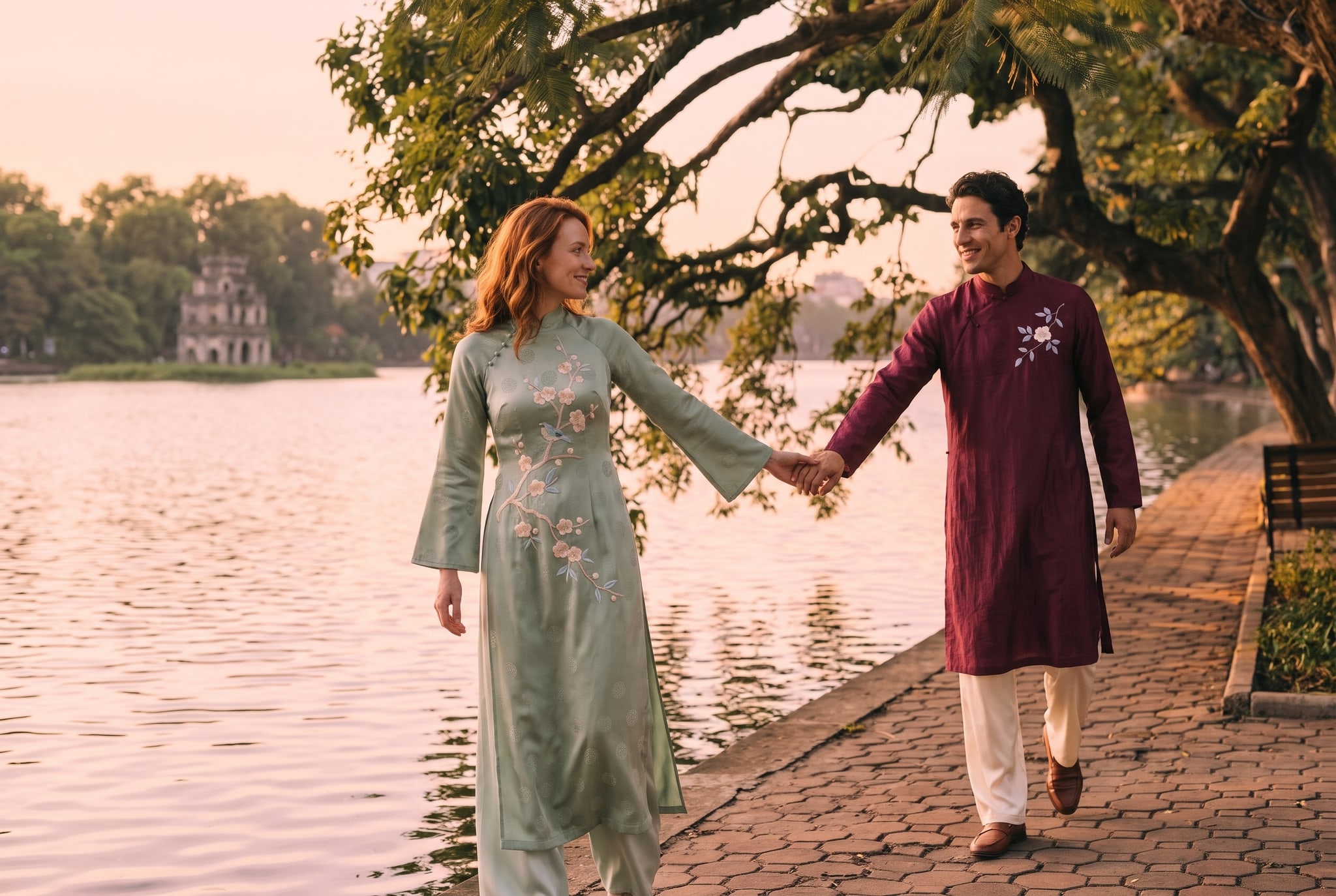
Which outfit styles work best in the field
We've styled over 400 couples at Tra Que. Three silhouettes dominate our shoots:
Áo dài (traditional Vietnamese tunic). Flows beautifully in wind, photographs as cultural storytelling, and protects your legs from insect bites. Pair with plain dark trousers underneath. The long sleeves shield skin during midday shoots. Best for formal couples who want heirloom-quality images.
Neutral linen separates. Linen breathes in 32°C heat and wrinkles authentically—the camera loves the texture. Wear a loose linen shirt (cream, sage, khaki, tan) with rolled cuffs and lightweight trousers or shorts in matching neutral tones. Shoes: canvas slip-ons or leather sandals that dry quickly. This style suits relaxed, editorial-feel shoots.
Earthy-toned casual wear. Think olive, rust, terracotta, or soft brown tops with natural-fiber shorts or cropped pants. The palette harmonizes with soil and leaf green. Avoid black (absorbs heat, reads as funeral wear) and bright neons (compete with the landscape). This works for playful, lifestyle-driven sessions.
What not to wear: White or cream silk (staining is permanent), structured dresses (restrict movement), heels or flip-flops (unsafe on wet earth), and heavy layers (you will overheat). Jewelry should be minimal—dangly bracelets catch on vegetable vines, and metal heats up under sun.
Chat with us on WhatsApp | See packages and prices on vietnamphotoshoot.com
How footwear choices affect your comfort and our shooting timeline
Feet are the first casualty at Tra Que. Muddy paths mean shoes must grip, drain, and survive water. We've watched shoots stall 45 minutes because a couple wore canvas sneakers that soaked through, then froze their feet in shade. Here's what actually works:
| Shoe Type | Best For | Why It Works | What Goes Wrong |
|---|---|---|---|
| Canvas slip-ons (Vans, Toms style) | Casual, relaxed shoots | Easy on/off, breathable, photo-friendly | Soaked by hour 1.5; feet smell after |
| Leather sandals (flat, simple) | Warm-weather couples | Dries fast, reveals skin, minimal | Straps leave tan lines; mud gets between toes |
| Quick-dry athletic shoes | Long sessions (5+ hours) | Grip + drainage; stylish modern look | Visible socks read "gym" not "romantic" |
| Bare feet (during planted rows) | Editorial, artistic shoots | Primal, textured, authentic | Cuts, blisters, insect bites; washes muddy |
| Flip-flops | NOT RECOMMENDED | Unsafe on wet ground; you'll slip | One lost shoe in a flooded row = 20-min search |
Our stylists advise: bring two pairs. Wear one to Tra Que; change into fresh shoes at the midpoint. Most couples appreciate this shift—new footwear boosts energy in hour 4 when exhaustion sets in. Cheap canvas slip-ons exist for exactly this: buy a pair, wear them once, discard. Ask us for a quote on cleaning costs if you're renting specialty footwear instead.
Layering for heat swings and sudden shade
Hoi An's climate is deceptive. Midday sun is brutal; farmers' shade shelters drop 8–10°C instantly. Couples who layer strategically avoid both sunburn and the shivering-cold phase when we move shoots near water pumps or dense crop rows.
Start with a loose base layer in breathable cotton or linen—long sleeves if you burn easily. Bring a lightweight overshirt (chambray, linen, cotton) you can tie at the waist or remove entirely. Avoid tight base layers—they trap sweat and look constricting in close-up frames. Hats are optional but smart. A simple straw hat or baseball cap protects your face and creates shadow contrast for portraits. We remove it for formal shots; it stays on for candids in the fields.
The second outfit—if you've booked one—should swap heavy layers for lighter fabric. If hour 1–3 was linen shirt + trousers, hour 4–6 could be sleeveless áo dài + same trousers, or a casual tank with an open overshirt. This costume change revitalizes both the couple and the camera's eye. Our pre-wedding photoshoot packages often include time for outfit swaps; confirm with your photographer on WhatsApp.
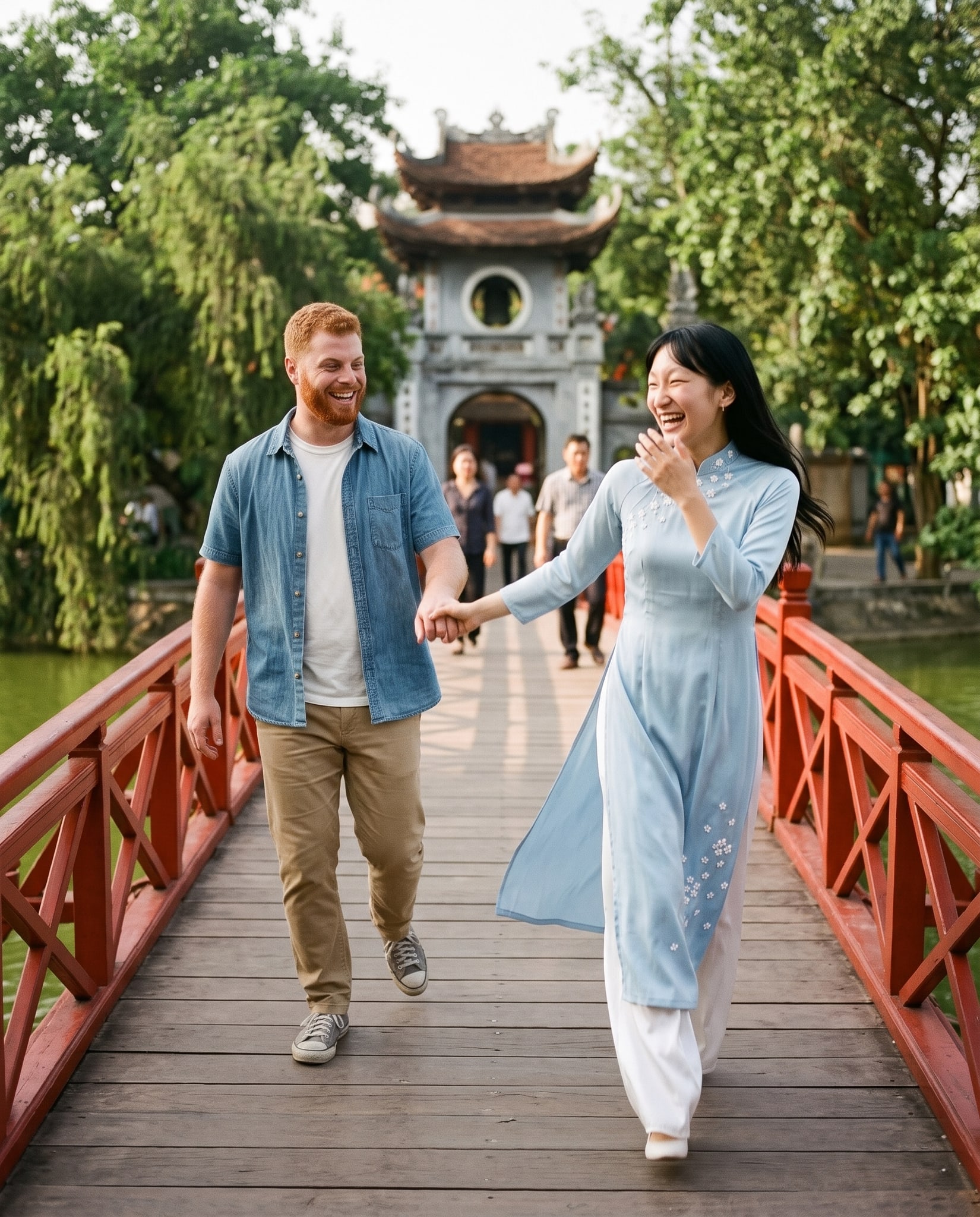
Coordinating colors so you look like a couple, not a crew
Clashing outfits confuse the frame. We've shot couples where one wore neon green and the other navy—technically different, visually chaotic. The farm's natural palette is muted: greens, browns, grays, water-blue. Your clothes should either match that or at least share a value (lightness/darkness).
Matching approach: Both wear the same neutral—cream linen, khaki, sage green. Subtle and married-looking. Best for formal, timeless albums.
Complementary approach: One wears warm earth (rust, terracotta, tan), the other cool (sage, soft blue, gray). Creates visual interest without clashing. Editorial shoots love this.
Avoid: Neon on one person, pastels on the other. Patterned fabrics on both (too busy). One dressy, one casual (reads as mismatched, not intentional).
Skin tone matters. Warm earth tones flatter olive and deep skin; cool pastels suit fair skin with pink undertones. Cáo Studio stylists assess your complexion before suggesting colors—ask during your WhatsApp consultation. We don't charge extra for styling advice; it's part of your couple photoshoot session.
Chat with us on WhatsApp | See packages and prices on vietnamphotoshoot.com
What to check before you finalize your outfit choice
Before booking your Tra Que session:
- Confirm the actual water level. Ask your photographer: "How wet is the farm this week?" Rain in the previous 48 hours means flooded rows. Wear fully waterproof shoes, not canvas.
- Check the season. November–February is cool (28°C, manageable); May–September is scorching (35°C+, plan shorter sessions or early morning). Adjust layers accordingly.
- Test your shoes at home. Wear them on wet ground, grass, stairs. Can you walk confidently? Do they slip? If yes, choose different shoes.
- Wash and dry new clothes before your shoot. Fresh fabric shrinks and dyes sometimes run. A pre-wash avoids mid-session surprises.
- Bring a waterproof bag. Phone, keys, wallet, fresh socks—all go muddy. A sealed pouch keeps essentials safe.
- Photograph your outfit choices. Text them to your photographer 2–3 days prior. Feedback now beats regret later.
Most Tra Que couples in our portfolio followed these steps. Those who didn't often requested reshoot discounts or complained about comfort. The farmers also appreciate when visitors dress practically—it signals respect for their work.
Pages from our team you may need
- ao dai photoshoot package
- couple photoshoot package
- makeup and hair at your hotel
- proposal and anniversary package
FAQ
Can I wear white at Tra Que?
White absorbs mud stains permanently and reads dull in green-field landscapes. Cream or ivory linen is safer; still consider a second outfit if your budget allows. Ask us on WhatsApp for styling alternatives.
How do I keep my hair and makeup clean during a muddy shoot?
Mud splashes mainly from knees down. Pull hair into a braid or bun, not loose. Skip heavy makeup; tinted moisturizer + mascara survives heat and sweat better. Our makeup and hair team recommends waterproof products. Bring blotting papers for touch-ups mid-session.
What if it rains the day of my shoot?
Tra Que becomes flooded and impassable within 90 minutes of heavy rain. We reschedule to the next clear day at no extra charge. Avoid booking during monsoon season (May–October). Wear waterproof shoes if light drizzle occurs.
Should I buy new clothes for Tra Que or use items I already own?
Use what you own if it fits the style guide above (neutral, breathable, washable). New clothes shrink or dye-bleed if unwashed. Only buy new if you specifically need quick-dry athletic wear or specialized sandals; ask us for a quote on rentals instead.
How long does a typical Tra Que couple shoot take?
4–6 hours, depending on your couple photoshoot package. Two outfits = longer session. Plan a full morning or afternoon. Bring water and light snacks; farmers' market cafes are limited.
Can we do Tra Que as part of a pre-wedding package?
Yes. Tra Que pairs beautifully with Hoi An Old Town portraits. Our pre-wedding and elopement packages include location scouting, outfit planning, and multi-location shoots. Chat with us on WhatsApp to customize.
Pre-Wedding & Elopement
Inclusions, prices and booking are on our booking site.
FAQ
Can I wear white at Tra Que?
White absorbs mud stains permanently and reads dull in green-field landscapes. Cream or ivory linen is safer; still consider a second outfit if your budget allows. Ask us on WhatsApp for styling alternatives.
How do I keep my hair and makeup clean during a muddy shoot?
Mud splashes mainly from knees down. Pull hair into a braid or bun, not loose. Skip heavy makeup; tinted moisturizer + mascara survives heat and sweat better. Our [makeup and hair team](https://go.vietnamphotoshoot.com/go/makeup-and-hair) recommends waterproof products. Bring blotting papers for touch-ups mid-session.
What if it rains the day of my shoot?
Tra Que becomes flooded and impassable within 90 minutes of heavy rain. We reschedule to the next clear day at no extra charge. Avoid booking during monsoon season (May–October). Wear waterproof shoes if light drizzle occurs.
Should I buy new clothes for Tra Que or use items I already own?
Use what you own if it fits the style guide above (neutral, breathable, washable). New clothes shrink or dye-bleed if unwashed. Only buy new if you specifically need quick-dry athletic wear or specialized sandals; ask us for a quote on rentals instead.
How long does a typical Tra Que couple shoot take?
4–6 hours, depending on your [couple photoshoot package](https://go.vietnamphotoshoot.com/go/couple-photoshoot). Two outfits = longer session. Plan a full morning or afternoon. Bring water and light snacks; farmers' market cafes are limited.
Can we do Tra Que as part of a pre-wedding package?
Yes. Tra Que pairs beautifully with Hoi An Old Town portraits. Our [pre-wedding and elopement packages](https://go.vietnamphotoshoot.com/go/pre-wedding-photoshoot) include location scouting, outfit planning, and multi-location shoots. Chat with us on WhatsApp to customize.
More from the team
Boho pre-wedding photoshoot in Vietnam: Hanoi, Saigon, Hoi An
Boho pre-wedding shoots mix romantic, free-spirited aesthetics with Vietnam's landscapes and heritage sites. We run full-day sessions in three cities, handling styling, makeup, location scouts and edits.
Avoid crowds at Hoang Su Phi rice terraces: timing for wedding shoots
Hoang Su Phi's terraced landscape draws couples and tour buses in equal measure. We show how to shoot there alone, when to arrive, and what to arrange with us before you go.
Photography rules at Con Dao beaches: permits, drones and what to check
Con Dao's beaches demand prep before you shoot—permits, drone zones and tide timing all affect your day. We share what the Cáo Studio team verifies on every booking.