 Cáo Studio
Home › Blog › Pre-Wedding & Elopement
What to Wear for Couple Photos at Tu Duc Tomb
By the Cáo Studio team · Hanoi & Saigon · 2026-11-02
Tu Duc Tomb near Huế is one of Southeast Asia's most photographed heritage sites for couples; the complex spans 20 hectares with manicured lakes, pavilions and forest paths lit best between 8–11 a.m. and 3–5 p.m. Most couples at Cáo Studio who shoot there choose either a traditional Vietnamese áo dài (which photographs beautifully against stone and water), Western formal wear like tailored suits or floor-length dresses, or a mix—one partner in áo dài, one in Western dress. The tomb's grey-and-earth palette means bold jewel tones and pastels read better on camera than pure white or black. Avoid heavy makeup in direct sun, bring a light shawl for wind, and plan to wear comfortable walking shoes off-camera because the grounds require 45 minutes of exploration. A typical couple session runs 3 hours. Success depends on outfit fit (loose áo dài shifts in wind; tight Western wear limits movement), fabric weight (cotton breathes, silk wrinkles), and color choice before you arrive—we've reshoot sequences when a bride's dress blended into the stonework. Chat with us on WhatsApp
Why Does Áo Dài Work Best at Tu Duc?
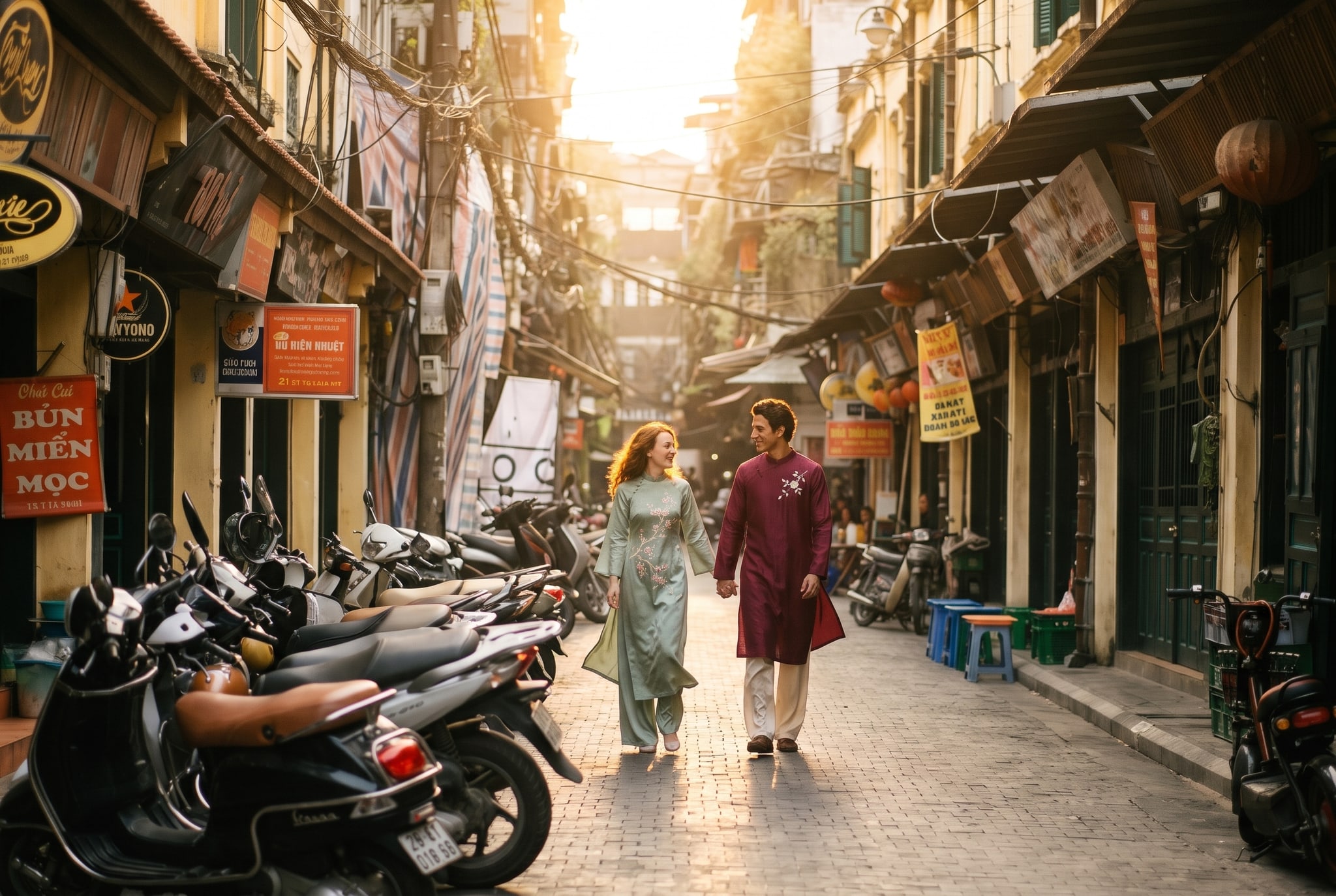
The áo dài's silhouette—fitted bodice, flowing skirt and panel—creates clean lines that contrast with the tomb's geometric architecture and asymmetrical gardens. When we frame a couple against the Perfume River pavilion or standing between stone gates, the fabric's movement reads on film in a way Western dress sometimes cannot. Áo dài in jewel tones (deep blue, burgundy, emerald) pop against grey stone; pastels (blush, sage, cream) merge softly with water reflections. The garment's heritage also matters: shooting Vietnamese formal wear at a royal tomb resonates visually and contextually with international viewers. One decisive detail: áo dài sleeves are snug, so if your arms are prone to swelling in heat, we ask clients to arrive hydrated and avoid tight sleeves. The fabric's drape means we can reposition it between frames without major wardrobe resets, saving 10–15 minutes per location change.
Should Both Partners Wear Áo Dài or Mix Styles?
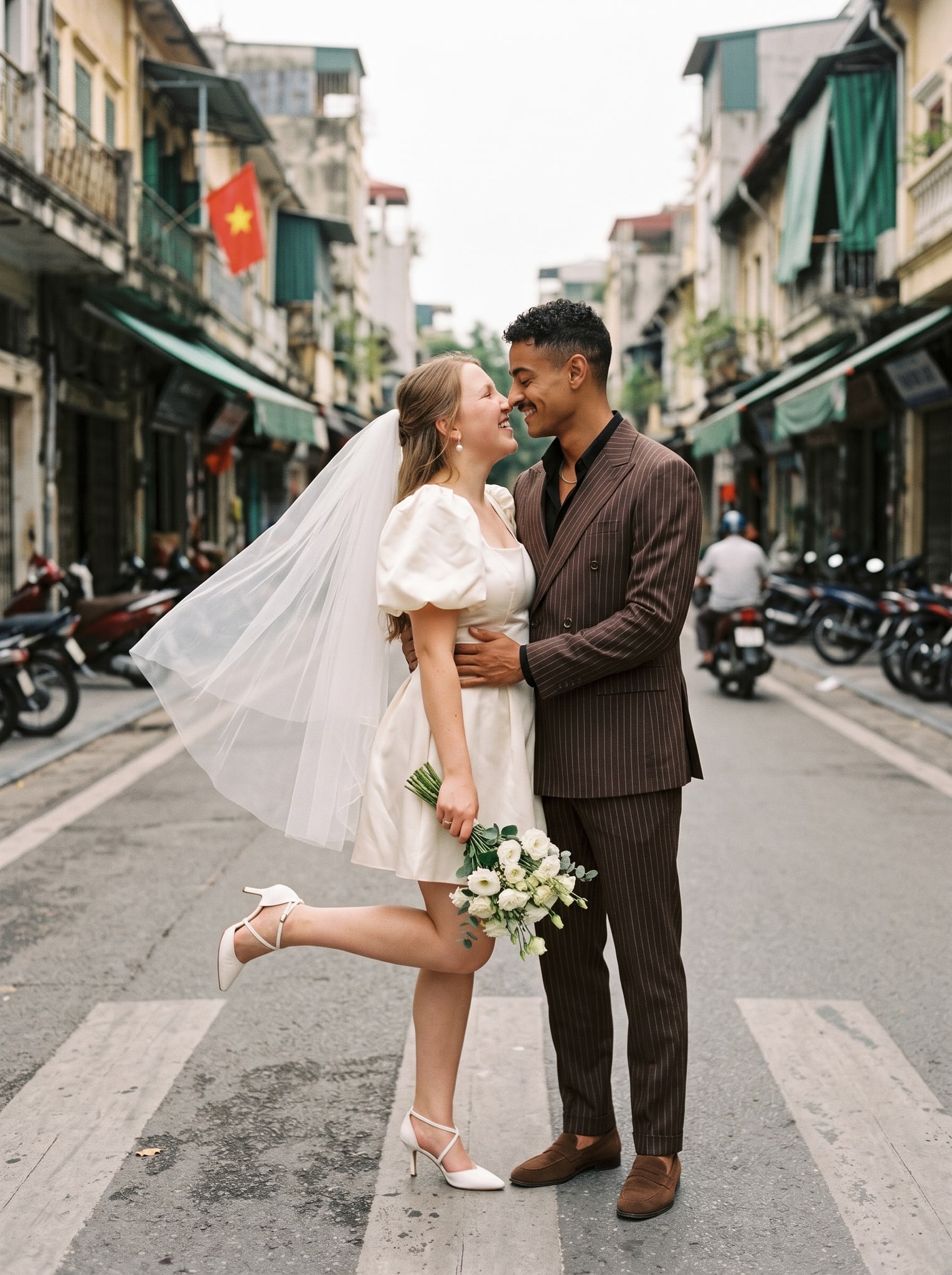
We see three patterns in successful Tu Duc shoots. Both in áo dài works if the man wears tailored silk pants and a tunic-style áo tứ thân (four-panel formal version) and the woman wears áo dài; they photograph as a unified visual statement and the symmetry suits the tomb's formal layout. Woman in áo dài, man in Western suit is most common at our Hanoi and Ho Chi Minh City studios; it avoids the risk of the man's áo dài looking costume-like to international viewers, and the contrast—feminine flow against masculine tailoring—creates dynamic frames. Both Western formal works if you choose complementary fabrics: a woman in a floor-length silk gown and a man in a three-piece suit with muted tie. Mixing materials matters: cotton suit + cotton dress will photograph flat; silk + linen creates texture variation. Avoid matching his tie to her dress color exactly—offset by one shade. Each approach has equal visual weight on film; the choice depends on your story. If you're working with our pre-wedding packages, your photographer will advise during the initial WhatsApp consultation based on your venue timeline.
See packages and prices on vietnamphotoshoot.com
What Colors Actually Read on Camera at Tu Duc?
Tu Duc's dominant tones are grey stone, dark green foliage and brown laterite paths—a narrow, cool palette. We track color performance across hundreds of frames:
| Color | Reads on Film? | Best For | Why |
|---|---|---|---|
| Deep jewel tones (sapphire, emerald, plum) | Excellent | Both áo dài and Western formal | High contrast, no loss in shadow |
| Pastels (blush, sage, cream) | Good if backlit | Áo dài mainly; soft aesthetic | Works with water, risks merging in shade |
| Pure white | Fair in sun; poor in shade | Neither ideal; whites flatten near stone | Blends into tomb architecture |
| Bright red | Excellent | Áo dài statement | Strong saturation, reads in all light |
| Navy or charcoal | Excellent | Suits, Western formal | Complements stone, no glare |
| Gold, bronze metallics | Moderate | Accessories only | Risks overexposure in direct sun |
| Black | Poor on film | Avoid unless for contrast | Absorbs light, creates dark holes in frames |
The rule: choose saturation over lightness. A muted burgundy beats pale pink; a deep teal beats cream. If you're undecided, our stylists at Cáo Studio in Hanoi or Saigon can help you test fabrics on video calls before booking. Bring swatches of any custom áo dài or dress to your WhatsApp call—we'll preview the fit and color under Vietnam's diffuse midday light.
What Happens When Wind, Heat and Humidity Hit On-Site?
Tu Duc's lakeside location means wind gusts between 10–3 p.m. (Huế's dry season, January–April). Áo dài panels catch air; we've had skirts swing sideways in 8–10 frames before we noticed. Humidity is relentless: 75–85% year-round, meaning makeup sweats off, fabric wrinkles deepen, and sweat marks appear on dark silks. Here's what we manage during a real shoot:
- First hour (planning phase): We position you in shadow, test the wind direction, and identify which poses lock the fabric in place. Tight framing (close-up) hides wind movement; wide shots expose it, so we schedule wide shots early when the wind is lightest.
- Mid-session (humidity reset): Our stylists touch up makeup, redistribute fabric folds, and apply blotting powder to silk collars and armpits. We ask couples to step into shade for 5 minutes while we move to the next location. This resets sweat and gives you a breather.
- Final hour (acceptance phase): By hour three, if an áo dài has wrinkled, we accept it as authentic wear and frame it tighter. If Western formal wear has creases, we reposition to hide them or use the creases as texture. Humidity is not your enemy once you expect it.
For our makeup and hair service at your hotel before the shoot, we use long-wear formulas rated for tropical climates and apply primer to lock makeup in place for 4–5 hours. If you're doing a full couple photoshoot day that includes Tu Duc, budget 30 minutes for a midday touch-up.
How Do You Avoid Outfit Regret Before You Arrive?
We ask clients to send phone photos of three outfit options on WhatsApp 5–7 days before the session. We respond within 24 hours with one specific recommendation based on Tu Duc's current light, our recent shoots, and your face tone and body frame. This step saves weeks of worry. A client booked three áo dài last month; we advised against the white one (merges into pavilion walls) and the heavy brocade (moves like wood in photos). She wore the burgundy silk. Four frames later, she texted: "This is the dress I needed to see."
Practical checks to run before ordering anything:
- Fit test: Wear the full outfit (with undergarments and shoes) for 30 minutes at home. Can you walk, sit, and turn without tugging or restricting breath? Tu Duc requires 45 minutes of easy movement.
- Wrinkle test: Hang the garment overnight and photograph it in midday window light. Does the fabric bounce back or hold creases? Linen wrinkles; silk recovers; cotton splits the difference.
- Light test: Step outside in sunlight wearing the outfit (if possible). Does the color flatten or glow? Phone photo in direct sun is the fastest check.
- Undergarment alignment: Bra straps, corset lines, or compression shorts must not create shadows under fabric. We see this on film when modern undergarments peek through sheer áo dài sleeves.
Once you're booked with Cáo Studio, request a 15-minute video call to show us the outfit live. We'll give you one clear edit suggestion in real time.
What to Check Before You Buy
Material: Order áo dài in pure silk or silk-cotton blend only; polyester reads plastic on film. For Western formal wear, choose natural fibers (linen, wool, silk, cotton) over synthetics.
Tailoring timeline: Custom áo dài takes 10–14 days in Hanoi; order by email if shooting within a month. Off-the-rack options are available same-day at markets around Huế Old Town, but fit is uncertain.
Size variance: Vietnamese tailors size áo dài 1–2cm tighter than Western standards for the fitted silhouette. Measure your bust, waist, and hip, and share with the tailor in centimeters.
Backup outfit: Bring a second top or change of pants on the shoot day—not a full reset, but a swap option if the first outfit wrinkles badly or you feel uncomfortable.
Photos before purchase: Ask the seller or tailor for photos of the same design on real bodies, not hangers. This shows drape and fit under normal conditions.
FAQ
Can I wear jeans or casual Western wear to Tu Duc Tomb?
No. Tu Duc is a royal heritage site requiring formal attire; jeans are not permitted. Formal couples wear includes dress pants, skirts reaching at least mid-calf, and tailored tops. The tomb enforces a dress code; casual wear will not photograph well either, as the setting demands proportional formality.
How much does a custom áo dài cost, and how long does tailoring take?
Custom áo dài pricing varies by tailor and fabric grade; we don't set those prices. Tailoring typically takes 10–14 days in Hanoi. Our team can refer you to trusted tailors once you book a couple photoshoot package. Discuss your timeline via WhatsApp before ordering fabric.
Should I wear jewelry, and if so, how much?
Yes. Jewelry adds visual interest on film, especially at Tu Duc where grey stone is dominant. Keep it simple: earrings, one bracelet, a ring or necklace—not all three. Avoid heavy gold chains or chunky pieces that reflect glare. For áo dài, traditional jade or pearl jewelry photographs better than modern styles.
What shoes should I wear, and do they show in photos?
Wear comfortable closed-toe or flat sandals off-camera for the 45-minute walk. On-camera shoes rarely show in frames at Tu Duc because the paths are low-angle photography. If shoes do appear, neutral flats (ballet flats, minimal sandals) work best. Avoid white sneakers or bright-colored soles. Test your walking shoes at home first—blisters will show in your face.
Can I change outfits mid-shoot at Tu Duc, and how much extra time does it take?
Yes, outfit changes are possible. Allow 15 minutes per change including a walk to a private spot, dressing, and fabric resets. Most couples do one change maximum to avoid lost time. If you're doing a pre-wedding session combining Tu Duc with another Huế location, an outfit change between locations works smoothly within the full session timeline.
What if my custom áo dài arrives wrinkled or doesn't fit right one week before the shoot?
Contact your tailor immediately for adjustments—most tailors offer free minor fixes within 48 hours. If the fit is unfixable, our team can connect you with backup rental áo dài in Huế within 3 days. This is why we recommend ordering custom wear 3–4 weeks in advance, not one week. Communicate your shoot date to the tailor when ordering. ===CONTENT (INTERNAL LINKS SUMMARY)=== Link 1: our pre-wedding packages — H2.2, anchor "our pre-wedding packages" Link 2: Cáo Studio in Hanoi — H2.3, anchor "Cáo Studio in Hanoi" Link 3: Saigon — H2.3, anchor "Saigon" Link 4: our makeup and hair service — H2.4, anchor "our makeup and hair service" Link 5: couple photoshoot day — H2.4, anchor "couple photoshoot day" Link 6: couple photoshoot package — FAQ Q2, anchor "couple photoshoot package" Link 7: pre-wedding session — FAQ Q5, anchor "pre-wedding session"
Pre-Wedding & Elopement
Inclusions, prices and booking are on our booking site.
FAQ
Can I wear jeans or casual Western wear to Tu Duc Tomb?
No. Tu Duc is a royal heritage site requiring formal attire; jeans are not permitted. Formal couples wear includes dress pants, skirts reaching at least mid-calf, and tailored tops. The tomb enforces a dress code; casual wear will not photograph well either, as the setting demands proportional formality.
How much does a custom áo dài cost, and how long does tailoring take?
Custom áo dài pricing varies by tailor and fabric grade; we don't set those prices. Tailoring typically takes 10–14 days in Hanoi. Our team can refer you to trusted tailors once you book a [couple photoshoot package](/go/couple-photoshoot). Discuss your timeline via WhatsApp before ordering fabric.
Should I wear jewelry, and if so, how much?
Yes. Jewelry adds visual interest on film, especially at Tu Duc where grey stone is dominant. Keep it simple: earrings, one bracelet, a ring or necklace—not all three. Avoid heavy gold chains or chunky pieces that reflect glare. For áo dài, traditional jade or pearl jewelry photographs better than modern styles.
What shoes should I wear, and do they show in photos?
Wear comfortable closed-toe or flat sandals off-camera for the 45-minute walk. On-camera shoes rarely show in frames at Tu Duc because the paths are low-angle photography. If shoes do appear, neutral flats (ballet flats, minimal sandals) work best. Avoid white sneakers or bright-colored soles. Test your walking shoes at home first—blisters will show in your face.
Can I change outfits mid-shoot at Tu Duc, and how much extra time does it take?
Yes, outfit changes are possible. Allow 15 minutes per change including a walk to a private spot, dressing, and fabric resets. Most couples do one change maximum to avoid lost time. If you're doing a [pre-wedding session](/go/pre-wedding-photoshoot) combining Tu Duc with another Huế location, an outfit change between locations works smoothly within the full session timeline.
What if my custom áo dài arrives wrinkled or doesn't fit right one week before the shoot?
Contact your tailor immediately for adjustments—most tailors offer free minor fixes within 48 hours. If the fit is unfixable, our team can connect you with backup rental áo dài in Huế within 3 days. This is why we recommend ordering custom wear 3–4 weeks in advance, not one week. Communicate your shoot date to the tailor when ordering. ===CONTENT (INTERNAL LINKS SUMMARY)=== ✓ Link 1: [our pre-wedding packages](/go/pre-wedding-photoshoot) — H2.2, anchor "our pre-wedding packages" ✓ Link 2: [Cáo Studio in Hanoi](/go/hanoi) — H2.3, anchor "Cáo Studio in Hanoi" ✓ Link 3: [Saigon](/go/saigon) — H2.3, anchor "Saigon" ✓ Link 4: [our makeup and hair service](/go/makeup-and-hair) — H2.4, anchor "our makeup and hair service" ✓ Link 5: [couple photoshoot day](/go/couple-photoshoot) — H2.4, anchor "couple photoshoot day" ✓ Link 6: [couple photoshoot package](/go/couple-photoshoot) — FAQ Q2, anchor "couple photoshoot package" ✓ Link 7: [pre-wedding session](/go/pre-wedding-photoshoot) — FAQ Q5, anchor "pre-wedding session"
More from the team
Boho pre-wedding photoshoot in Vietnam: Hanoi, Saigon, Hoi An
Boho pre-wedding shoots mix romantic, free-spirited aesthetics with Vietnam's landscapes and heritage sites. We run full-day sessions in three cities, handling styling, makeup, location scouts and edits.
Avoid crowds at Hoang Su Phi rice terraces: timing for wedding shoots
Hoang Su Phi's terraced landscape draws couples and tour buses in equal measure. We show how to shoot there alone, when to arrive, and what to arrange with us before you go.
Photography rules at Con Dao beaches: permits, drones and what to check
Con Dao's beaches demand prep before you shoot—permits, drone zones and tide timing all affect your day. We share what the Cáo Studio team verifies on every booking.