 Cáo Studio
Home › Blog › Pre-Wedding & Elopement
What to wear for couple photos at Vung Tau lighthouse
By the Cáo Studio team · Hanoi & Saigon · 2026-11-02
Vung Tau lighthouse couple shoots demand outfits that survive salt spray, wind, and eight hours of shooting without looking creased or faded. We recommend neutral or jewel-tone base layers (avoid pure white—it overexposes in harsh midday light), flowing fabrics like linen or silk that move well in coastal wind, and a second outfit for tonal variety across your gallery. The lighthouse itself wears cream and rust, so earth tones, deep blues, or emerald greens photograph strongest. Most couples we work with through Cáo Studio pack a backup shirt and shoes; the walk to the lighthouse rocks is rough. Aim to arrive early (6–7 a.m.) before tourist crowds and the worst glare, and bring a lightweight cardigan or overshirt to layer when wind picks up. Budget two outfit changes and about seven hours on-site for a full session. Chat with us on WhatsApp
What colors actually work in Vung Tau's harsh midday light?
We've watched rich jewel tones—emerald, sapphire, burgundy—photograph beautifully against the lighthouse's cream facade and gray rock, even in direct sun around noon. Neutrals like warm taupe, sand, and soft grey also hold up well. Pure white and pale pastels blow out and lose detail in the overexposed coastal glare we see in our Saigon and Hanoi studios' archive, but they can work if one partner wears a darker base to anchor the frame. Avoid neon or artificial dyes; they look harsh and shift unpredictably in post-processing.
Real-shoot note: A couple in matching sage linen looked refined and cohesive; another in his navy shirt, her emerald dress created much stronger visual separation that editors loved. The lighthouse's weathered rust and cream tones favor cool and deep palettes, not warm pastels.
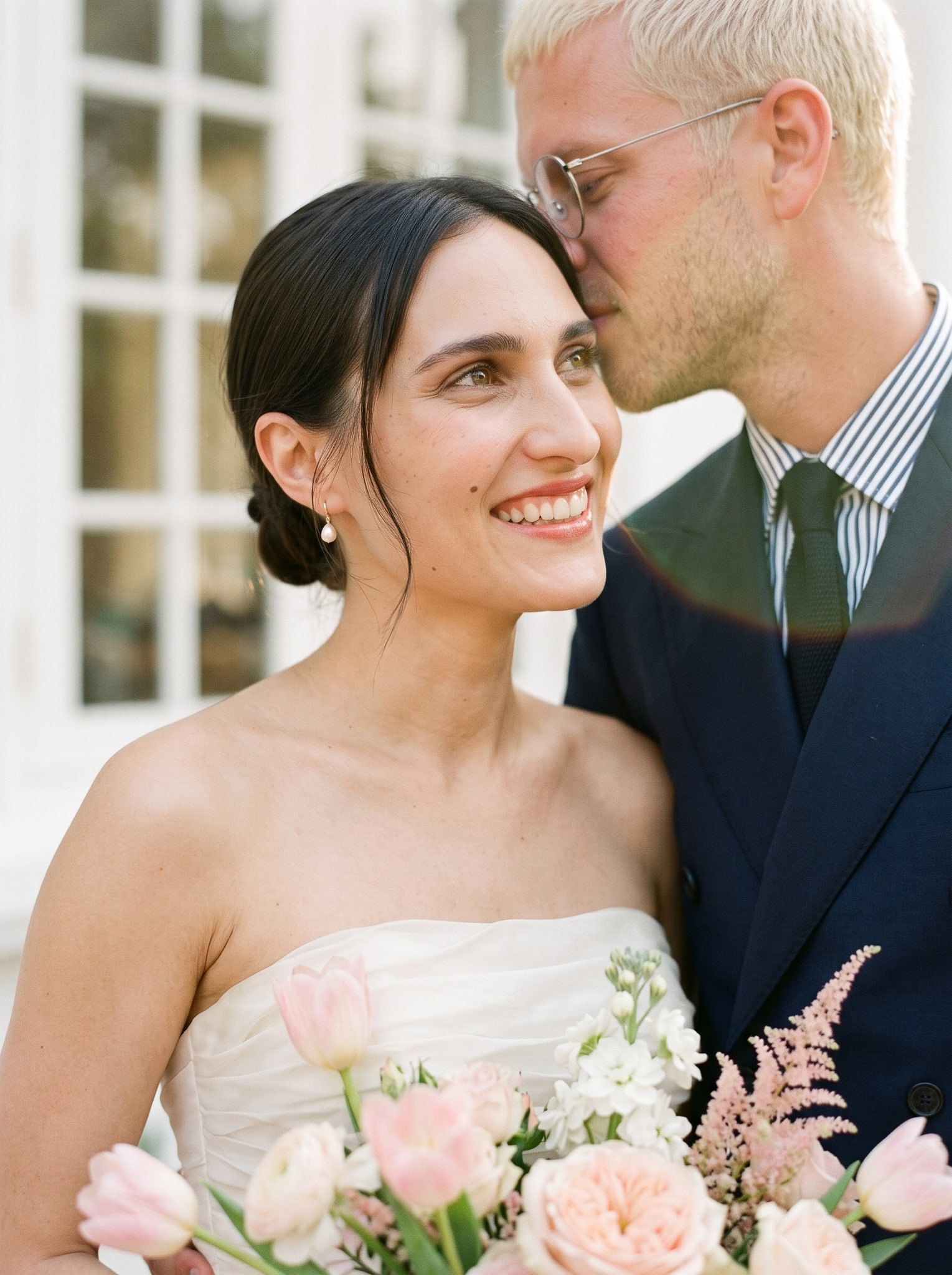
Should you wear matching or contrasting outfits?
Matching outfits (same color, cut, or designer aesthetic) work when both partners commit fully—identical white linen shirts, for example, or coordinated tonal greys. Contrasting outfits give editors more freedom and read stronger in wide shots against the rocky landscape. We typically advise one neutral anchor (beige, grey, navy) shared by both, with one partner introducing a jewel tone or texture—his tan shirt, her emerald dress; her grey trousers, his burgundy button-up. This creates visual harmony without monotony.
Check before ordering: If buying new pieces, order them together and test the photo impact on your phone in natural light. A color that looks good in your closet may read too muted or too bright once full-body and three meters away in coastal light.
How do you dress for eight hours of shooting without looking worn out?
Pack a second complete outfit—shoes included. Most couples change around hour four or five, which breaks up the repetition in your gallery and gives you fresh energy for the final sequences. We've seen guests arrive in fitted denim that creases badly by hour three; switching to flowing linen mid-shoot salvages those late-afternoon shots. Bring a steamer or wrinkle-release spray in your beach bag; the salt humidity creases fabrics fast.
Fabric checklist:
- Linen: breathes, moves in wind, wrinkles are acceptable and atmospheric
- Cotton-silk blends: hold shape better than pure linen, still move well
- Rayon: drapes beautifully but shows every wrinkle and salt stain—bring backup
- Denim: avoid fitted styles; boyfriend-cut or wide-leg works if you layer
- Chiffon or gauze: excellent for movement, but fragile on rocky terrain
Bring a compact sewing kit and bobby pins. One guest's hem caught on a rock; we safety-pinned it in two minutes and avoided a wardrobe malfunction.
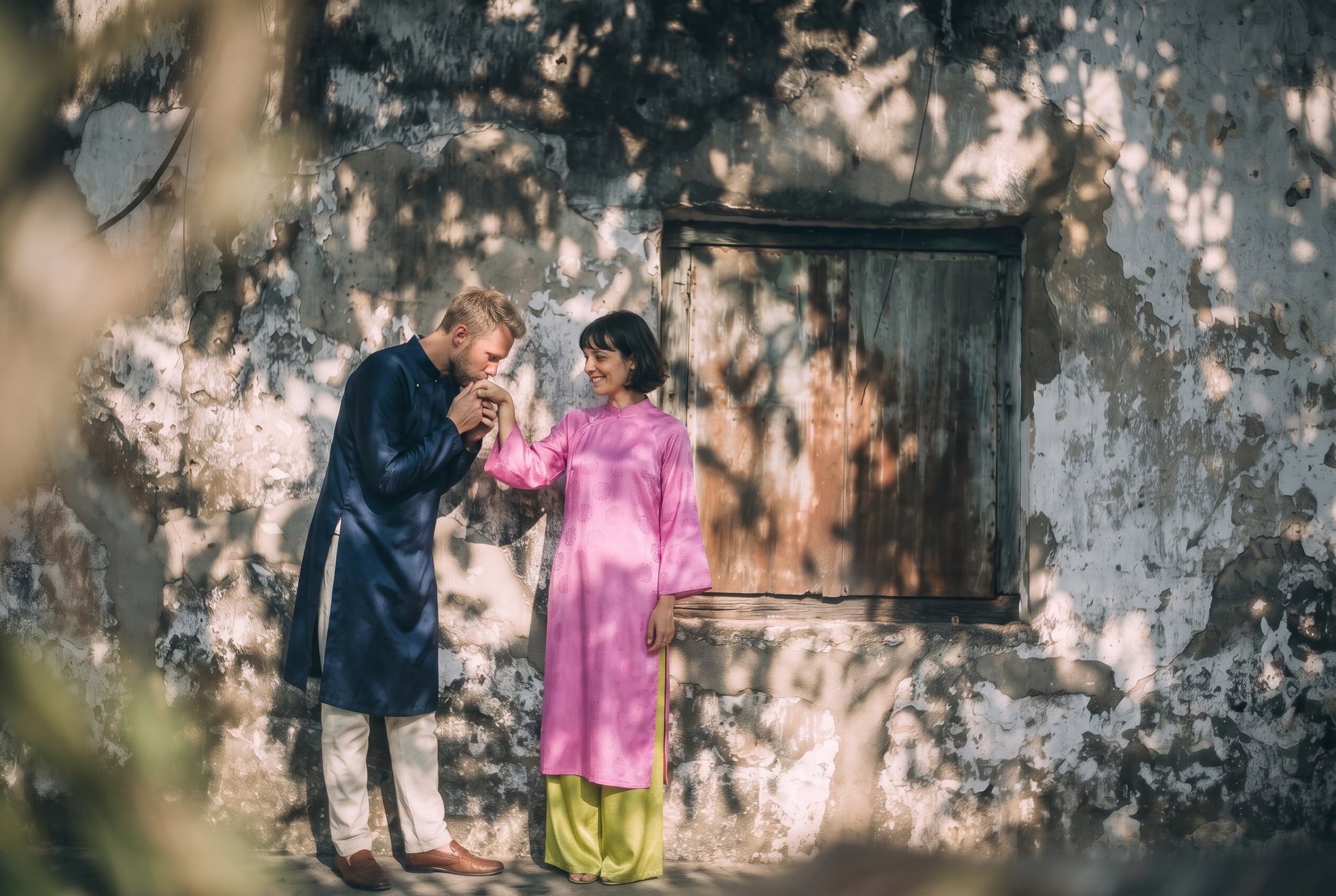
What fabric and fit survive salt spray and wind?
Loose, natural fabrics shed salt and water better than tight synthetics. Linen, cotton, and silk-blend shirts repel spray naturally and dry quickly if rinsed. Avoid rayon in coastal shoots—it absorbs water and salt, stains easily, and takes hours to dry. Fitted styles catch the wind awkwardly; we suggest boyfriend cuts, oversized camp collars, or flowing dresses that move rather than flap.
Wind reality: A couple in a fitted silk blouse struggled constantly; switching her to an oversized linen shirt mid-shoot solved it. Flowing fabrics photograph better in wind—they create dynamic lines and don't cling.
Bring a lint roller and microfiber cloth. Salt residue and fine sand settle on dark fabrics fast; a quick wipe every 20 minutes keeps fabric looking fresh in close-ups.
When should you order new outfits versus wearing what you own?
| Scenario | What to do | Why | Timeline |
|---|---|---|---|
| Outfit already fits, looks polished | Wear it | No shipping risk, familiarity | Order nothing |
| Want matching set but don't own it | Order one month ahead | Fabric types vary widely; samples help | Start now |
| Love a design but uncertain fit | Order two weeks early, request exchange policy | Coastal humidity changes how fabrics hang | Check return terms |
| Prefer new for freshness/photos | Order four weeks out | Dyes and finishes need wash-in before coastal shoot | Earlier = buffer |
Most couples we photograph through our couple photoshoot package own at least one outfit already; new purchases add pressure and often arrive wrinkled or undersized. If you do order, buy one month ahead, wash and wear the pieces at least once, and pack a backup from your closet.
What to check before ordering:
- Fabric content (natural fibers only for coastal shoots)
- Return window (30 days minimum if fit is uncertain)
- Care instructions (pre-shrink if cotton-heavy; salt water will touch these clothes)
- Photos of the item on real bodies in daylight (not studio lighting)
- Arrival date with buffer for alterations or rewashes
How do you pack and prep outfits for travel to Vung Tau?
Hang everything on a garment rack or hanger rod in your bag; avoid rolling. Linen wrinkles badly when folded. Pack shoes in cloth bags, not plastic (moisture traps salt and odor). Bring a small steamer, or request hotel pressing the night before your shoot—most Vung Tau resorts offer it.
Arrive at the lighthouse with outfits already styled: jewelry on, shoes clean, hair dry. We spend the first 20 minutes of every shoot on lighting and positioning; wardrobe adjustments eat into that. One couple brought pieces in a suitcase with no plan for layers; we improvised with a cardigan from our kit, but it cost us golden-hour time. When you arrive styled and ready, we capture better light windows.
Packing list:
- Two complete outfits (including shoes)
- Lightweight cardigan or overshirt
- Jewelry (avoid jingling pieces; they distract)
- Sunscreen and lip balm (wind and salt dry lips fast)
- Small mirror and touch-up makeup
- Lint roller and microfiber cloth
- Water and snacks (Vung Tau has no vendors near the lighthouse)
Consider booking makeup and hair at your hotel the morning of the shoot. You'll arrive at the lighthouse camera-ready, with our stylists' expertise baked in, and no fuss about travel damage to curls or makeup.
Comparison: hiring a stylist versus self-styling
| Approach | Best for | Investment | What we see |
|---|---|---|---|
| Self-style (bring your own outfits) | Couples who own polished pieces, confident in color | Time to photograph yourself together beforehand | 60% of our guests; works well if they test fit under natural light |
| Work with our stylists beforehand | Couples uncertain about colors/fabrics, want professional input | A styling consultation (ask us for a quote on WhatsApp) | Faster shoot days; guests feel confident; fewer wardrobe changes mid-session |
| Rent locally in Saigon | Couples who travel light, want designer pieces without buying | Rental fees (typically higher than buying for one-time use) | Unfamiliar fit, often arrives last-minute, shipping stress—we've had one rental dress arrive damaged |
Most couples self-style and arrive well-prepared. A few book our stylists for pre-shoot consultation; those sessions almost always produce sharper outfit choices and fewer regrets on the day.
See packages and prices on vietnamphotoshoot.com
The pre-wedding photoshoot package includes location scouting and styling tips for your chosen site. If Vung Tau is your location, we'll guide you on color, fabric, and logistics before you arrive. Shoot day runs seven to eight hours; most couples do two outfit changes and finish with a sunset sequence at the lighthouse's north overlook, where the light turns amber and the crowds thin out.
Not all couple shoots happen at the lighthouse. Some guests want the rocky southern beach, the old French fort ruins, or Ba Ria town inland. Each location has different light and a different wardrobe strategy. For a special concept shoot—like an elopement vow renewal or anniversary session—we'll work backward from your vision and advise on outfit and styling from day one.
FAQ
What if my outfit gets wet or stained during the shoot?
Salt spray and seawater happen. Bring a backup set of clothes and shoes. We carry a small sewing kit and microfiber cloth on every coastal shoot; most stains rinse out immediately in fresh water. If an outfit is damaged badly, we pause, document the damage, and pivot to your backup or re-style with available pieces. In ten years, only one couple needed to cut a shoot short for wardrobe failure—and she'd worn a delicate silk that wasn't rated for coastal work.
Should I buy new outfits or wear what I already own?
Wear what you own if it fits, moves well, and photographs beautifully in your own daylight tests. New outfits add shipping risk and fitting uncertainty. If you do order, buy one month early, wash the pieces, and practice wearing them. We've photographed hundreds of couples in their own clothes; polished closets outperform rushed new purchases every time.
How do colors look different in coastal light versus city studios?
Coastal light is brighter, harsher, and bluer (reflected off the sea). Jewel tones and deep neutrals hold saturation better than pastels. Pure white blows out; warm earth tones shift cooler. Test your chosen outfit colors in direct sunlight on a clear day, ideally near water. Smartphone photos in that light are your best preview of how our cameras will render them.
What if I'm unsure about fit or sizing when ordering online?
Order two weeks ahead and request exchanges or returns. Check the vendor's policy before paying. Coastal humidity expands fabrics slightly; if sizing is borderline, go one size up. Bring your backup outfit from home—something you've worn a hundred times and know fits perfectly. This removes all stress from new-piece fit on shoot day.
Can I wear the same outfit as my partner, or does it have to be different?
Both work. Matching outfits (same shirt, same neutral color) photograph cohesively and timeless. Contrasting outfits give editors more visual separation and work stronger in wide landscape shots. Most couples pick one anchor color both wear (neutral grey, navy, beige) and one partner introduces a jewel tone or texture for depth. Test your pairing in a phone selfie outdoors before committing.
How many outfit changes do I need for a full-day session?
Two changes are ideal for a seven-hour shoot. One outfit for morning and early afternoon; a second for late afternoon and golden hour. A third is nice but rarely necessary. Each change adds 10–15 minutes to the timeline (getting dressed, adjusting, re-posing). Plan accordingly with your photographer during the pre-shoot consultation.
Pre-Wedding & Elopement
Inclusions, prices and booking are on our booking site.
FAQ
What if my outfit gets wet or stained during the shoot?
Salt spray and seawater happen. Bring a backup set of clothes and shoes. We carry a small sewing kit and microfiber cloth on every coastal shoot; most stains rinse out immediately in fresh water. If an outfit is damaged badly, we pause, document the damage, and pivot to your backup or re-style with available pieces. In ten years, only one couple needed to cut a shoot short for wardrobe failure—and she'd worn a delicate silk that wasn't rated for coastal work.
Should I buy new outfits or wear what I already own?
Wear what you own if it fits, moves well, and photographs beautifully in your own daylight tests. New outfits add shipping risk and fitting uncertainty. If you do order, buy one month early, wash the pieces, and practice wearing them. We've photographed hundreds of couples in their own clothes; polished closets outperform rushed new purchases every time.
How do colors look different in coastal light versus city studios?
Coastal light is brighter, harsher, and bluer (reflected off the sea). Jewel tones and deep neutrals hold saturation better than pastels. Pure white blows out; warm earth tones shift cooler. Test your chosen outfit colors in direct sunlight on a clear day, ideally near water. Smartphone photos in that light are your best preview of how our cameras will render them.
What if I'm unsure about fit or sizing when ordering online?
Order two weeks ahead and request exchanges or returns. Check the vendor's policy before paying. Coastal humidity expands fabrics slightly; if sizing is borderline, go one size up. Bring your backup outfit from home—something you've worn a hundred times and know fits perfectly. This removes all stress from new-piece fit on shoot day.
Can I wear the same outfit as my partner, or does it have to be different?
Both work. Matching outfits (same shirt, same neutral color) photograph cohesively and timeless. Contrasting outfits give editors more visual separation and work stronger in wide landscape shots. Most couples pick one anchor color both wear (neutral grey, navy, beige) and one partner introduces a jewel tone or texture for depth. Test your pairing in a phone selfie outdoors before committing.
How many outfit changes do I need for a full-day session?
Two changes are ideal for a seven-hour shoot. One outfit for morning and early afternoon; a second for late afternoon and golden hour. A third is nice but rarely necessary. Each change adds 10–15 minutes to the timeline (getting dressed, adjusting, re-posing). Plan accordingly with your photographer during the pre-shoot consultation.
More from the team
Boho pre-wedding photoshoot in Vietnam: Hanoi, Saigon, Hoi An
Boho pre-wedding shoots mix romantic, free-spirited aesthetics with Vietnam's landscapes and heritage sites. We run full-day sessions in three cities, handling styling, makeup, location scouts and edits.
Avoid crowds at Hoang Su Phi rice terraces: timing for wedding shoots
Hoang Su Phi's terraced landscape draws couples and tour buses in equal measure. We show how to shoot there alone, when to arrive, and what to arrange with us before you go.
Photography rules at Con Dao beaches: permits, drones and what to check
Con Dao's beaches demand prep before you shoot—permits, drone zones and tide timing all affect your day. We share what the Cáo Studio team verifies on every booking.