 Cáo Studio
Home › Blog › Pre-Wedding & Elopement
What to Wear for Pre-Wedding Photos in Da Nang
By the Cáo Studio team · Hanoi & Saigon · 2026-11-02
Da Nang pre-wedding shoots run 3–4 hours across multiple locations—usually a mix of urban streets, beach and resort gardens. The city's bright midday sun, salt air and warm humidity mean fabrics must breathe, colors stay vivid, and layers work for early-morning or late-afternoon shots. Cáo Studio's stylists start by understanding your theme (romantic, modern, bohemian, traditional áo dài) and the exact venues your photographer has booked. We then recommend outfits based on local conditions: lighter silks and linens for heat, muted or jewel tones to cut glare, and backup pieces for wind or water spray. Most couples bring 2–3 complete looks; we advise booking makeup and hair at your hotel beforehand so changes stay polished. Budget depends on whether you buy, rent or bring pieces from home—no single "right" cost, but plan for comfort over trend. Chat with us on WhatsApp | See packages and prices on vietnamphotoshoot.com
Why Da Nang's climate shapes what you wear?
Da Nang sits on the central coast; from May to September, heat peaks at 32–35°C with 70%+ humidity. October to April is cooler (22–28°C) but still humid. Synthetic fabrics cling to skin and show sweat marks in close-ups. We've learned through dozens of sessions that natural fibers—silk, cotton, linen blends—photograph cleaner and keep couples comfortable across a full shoot day. If you're arriving without local knowledge, ask us via WhatsApp before booking; we'll tell you which season suits your wardrobe and whether you need a shawl, light jacket or parasol for specific times of day.
What to check: does your outfit breathe in 85% humidity? Does the fabric hold shape after two hours on beach sand?
Which colors and patterns read best in Da Nang light?
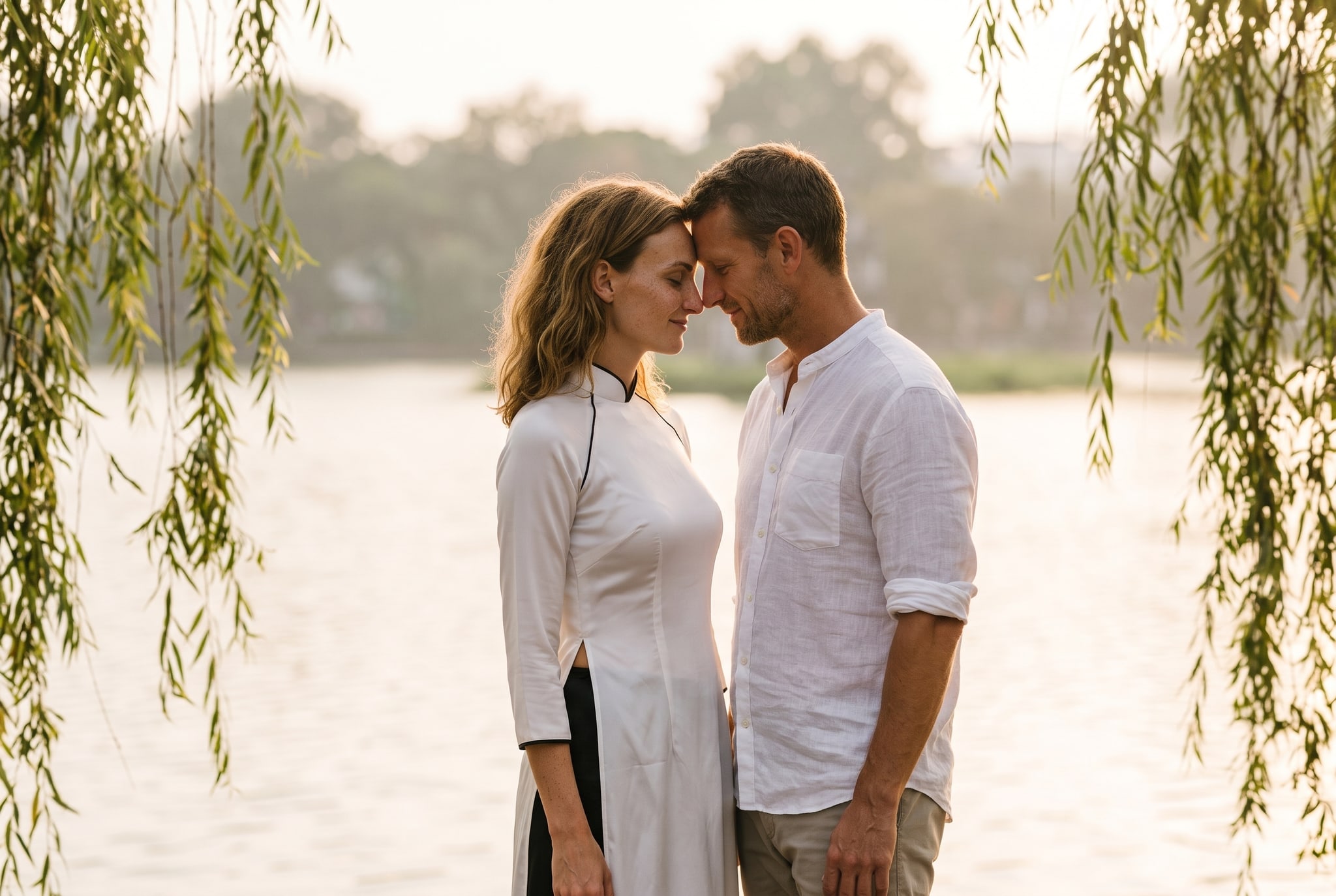
Da Nang's midday sun is intense and unforgiving. White and pastels blow out (lose detail) in direct sun unless shot in shade or during golden hour. Jewel tones—deep emerald, sapphire, burgundy—hold color and depth in full sunlight. Soft neutrals (cream, taupe, warm gray) work if the backdrop is neutral; navy and blush are reliable across venues. Patterns flatten in harsh light; small prints vanish, large geometric designs dominate. Our photographers prefer solids or subtle textures so your faces and the location remain the focal points. We've found that couples who bring one jewel-tone outfit and one neutral piece can adapt to morning versus afternoon schedules without re-shopping.
Test your colors outdoors at midday under similar light before the shoot date.
How many outfit changes should you plan?
Most pre-wedding shoots in Da Nang include 2–3 venue changes over 3–4 hours. A standard plan is one outfit per venue, but logistics matter. Changing clothes takes 15–20 minutes (styling, hair touch-ups, safety checks). If you plan three full outfit swaps plus makeup adjustments, the shoot compresses. Couples often pick: a romantic or traditional look for the opening (beach or temple), a modern casual fit for the city walk, and a formal or date-night piece for the finale. We advise limiting formal dresses with trains or heavy embellishment to one location; they slow transitions and risk sand or water damage. Practicality wins over variety here—two polished looks beat three rushed ones.
Chat with us on WhatsApp | See packages and prices on vietnamphotoshoot.com
Do you wear áo dài for Da Nang pre-wedding shoots?
Áo dài—Vietnam's national silk tunic—can anchor a pre-wedding day beautifully, especially if your families value tradition. Da Nang's breezy seafront settings show off the tunic's flowing lines and embroidery. However, áo dài requires specific handling: the silk wrinkles easily in humidity, the floor-length hem catches on sand and rocks, and professional tailoring (custom fit, high-quality silk) adds cost and lead time. If tradition is central to your vision, we recommend a dedicated áo dài photoshoot session on a controlled day, then keep your pre-wedding shoot in Western or modern fusion dress for flexibility. Many couples pair one áo dài look early in the pre-wedding day, then change to easier pieces for beach and city venues. Ask yourself: does the áo dài reflect your story, or are you choosing it because it's expected?
| Approach | Best for | What to know |
|---|---|---|
| One full áo dài look | Tradition-first couples | Needs professional tailoring, extra styling time, venue control (beach sand damages hems). |
| Áo dài as opening shot only | Mixed tradition + modern | Split styling hours between a tailor and your hotel venue. Backup outfit required. |
| No áo dài; modern dress throughout | Contemporary aesthetic | Simpler logistics; faster changes; more time for multiple locations. |
| Fusion (áo dài top + modern skirt) | Cultural blend | Harder to source; requires bespoke tailoring; niche but striking in photos. |
What fabrics and fits work best for your body and the sea breeze?
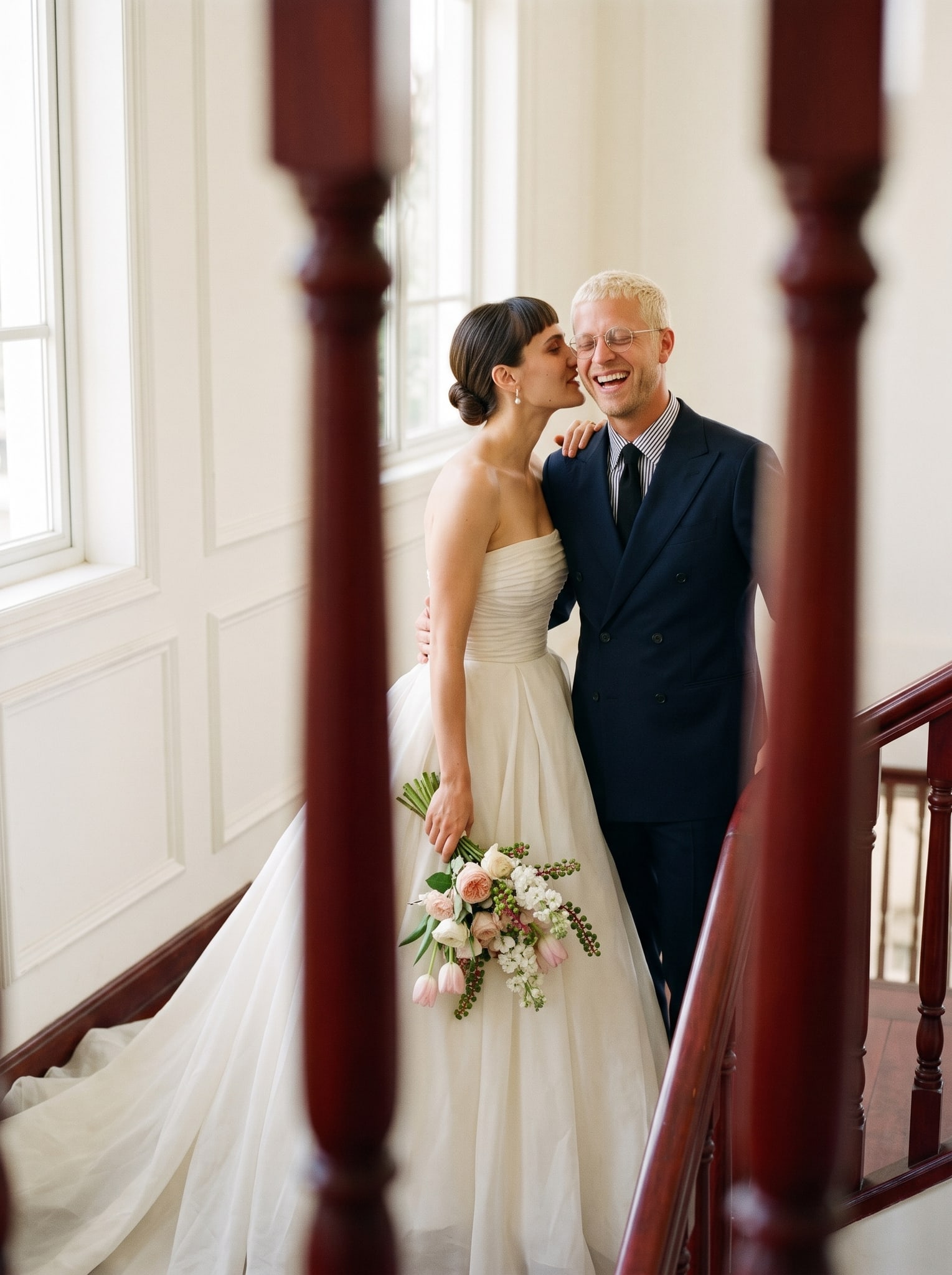
Humidity and salt wind are the enemies of fitted clothes and delicate fabrics. Polyester clings; linen wrinkles heavily but breathes. Silk blends offer the best compromise—they drape, resist wrinkles longer, and feel lightweight. Fit matters: loose, flowing silhouettes move beautifully in wind and don't trap heat; fitted dresses photograph well but need breathable linings and won't feel comfortable by hour three. We often advise women toward A-line or wrap dresses, and men toward linen shirts unbuttoned at the collar (or short-sleeve over fitted trousers). Avoid super-tight jeans, heavy velvet, or anything with a stiff understructure. If you're plus-size or expecting, elastic waistbands and stretchy blends are lifesavers; the camera won't see the construction, and you'll move freely.
Our stylists also recommend trying on your outfit in a warm bathroom with the shower running steam to mimic Da Nang's humidity—you'll know immediately if it clings, rides up, or loses shape.
Chat with us on WhatsApp | See packages and prices on vietnamphotoshoot.com
What should you pack to protect your clothes on the day?
A packed garment bag keeps dust and moisture at bay during transport. Bring a lint roller, sewing kit (loose buttons), and stain pen. Water bottles for you and the team prevent dehydration in heat. A lightweight scarf or pashmina doubles as a style layer and sun/wind shield. Closed shoes for city walks, sandals for beach (we rinse feet before photos). Undergarments that don't show panty lines (seamless, nude-tone briefs) are non-negotiable. Men should pack a tie and pocket square if you want formality; leave them off for casual. Bring phone chargers and a portable battery pack so your photographer can show you proofs on-set. Pack snacks—shooting hunger drops morale and ruins facial expressions.
One final detail: if you're traveling to Da Nang without your outfits, confirm with our team that your luggage will arrive on time. International flights can delay; we've seen couples arrive two days before their shoot unable to try on fits. Ship clothes ahead or plan a quick tailor visit in Da Nang if needed—we can recommend trusted seamstresses.
What to check before you buy or rent outfits
- Seams and hems: try on in a warm room to see if they hold or gap after sweating.
- Color in sunlight: step outside at midday, not indoors under warm bulbs.
- Fabric weight: hold it to window light; transparent or thin spots will show under cameras.
- Movement: walk, sit, reach overhead; does the fit allow natural motion?
- Tide and sand plan: if you're wading, choose quick-dry fabrics and secure straps.
- Return or alteration windows: if renting, confirm deadlines; if buying, allow 2–3 weeks for tailoring.
- Backup pieces: one extra top and bottom in case of spills or unexpected weather.
For a couple photoshoot in Da Nang that feels unrushed and polished, clothing choices start weeks before the camera rolls. Let our stylists walk you through the climate, your venues, and your vision—we'll help you build a wardrobe that feels like you, not a costume.
FAQ
Can I wear the same outfit for both my pre-wedding shoot and my wedding day?
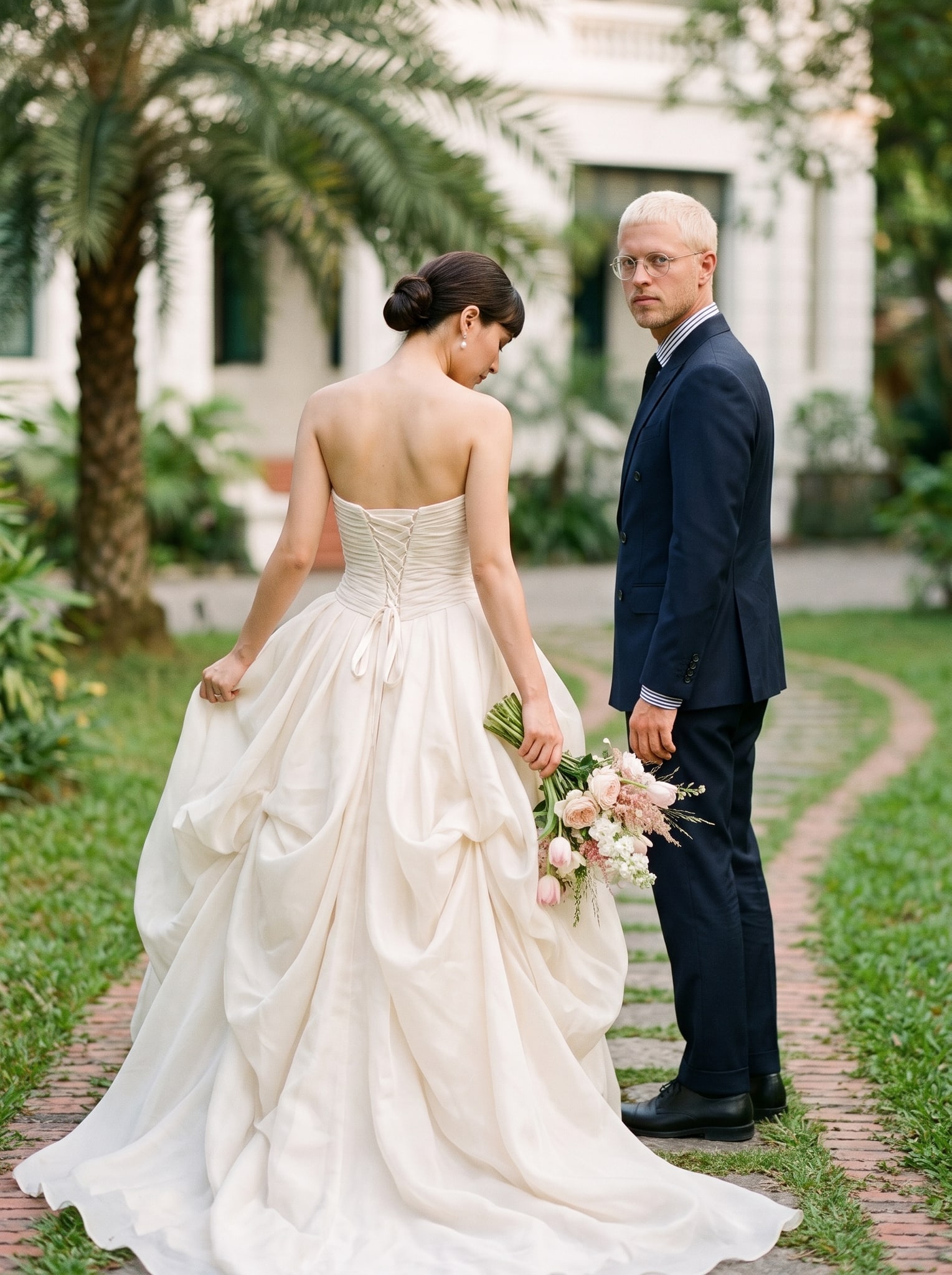
It's possible but risky. Wedding-day dresses endure movement, eating, dancing; pre-wedding shoots demand comfort over a 3–4 hour stretch in heat. Most couples buy or rent a separate pre-wedding outfit so they're not stressing over damage to the real dress.
How far in advance should I order or tailor my clothes for a Da Nang shoot?
Aim for 4–6 weeks if you're buying or renting from abroad. Local tailoring in Da Nang takes 2–3 weeks for alterations. If you're flying in with pieces, arrive at least 2–3 days early for a fitting and backup shopping if needed.
My fiancé is uncomfortable in formal wear. What's a good alternative for pre-wedding photos?
Linen trousers and a fitted short-sleeve shirt photograph as polished as a suit without the heat stress. Smart casual (quality jeans, linen jacket, leather shoes) reads well in candid shots. Talk to our stylists about your actual comfort level; forced formality shows on camera.
Should I match colors exactly, or can we coordinate differently?
Exact matching (identical colors, same brand) looks stiff. Complementary colors (one warm, one cool) or the same tone in different fabrics feel more natural. Coordinate, don't match. Our team helps you see samples before the shoot so you're confident.
What if the weather forecast shows rain or unusual wind the day before my shoot?
We monitor forecasts with you and can pivot venues or reschedule if needed. Rain sometimes means better light (no glare) and moody backdrops. Bring waterproof layers and quick-dry fabrics if rain is possible. We'll advise you 24–48 hours before.
Can I wear jewelry or accessories, and do they show up well in photos?
Yes, thoughtfully. Simple, high-quality pieces (gold or silver chains, stud earrings, delicate rings) photograph better than chunky costume jewelry. Avoid loud patterns or flashing stones that distract from your faces. A simple belt, shawl, or hat can elevate an outfit without adding bulk.
Pre-Wedding & Elopement
Inclusions, prices and booking are on our booking site.
FAQ
Can I wear the same outfit for both my pre-wedding shoot and my wedding day?
It's possible but risky. Wedding-day dresses endure movement, eating, dancing; pre-wedding shoots demand comfort over a 3–4 hour stretch in heat. Most couples buy or rent a separate pre-wedding outfit so they're not stressing over damage to the real dress.
How far in advance should I order or tailor my clothes for a Da Nang shoot?
Aim for 4–6 weeks if you're buying or renting from abroad. Local tailoring in Da Nang takes 2–3 weeks for alterations. If you're flying in with pieces, arrive at least 2–3 days early for a fitting and backup shopping if needed.
My fiancé is uncomfortable in formal wear. What's a good alternative for pre-wedding photos?
Linen trousers and a fitted short-sleeve shirt photograph as polished as a suit without the heat stress. Smart casual (quality jeans, linen jacket, leather shoes) reads well in candid shots. Talk to our stylists about your actual comfort level; forced formality shows on camera.
Should I match colors exactly, or can we coordinate differently?
Exact matching (identical colors, same brand) looks stiff. Complementary colors (one warm, one cool) or the same tone in different fabrics feel more natural. Coordinate, don't match. Our team helps you see samples before the shoot so you're confident.
What if the weather forecast shows rain or unusual wind the day before my shoot?
We monitor forecasts with you and can pivot venues or reschedule if needed. Rain sometimes means better light (no glare) and moody backdrops. Bring waterproof layers and quick-dry fabrics if rain is possible. We'll advise you 24–48 hours before.
Can I wear jewelry or accessories, and do they show up well in photos?
Yes, thoughtfully. Simple, high-quality pieces (gold or silver chains, stud earrings, delicate rings) photograph better than chunky costume jewelry. Avoid loud patterns or flashing stones that distract from your faces. A simple belt, shawl, or hat can elevate an outfit without adding bulk.
More from the team
Boho pre-wedding photoshoot in Vietnam: Hanoi, Saigon, Hoi An
Boho pre-wedding shoots mix romantic, free-spirited aesthetics with Vietnam's landscapes and heritage sites. We run full-day sessions in three cities, handling styling, makeup, location scouts and edits.
Avoid crowds at Hoang Su Phi rice terraces: timing for wedding shoots
Hoang Su Phi's terraced landscape draws couples and tour buses in equal measure. We show how to shoot there alone, when to arrive, and what to arrange with us before you go.
Photography rules at Con Dao beaches: permits, drones and what to check
Con Dao's beaches demand prep before you shoot—permits, drone zones and tide timing all affect your day. We share what the Cáo Studio team verifies on every booking.