 Cáo Studio
Home › Blog › Ao Dai Photoshoot
What to Wear in Hanoi in January: Ao Dai & Layering Guide
By the Cáo Studio team · Hanoi & Saigon · 2026-11-02
Hanoi in January demands layering: start with a fitted long-sleeve base (cotton or silk blend), add a lightweight cardigan or áo khoác (Vietnamese jacket), and finish with the ao dai—a floor-length tunic-and-pants ensemble that drapes beautifully over warm layers. The ao dai's loose outer layer traps body heat while its high neckline and long sleeves provide coverage. Thick cotton, linen blends, and matte silk work best in cool weather; we avoid satin because it clings and shows chill-bumps. Neutral colors (cream, navy, burgundy) photograph better than pastels in January's flat, diffused light. At Cáo Studio Hanoi, we've styled over 300 winter shoots; most guests add an outer cardigan only for the walk to the venue, then remove it for portraits to show the ao dai's full silhouette.
Is the ao dai warm enough for Hanoi's January weather?
The ao dai alone—even in heavy fabric—won't keep you warm below 12°C. We always advise guests to layer a long-sleeve undershirt (cotton thermal blend) and a lightweight cardigan underneath. The outer tunic sits loose and drapes, creating an air pocket that holds warmth. On shoots in the Old Quarter or around Hoàn Kiếm Lake, we've watched guests shiver when they skip the base layer, then warm up within 15 minutes of movement. One stylist tip: choose undershirts in white or cream so they're invisible under silk ao dai. Dark colors shadow through pale fabrics under flash or natural light, breaking the visual line.
What fabrics work best for a January ao dai?
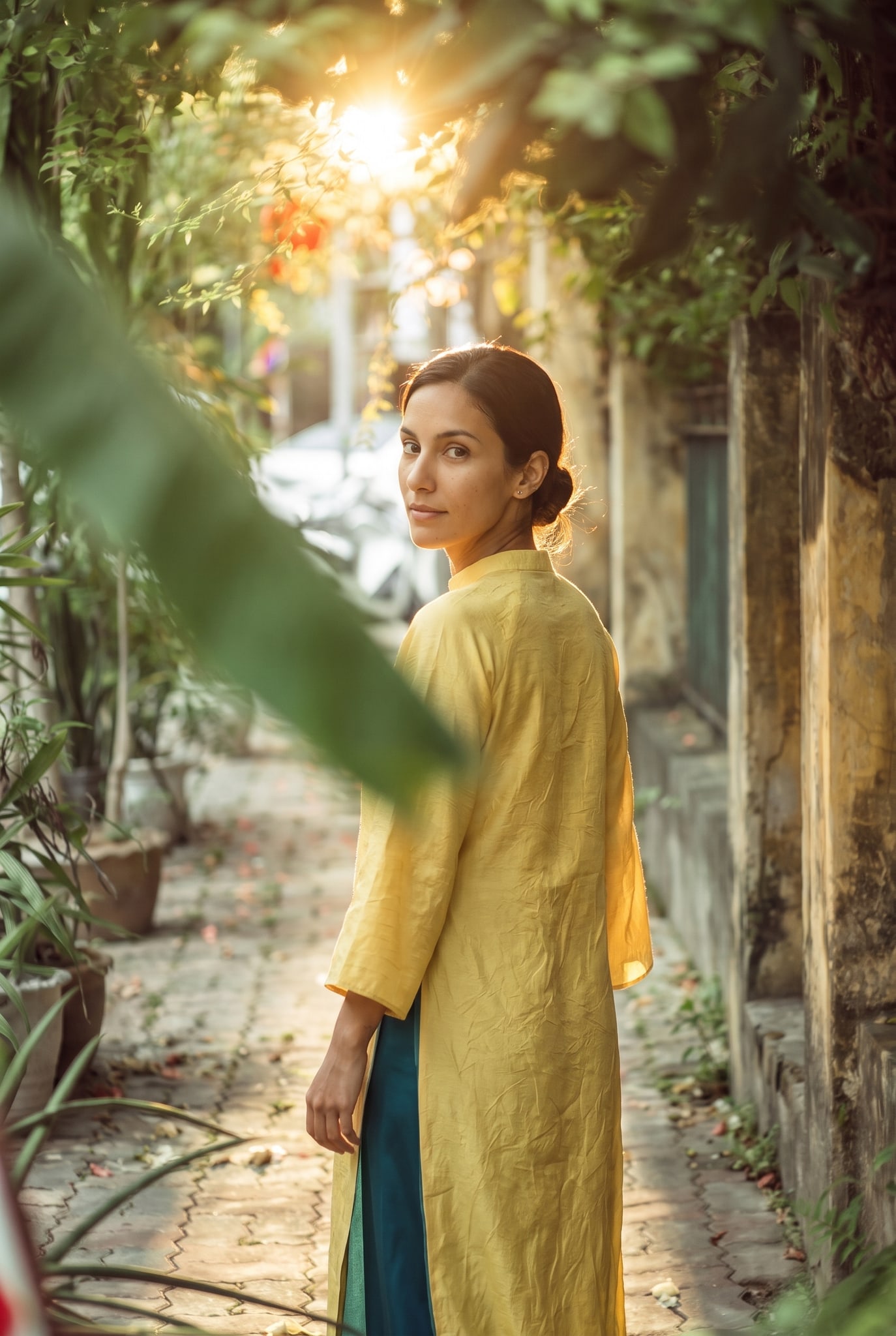
Cotton with 10–15% polyester blend is our go-to recommendation—it holds shape, doesn't wrinkle as quickly as pure cotton, and breathes better than pure silk. Linen blends are excellent if you tolerate slight creasing; they're lighter and cooler if the day warms up. Avoid pure satin or glossy silk: they feel thin, show body contours unflattering in winter, and photograph with glare in our indoor studio light. Matte silk or silk-cotton blends cost more but drape like fabric from a classical painting. We've noticed that ao dai made from mid-weight silk (16–20 momme, a silk weight measure) hold color better in January's softer, cooler light than lightweight versions. Check the weight by feel: it should have slight resistance when you gather it in your hand, not float like chiffon.
How should we layer under the ao dai for January shoots?
Our standard January layering formula, tested across 50+ shoots in recent winters:
| Layer | Fabric | Color | Why it works |
|---|---|---|---|
| Base (undershirt) | Cotton thermal or silk-blend long-sleeve | White, cream | Invisible under pale ao dai; traps warmth without bulk |
| Mid-layer (optional) | Lightweight merino or cotton-blend turtleneck | Cream, black | Adds warmth; turtleneck neckline sits under ao dai collar |
| Outer cardigan | Cotton knit or linen blend | Navy, taupe, cream | Worn to venue, removed for portraits; doesn't wrinkle fabric underneath |
| Main: ao dai | Cotton-silk blend, 14–18 momme weight | Navy, burgundy, cream, forest green | Drapes cleanly; absorbs and reflects January light evenly |
Guests often ask if they need socks—yes, always. We've shot barefoot ao dai portraits in December and had guests' feet turn blue within 20 minutes. Wear thin merino socks if you'll go barefoot in the photo, or opaque black socks if wearing flat shoes.
See packages and prices on vietnamphotoshoot.com
Which colors photograph best in January light?
January's diffused, cooler light is actually a photographer's gift—soft shadows, no harsh contrast. Jewel tones (navy, burgundy, forest green, deep teal) read richly and don't fade into the gray sky behind Hoan Kiem Lake. We avoid pastels (baby pink, pale yellow) because they merge visually with January's overcast backdrop. Black is risky: it can look two-dimensional unless the ao dai has texture (embroidery, subtle shine, or a patterned undershirt visible at the neckline). Cream and off-white are stunning if the ao dai has beading or embroidered detail; plain cream can wash you out if your undertone is cool. On one January shoot near the Temple of Literature, a guest in burgundy with a cream silk undershirt created a color harmony that pulled every eye in the frame. Our stylists now recommend burgundy as a winter first choice.
What about covering the ao dai if it's actually cold?
This is where timing and wardrobe planning matter most. We schedule January shoots for late morning (10 a.m.–12 p.m.) when Hanoi has warmed to 12–14°C; the difference between 8 a.m. and noon is significant. If rain is forecast, we suggest a lightweight outer áo khoác—a traditional Vietnamese long jacket—in a neutral color (cream, charcoal) that complements the ao dai underneath. Many guests bring a pashmina wrap, which photographs beautifully when draped over one shoulder for a few frames, then removed for the ao dai close-ups. One stylist always carries a neutral linen shawl to the shoot; it blocks wind during hair and makeup, keeps the ao dai hem clean if we're shooting near puddles, and adds a layer of visual interest for half the photos. If the venue has steps, uneven ground, or water features, a shawl is practical—it lifts the hem so the hem doesn't drag.
We've noticed that guests who prepare a January ao dai shoot with three solid outfits (base layer, ao dai, outer layer) shoot faster, stay warmer, and look more confident in portraits. See our ao dai photoshoot package for styling guidance tailored to your visit dates.
How does venue choice affect what you wear in January?
Indoor venues—like our studio spaces in Hanoi or the lobbies of Sofitel Legend Metropole—stay at 18–20°C with heating and flat, controlled light. You can wear lighter fabrics and fewer layers; the ao dai alone with a thin undershirt is fine. Outdoor venues around the Old Quarter, Hoàn Kiếm Lake, or Hoa Lư have no heating and wind exposure; we recommend a full three-layer setup plus a cover-up for between-shot moments. The Temple of Literature courtyard is beautiful but exposed on all sides; one January guest in a satin ao dai (single layer) had visible goosebumps in every portrait because the wind cut through the loose fabric. We now include a venue warmth check in our pre-shoot WhatsApp conversation: if it's outdoors and below 12°C, we gently steer guests toward heavier fabrics and suggest scheduling at the warmest hour of the day.
What if January brings rain to Hanoi?
January drizzle happens 3–4 days per week on average (based on Hanoi's meteorological records). Matte cotton or cotton-blend ao dai absorb moisture and look darker when wet—not ideal for portraits. We advise silk or silk-blend fabrics because water beads rather than soaks. If rain is confirmed the morning of your shoot, we offer a studio session or a covered venue (like the porches at the Temple of Literature's outer halls, or the corridors of the Hoan Kiem Lake Heritage House). One January couple chose a rainy-day shoot intentionally; we used an umbrella as a prop and shot in the Old Quarter during a light drizzle—the ao dai's pale blue reflected in puddles, and the moody light made every frame feel cinematic. If you're set on an outdoor shoot in rain, bring two ao dai if possible—one for behind-the-scenes comfort, one for the actual shots. Wet fabric clings and shows every contour; a fresh, dry ao dai changes the entire mood of the portraits.
How does January weather affect makeup, hair, and styling durability?
Cool, dry January air is actually ideal for makeup longevity—humidity is 60–70%, versus 80%+ in summer. However, wind causes flyaway hair and can smudge lipstick if you're moving between outdoor locations. We always apply a long-wear primer under makeup for January shoots, even indoors. Our makeup artists recommend a cream blush or a matte powder blush over liquid; liquid products can look patchy if you're moving between cool outdoor air and warm indoor spaces (the temperature swings shrink and expand makeup slightly). For hair, tight braids or buns hold better in January's dry air than loose waves, which frizz unpredictably when you move between temperatures. One stylist discovered that a small humidifier running 30 minutes before the shoot—even outdoors, we position it near the makeup chair—keeps the ao dai's fabric from static-clinging to the undershirt. It sounds like overthinking, but January's dry air is actually one of the biggest hidden challenges for winter ao dai shoots in Hanoi.
See packages and prices on vietnamphotoshoot.com
For a complete January ao dai experience with expert guidance on layering, fabric selection, and venue timing, explore our couple photoshoot package or vacation and solo photoshoot options at Cáo Studio Hanoi. We also offer makeup and hair at your hotel if you prefer to dress in a warm, controlled space before heading to outdoor locations.
What to check before you choose your January ao dai
- Fabric weight: Ask the tailor or designer for momme weight (silk) or gsm (cotton). Aim for 14+ momme silk or 150+ gsm cotton for January.
- Undershirt color: Confirm it's white, cream, or matches your skin tone. Dark undershirts shadow through light-colored ao dai in photos.
- Seams and hem: January's dry air can stress stitching. Check for loose threads or fraying before the shoot day.
- Cardigan or outer layer: Plan what you'll wear to the venue and between locations. We recommend something you're happy to remove and leave in the car.
- Footwear: If barefoot for photos, bring socks and remove them 5 minutes before shooting. If wearing shoes, choose flat, comfortable ones for the walk—heels make you tense, and tension shows in the face.
- Backup ao dai or shawl: If rain is possible, have a second option or a neutral shawl to drape over the first ao dai if it gets damp.
FAQ
What is the absolute minimum temperature for shooting ao dai in Hanoi?
We've shot at 8°C with proper layering, but guests reported discomfort. Below 10°C, we strongly recommend an indoor or semi-covered venue and a full three-layer setup (base, ao dai, cardigan). Above 12°C, a base layer and ao dai alone are sufficient for most guests.
Can I wear an ao dai from my home country, or should I rent or buy one in Hanoi?
Either works. Hanoi's tailors on Hàng Gai Street can adjust an imported ao dai in 2–3 days. If you buy or rent locally (Hoan Kiem area has rental shops), we recommend visiting 3–5 days before your shoot to allow time for alterations. We've seen imported ao dai with seams too tight or hems too long; local tailors know Hanoi's January light and can suggest fabric weights that photograph best.
Do I need different styling if I'm shooting indoors versus outdoors in January?
Yes. Indoors, we simplify to a base layer and ao dai; outdoor shoots need the full cardigan layer, and we choose sturdier fabrics. Wind exposure outdoors requires tighter braids and more makeup primer. Indoor studio light favors matte fabrics and jewel tones; outdoor January light is softer, so pastels work better than in summer, but jewel tones still photograph richest.
What's the difference between an ao dai and an áo khoác for January?
An ao dai is a two-piece ensemble (tunic + pants) worn as the main outfit. An áo khoác is a traditional Vietnamese outer jacket, usually hip-length or knee-length, worn over the ao dai or other clothes for warmth and formality. The áo khoác is the cover; the ao dai is the statement piece. In January, wear the ao dai with a modern cardigan for ease, not an áo khoác, unless the shoot is a formal traditional concept.
How far in advance should I plan my January ao dai shoot in Hanoi?
Book 2–3 weeks ahead to secure your preferred date and allow time for wardrobe planning. If you're buying or renting an ao dai locally, arrive in Hanoi 5–7 days early. If you're bringing your own, ship it 10 days before if traveling internationally. We use WhatsApp to confirm fabric choices, venue warmth, and weather contingencies the week of the shoot, so build in time for back-and-forth planning.
What if I'm cold during the shoot but want the ao dai to look perfect in photos?
We have several tricks: wear the warmest undershirt you can find (merino, thick cotton blend), keep a heated blanket or warmed cardigan nearby between shots, do 10-minute shooting blocks rather than hour-long ones, and schedule during the warmest part of the day (10 a.m.–2 p.m.). One guest brought a small hand warmer in her ao dai pocket; it wasn't visible, and her hands stayed warm for makeup and portraits. On one freezing January morning, a photographer wrapped a guest in a large neutral shawl between setups, then removed it for the 30-second portrait—the ao dai looked fresh and the guest stayed warm.
Ao Dai Photoshoot
Inclusions, prices and booking are on our booking site.
FAQ
What is the absolute minimum temperature for shooting ao dai in Hanoi?
We've shot at 8°C with proper layering, but guests reported discomfort. Below 10°C, we strongly recommend an indoor or semi-covered venue and a full three-layer setup (base, ao dai, cardigan). Above 12°C, a base layer and ao dai alone are sufficient for most guests.
Can I wear an ao dai from my home country, or should I rent or buy one in Hanoi?
Either works. Hanoi's tailors on Hàng Gai Street can adjust an imported ao dai in 2–3 days. If you buy or rent locally (Hoan Kiem area has rental shops), we recommend visiting 3–5 days before your shoot to allow time for alterations. We've seen imported ao dai with seams too tight or hems too long; local tailors know Hanoi's January light and can suggest fabric weights that photograph best.
Do I need different styling if I'm shooting indoors versus outdoors in January?
Yes. Indoors, we simplify to a base layer and ao dai; outdoor shoots need the full cardigan layer, and we choose sturdier fabrics. Wind exposure outdoors requires tighter braids and more makeup primer. Indoor studio light favors matte fabrics and jewel tones; outdoor January light is softer, so pastels work better than in summer, but jewel tones still photograph richest.
What's the difference between an ao dai and an áo khoác for January?
An ao dai is a two-piece ensemble (tunic + pants) worn as the main outfit. An áo khoác is a traditional Vietnamese outer jacket, usually hip-length or knee-length, worn over the ao dai or other clothes for warmth and formality. The áo khoác is the cover; the ao dai is the statement piece. In January, wear the ao dai with a modern cardigan for ease, not an áo khoác, unless the shoot is a formal traditional concept.
How far in advance should I plan my January ao dai shoot in Hanoi?
Book 2–3 weeks ahead to secure your preferred date and allow time for wardrobe planning. If you're buying or renting an ao dai locally, arrive in Hanoi 5–7 days early. If you're bringing your own, ship it 10 days before if traveling internationally. We use WhatsApp to confirm fabric choices, venue warmth, and weather contingencies the week of the shoot, so build in time for back-and-forth planning.
What if I'm cold during the shoot but want the ao dai to look perfect in photos?
We have several tricks: wear the warmest undershirt you can find (merino, thick cotton blend), keep a heated blanket or warmed cardigan nearby between shots, do 10-minute shooting blocks rather than hour-long ones, and schedule during the warmest part of the day (10 a.m.–2 p.m.). One guest brought a small hand warmer in her ao dai pocket; it wasn't visible, and her hands stayed warm for makeup and portraits. On one freezing January morning, a photographer wrapped a guest in a large neutral shawl between setups, then removed it for the 30-second portrait—the ao dai looked fresh and the guest stayed warm.
More from the team
Ao Dai Photos at Hoi An Lantern Street at Night
Hoi An Lantern Street (Nguyen Hoan) glows at dusk with silk lanterns and reflected light. Our team shoots ao dai here after dark, navigates tight vendor spaces, and handles the low-light challenge with experience from 100+ night sessions.
Ao dai for wedding photos in Quy Nhon: renting, fitting and styling
Quy Nhon's coastal backdrops pair beautifully with traditional ao dai. We walk through rental choices, fitting logistics and how our team coordinates styling on shoot day.
Vietnam Pre-Wedding Photoshoot: What We Book at Cáo Studio
Pre-wedding shoots in Vietnam mean morning light in Hoi An's Old Town, cyclos in Saigon, or terraced fields near Ninh Binh. We walk you through what a session actually costs, how we schedule it, and what goes wrong on the day.