 Cáo Studio
Home › Blog › Ao Dai Photoshoot
What to Wear in Hanoi: Our Studio's Real Guide
By the Cáo Studio team · Hanoi & Saigon · 2026-11-01
Wear natural fabrics in light colours: cotton, linen, silk. Start with a breathable base layer (t-shirt, tank, or traditional áo dài) and bring a lightweight overshirt or scarf for sun and air-conditioned spaces. Avoid heavy denim, black synthetics, and tight fits that cling in 30°C heat and 70% humidity. Shoes should be slip-on and comfortable for walking Old Quarter streets and temple grounds. In our sessions, we notice guests who dress in layers stay confident all day—they can adjust without changing outfits. Hanoi photoshoots run early (6–8 a.m.) to catch soft light and avoid midday heat, so a light cardigan or áo dài overshirt solves temperature swings between cool dawn streets and midday sun. Cáo Studio always confirms outfit plans 48 hours before arrival.
Why do fabric and colour matter more than style in Hanoi heat?
Light colours (white, cream, pale blue, pastels) reflect heat and photograph brighter in morning shade. Dark fabrics absorb heat and fade in photos under harsh contrast—a common mistake we spot in first-time visitor photos. Natural fibres (cotton 100%, linen, silk) breathe; synthetics trap sweat and wrinkle on camera. In a typical 6 a.m. shoot around Hoàn Kiếm Lake, we dress guests in layers so they stay dry and comfortable as humidity rises. Cotton absorbs moisture without clinging; linen keeps structure even when damp. A guest in a 70% polyester "breathable" shirt looks uncomfortable by hour two. Pick natural fabrics, skip synthetics, and you'll move freely for 2–3 hours outdoors.
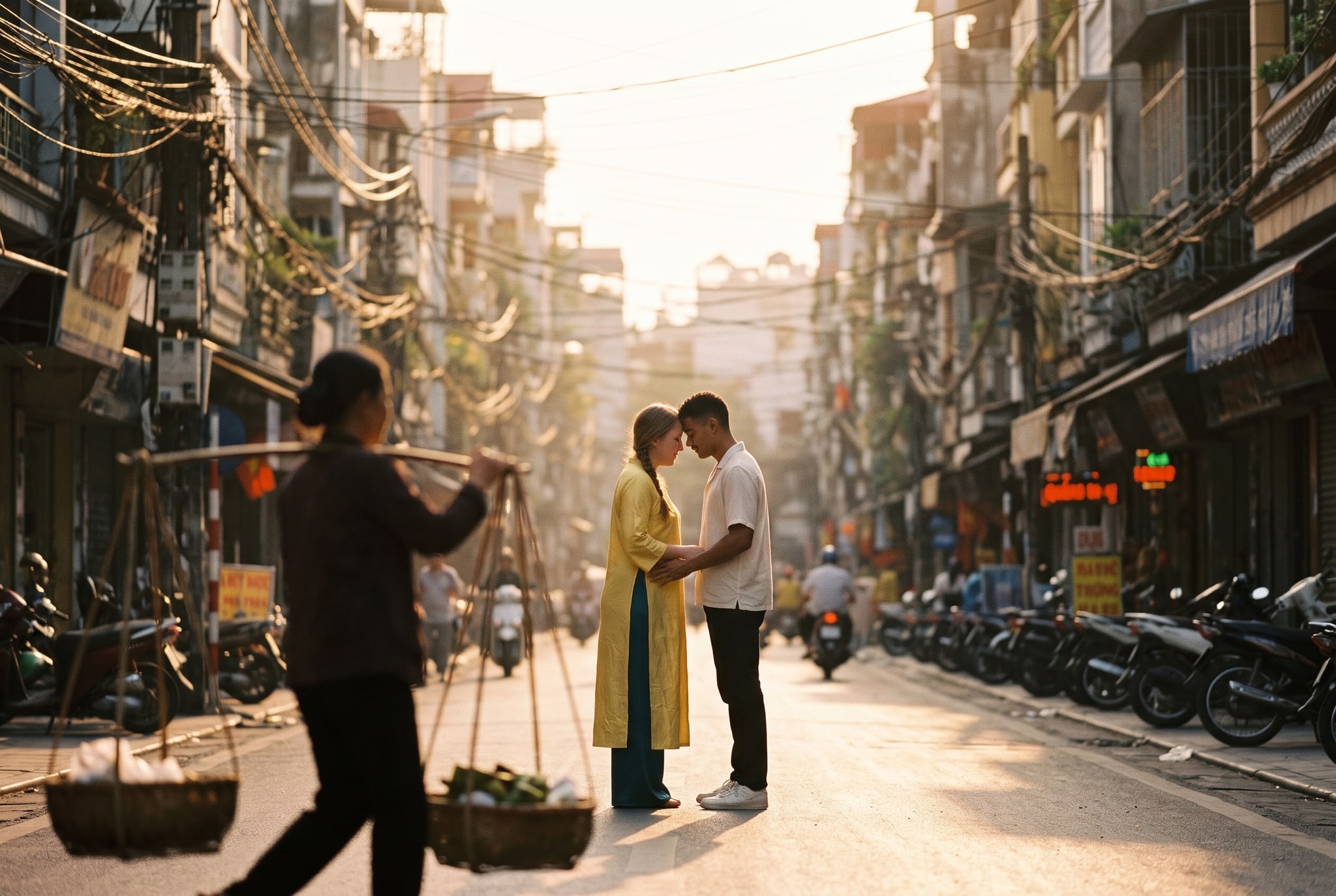
What temperature swings should you pack for?
Hanoi in early morning (5–7 a.m.) sits around 18–22°C; by 11 a.m., it's 25–28°C. Inside cafés and hotels, air conditioning drops to 16–18°C. We've had guests shivering during café breaks, then sweating on the street minutes later. Bring one lightweight layer—a thin linen shirt, silk scarf, or cardigan—that packs into a small bag or stays tied around the waist. We never suggest heavy jackets; instead, a 100% cotton overshirt works for both dawn chill and midday air-con shock. On a typical morning shoot in Hoan Kiem District, our stylists carry a spare scarf in case a guest gets cold waiting between setups near water.
Should you buy clothes in Hanoi before your shoot, or bring them from home?
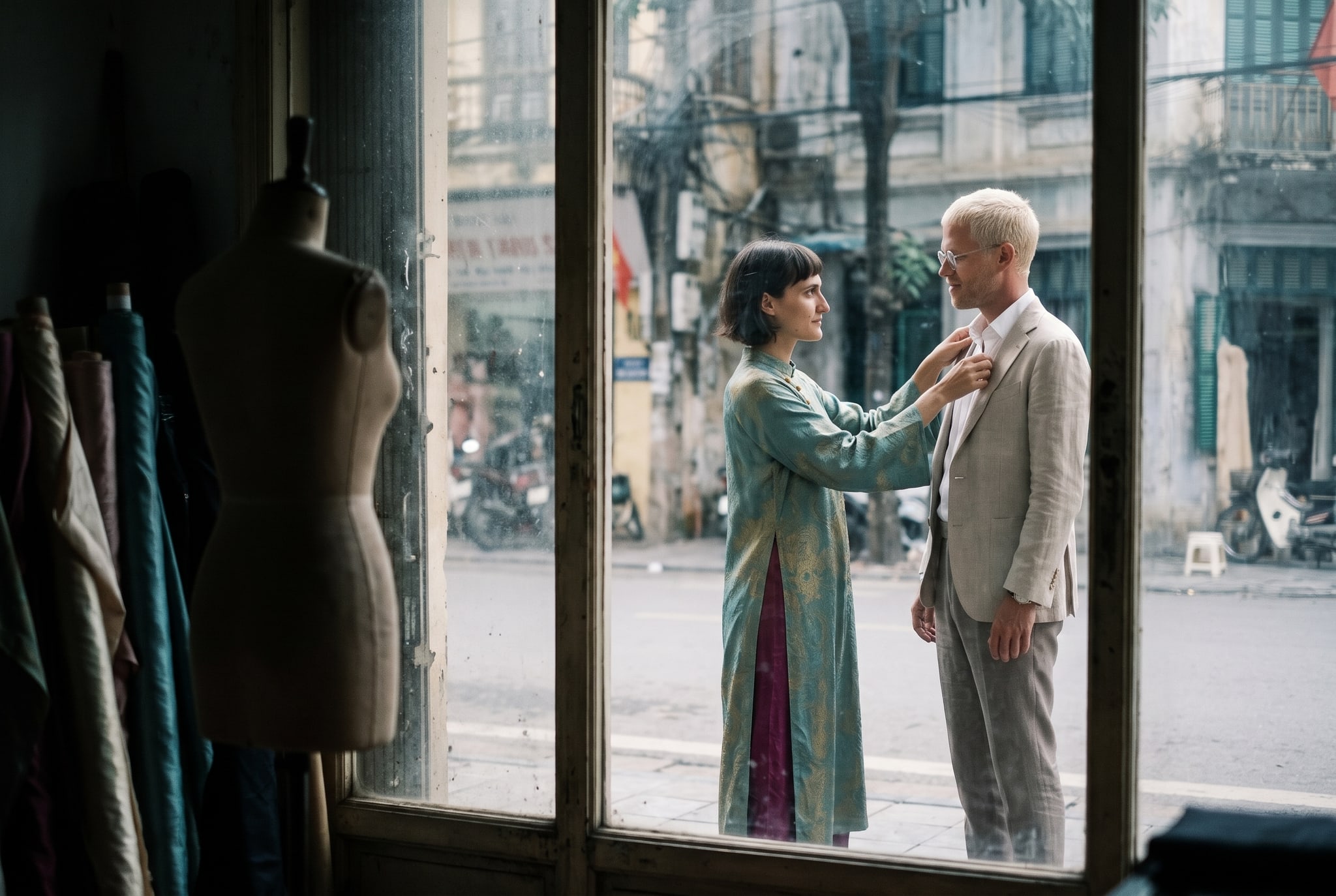
Bring one or two proven outfits from home that photograph well and fit comfortably. Hanoi's Old Quarter has endless fabric and tailoring shops, but custom áo dài takes 3–5 days minimum. If you arrive with 2–3 days before a photoshoot, time is too tight for tailoring; instead, rental shops in Hoan Kiem and Ba Dinh offer ready-made áo dài and áo bà ba in traditional styles, and ready-to-wear cotton dresses at night markets. We recommend planning outfit details with us before travel—describe colours, silhouette, and function (movement, layering, temple-appropriate), and we'll confirm if you need to pack or can shop local. For our áo dài photoshoot sessions, we often suggest guests bring a personal outfit plus rent one traditional piece to mix styles in one shoot.
See packages and prices on vietnamphotoshoot.com
How do street surface and walking comfort shape your shoe choice?
Hanoi's Old Quarter mixes smooth stone, rough cobble, cracked pavement, and occasional temple stairs—uneven terrain that punishes tight or unsupported shoes. We've had guests in cute flat sandals struggle after 20 minutes; others in rigid new sneakers get blisters by hour three. Our photographer always notes in the final hour which guests move with ease and which are limping. Slip-on trainers, soft leather flats, or strappy sandals with arch support work best. Avoid flip-flops (no ankle support on stairs), rigid new shoes, or heels above 3 cm (broken cobbles = twisted ankles). Test your shoes with a 30-minute walk before the shoot day. If you're planning a vacation photoshoot around Hanoi, break in shoes at least one week before arrival.
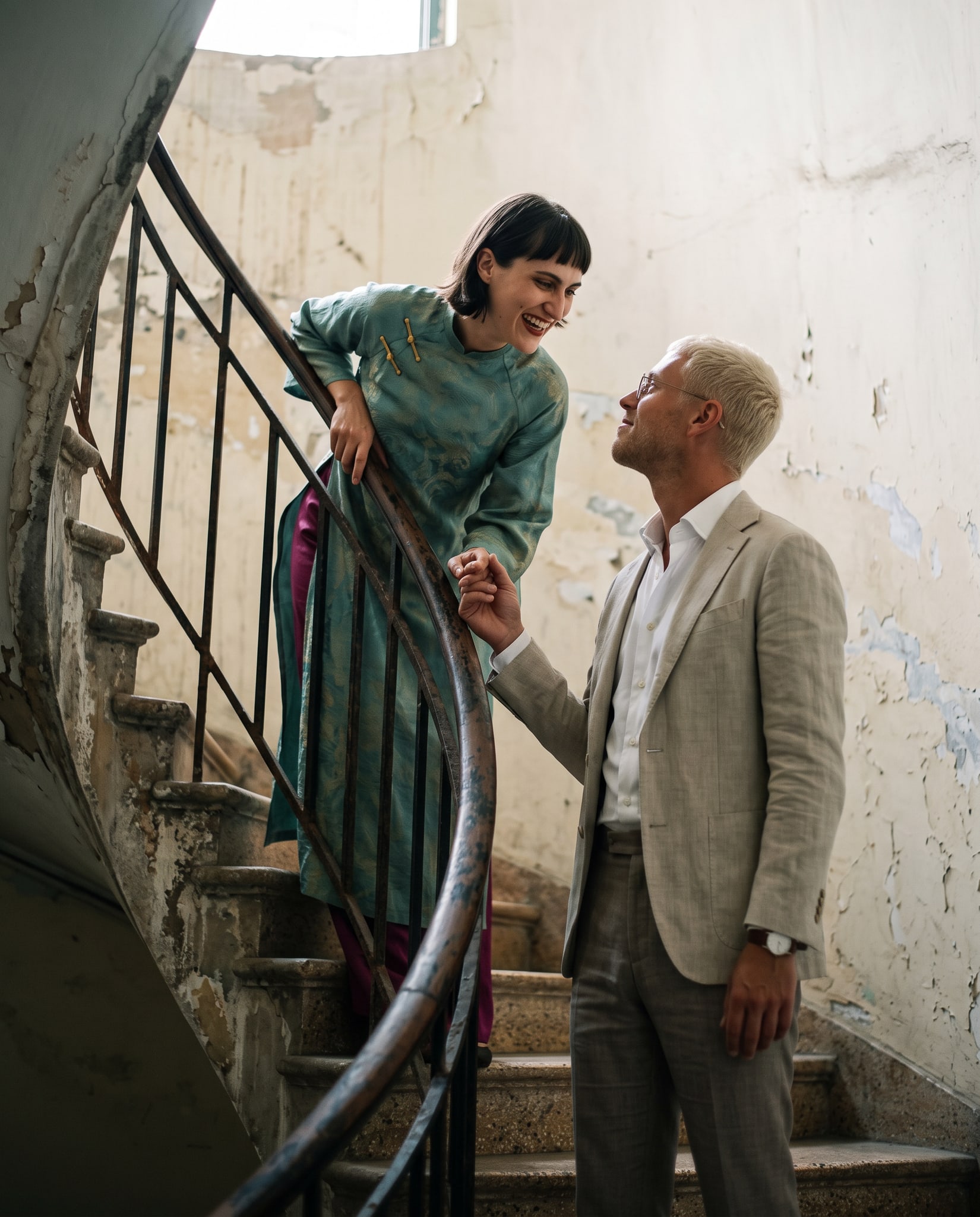
Why are darker, tighter clothes risky for Hanoi photoshoots?
Black and dark navy look dramatic in studio light but fade into shadows outdoors in Hanoi's soft morning light—especially in tree-lined streets of Ba Dinh or near Hoàn Kiếm Lake where soft diffusion is high. Tight fabrics cling to sweat after 30 minutes, creating wet patches on camera. We avoid suggesting dark tight outfits for sunrise shoots; instead, light loose silhouettes (wrap dresses, flowy pants, cotton shirts one size roomy) photograph fresh and comfortable. A guest in a fitted black shirt looks exhausted by the final location; the same person in cream linen looks cool and awake. Our team always asks for outfit photos 48 hours before a session to catch and redirect tight dark choices.
How do temple visits, café stops, and location changes affect outfit planning?
A typical Hanoi shoot moves through 3–4 locations: temple grounds (low platform shoes, covered shoulders), Old Quarter café (any style), street photography (wide walkable clothes), and lakeside parks (light and airy). Different spaces need different outfit functions. Temples like Trần Quốc require knees and shoulders covered—a wrap skirt, loose trousers, and scarf solve this without a wardrobe change. Narrow café aisles need unclunky fabrics that don't catch furniture; busy street shots need clothes that breathe so you're not visibly sweating. We plan location sequences with outfit logic: if temple is first, layer appropriately and don't over-dress for later heat. When booking, discuss location order with our team so you pack and layer smart for the actual schedule, not a generic "Hanoi day."
What's the outfit checklist our stylists use 2 hours before each shoot?
Before every session, our team checks: Fabric type (100% natural or high-linen blend?), Fit (loose enough to sit and bend, no visible sweat areas?), Colour (photograph bright in soft morning light?), Layers (scarf, cardigan, or overshirt ready for temperature swings?), Footwear (tested for 30+ min walk, no new shoes?), Accessories (nothing that catches light or jingles?), Undergarments (no visible lines, no show-through on light fabrics?), Weather plan (bag for an umbrella if rain forecast?). We text guests 2 hours before: "Confirm you're wearing [outfit list]. Bring [layer]. Leave [item] at hotel." Guests who follow this checklist arrive loose, comfortable, and camera-ready. Those who skip it spend the first 30 minutes adjusting bra straps, rolling up sweaty sleeves, or standing in shadow because dark fabric is too hot.
| Outfit choice | Why it works in Hanoi | Why it doesn't |
|---|---|---|
| Light linen shirt + cotton trousers | Breathes, layers easily, light colour in photos | Wrinkles heavily; needs ironing |
| Fitted black dress | Looks stylish indoors | Clings with sweat, fades in soft outdoor light |
| Áo dài (traditional or rental) | Iconic, comfortable, temple-appropriate, flows in photos | Requires specific footwear, slow to put on, not all bodies fit rental sizes |
| Slip-on trainers | Supported, comfortable for 3 hours | Too casual for temple or formal shoots |
| Heavy denim jacket | Structured, has pockets | Absorbs heat, visible sweat patches, stiff in photos |
| Wrap skirt + cotton tank | Versatile, modest for temples, breathes | Can slip if not tied tight, limited movement |
| Tight synthetic "moisture-wicking" top | Promises breathability | Traps sweat, clings, synthetic sheen in photos |
What to check before you book and dress?
Confirm location list with our team 48 hours before shoot. Different districts have different dress codes: temple areas near Trần Quốc require shoulder and knee coverage; Old Quarter café shoots allow casual style; lakeside parks invite light flowing clothes. Ask us which locations are confirmed so you pack smart.
Send outfit photos to your photographer via WhatsApp. We review each piece—colour, fit, fabric—and flag anything that won't work. This prevents day-of stress and wardrobe changes.
Test shoes with a 30-minute walk on uneven ground. Hanoi's terrain is rough. Blisters, slipping, or foot pain kill photos and mood by hour two.
Pack one backup outfit. Weather shifts fast. A sudden spill, unexpected humidity spike, or location change means having a second option saves the session.
Confirm if you need áo dài rental or bring your own. If renting, we arrange it; if bringing, ship it ahead or carry it carefully. Custom áo dài doesn't fit everyone off-the-rack.
We run couple photoshoots, family sessions, and solo vacation shoots across Hanoi—each with different outfit needs. Talk to us early about your vision, location list, and comfort level so we style you in confidence, not guesswork.
FAQ
What's the single biggest outfit mistake we see in Hanoi shoots?
Guests wear dark tight clothes they think look dramatic, then spend the shoot sweating and looking exhausted in photos. Light loose natural fabrics photograph calm and cool. Test outfits in heat and humidity before arrival, not on shoot day.
Should I pack a rain jacket for Hanoi photoshoots?
Yes, but lightweight. Hanoi rains are often brief. Carry a thin waterproof poncho or packable rain jacket, not a heavy winter coat. We reschedule if storms arrive; light drizzle often creates beautiful soft light for photos.
How many outfit changes can we fit into one session?
Two outfit changes work well in a 3-hour shoot without rushing. More than three spreads us too thin on locations and light quality. We plan outfit changes at logical breaks: temple → café → park. Discuss with us before booking if you want multiple looks.
Is renting an áo dài better than buying one before my shoot?
If you have 5+ days in Hanoi, custom tailoring gives you a perfect fit. If 2–3 days, rent ready-made—faster and less risky. We coordinate rental from trusted vendors in Hoan Kiem District. For áo dài photoshoots, rental is standard and included in many packages.
What do we do if my outfit doesn't fit right on the morning of the shoot?
Contact us by 5 a.m. We have backup scarves, safety pins, and styling tricks. We've tied crops tighter with scarves, added layers to hide fit issues, and adjusted poses to hide seams. Honesty early is always better than suffering in silence for 3 hours.
Can I wear black, or is it completely off-limits?
Black works in detail layers (undershirt, scarf) but avoid all-black outfits for morning shoots. A black silk scarf under a cream linen shirt works beautifully; an all-black ensemble fades flat in soft outdoor light. If you love black, wear it as an accent, not the dominant colour.
Ao Dai Photoshoot
Inclusions, prices and booking are on our booking site.
FAQ
What's the single biggest outfit mistake we see in Hanoi shoots?
Guests wear dark tight clothes they think look dramatic, then spend the shoot sweating and looking exhausted in photos. Light loose natural fabrics photograph calm and cool. Test outfits in heat and humidity before arrival, not on shoot day.
Should I pack a rain jacket for Hanoi photoshoots?
Yes, but lightweight. Hanoi rains are often brief. Carry a thin waterproof poncho or packable rain jacket, not a heavy winter coat. We reschedule if storms arrive; light drizzle often creates beautiful soft light for photos.
How many outfit changes can we fit into one session?
Two outfit changes work well in a 3-hour shoot without rushing. More than three spreads us too thin on locations and light quality. We plan outfit changes at logical breaks: temple → café → park. Discuss with us before booking if you want multiple looks.
Is renting an áo dài better than buying one before my shoot?
If you have 5+ days in Hanoi, custom tailoring gives you a perfect fit. If 2–3 days, rent ready-made—faster and less risky. We coordinate rental from trusted vendors in Hoan Kiem District. For [áo dài photoshoots](/go/ao-dai-photoshoot), rental is standard and included in many packages.
What do we do if my outfit doesn't fit right on the morning of the shoot?
Contact us by 5 a.m. We have backup scarves, safety pins, and styling tricks. We've tied crops tighter with scarves, added layers to hide fit issues, and adjusted poses to hide seams. Honesty early is always better than suffering in silence for 3 hours.
Can I wear black, or is it completely off-limits?
Black works in detail layers (undershirt, scarf) but avoid all-black outfits for morning shoots. A black silk scarf under a cream linen shirt works beautifully; an all-black ensemble fades flat in soft outdoor light. If you love black, wear it as an accent, not the dominant colour.
More from the team
Ao Dai Photos at Hoi An Lantern Street at Night
Hoi An Lantern Street (Nguyen Hoan) glows at dusk with silk lanterns and reflected light. Our team shoots ao dai here after dark, navigates tight vendor spaces, and handles the low-light challenge with experience from 100+ night sessions.
Ao dai for wedding photos in Quy Nhon: renting, fitting and styling
Quy Nhon's coastal backdrops pair beautifully with traditional ao dai. We walk through rental choices, fitting logistics and how our team coordinates styling on shoot day.
Vietnam Pre-Wedding Photoshoot: What We Book at Cáo Studio
Pre-wedding shoots in Vietnam mean morning light in Hoi An's Old Town, cyclos in Saigon, or terraced fields near Ninh Binh. We walk you through what a session actually costs, how we schedule it, and what goes wrong on the day.