 Cáo Studio
Home › Blog › Ao Dai Photoshoot
What to Wear in Hanoi Vietnam: Studio Guide for Every Season
By the Cáo Studio team · Hanoi & Saigon · 2026-11-01
Hanoi sits in the Red River Delta and swings between scorching, humid summers (May–September, 28–35°C, heavy rain) and mild, dry winters (November–February, 10–20°C). Pack breathable cotton or linen for heat; light layers for air-conditioned spaces and chilly temples. Wear modest, loose-fitting clothes—shoulders covered, knees below mid-thigh—in temples, pagodas and old-town streets. Comfortable walking shoes grip wet pavements after rain. For evening strolls, a light cardigan or scarf handles both cooler air and temple etiquette. If you're booking an áo dài photoshoot with Cáo Studio, we provide the garment; bring flat shoes, minimal jewelry and a simple base layer. Avoid neon, very short shorts and sleeveless tops on cultural sites. Chat with us on WhatsApp | See packages and prices on vietnamphotoshoot.com
How hot and humid is Hanoi really?
From May to September, Hanoi feels like a sauna: 28–35°C with 70–90% humidity and frequent afternoon downpours. Your clothes stick to skin within minutes. Cotton and linen breathe; polyester traps moisture and ruins photos. We've shot couple sessions in July when a bride's silk dress soaked through in three hours—she switched to a linen áo dài for the second outfit and the difference was instant. Lightweight, loose-fitting pieces keep you cool and move better on camera.
What do temples and pagodas actually require?
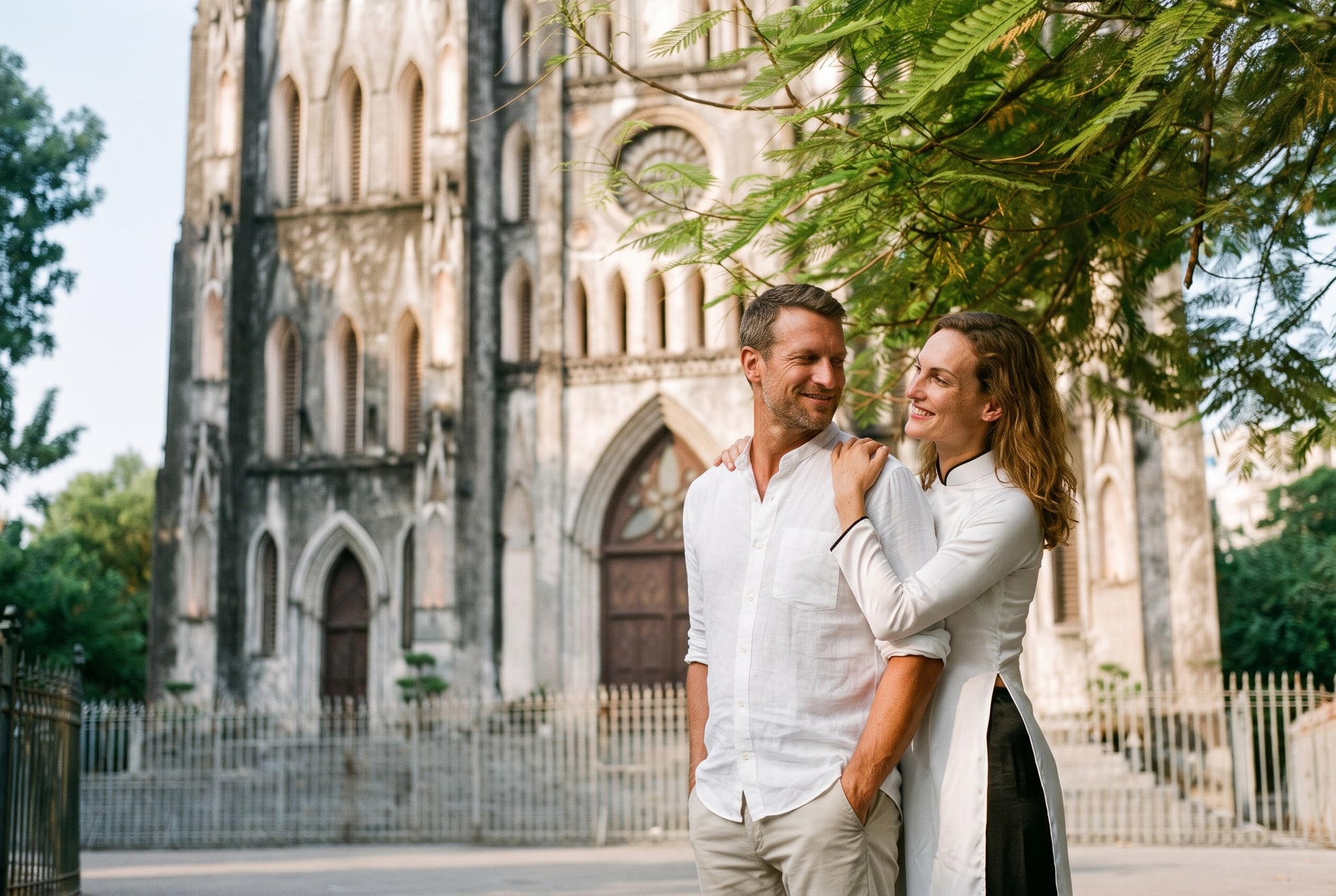
Hanoi's major temples—Trấn Quốc, Tiền Phong, the Tran Temple—enforce modest dress silently but firmly. Shorts must reach the knee; sleeveless tops or crop tops get turned away. We've had guests stopped at the entrance and had to wait while they bought a wrap from a vendor outside. Shoulders should be covered; women in particular notice this rule. Wear closed-toe shoes—many temples have stone or uneven paths. Layers help: a scarf doubles as shoulder cover and adapts to sudden air conditioning indoors. A single respectful outfit saves frustration and photos you'll actually want to share.
Which districts and streets need different clothing?
Hanoi Old Quarter (36 phố) draws crowds and tourists; dress is mixed but pickpocketing is real, so avoid displaying cash, phones or jewelry. Hoàn Kiếm Lake's west side is upscale; business-casual works. Temple areas around Hoan Kiem and Ba Dinh require modesty. Our shoots near French Quarter (Tây Hồ, Hoàng Diệu) are more relaxed. Hoi An (a half-day drive south) is a heritage site with stricter temple rules—covered shoulders are enforced. When we scout locations, we always brief guests: tight clothes or bare shoulders don't work with the backdrop or local courtesy. Loose, neutral layers photograph better anyway.
Summer versus winter: what actually changes?
| Season | Dates | Temperature | What We See on Shoots | What to Pack |
|---|---|---|---|---|
| Summer monsoon | May–Sep | 28–35°C, 70–90% humidity | Frizz, sweat visible in close-ups, makeup runs; we shoot early or late | Cotton shorts, tank layers, umbrella, flat sandals |
| Autumn dry | Sep–Nov | 23–28°C, falling humidity | Hair holds shape; light sweat only; golden-hour light | Lightweight pants, short sleeves, light cardigan |
| Winter cool | Nov–Feb | 10–20°C, dry air | Skin dries out; long sleeves work; layering essential; misty mornings | Jeans, long-sleeve tees, light jacket, closed shoes |
| Spring warm | Mar–May | 20–28°C, humidity rising | Transition period; variable rain; allergies spike | Layers, waterproof bag, antihistamine |
Winter isn't "cold" by Western standards, but 15°C feels sharp in the morning. We've shot pre-wedding sessions in January where couples started in sweaters and stripped to short sleeves by noon. Pack a zip-up or button-front jacket you can remove on camera.
Why does what we wear on a photoshoot matter more than you think?
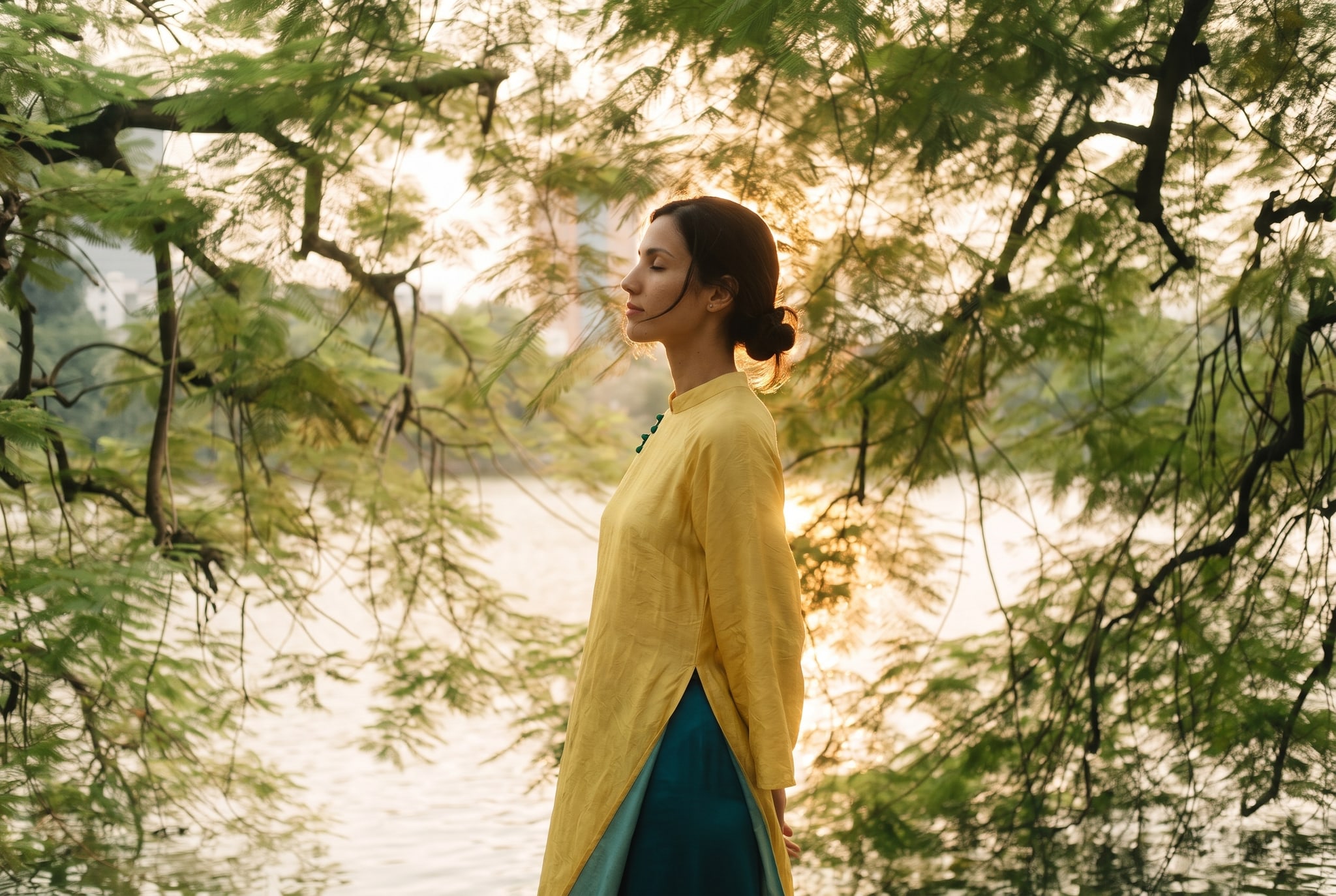
When you book an áo dài photoshoot, we style you in the traditional garment. But what you wear under and around it shapes the shoot. Tight undergarments show through the silk and restrict movement. We always say: bring a simple, close-fitting tank or slip dress in a neutral tone. Flat shoes (no heels) let you walk Hanoi's uneven stone streets without twisting an ankle between locations. Minimal jewelry—one delicate bracelet, small earrings—frames your face; chunky pieces distract and weigh you down after six hours of standing. We've learned this from hundreds of sessions: when a guest arrives in loose layers and practical shoes, they relax, smile naturally, and move freely. That shows in every frame.
Similarly, if you're doing a couple photoshoot or family session, coordinating colors matters. We don't ask everyone to wear identical outfits—that reads as forced. But a shared color palette (whites and creams, earth tones, blues) ties the group visually. Avoid logos, neon and clashing patterns. Soft textures photograph better than stiff fabrics.
What to actually check before you leave your hotel
Before a shoot, ask yourself: Can I move my arms freely? Will this fabric stick to my back in sweat? Are my shoes broken in? (New shoes = blisters after two hours walking Old Quarter cobblestones.) Do I have a scarf for temples? Is my phone in a zipped pocket—not a crossbody bag dangling loose? We've had guests chase pickpockets, cry over lost photos and bail out early because of foot pain. None of this is dramatic; it's preventable.
For evening plans—dinner in Tây Hồ, drinks on the rooftop, walking Hoàn Kiếm Lake—a pair of lightweight pants or a knee-length skirt, a fitted top and a cardigan work everywhere. Hanoi restaurants are casual; even upscale places don't enforce dress codes. But standing out as a tourist (very short shorts, sports bra visible, transparent fabrics) invites attention you don't want.
See packages and prices on vietnamphotoshoot.com
What to pack: a working checklist
- Base layers: 4–5 lightweight cotton t-shirts and vests (you'll wear 1–2, laundry is fast and cheap).
- Bottoms: 1 pair linen shorts (knee-length, for daytime), 1 pair lightweight pants (cotton chinos, linen, for temples and evenings), 1 pair jeans (for winter or versatile styling).
- Footwear: 1 pair broken-in walking shoes (leather, mesh, breathable; avoid canvas—it absorbs sweat), 1 pair flat sandals (for hotel, casual streets).
- Layers: 1 lightweight cardigan or button-front shirt (doubles as shoulder cover), 1 silk or cotton scarf (temples, cooler indoors, photo prop).
- Modest dress or skirt: If you prefer dresses, choose cotton blend, knee-length or longer.
- Sleepwear and undergarments: Moisture-wicking fabrics; avoid heavy or padded bras (visible under silk áo dài).
- Rain protection: A compact umbrella (monsoon season is real; we reschedule shoots if lightning, but light rain doesn't stop us).
For a vacation photoshoot with us, bring one outfit that reflects you—a pattern you love, a color you're confident in, a fabric that feels good. We'll shoot it in multiple locations and lighting. Avoid last-minute wardrobe stress.
Why Hanoi itself teaches you what works
Hanoi locals dress practically: loose cotton shirts, lightweight pants, scarves for temples and sun protection, flat sandals. Tourists in heavy jeans, thick fabrics or exposed shoulders stand out—and they're uncomfortable. Our team has lived here for years. We notice what works because we wear it daily. When we brief guests arriving at the airport, we say: "Dress for 30°C and respect. Loose cotton. No rush. The city will guide you." By day three, most guests have figured it out.
For your makeup and hair session before a big event, come in comfortable, cool clothes—makeup takes 45–60 minutes and air conditioning isn't always strong. Bring a button-front top so you can change without disturbing your face. Same logic applies to pre-wedding shoots: comfort during prep means better energy on camera.
The golden rule: breathable, modest, practical. That's Hanoi style.
Chat with us on WhatsApp | See packages and prices on vietnamphotoshoot.com
FAQ
Is it okay to wear shorts in Hanoi?
Yes, but knee-length only. Above-the-knee shorts read as disrespectful near temples and heritage sites. We've seen guests asked to cover up or leave. For casual strolls, locals wear mid-thigh shorts; visitors should aim for the knee to be safe.
Do I need a jacket in winter?
A light layer—cardigan, linen shirt, unlined jacket—helps. Hanoi winter (November–February) feels cool to cold, especially early morning and in air conditioning. Don't pack a heavy winter coat; 10–15°C doesn't warrant it.
What shoes are best for walking Hanoi?
Breathable, broken-in shoes with good grip. Stone streets are slippery when wet (frequent rain). Flat sandals work for short hotel walks; closed-toe shoes protect against puddles and rough pavements on longer outings. We recommend leather or mesh sneakers.
Can I wear sleeveless in casual areas?
In modern cafes, malls and young neighborhoods, sleeveless tops are fine. But temples, pagodas and older residential areas expect shoulders covered. Layer with a scarf or cardigan to be safe and blend in.
What colors photograph best for a shoot in Hanoi?
Soft, muted tones—creams, light blues, earth tones, sage green—work with Hanoi's architecture and light. Avoid neon and very bright white (causes glare in sun). Jewel tones (emerald, sapphire, burgundy) are stunning in shade or golden hour. Pastels fade in strong midday light.
Should I buy clothes in Hanoi instead of packing?
Yes, if you're comfortable with it. Tailors and street vendors sell cheap cotton shirts, pants and áo dài. Quality varies. Shopping takes time and haggling. For a photoshoot, we recommend bringing 1–2 outfits you trust rather than gambling on last-minute purchases.
Ao Dai Photoshoot
Inclusions, prices and booking are on our booking site.
FAQ
Is it okay to wear shorts in Hanoi?
Yes, but knee-length only. Above-the-knee shorts read as disrespectful near temples and heritage sites. We've seen guests asked to cover up or leave. For casual strolls, locals wear mid-thigh shorts; visitors should aim for the knee to be safe.
Do I need a jacket in winter?
A light layer—cardigan, linen shirt, unlined jacket—helps. Hanoi winter (November–February) feels cool to cold, especially early morning and in air conditioning. Don't pack a heavy winter coat; 10–15°C doesn't warrant it.
What shoes are best for walking Hanoi?
Breathable, broken-in shoes with good grip. Stone streets are slippery when wet (frequent rain). Flat sandals work for short hotel walks; closed-toe shoes protect against puddles and rough pavements on longer outings. We recommend leather or mesh sneakers.
Can I wear sleeveless in casual areas?
In modern cafes, malls and young neighborhoods, sleeveless tops are fine. But temples, pagodas and older residential areas expect shoulders covered. Layer with a scarf or cardigan to be safe and blend in.
What colors photograph best for a shoot in Hanoi?
Soft, muted tones—creams, light blues, earth tones, sage green—work with Hanoi's architecture and light. Avoid neon and very bright white (causes glare in sun). Jewel tones (emerald, sapphire, burgundy) are stunning in shade or golden hour. Pastels fade in strong midday light.
Should I buy clothes in Hanoi instead of packing?
Yes, if you're comfortable with it. Tailors and street vendors sell cheap cotton shirts, pants and áo dài. Quality varies. Shopping takes time and haggling. For a photoshoot, we recommend bringing 1–2 outfits you trust rather than gambling on last-minute purchases.
More from the team
Ao Dai Photos at Hoi An Lantern Street at Night
Hoi An Lantern Street (Nguyen Hoan) glows at dusk with silk lanterns and reflected light. Our team shoots ao dai here after dark, navigates tight vendor spaces, and handles the low-light challenge with experience from 100+ night sessions.
Ao dai for wedding photos in Quy Nhon: renting, fitting and styling
Quy Nhon's coastal backdrops pair beautifully with traditional ao dai. We walk through rental choices, fitting logistics and how our team coordinates styling on shoot day.
Vietnam Pre-Wedding Photoshoot: What We Book at Cáo Studio
Pre-wedding shoots in Vietnam mean morning light in Hoi An's Old Town, cyclos in Saigon, or terraced fields near Ninh Binh. We walk you through what a session actually costs, how we schedule it, and what goes wrong on the day.