 Cáo Studio
Home › Blog › Ao Dai Photoshoot
Áo Dài for Men: Cuts, Colors & How Travelers Wear It
By the Cáo Studio team · Hanoi & Saigon · 2026-10-31
Men's áo dài consists of a long tunic worn over loose trousers, traditionally made from silk or brocade. Unlike women's versions, men's áo dài has straighter lines, no side splits, and falls to mid-shin. Colors follow strict etiquette: white or cream for youth and celebration; dark blue, black, or burgundy for formal events; gold or bronze for weddings. The garment originated in 18th-century Vietnam and remains the national formal dress. At Cáo Studio, we fit travelers in custom or rental áo dài before ao dai photoshoot sessions in Hanoi and Ho Chi Minh City; most guests book 2–3 hours including styling. Cost varies by rental or purchase; check our packages for inclusion.
How does men's áo dài differ from women's?
Men's áo dài lacks the dramatic side slits women's versions have; the tunic closes fully down the front. The fit is broader at the chest and shoulders, narrower at the waist, and the hem runs straight—not curved—to the ankle or mid-shin. Women's áo dài emphasizes the silhouette; men's prioritizes elegance and authority. Sleeves on men's versions are tighter and end at the wrist. This structural difference means fit matters intensely—a poorly tailored men's áo dài looks rumpled, while a good one commands a room.
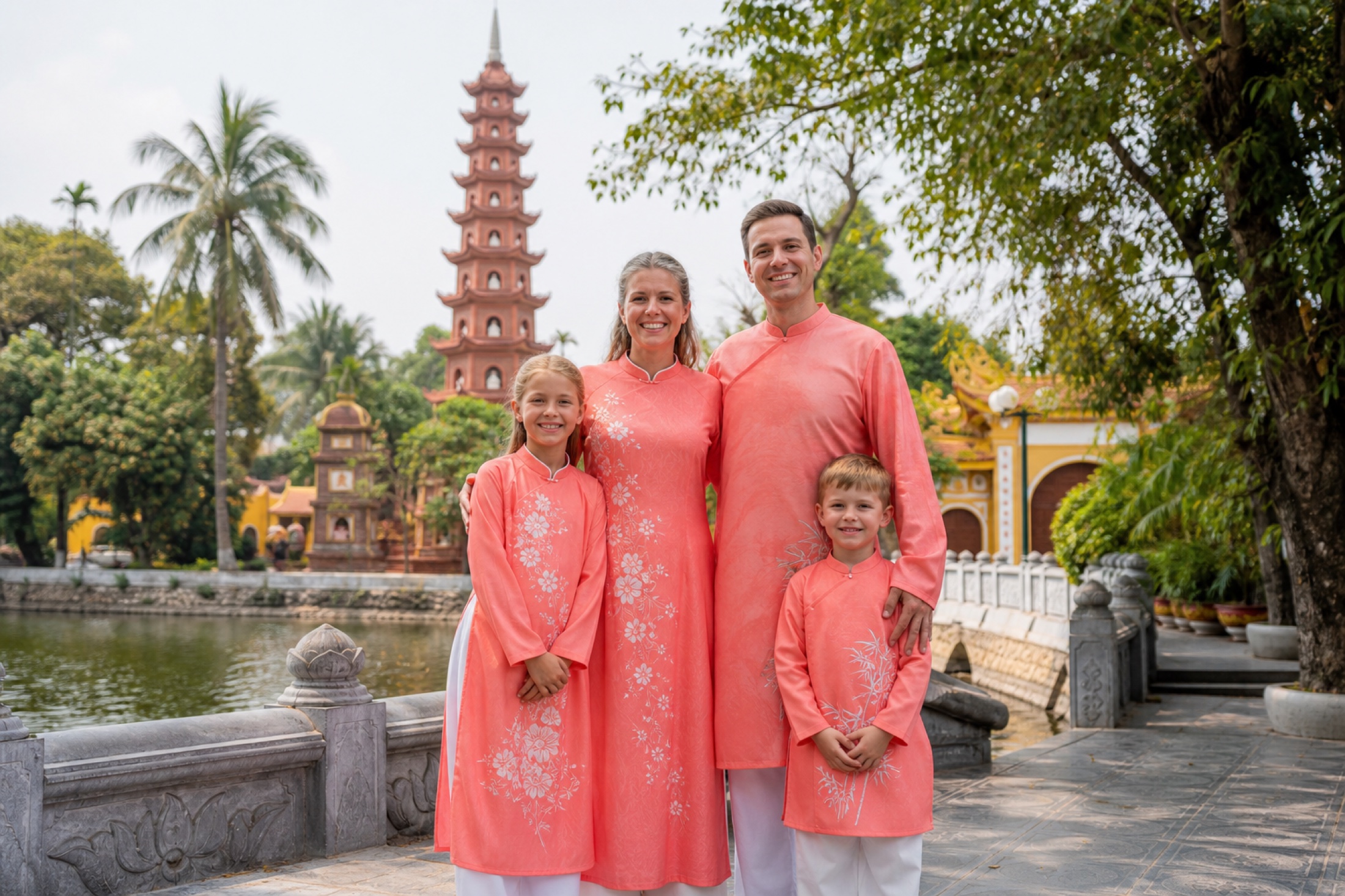
What colors work for men's áo dài and when?
Color reference for travelers:
| Color | Occasion | Cultural Note | Photo Impact |
|---|---|---|---|
| White / cream | Youth, celebrations, first-time wear | Symbolizes purity, ideal for debut | Bright, fresh, best in golden-hour light |
| Navy / black | Formal events, evening, celebrations | Mature, respectful, versatile | Deep, photogenic, suits any setting |
| Burgundy / maroon | Weddings, upscale events | Warm, sophisticated, less common | Rich tones pop in portraits |
| Gold / bronze | Weddings, groom wear | Festive, luxurious, traditional | Glamorous but challenging in harsh sun |
| Emerald / sage | Modern events, bolder travelers | Contemporary take, less traditional | Jewel tones photograph exceptionally well |
White reads best in outdoor shots; darker shades hold detail indoors. Gold and bronze require shade or diffused light—direct sun washes them out. For a first-time photo session in Vietnam, white or navy are safest choices.
How tight should a men's áo dài fit?
Fit is the difference between looking polished and looking costume-like. The tunic should skim the chest without clinging, sit at the natural waist, and allow two fingers' width at the closure. Sleeves must end at the wrist bone—too long looks sloppy, too short looks unfinished. The collar should sit flat against the neck without gaping. Trousers underneath should be straight-leg, not tapered, and cover the tops of your shoes. When we fit travelers at our studios, we check movement: you should raise your arms to shoulder height without the tunic pulling. Most rental áo dài come pre-fitted; custom tailoring takes 1–2 weeks. Oversized áo dài creates unflattering shadows in photos; undersized ones restrict breathing and look cramped.
What shoes and accessories complete the look?
Leather slip-ons or formal shoes in black or brown pair with men's áo dài—no sneakers, no sandals. Avoid bright colors or patterns on feet; they distract in photos. A simple watch works; heavy jewelry reads as costume. A fabric belt in black or neutral tone can sit over the tunic if trousers lack a waistband, though traditionally men's áo dài need no belt. A light scarf or pashimina draped loosely adds texture for photos without breaking etiquette. Hats are optional; a conical nón lá (Vietnamese straw hat) photographs memorably but feels bulky in formal settings. For proposal and anniversary shoots, we often skip accessories entirely and let the áo dài speak. Grooming matters as much as fabric: neat hair, light cologne, clean nails. The garment expects restraint.
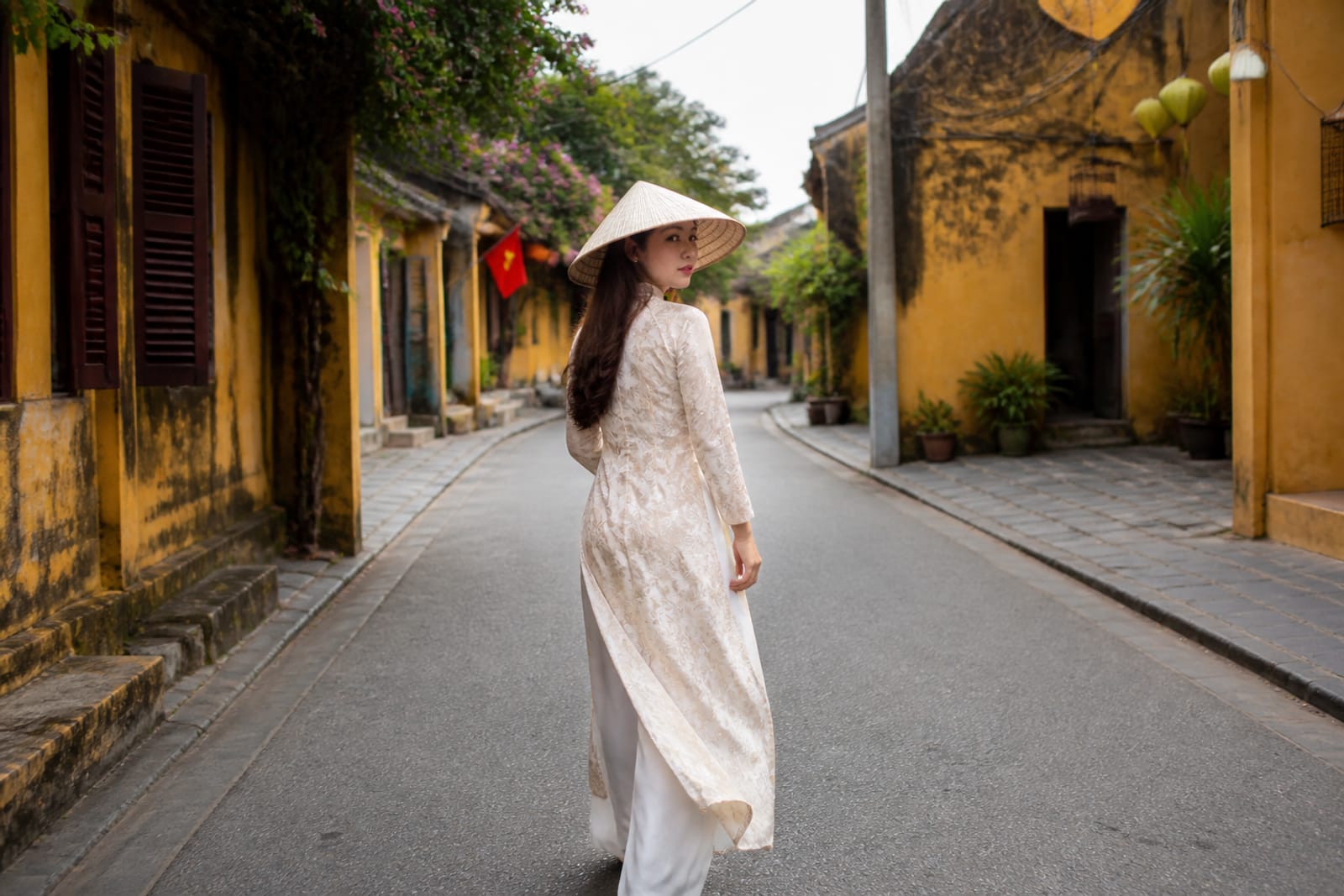
When do Western travelers actually wear men's áo dài in Vietnam?
Most travelers wear áo dài for photoshoots, not daily wear. Hotels don't require it; it's seen as formal or celebratory. Locals wear áo dài on National Day (September 2), Tet (Lunar New Year), weddings, and formal government events. Tourists who book with us typically wear áo dài for a 2–4 hour studio or location session—often their only time in the garment. Some choose it for dinner at fine-dining restaurants in Hanoi's Old Quarter or Saigon's District 1, where it reads as respectful cultural appreciation. The key is context: áo dài at a well-made hotel restaurant feels appropriate; at a night market, it feels out of place. We guide guests on this during WhatsApp consultations before their sessions.
---
Deciding between rental and purchasing áo dài
Rental advantages: Quick fit, included in many shoot packages, no storage hassle post-travel, variety of sizes and colors available same-day. Rental works for single-session travelers. Purchase advantages: Custom tailoring ensures perfect fit, fabric choice (silk versus cotton-blend), heirloom potential, no time pressure. Purchase makes sense if you're returning to Vietnam, gifting it, or wearing it multiple times. At Cáo Studio, we offer rental as part of photoshoot packages; custom tailoring partnerships can be arranged during consultation. Rental typically includes styling and hair-makeup coordination; purchases require separate arrangement via hotel makeup and hair services. Most first-time travelers rent.
---
Chat with us on WhatsApp | See packages and prices on vietnamphotoshoot.com
---
A step-by-step checklist before your áo dài session
- Confirm color and fit 1 week ahead. Message us your height, chest, and waist measurements; we'll hold rental or confirm custom order.
- Decide location: studio (controlled light, quick changes) or outdoor (authentic Vietnamese backdrop, longer prep time).
- Choose accessories: shoes should be new or polished; decide on scarf, hat, or pashimina.
- Plan grooming: haircut or tidy 2–3 days before; avoid new cologne (can clash with makeup).
- Arrive 30 minutes early for fit checks and adjustment. Wear simple undergarments that won't create lines under silk.
- Communicate any discomfort: áo dài should feel formal but not restrictive. We adjust closures and hems on-site.
- Bring multiple outfit options if booking longer sessions; we can switch you between white and navy for variety.
- Review final digital proofs within 5 days; feedback on fit informs future rentals.
---
What to check before you book
- Rental availability: Confirm your date and size 2 weeks ahead if traveling peak season (Nov–Feb). We hold stock in XS–XXXL at both studios.
- Fit trial: If custom ordering, allow 14 days for tailoring and 1 fitting adjustment. Rush orders add complexity; plan ahead.
- Styling coordination: Makeup and hair services are booked separately; bundle them for continuity. Ask if your package includes áo dài or if it's add-on cost.
- Weather: White áo dài in 35°C heat can feel heavy; darker colors absorb warmth. We schedule outdoor shoots in early morning or late afternoon.
- Fabric care: Silk wrinkles easily; we press garments morning-of. Don't sit on rough surfaces in white; synthetic blends hide stains better.
- Return logistics: Rentals are returned the same day or next morning. International guests can post from our studio if needed; we provide prepaid envelope.
---
Book your áo dài shoot – message us now
For couple shoots with matching áo dài, family sessions, or pre-wedding vows in formal wear, we coordinate both outfits and timing so everyone transitions together. Hanoi and Saigon studios hold stock for 24-hour notice; Hoi An and Ninh Binh shoots require 1-week lead time due to location distance. See full options and availability on our booking site.
---
Check packages and dates on vietnamphotoshoot.com
FAQ
Can I wear a Western suit instead of áo dài for Vietnamese formal photos?
Yes, but it reads differently. Áo dài signals respect for Vietnamese culture; a suit reads as international formal. For authenticity in Vietnam, locals and photographers recommend áo dài. Many travelers choose both for variety within a longer session.
How long does it take to get fitted and ready for áo dài photos?
30–45 minutes total: 15 minutes for fit check and adjustment, 15–20 minutes for makeup (if booked), 10 minutes for hair. We build this into session timelines so you're never rushed.
Will áo dài fit comfortably if I'm tall or broad-shouldered?
Standard rentals go to 6'2" and XXXL chest. If you're taller or larger, custom tailoring (available through our tailoring partners) is better. Inform us early; we source pieces that won't look swallowed.
What happens if the rental áo dài tears or stains during my shoot?
Minor stains come out; small tears are our responsibility, not yours. We carry on-site sewing kits for quick fixes. Major damage (rips from movement) is rare; our fabrics are robust. Accidental spills are covered under our liability.
Can I wear áo dài to dinner at a Hanoi or Saigon restaurant after my photoshoot?
Absolutely. A white or navy áo dài reads well at fine-dining restaurants, upscale hotels, and evening events. Casual street food stalls might draw stares—not negative, just novelty. We advise against white áo dài at casual dining due to spill risk.
How do I care for a purchased men's áo dài between wears?
Silk: dry-clean only; store on a wide hanger in a breathable garment bag away from direct sunlight. Cotton-blend: hand-wash cold, lay flat to dry, iron on medium heat with a pressing cloth. Steam before wear to reset wrinkles. Have it professionally cleaned annually if worn multiple times yearly.
Ao Dai Photoshoot
Inclusions, prices and booking are on our booking site.
FAQ
Can I wear a Western suit instead of áo dài for Vietnamese formal photos?
Yes, but it reads differently. Áo dài signals respect for Vietnamese culture; a suit reads as international formal. For authenticity in Vietnam, locals and photographers recommend áo dài. Many travelers choose both for variety within a longer session.
How long does it take to get fitted and ready for áo dài photos?
30–45 minutes total: 15 minutes for fit check and adjustment, 15–20 minutes for makeup (if booked), 10 minutes for hair. We build this into session timelines so you're never rushed.
Will áo dài fit comfortably if I'm tall or broad-shouldered?
Standard rentals go to 6'2" and XXXL chest. If you're taller or larger, custom tailoring (available through our tailoring partners) is better. Inform us early; we source pieces that won't look swallowed.
What happens if the rental áo dài tears or stains during my shoot?
Minor stains come out; small tears are our responsibility, not yours. We carry on-site sewing kits for quick fixes. Major damage (rips from movement) is rare; our fabrics are robust. Accidental spills are covered under our liability.
Can I wear áo dài to dinner at a Hanoi or Saigon restaurant after my photoshoot?
Absolutely. A white or navy áo dài reads well at fine-dining restaurants, upscale hotels, and evening events. Casual street food stalls might draw stares—not negative, just novelty. We advise against white áo dài at casual dining due to spill risk.
How do I care for a purchased men's áo dài between wears?
Silk: dry-clean only; store on a wide hanger in a breathable garment bag away from direct sunlight. Cotton-blend: hand-wash cold, lay flat to dry, iron on medium heat with a pressing cloth. Steam before wear to reset wrinkles. Have it professionally cleaned annually if worn multiple times yearly.
More from the team
How to Choose Your Ao Dai Color for Photos: Skin Tone, Location, Seaso
Choosing an ao dai color is not just about preference—it shapes how you appear in every frame across Hanoi's temples, Hoi An's riverside, or Saigon's urban streets. We'll walk you through skin tone, season, and location so you book with confidence.
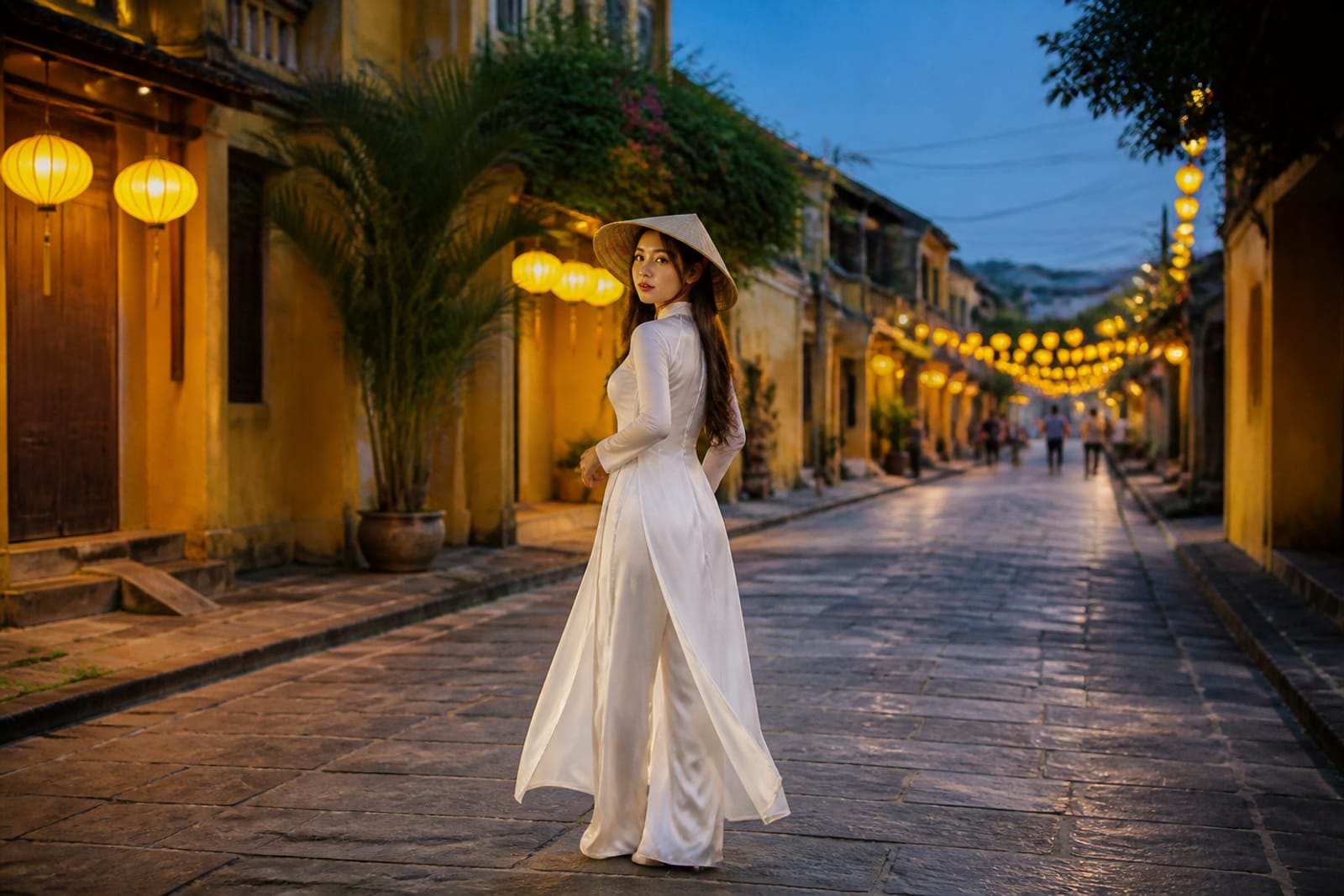
What to expect at an ao dai photoshoot in Hanoi: hour by hour
An ao dai photoshoot in Hanoi runs 3–4 hours from hair and makeup through outdoor locations. We walk you through every hour, what to bring, and how to avoid common delays.