 Cáo Studio
Home › Blog › Ao Dai Photoshoot
Ao Dai Photos at Hanoi Opera House: What We've Learned
By the Cáo Studio team · Hanoi & Saigon · 2026-11-04
The Hanoi Opera House is a colonial-era venue on Trang Tien Street that draws ao dai photographers because of its cream-colored façade, arched entrance, and ornate railings. A session there typically runs 2–3 hours with Cáo Studio, covering the front steps, side colonnades, and interior lobby. Most guests book this as part of a full ao dai photoshoot package, combining it with a second location like the Red River or French Quarter. No permit is required for still photography on public grounds outside the building, but crowds peak between 10 a.m. and 4 p.m., so we schedule early mornings or late afternoons. Budget time for styling, travel, and one location change; factor in heat in summer and occasional rain in monsoon months. The Opera House works best for guests seeking classic, architectural frames rather than nature-focused aesthetics. Chat with us on WhatsApp
Why does morning light matter more than you'd think?
We've shot at the Opera House in every season, and lighting is the biggest variable. Morning sun (6:30–9 a.m.) hits the front façade at a low angle, creating definition in the white stonework and soft shadows on the ao dai pleats. By noon, direct overhead light flattens both the building and the fabric. We watch where the shadows fall on the steps—if they're too harsh, we move to the side portico where the columns create striped light that frames the wearer beautifully. One October session, clouds rolled in around 8:30 a.m., and we switched focus to the lobby arches where overhead skylights gave us even, diffused light that made the silk glow. The moral: if you're flexible on start time, 7–8 a.m. beats 2 p.m. every time, regardless of season.
What happens when pedestrians walk into your frame?
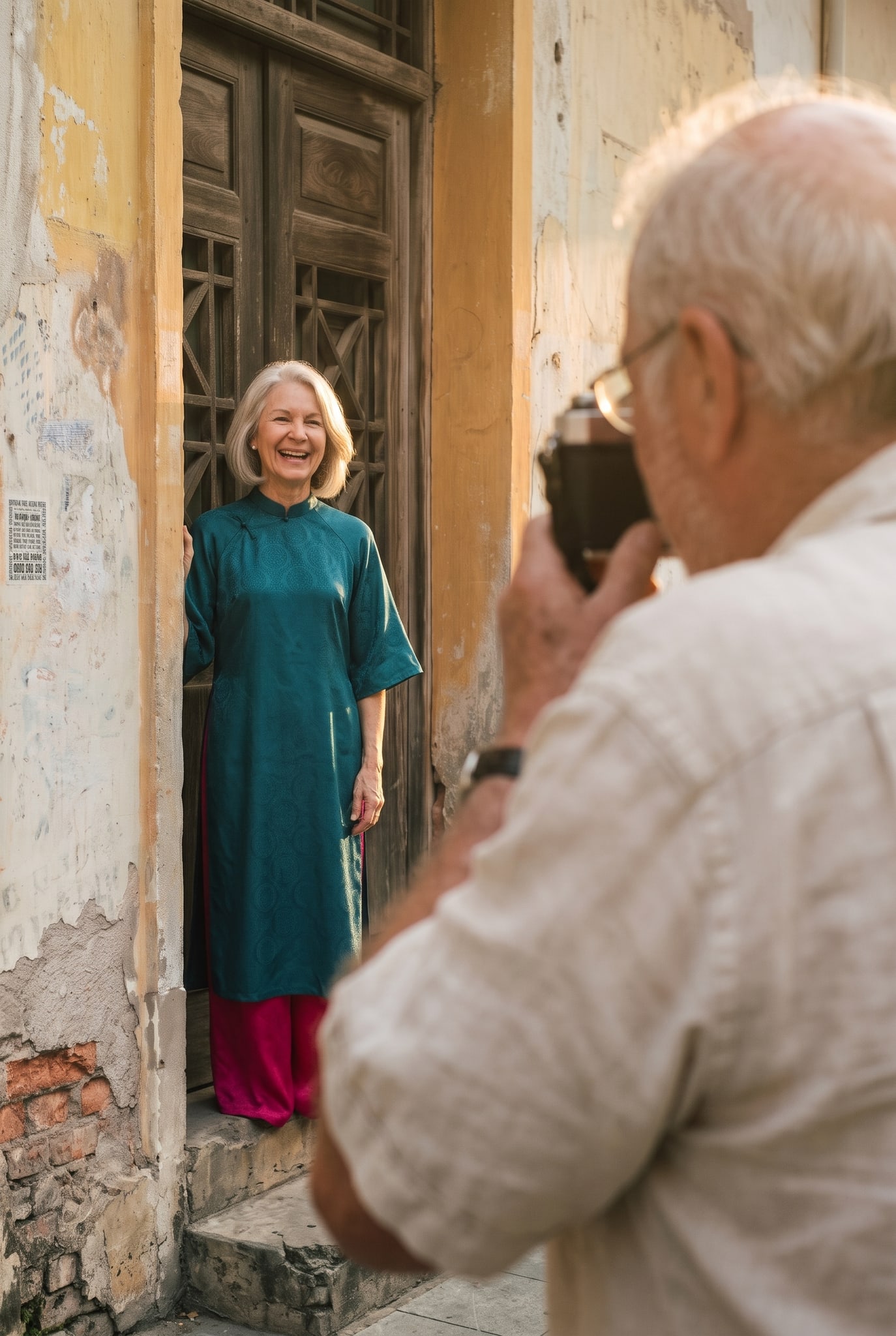
The Opera House sits on a busy pedestrian corner. We plan for interruptions. On a recent Saturday, we were shooting a couple in a matching burgundy áo dài set near the main entrance when a tour group of 40 people stopped to photograph the building. Our photographer didn't stop—she moved the couple to the left side entrance where the colonnades created a private pocket. Then she used the foot traffic strategically: one shot has a cyclo passing in soft focus behind them, which added storytelling without taking over the frame. We carry a small reflector to bounce light if we're in shadow, and we always scout the space 15 minutes early to check sight lines and foot patterns. If you're booking during peak tourist season (Nov–Feb), tell us, and we'll schedule you for a weekday or arrive 45 minutes before your slot to claim the best angle first.
See packages and prices on vietnamphotoshoot.com
How do heat and humidity affect the ao dai itself?
Silk wrinkles, colors shift, and fabrics cling differently as temperature and moisture change. We've learned to check the garment every 45 minutes. On a July shoot, a guest wore a traditional heavy silk áo dài, and by 9:30 a.m. (after just two hours in 32°C heat), the front panels had absorbed humidity and lost their crisp drape. Our stylist kept a handheld steamer in an insulated bag and touched up the pleats before every set of shots. For summer Opera House sessions, we now recommend lighter silk blends or modern stretch fabrics that hold their shape, and we advise guests to bring a thin cotton robe to wear between photo setups. In cooler months (Nov–Feb), traditional heavy silk photographs beautifully and holds form all day. If you're unsure which fabric weight suits the season, ask us on WhatsApp when you're booking, and we'll suggest what works best for your dates.
What's the difference between solo, couple, and group shoots here?
| Setup | Best for | Session length | Why the Opera House fits |
|---|---|---|---|
| Solo ao dai | First-time wearers, portraits | 1.5–2 hours | Architectural frames let the garment speak; fewer logistical moving parts |
| Couple or family | Pre-wedding, anniversaries | 2–3 hours | Multiple locations on-site (front, sides, lobby) keep poses varied without moving locations |
| Group (3+) | Family reunions, friends | 3–4 hours | Building's scale absorbs larger groups; we rotate between locations to avoid crowding one spot |
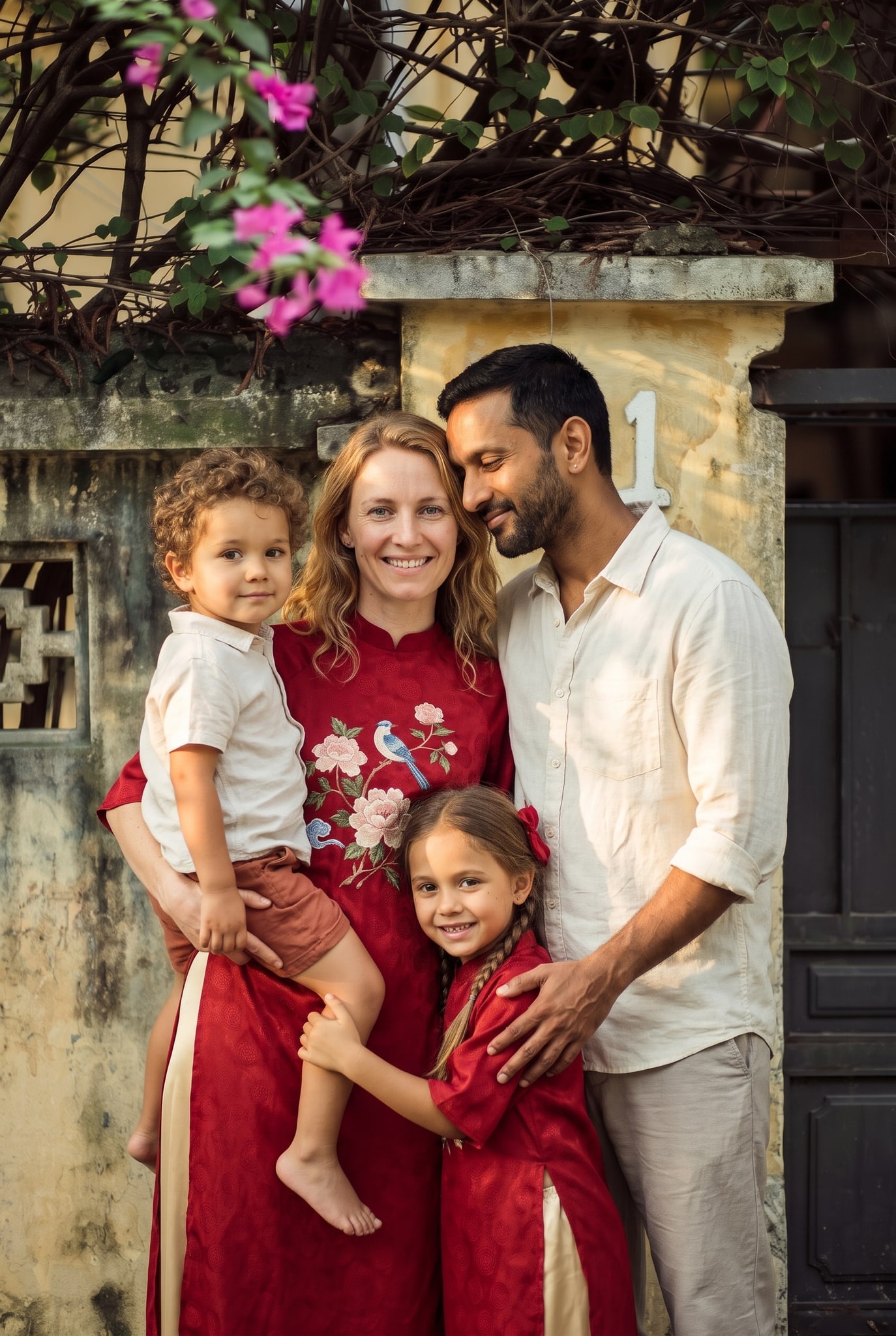
Solo sessions are fastest because we focus on the wearer and the building as a paired subject. Couples need more time because we're choreographing interaction—where they stand, how they hold each other, how the light hits both garments. Family groups (three or more) require us to think in layers: we'll position taller people and the building's verticals together, use the steps to create depth, and make sure everyone's face is lit. We've found that couples who book a dedicated package often add the Opera House as their second location, since it's central and feels like a natural photo progression after an intimate nearby café or riverside shot.
What should you check before booking an Opera House session?
Before you book, confirm these five things with us:
- Time of year. Are you visiting Nov–Feb (cool, dry—ideal) or Apr–Sep (hot, humid—trickier, more heat management needed)?
- Your ao dai style. Traditional heavy silk, modern stretch, or a blend? We'll advise on what holds up to the climate and the light.
- Group size. Solo, couple, or family? This changes how we choreograph and where we place you.
- Second location. The Opera House alone is 2 hours. Do you want a second backdrop (French Quarter, Red River, Hoan Kiem Lake) to round out your session? Ask about vacation and solo photoshoot packages or our Hanoi studio options.
- Styling choices. Hair, makeup, and jewelry all register differently in overhead colonial light. We'll walk you through this on WhatsApp once you've booked.
Ask us for a quote on WhatsApp, and tell us your dates, group size, and whether this is for pre-wedding, a trip souvenir, or a family milestone. We'll send you a session outline and next steps.
What goes wrong, and how we fix it?
Rain is the most common surprise. Hanoi's monsoon runs May–Aug, and we've learned to shoot first, ask questions later. One June morning, light drizzle started just as a guest stepped onto the front steps. Our photographer kept shooting—the wet stone reflected the cream-colored façade beautifully, and the rain added texture to outdoor light. We had an umbrella ready, but the client loved the moody aesthetic. However, if rain is heavy, we pivot to the lobby and interior arches, where we're protected and skylights still give us soft, even light.
Costume continuity is another one: if a guest is changing outfits mid-session, we shoot all shots in outfit A first, then reset. We've seen wrinkles accumulate if we switch back and forth. One family shoot in Feb involved three outfit changes across the group—we made a shot list in advance, grouped by outfit, and stuck to it. This saved 30 minutes and meant fewer retakes.
Finally, battery and storage. We carry dual chargers for cameras, three external hard drives, and a portable backup power bank. The Opera House is surrounded by cafés with outlets, but we don't rely on them. We've had zero data loss in five years because we back up at the end of every session, same day.
See packages and prices on vietnamphotoshoot.com
FAQ
Can we shoot inside the Hanoi Opera House or only on the exterior steps?
The Opera House interior is accessible during certain hours and events, but we typically work outdoors on the public grounds (steps, colonnades, courtyard). We'll check the day-of schedule and let you know. Interior lobby shots are sometimes possible if there's an event scheduled; we confirm this before your session date.
Do we need a permit to photograph at the Opera House?
No permit is required for personal or portrait photography on the public exterior grounds. Commercial or large-scale production shoots may need advance approval; if that applies to you, tell us when booking, and we'll handle it.
What's the best time of day to shoot ao dai at this location?
Early morning (6:30–9 a.m.) gives the best light on the cream façade and flatters silk textures. Late afternoon (4–6 p.m.) also works. Midday (11 a.m.–3 p.m.) creates harsh shadows and overhead glare. We typically recommend early morning for summer and flexible afternoon slots in winter.
How long does a session at the Opera House usually take?
A typical ao dai shoot takes 2–3 hours with one location. Many guests combine it with a second spot (Red River, French Quarter, nearby café) to fill a 3–4 hour block. We'll discuss this during booking and adjust the timeline based on your preferences.
Can we do a couple shoot or family session here, or is it better for solo?
All three work well. Solo sessions are fastest because we focus on the individual and the architecture. Couples and families take longer because we're choreographing interaction and positioning across the space. The Opera House's scale and varied backgrounds (front, sides, lobby, columns) give us plenty of room for all group sizes.
What if the weather is bad on our booked day?
We shoot through light rain because wet stone and overcast skies often create beautiful, moody light. Heavy rain means we move to the protected lobby and interior spaces. For severe weather (storms), we'll reschedule a day or two out if you prefer. Chat with us on WhatsApp before your session for the real-time forecast and our recommendation.
Ao Dai Photoshoot
Inclusions, prices and booking are on our booking site.
FAQ
Can we shoot inside the Hanoi Opera House or only on the exterior steps?
The Opera House interior is accessible during certain hours and events, but we typically work outdoors on the public grounds (steps, colonnades, courtyard). We'll check the day-of schedule and let you know. Interior lobby shots are sometimes possible if there's an event scheduled; we confirm this before your session date.
Do we need a permit to photograph at the Opera House?
No permit is required for personal or portrait photography on the public exterior grounds. Commercial or large-scale production shoots may need advance approval; if that applies to you, tell us when booking, and we'll handle it.
What's the best time of day to shoot ao dai at this location?
Early morning (6:30–9 a.m.) gives the best light on the cream façade and flatters silk textures. Late afternoon (4–6 p.m.) also works. Midday (11 a.m.–3 p.m.) creates harsh shadows and overhead glare. We typically recommend early morning for summer and flexible afternoon slots in winter.
How long does a session at the Opera House usually take?
A typical ao dai shoot takes 2–3 hours with one location. Many guests combine it with a second spot (Red River, French Quarter, nearby café) to fill a 3–4 hour block. We'll discuss this during booking and adjust the timeline based on your preferences.
Can we do a couple shoot or family session here, or is it better for solo?
All three work well. Solo sessions are fastest because we focus on the individual and the architecture. Couples and families take longer because we're choreographing interaction and positioning across the space. The Opera House's scale and varied backgrounds (front, sides, lobby, columns) give us plenty of room for all group sizes.
What if the weather is bad on our booked day?
We shoot through light rain because wet stone and overcast skies often create beautiful, moody light. Heavy rain means we move to the protected lobby and interior spaces. For severe weather (storms), we'll reschedule a day or two out if you prefer. Chat with us on WhatsApp before your session for the real-time forecast and our recommendation.
More from the team
Ao dai wedding photos at Thanh Ha pottery village
Thanh Ha pottery village in Hoi An is a working craft site where red-brick kilns frame ao dai perfectly. We've shot dozens of couples there—here's what happens on the day, what to pack, and how to choose the right session length.
Ao dai wedding photos at Bay Mau coconut forest: our shoot day
Bay Mau coconut forest is one of Ninh Binh's most-requested backdrops for ao dai wedding and engagement photos. We share how our team structures these shoots, what to expect hour by hour, and how to prepare.
Ao dai for wedding photos in Hoi An: renting, fitting and styling
Hoi An's ancient streets demand an ao dai that fits perfectly and tells your story. We walk you through renting, fittings, and the decisions that transform a garment into your wedding photo.