 Cáo Studio
Home › Blog › Special Concept Shoot
Best Time of Day for Photos in Saigon: Golden Hour vs Midday Shoots
By the Cáo Studio team · Hanoi & Saigon · 2026-11-01
Golden hour (6–7 a.m. or 5–6:30 p.m.) delivers warm, directional light that flatters skin and fills Saigon's colonial streets with amber tones—this is when Cáo Studio books most ao dai and couple shoots. Midday (11 a.m.–1 p.m.) flattens faces and creates harsh shadows, but works for bold, high-contrast editorial looks and when you need cooler, punchy colors. Blue hour (just after sunset, 6:45–7:30 p.m.) requires fast film and steady hands but gives moody, atmospheric city shots. Each slot costs the same; the difference is light, energy, and what story your photos tell. Choose based on your vision, venue, and tolerance for heat—not just habit. Chat with us on WhatsApp
What happens in our editing suite when you shoot at 6 a.m.?
Sunrise shoots in Saigon mean we start in Tao Đàn Park or down by the Saigon River by 5:45 a.m., before the city wakes. The light is clean—no haze yet, no competing sun angles. When we upload files to our laptops by 8 a.m., skin tones are already separated from the background, shadows have shape, and highlights don't blow. Our retouchers spend less time fixing blown skies or salvaging flat midday exposures. The trade: guests wake early, humidity builds fast, and by 6:30 a.m. the light has shifted enough that we're chasing the angle. We've learned to brief clients on WhatsApp the night before: bring water, wear layers you can peel off, and plan to move between locations every 20 minutes to stay in the sweet light.
Why do we avoid straight noon unless the client asks for it?
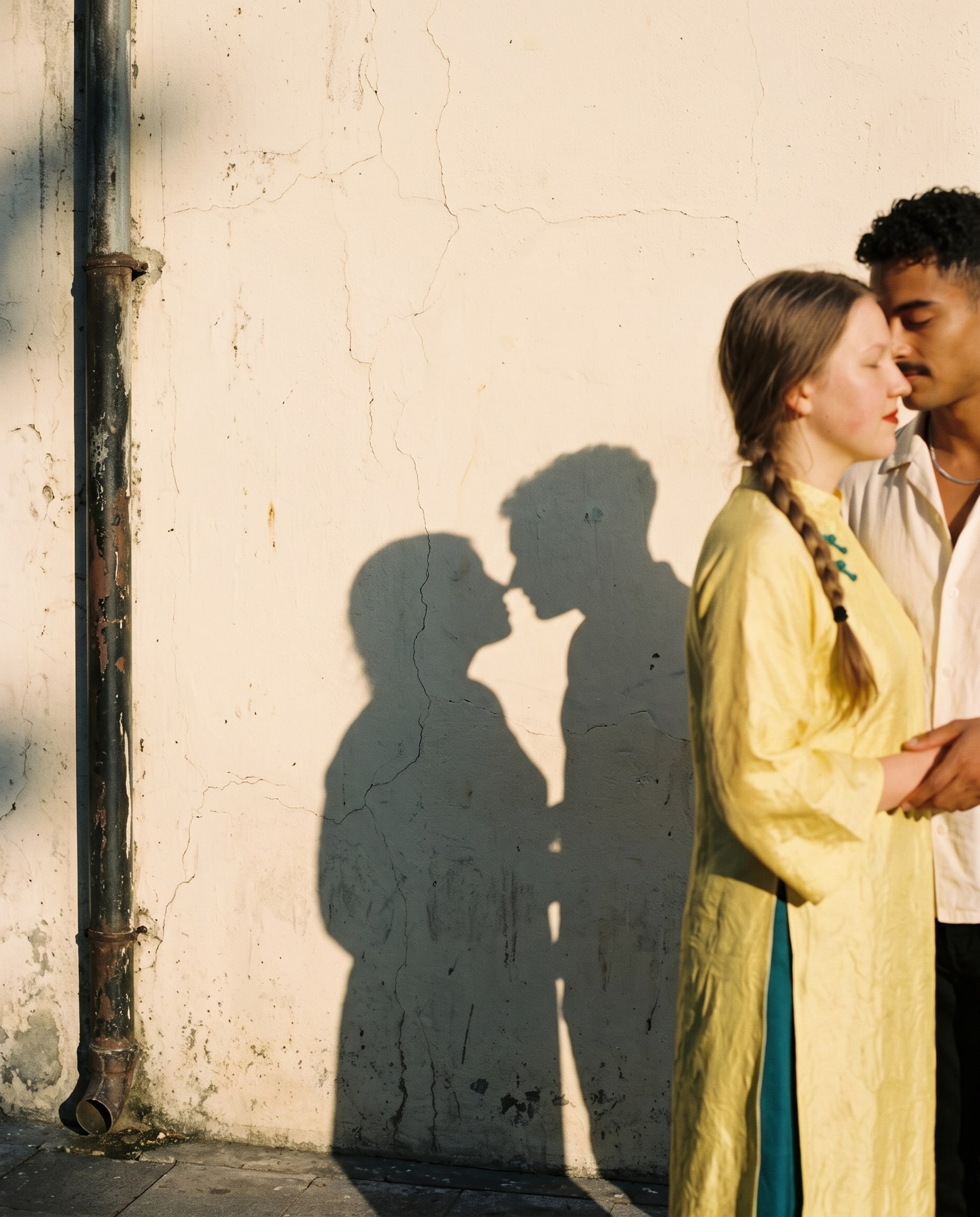
At noon in District 1 or around the War Remnants Museum, the sun is directly overhead. Faces go dark under brows, noses cast no shadow (so noses look flat), and if you're wearing an ao dai, the fabric is washed out. We don't avoid it entirely—some clients want clean, minimal shadows for a minimalist look, or they're working with a tight schedule. But when the brief is "romantic" or "timeless," noon is a fight. Our photographer's eye catches the problem in the live view within minutes, and we're already radioing the stylist to adjust positioning or suggesting we move to shade. One couple insisted on noon in February heat; they got the shots, but we had to shoot twice as many frames to find keepers, and skin looked parched in early edits. Now we show samples on WhatsApp before booking and suggest morning or late afternoon instead.
How does 4–6 p.m. light change your color palette?
Late afternoon in Saigon gives us the golden hour the textbooks promise—reddish, warm, wrapping light that makes people glow. When we're editing ao dai shots taken at 5 p.m. near the Bitexco Financial Tower or in the old quarters of District 3, reds and crimsons in the fabric vibrate; pale skin gets warmth without needing a filter. Greens in the background become jewel-toned. We typically see 30% less retouching time on skin because the light is doing half the work. The catch: you're racing the sunset. By 6:15 p.m. the angle has dropped so low that tall buildings throw long shadows across streets. One couple's pre-wedding shoot last month (5 p.m. slot) meant we had maybe 35 minutes of usable light before harsh street lamps turned on. We restructured the shot list mid-session—moved the venue shot up front, saved a dimmer second location for the final 10 minutes. Clients who book 4 p.m. need to understand the time squeeze.
What's the real difference between 5 p.m. and 6:15 p.m. on shoot day?
Fifteen minutes changes everything. At 5 p.m., the light is still diffuse enough that we can shoot in open shade and still see color in faces. By 6:15 p.m., we're using reflectors to bounce what's left, or we're relying on the blue sky reflected off buildings. Our light meter tells us the ISO jumps from 400 to 800+, and shutter speeds drop. On a couple's shoot in Saigon in March, we booked 5 p.m. because the couple wanted that amber-hour look, but they arrived 20 minutes late—suddenly we were shooting at 5:20 p.m., which sounds trivial but forced us to drop from two locations to one and use a flash for fill, which we try to avoid. We learned to buffer: now we ask clients to meet 15 minutes early, and we always have a contingency "blue-hour" location in mind in case we lose light faster than planned. The difference shows in the proofs: 5 p.m. shots have natural fill, 6:15 p.m. shots need more Photoshop recovery.
Should you prioritize comfort or light when choosing your time slot?
Here's the honest framework we use in consultations: if your shoot is in April–May (peak heat), an early morning or late afternoon slot means you stay fresh and sweat doesn't pool under makeup. If it's November–December, even midday is cool enough and the light is a touch softer due to lower humidity haze. Your clothing matters too—ao dai fabric doesn't breathe in noon sun; couple shoots where people wear jeans or denim overheat by 2 p.m. and it shows in their faces. We show prospective clients a side-by-side table (in WhatsApp consultations) of typical session timings, so they can match their energy, outfit, and vision. One family from Australia booked a 1 p.m. family photoshoot in June thinking they'd avoid "early mornings," but by 35 minutes in, the toddler was cranky and parents were wilted. We pivoted to the indoor hotel lobby to finish—not ideal, but saved the session. The takeaway: light is non-negotiable; comfort lets you show up as yourself.
| Time Slot | Light Quality | Heat (Apr–May) | Best For | What to Watch |
|---|---|---|---|---|
| 5:45–7 a.m. | Warm, directional, no haze | Cool | Ao dai, romantic couple shots, editorial | Humidity builds; light shifts fast |
| 10 a.m.–noon | Bright, high contrast, flattens skin | Hot | Bold editorial, minimalist, high-key | Unflattering shadows; heat stress |
| 1–3 p.m. | Harsh, overhead, blown highlights | Very hot | Not recommended unless brief requires it | Faces darken; fabric washes out |
| 4–5 p.m. | Golden, warm, flattering | Hot but manageable | Couple, family, pre-wedding | 35–45 min usable light; sunset race |
| 5:30–6:30 p.m. (blue hour start) | Amber fading to blue; magical | Cooling | Moody city shots, proposals, editorial | Requires fast film; limited keepers |
What goes wrong when we don't lock in the exact time on your booking confirmation?
We've had guests text "around 4 p.m." and show up at 4:45 p.m., expecting golden hour—by then we're 15 minutes into blue hour, color is draining from the sky, and we're in recovery mode. Now our WhatsApp confirms the time as "4:00 p.m., meet at [venue name]" and we send a reminder 24 hours before with the exact address and light notes—"golden hour until 5:45 p.m., bring sunscreen, the light will be warm and from the west." One pre-wedding couple thought "4 p.m." meant they could arrive anytime before 5 p.m.; we met them at 4:50 p.m., had 30 minutes of usable light, and had to cut their location list in half. Now our package confirmations include a sentence: "Arrive by [time]. Light window closes by [time]. Late arrivals mean fewer locations or rescheduling." Bookings at /go/pre-wedding-photoshoot and /go/couple-photoshoot include this detail in the pre-shoot brief.
See packages and prices on vietnamphotoshoot.com
How do we adapt when weather darkens the sky unexpectedly?
Saigon's rainy season (May–Sept) brings surprise cloud cover that darkens the light 20 minutes earlier than the forecast suggested. We've shot golden-hour ao dai sessions at 5 p.m. only to find the sky gray by 5:30 p.m. because a weather front rolled in from the coast. On the day, our photographer checks the live view constantly and radios the team: "We're losing 1.5 stops of light—shift to backlit mode or move to the next location now." If the clouds won't lift (happened to a solo traveler's shoot last June), we have a list of Saigon venues with good indoor light: the lobby of the Majestic Hotel has north-facing windows, the old Tan Dinh Church interior glows softly. We also reframe it with clients—"We have an unexpected gift, moody light. Let's shoot editorial portraits instead of the planned landscape." One couple's proposal shoot was threatened by cloud cover at 5:45 p.m.; we pivoted to an indoor venue and used the softer, dramatic light to create a more intimate mood. No one complained. The lesson: nail the time, but have a plan for when weather doesn't cooperate.
Do we ever recommend clients book a backup time slot?
For high-stakes shoots like proposals or elopements, we sometimes suggest a two-slot booking: a morning slot and a late-afternoon slot on different days, so you can choose the winner based on weather and energy. This isn't common—most guests book once—but for destination travelers or couples flying in for one day, it gives flexibility. The second session would be a shorter shoot to keep time and budget reasonable. We've never had someone take us up on it, but we mention it in the consultation for high-budget clients. For most guests, one sharp session at the right time beats two rushed ones.
What time do we recommend for visitors staying in a specific Saigon hotel?
If you're staying downtown near Saigon Opera House or Dong Khoi, a 5 p.m. start means you can rest after lunch, have a 2 p.m. makeup and hair session with our team (available via our hotel service), then walk to nearby locations in District 1 and catch the best light. If you're in District 7 (farther out, near the Saigon River), a 4:30 p.m. start gives you commute time and still catches the heart of golden hour. We map this on the consultation call, factoring in travel time from your hotel, makeup time (usually 60–90 min), and venue distance. For family shoots, we often book 9:30 a.m.—early enough that kids are alert, late enough that harsh shadows aren't an issue. For vacation and solo shoots, we ask what the person's energy is like ("Are you a morning person?") and book accordingly.
How does light differ between our Saigon and Hanoi studios?
Cáo Studio in Saigon works with tropical afternoon heat and intense cloud-to-ground humidity that softens overhead light by 2 p.m.—a 5 p.m. golden hour here is richer and lasts longer (until 6:30 p.m.) because the atmosphere glows. Hanoi at the same time sees crisper, cooler light and an earlier hard sunset (5:45 p.m. in winter vs. 6:30 p.m. in Saigon summer). If you're split between cities, we brief you: "In Hanoi, golden hour is tighter; book 4:30 p.m. In Saigon, you can relax to 5 p.m." We've had guests try to use the same timeline in both cities and run short on light in Hanoi. The difference matters.
What to check before you book your time slot:
- Confirm your exact arrival time (not "around 4 p.m."). Our WhatsApp reminders will lock it in 24 hours before.
- Tell us your venue and closest hotel so we can factor in commute time and light loss to travel.
- Let us know if you're booking makeup and hair at your hotel—this adds 60–90 min before the shoot, so a "5 p.m. shoot start" might mean 3 p.m. makeup.
- Check the weather forecast in Saigon 2 days before. If rain is predicted, ask about indoor backup locations or rescheduling.
- Wear clothes you can move in—if you're in an ao dai or heavy fabric, morning/late afternoon beats noon.
- Bring sunscreen and water, even if you're shooting early. Saigon humidity builds fast.
- Ask if your package includes a time-specific guarantee—some special concept shoots promise a certain number of keepers per time window.
FAQ
Does golden hour really look that different, or is it just hype?
The difference is real in files. Skin tones separate from backgrounds, highlights hold detail, and the angle of light sculpts faces—you need 30% fewer edits. Hype is the idea that every shot must be golden hour; some briefs (minimalist, editorial, high-key) use midday light on purpose. We show before-and-afters in consultations.
What if I can only shoot at noon because of my flight schedule?
We can work around it—we'll use shade, reflectors, and fast shutter speeds to control contrast, and schedule edits knowing we'll recover blown skies. It's not ideal, but we've made it work. Tell us in the booking so we can plan locations with good cover and adjust the shot list.
Does Saigon's heat in April–May really affect the photos, or just the experience?
Both. Heat stress shows in people's faces—tension, less genuine smiling, visible sweat. It also can make makeup break down faster, which means more touch-ups between locations. Shoots at 9 a.m. or 5 p.m. in April–May produce fresher-looking results and happier clients.
Can you shoot at both golden hour and blue hour in the same session?
Yes, if the session is 3+ hours. You'd split time between locations—golden hour at 5 p.m. for warm couple shots, then blue hour at 6:45 p.m. for moody city shots. This is common in pre-wedding and proposal packages where the budget allows longer sessions.
What's the difference between "golden hour" and "blue hour" for mood?
Golden hour is warm, romantic, classic—the look most couple and ao dai shoots chase. Blue hour (just after sunset, when the sky is deep blue) is moodier, more editorial, slower pacing. They're opposite aesthetics; we use each for different briefs. If you're unsure, book golden hour—it's more forgiving and universally flattering.
Do you offer a refund or reshoot if the light is bad on the day we booked?
We don't control the weather, but we own the edit. If clouds steal the light, we adapt location or offer a light reshoot at a better time. We've never left a client unhappy because of weather; we pivot instead. Check your package terms at vietnamphotoshoot.com—most include bad-light reschedules.
How early before sunset should we start if we want "blue hour" shots?
Start 45 minutes before sunset (so 5:45 p.m. in Saigon in June). You'll catch the tail of golden light, then transition into blue hour as the sun dips. If you start at sunset itself, you'll miss the warm-to-blue gradient and only get the last 20 minutes of usable light.
Can you shoot indoors instead and avoid the whole time-of-day problem?
You can, and some clients do makeup and hair at their hotel with us and use the hotel's interior light. But natural light always reads as more alive and genuine in photos. Indoor light is a backup, not a first choice.
Special Concept Shoot
Inclusions, prices and booking are on our booking site.
FAQ
Does golden hour really look that different, or is it just hype?
The difference is real in files. Skin tones separate from backgrounds, highlights hold detail, and the angle of light sculpts faces—you need 30% fewer edits. Hype is the idea that every shot *must* be golden hour; some briefs (minimalist, editorial, high-key) use midday light on purpose. We show before-and-afters in consultations.
What if I can only shoot at noon because of my flight schedule?
We can work around it—we'll use shade, reflectors, and fast shutter speeds to control contrast, and schedule edits knowing we'll recover blown skies. It's not ideal, but we've made it work. Tell us in the booking so we can plan locations with good cover and adjust the shot list.
Does Saigon's heat in April–May really affect the photos, or just the experience?
Both. Heat stress shows in people's faces—tension, less genuine smiling, visible sweat. It also can make makeup break down faster, which means more touch-ups between locations. Shoots at 9 a.m. or 5 p.m. in April–May produce fresher-looking results and happier clients.
Can you shoot at both golden hour and blue hour in the same session?
Yes, if the session is 3+ hours. You'd split time between locations—golden hour at 5 p.m. for warm couple shots, then blue hour at 6:45 p.m. for moody city shots. This is common in [pre-wedding](/go/pre-wedding-photoshoot) and [proposal packages](/go/proposal-and-anniversary) where the budget allows longer sessions.
What's the difference between "golden hour" and "blue hour" for mood?
Golden hour is warm, romantic, classic—the look most couple and ao dai shoots chase. Blue hour (just after sunset, when the sky is deep blue) is moodier, more editorial, slower pacing. They're opposite aesthetics; we use each for different briefs. If you're unsure, book golden hour—it's more forgiving and universally flattering.
Do you offer a refund or reshoot if the light is bad on the day we booked?
We don't control the weather, but we own the edit. If clouds steal the light, we adapt location or offer a light reshoot at a better time. We've never left a client unhappy because of weather; we pivot instead. Check your package terms at vietnamphotoshoot.com—most include bad-light reschedules.
How early before sunset should we start if we want "blue hour" shots?
Start 45 minutes before sunset (so 5:45 p.m. in Saigon in June). You'll catch the tail of golden light, then transition into blue hour as the sun dips. If you start at sunset itself, you'll miss the warm-to-blue gradient and only get the last 20 minutes of usable light.
Can you shoot indoors instead and avoid the whole time-of-day problem?
You can, and some clients do [makeup and hair at their hotel](/go/makeup-and-hair) with us and use the hotel's interior light. But natural light always reads as more alive and genuine in photos. Indoor light is a backup, not a first choice.
More from the team
Fishing Village Concept Photoshoot Vietnam: How We Shoot It
A fishing village photoshoot captures Vietnam's working waterfront—nets, boats, morning light, real people. We share how our team runs these shoots from location scout to final delivery.
Cruise Stop Saigon Photoshoot at Phu My Port: Studio Guide
Cruise passengers have 8–12 hours in Saigon. We photograph guests right from Phu My Port, handling transport and changing rooms so you step off the ship and into an áo dài or couple session.
Cinematic Film Look Photoshoot Vietnam: Our Studio Guide
Cinematic film aesthetics—muted colour grading, shallow depth of field, story-driven composition—have become the most requested look across our shoots in 2026. We run you through how we build this style on set, what goes wrong, and which packages genuinely deliver it.