 Cáo Studio
Home › Blog › Special Concept Shoot
Couple poses that do not feel awkward: what works
By the Cáo Studio team · Hanoi & Saigon · 2026-11-02
Awkward couple poses come from tension and overthinking. At Cáo Studio, we fix this by starting with movement (walking, laughing, looking away) instead of static holds, building comfort before formal frames, and giving clear directions that feel natural—no "hold this exact angle" scripts. The best poses look unposed: one partner's hand on the other's back while both face the light, or sitting with legs crossed toward each other and heads tilted close. Our couple photoshoot package runs 2–3 hours and includes 40–60 final images; we spend the first 15 minutes talking through your story so poses feel genuine, not choreographed. Awkwardness happens when couples hold their breath, lock their arms stiffly, or face the camera head-on with blank expressions—we coach you to breathe, shift weight, and think of something that makes you both smile instead of "smile for the camera." Chat with us on WhatsApp
Why static poses feel uncomfortable even when they look fine in photos?
Holding one position for 5–10 seconds builds tension in your shoulders, neck and jaw. We notice this every session: couples who stand with weight evenly on both feet tend to stiffen. Instead, shift your weight onto your back leg, let your front leg relax, and let one arm rest naturally. This small shift takes pressure off your core and your face softens. Movement—even tiny shifts—breaks the mental loop where your body expects to "hold still." On shoot day, we ask you to take a step, then pause; walk toward each other, then stop; laugh at a terrible joke, then freeze that moment. Your face and posture are already in motion, so the final frame feels alive rather than posed. We've run 200+ couple sessions across Hanoi and Saigon since 2022, and the couples who felt least awkward afterward were the ones who moved between frames, not during them.
What physical positions actually look natural in couple photos?
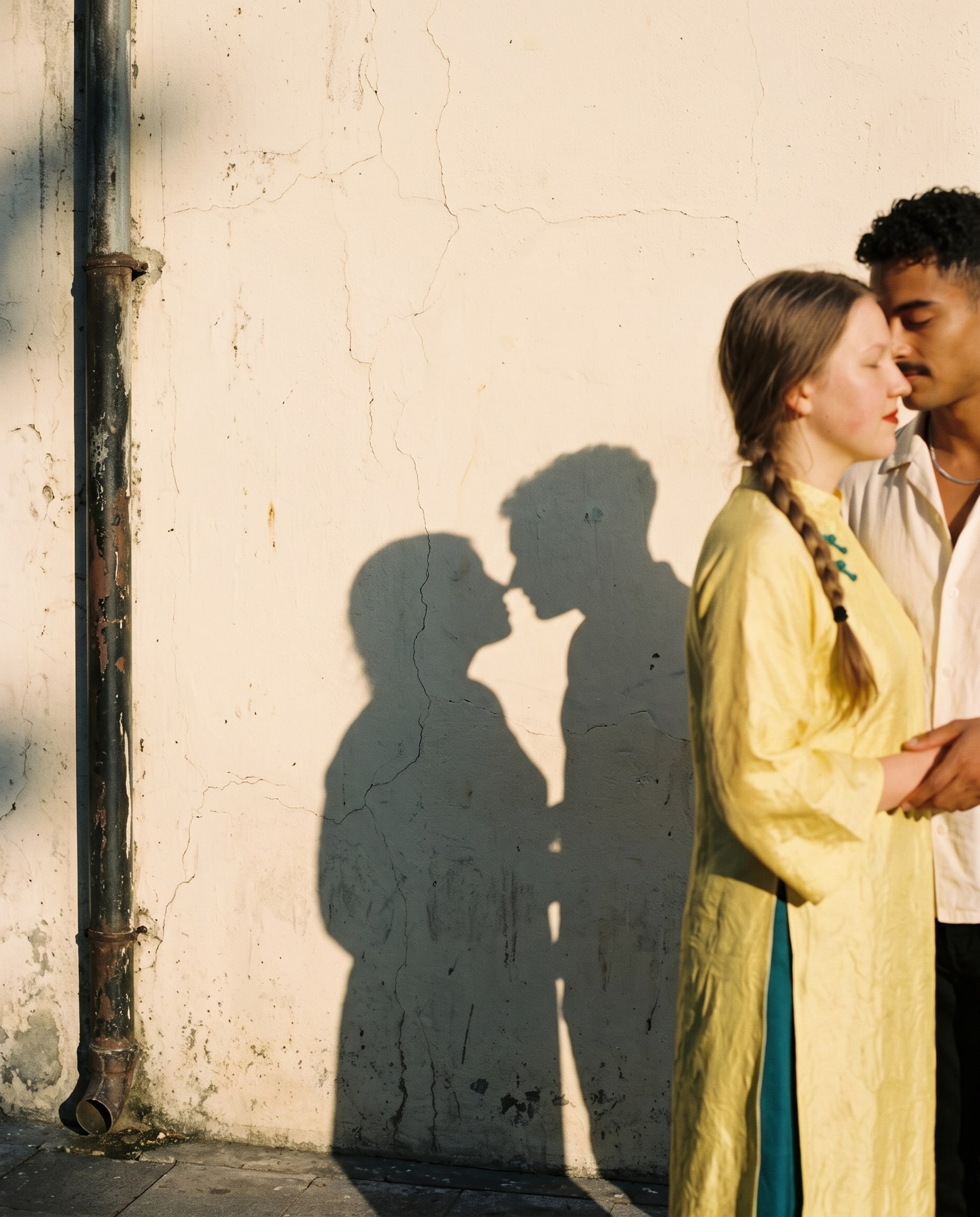
The strongest couple poses break the face-forward rule. Side-by-side with your arm around each other's waist and both heads tilted toward each other creates intimacy and removes the "mugshot" feel. Our stylists prefer the "forehead-to-cheek" position: one partner's forehead touches the other's cheekbone while both look slightly away from the camera—it's tender, avoids forced eye contact, and works in any light. Sitting back-to-back with heads tilted back to touch adds playfulness. For formal shots, the "close frame" works: stand chest-to-chest, his hands on her waist or shoulders, her hands on his chest or around his neck, both gazing just off-camera. The key is pressure and contact—when you're touching, awkwardness drops because your brain isn't screaming "where do I put my hands?" Standing at arm's length facing each other, both hands held, works for movement: walk toward the camera, pause, then the photographer captures that moment of connection. Avoid face-to-face stares (too confrontational), parallel stiff stands (too formal unless that's your vibe), and reaching for poses that feel unnatural to how you actually touch each other. We tell every couple: if a pose doesn't work in real life, it won't in photos.
See packages and prices on vietnamphotoshoot.com
How do you pick a pose that matches your personality?
Start by asking: do we prefer playful or intimate? Playful couples thrive in movement poses—jumping, walking, running through a field, laughing mid-conversation. We see this in our vacation and solo photoshoot sessions where couples travel together; they relax faster when the shoot feels like play, not performance. Intimate couples often prefer stillness: sitting close, foreheads touching, long gazes. Formal couples suit structured frames: standing, both looking toward the camera or one looking at the other. Before booking, watch 15–20 images from shoots similar to your mood. Do the poses in those photos feel like something you'd naturally do together? If yes, that's your style. Our stylists ask three questions on the call: "What's your relationship milestone?" (proposal, anniversary, engagement, just traveling), "How do you usually touch—casually or reserved?" and "What time of day feels right?" These answers guide our pose selection and location choice. A couple on their fifth anniversary in Hoi An might prefer the pre-wedding and elopement package with romantic, slower-paced poses. A couple visiting Saigon for one day might choose our special concept shoot with faster movement and urban backdrops to match their energy.
| Pose type | Best for | Comfort level | Time on camera | Looks stiff? |
|---|---|---|---|---|
| Walking together, holding hands | Casual, outdoorsy couples | High | 30–45 sec | No—movement masks tension |
| Forehead-to-cheek, both looking away | Intimate, shy couples | Medium | 20–30 sec | No—tender, not forced |
| Sitting back-to-back, heads tilted back | Playful, younger couples | High | 20 sec | No—natural and silly |
| Chest-to-chest, hands on each other | Formal, milestone moments | Medium | 15–20 sec | No if touching is natural; yes if not |
| Dancing or spinning together | Energetic, outgoing couples | High | 30–60 sec | No—motion sells authenticity |
| Sitting, one partner's arm around the other | Universal (all ages, all moods) | High | 20–30 sec | No—feels everyday |
What mistakes do most couples make that ruin otherwise good photos?
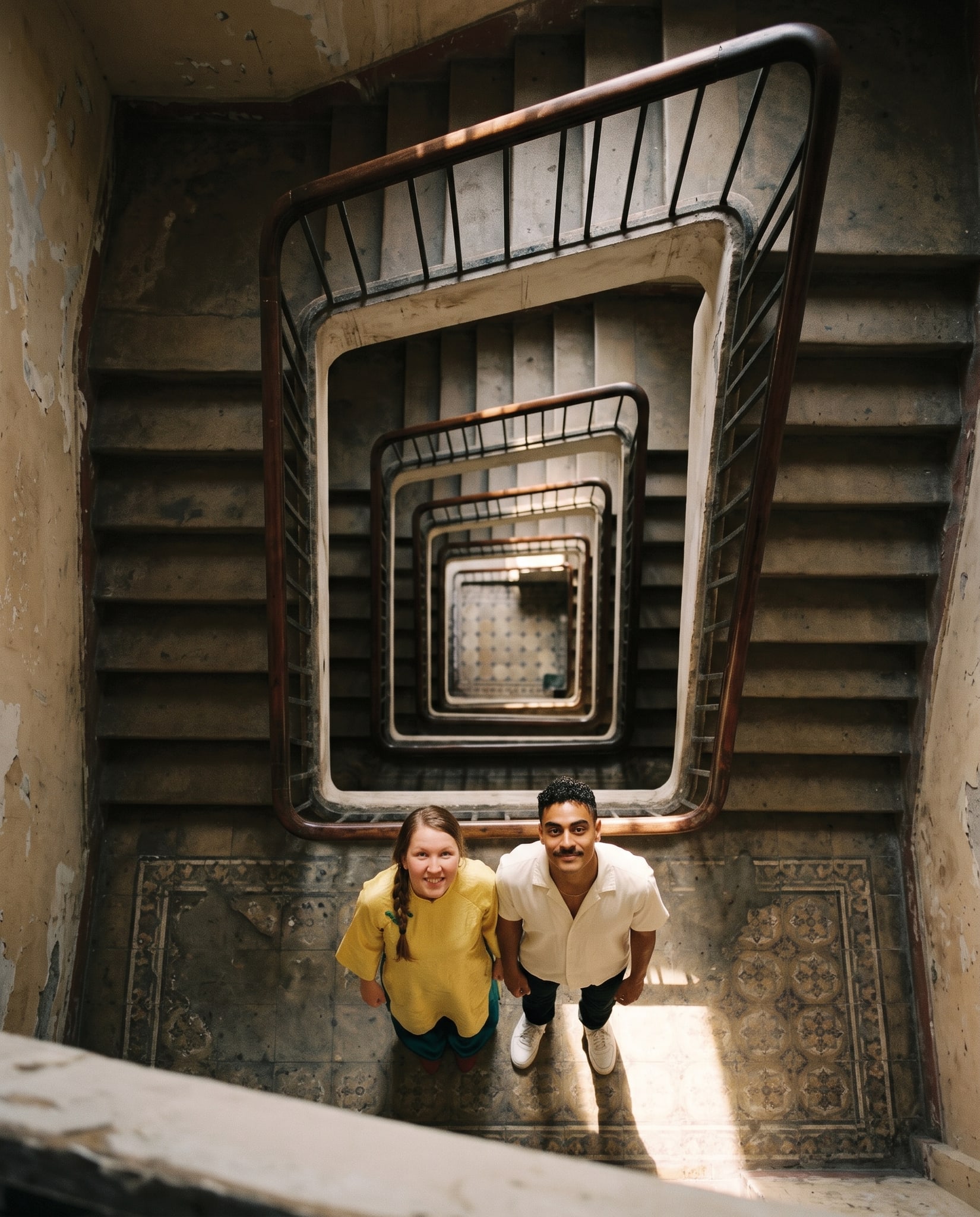
The biggest trap is trying too hard to look good instead of feel good. Couples who worry about their angles, who ask "do I look fat in this?" or "is my smile too big?" get stiffer with each frame. Our team stops shoots briefly when we sense tension and ask you to take three deep breaths, drink water, or tell us a funny story. A full reset takes 90 seconds and resets your nervous system. Second mistake: holding your breath. The moment you stop breathing, your face flattens. We remind you to breathe in through your nose, out through your mouth, even mid-pose. Third: looking directly at the camera with blank focus. Eyes should be soft, not locked. We say "look at your partner, not the lens" or "look just past the camera." Fourth: forgetting that your hands are visible. Limp or awkwardly placed hands ruin a strong pose. Keep hands touching your partner, in a pocket, or resting naturally on your own lap—never floating at your sides. Fifth: wearing clothes that don't let you move. Stiff fabrics, high heels you can't walk in, or overtight fits lock your body. For ao dai photoshoots, the áo dài itself creates natural grace, but many guests tense up in unfamiliar fabric. We help you move in it the day before so it feels like yours, not a costume. Sixth: picking a location you haven't seen. Couples get distracted by unfamiliar surroundings. We always scout with you or send location videos on WhatsApp before the shoot.
How do package types match your comfort with posing?
Our couple photoshoot package (2–3 hours, 40–60 images) suits couples who want guided direction and a calm pace. We spend the first 30 minutes building rapport, showing you test frames on the camera back, and adjusting poses based on what feels good. This slower pacing means less awkwardness—you see what works before we shoot more. The special concept shoot is faster-paced, often 1–2 hours, with a specific theme (vintage, streetwear, seasonal) and less "sit and refine" time. It's better for couples comfortable with quick direction and movement. If you've never done a photoshoot, the couple package is safer. If you've modeled or done Instagram content, the concept shoot keeps you engaged. The proposal and anniversary package includes a videographer and emotional storytelling; poses are natural because you're often reacting to surprise or re-enacting your moment, not thinking about angles. For hotel-based sessions, our makeup and hair at your hotel service means you can warm up in a private space before moving to a location, reducing anxiety. Each package type is built around a different comfort curve. Before booking, match your comfort level to the package style: are you an observer (couple package), a mover (concept), or someone who wants a narrative (proposal/anniversary)?
What to check before you book a couple shoot
- Watch 20+ couple images from the studio's portfolio that match your vibe (formal, casual, artistic). If those poses look stiff to you, this might not be the right fit.
- Ask about the photographer's posing style. Some photographers give detailed, step-by-step instruction; others guide by example or ask "how do you naturally stand together?" Know which matches your personality.
- Confirm location and lighting. Awkwardness often comes from bad light or feeling exposed in a crowded place. Ask for location details and visitor timing.
- Check the package length. Shorter shoots (1 hour) feel rushed; longer ones (3+ hours) let you settle in. Read the package details on vietnamphotoshoot.com.
- Plan your clothes. Bring comfortable, well-fitting outfits you can move in. Confirm with the studio whether special concept shoots require specific styles.
- Eat and sleep the day before. This sounds silly, but couples who skip meals or arrive exhausted tense up faster. Hydrate, rest, and eat a light meal 2 hours before.
- Have a "why we're doing this" conversation. Talk with your partner about what you want from the shoot. Couples aligned on intention pose better together.
Our Hanoi studio is near Hoàn Kiếm Lake; our Saigon studio is in District 1. Both teams use the same posing principles and spend time building comfort before any frame is shot. If you've felt awkward in couple photos before, that was about direction or tension, not you. Book a couple photoshoot package and let us walk you through what actually works.
FAQ
How long should we hold one couple pose?
15–20 seconds maximum. Longer holds breed tension. We shoot 3–5 frames per pose, then move to the next one. Movement between poses is where the best images often come from.
Can you teach us poses before the shoot day?
Yes. We send a WhatsApp message 48 hours before with 3–4 pose ideas matched to your style and location. Many couples practice together; some prefer to see poses on the day. Both work. We adjust real-time based on your comfort.
What if one of us is camera-shy?
Tell us in the booking form or on the pre-shoot call. We have poses that feel less "performative": sitting with your back to the camera, walking away, candid conversation while you're not thinking about the lens. Camera-shy partners relax faster in movement-based shoots than static ones.
Should we hire a makeup artist if we already know makeup?
Our makeup and hair at your hotel service is worth it if you want professional video-ready makeup (lasts 3+ hours under lights). If you're comfortable with your own makeup and the lighting is natural (morning or golden hour), you can skip it. Confirm with your photographer what lighting you'll shoot in.
Do couple poses work the same in Hanoi and Ho Chi Minh City locations?
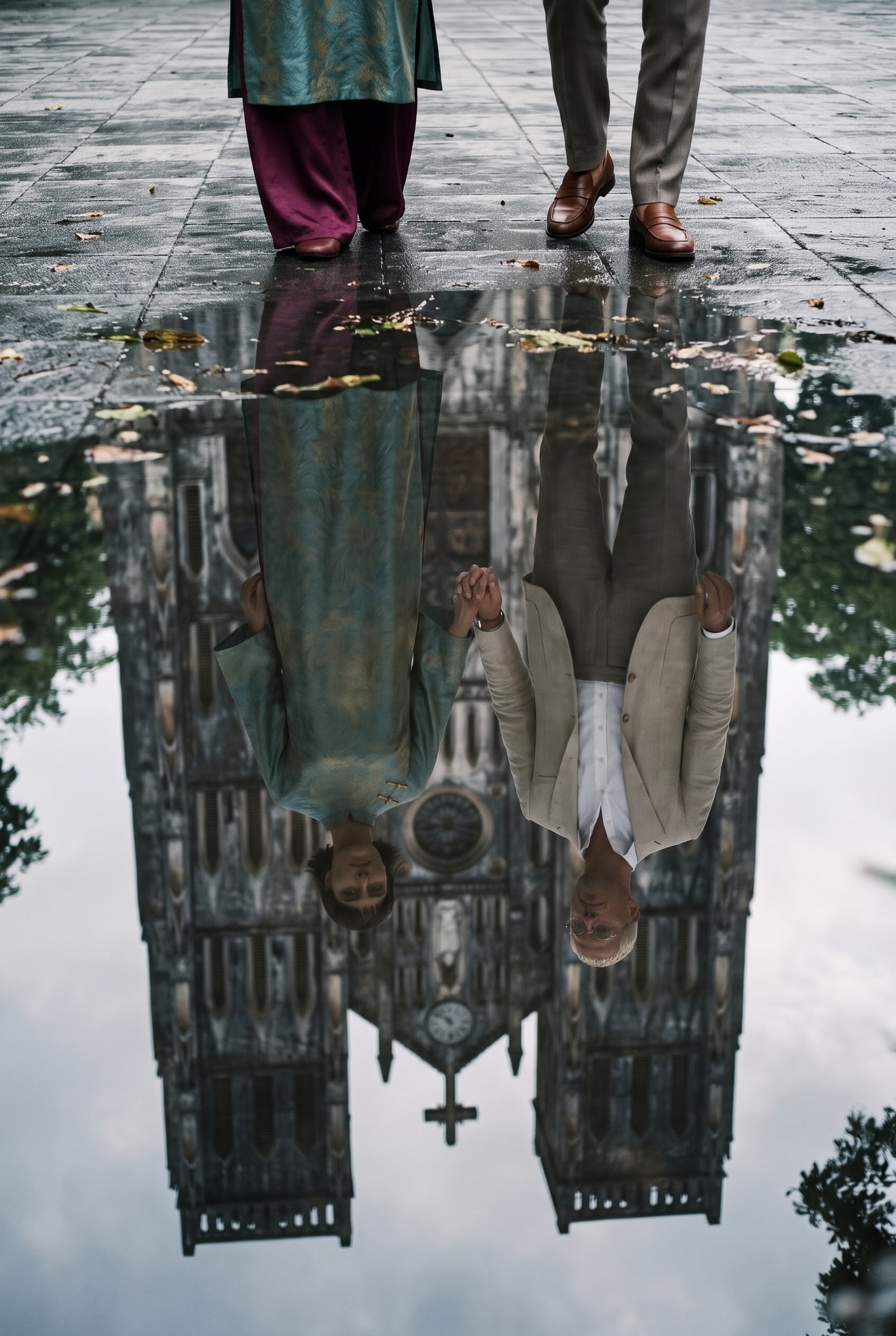
Yes. Posing principles are universal. What changes is light quality and location vibe. Hanoi's colonial architecture suits formal, intimate poses; Saigon's urban energy suits movement and playful ones. Both cities have hidden spots where couples feel private and pose better. We scout locations based on your style, not just city.
How do we know if a pose is "right" before we book?
Look at the studio's portfolio and ask: could I see myself doing that without coaching? Do the couples look relaxed or strained? Are their hands in places yours would naturally go? If yes to all three, you're looking at the right package. Schedule a WhatsApp call with the team to discuss your comfort level and location ideas.
Special Concept Shoot
Inclusions, prices and booking are on our booking site.
FAQ
How long should we hold one couple pose?
15–20 seconds maximum. Longer holds breed tension. We shoot 3–5 frames per pose, then move to the next one. Movement between poses is where the best images often come from.
Can you teach us poses before the shoot day?
Yes. We send a WhatsApp message 48 hours before with 3–4 pose ideas matched to your style and location. Many couples practice together; some prefer to see poses on the day. Both work. We adjust real-time based on your comfort.
What if one of us is camera-shy?
Tell us in the booking form or on the pre-shoot call. We have poses that feel less "performative": sitting with your back to the camera, walking away, candid conversation while you're not thinking about the lens. Camera-shy partners relax faster in movement-based shoots than static ones.
Should we hire a makeup artist if we already know makeup?
Our [makeup and hair at your hotel](/go/makeup-and-hair) service is worth it if you want professional video-ready makeup (lasts 3+ hours under lights). If you're comfortable with your own makeup and the lighting is natural (morning or golden hour), you can skip it. Confirm with your photographer what lighting you'll shoot in.
Do couple poses work the same in Hanoi and Ho Chi Minh City locations?
Yes. Posing principles are universal. What changes is light quality and location vibe. Hanoi's colonial architecture suits formal, intimate poses; Saigon's urban energy suits movement and playful ones. Both cities have hidden spots where couples feel private and pose better. We scout locations based on your style, not just city.
How do we know if a pose is "right" before we book?
Look at the studio's portfolio and ask: could I see myself doing that without coaching? Do the couples look relaxed or strained? Are their hands in places yours would naturally go? If yes to all three, you're looking at the right package. Schedule a WhatsApp call with the team to discuss your comfort level and location ideas.
More from the team
Fishing Village Concept Photoshoot Vietnam: How We Shoot It
A fishing village photoshoot captures Vietnam's working waterfront—nets, boats, morning light, real people. We share how our team runs these shoots from location scout to final delivery.
Cruise Stop Saigon Photoshoot at Phu My Port: Studio Guide
Cruise passengers have 8–12 hours in Saigon. We photograph guests right from Phu My Port, handling transport and changing rooms so you step off the ship and into an áo dài or couple session.
Cinematic Film Look Photoshoot Vietnam: Our Studio Guide
Cinematic film aesthetics—muted colour grading, shallow depth of field, story-driven composition—have become the most requested look across our shoots in 2026. We run you through how we build this style on set, what goes wrong, and which packages genuinely deliver it.