 Cáo Studio
Home › Blog › Ao Dai Photoshoot
Da Nang Ao Dai Photoshoot Guide: What We Do On Set
By the Cáo Studio team · Hanoi & Saigon · 2026-11-04
A Da Nang ao dai photoshoot with Cáo Studio is a half-day or full-day session where we photograph you in traditional Vietnamese dress against the city's beaches, French colonial architecture, and riverside temples. We arrive early to scout light, style your hair and makeup on-site or at your hotel via makeup and hair at your hotel, and move between 2–4 locations depending on your package. Sessions run 3–5 hours and include 80–200 edited digital images. The ao dai itself—whether you rent locally, bring your own, or we source one—is pressed and fitted the morning of the shoot. Most guests invest in a full-day package to capture morning golden light at Han Market, midday portraits at My Khe Beach, and sunset at Dragon Bridge. Ask us for a quote on WhatsApp and we'll map locations based on your ao dai style and season. Chat with us on WhatsApp | See packages and prices on vietnamphotoshoot.com
Why does Da Nang work so well for ao dai photography?
Da Nang's mix of beach, colonial French architecture, and spiritual temples creates variety in one compact city—no 2-hour drives between shoots like in Hanoi. The coastline runs east–west, which means morning light hits My Khe Beach from behind, creating rim-lit ao dai silhouettes we rely on for drama. My Khe's sand is also firm and light-colored, so dragging the ao dai skirt across it photographs cleanly without mud or algae stains. The old town near Da Nang Cathedral has narrow French-era streets with soft shade at 3–4 p.m., perfect for flattering skin tone without harsh shadows on embroidered fabric. We've learned that the Tran Phu Bridge area floods during high tide (May–August), so we scout tide times the week before every shoot. Da Nang's central location means we can position you at the river at golden hour without racing back to the studio, unlike northern cities where sundown happens fast. Conclusion: one city, multiple aesthetic worlds in 8 km.
What happens in the first hour of a Da Nang shoot?
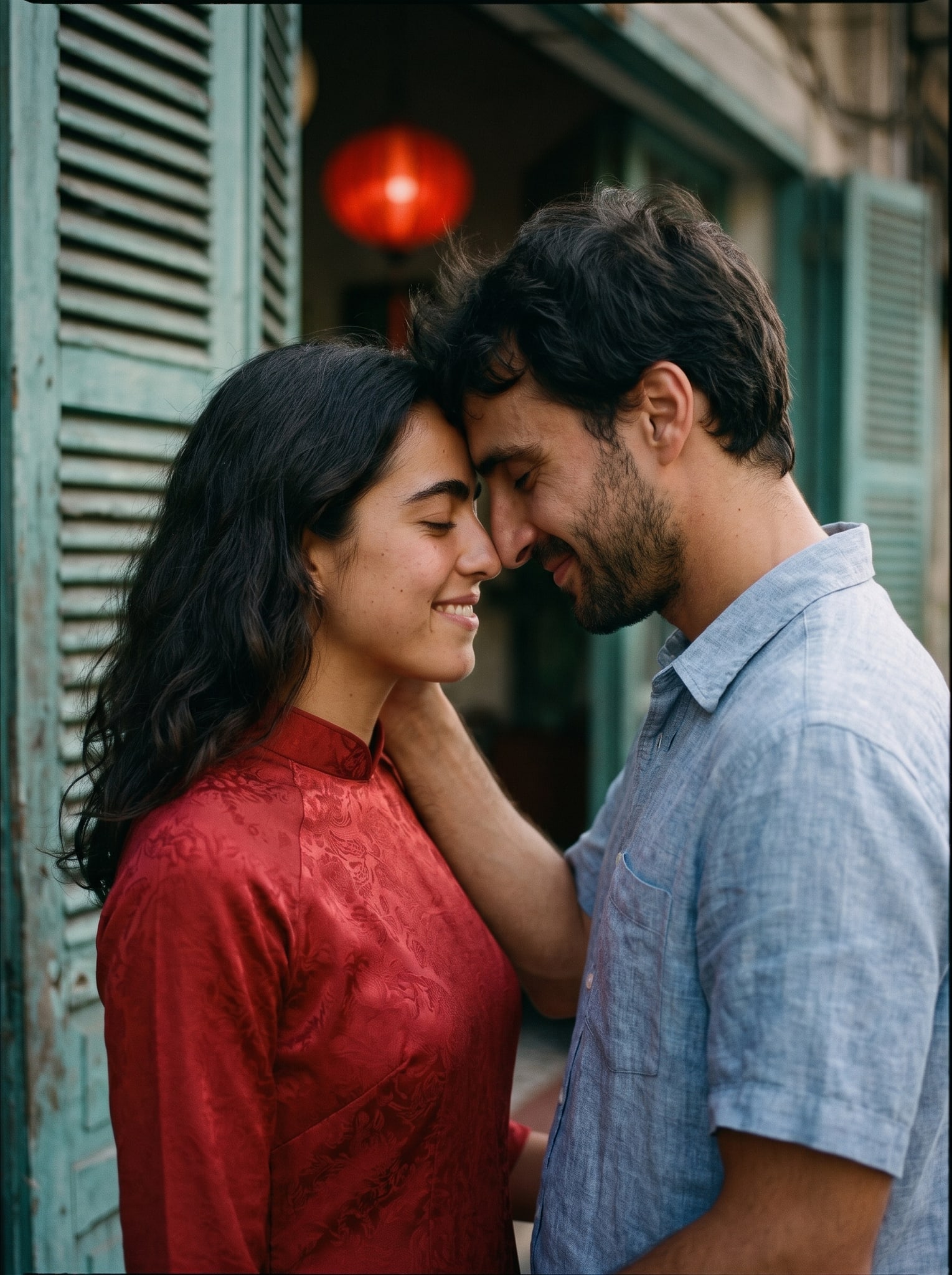
We meet you at your hotel at 6:00 a.m. if you're doing a sunrise session, or 9:00 a.m. for a standard day. If you've booked makeup and hair at your hotel, our makeup artist spends 45–60 minutes on your face and updo while the photographer checks light in the lobby or outside. If you're meeting us at our studio space or a rented location, we confirm your ao dai fits—this is when we often discover the waist is tighter than expected or the hem drags on the left side. We never force it; we either have a tailor on standby for quick fixes, or we adjust posing and fabric draping to hide the issue in the frame. By 7:30 a.m., you're in the ao dai, and we drive to Han Market or the beach depending on tide and light forecast. We shoot the first 20 minutes in ambient light as your nervousness fades—these shots are rarely the "hero" images, but they warm you up. The real work starts once you're relaxed and the light is exactly where we predicted.
How do we handle the ao dai itself—renting vs. buying vs. bringing your own?
| Scenario | Best for | What we see happen | Your call |
|---|---|---|---|
| You rent locally | Budget-conscious, no luggage space. | Rental shops cluster near Han Market; we negotiate bulk discounts. Ao dai often fits loosely (tailored for many bodies). | Ask us which shops we trust; we've worked with 5 in Da Nang. |
| You bring your own | Deep connection to the garment, custom fit. | Customs rarely flags ao dai. Wrinkles appear mid-shoot—we steam it during location breaks. Guests move more freely. | Worth the luggage weight if it's silk or heirloom. |
| We source one | You want certainty of fit and quality. | We rent from curated vendors; garment arrives pressed and fitted to your measurements. No surprises on shoot day. | Most stress-free option. Ask us for a quote. |
Renting locally saves money but introduces variables—we once had a guest's borrowed ao dai split at the armpit during a jumping shot at 11:00 a.m. We safety-pinned it from the inside, repositioned the guest away from the sun (so shadows hide the repair), and moved on. The guest never noticed in the final images. If you bring your own, we steam it in the van between locations and check seams after dynamic poses. If we source it, we control the fabric weight and color—silk ao dai drapes differently in wind than cotton, and we know which works best for Da Nang's beach gusts.
What locations do we actually use, and how do we decide between them?
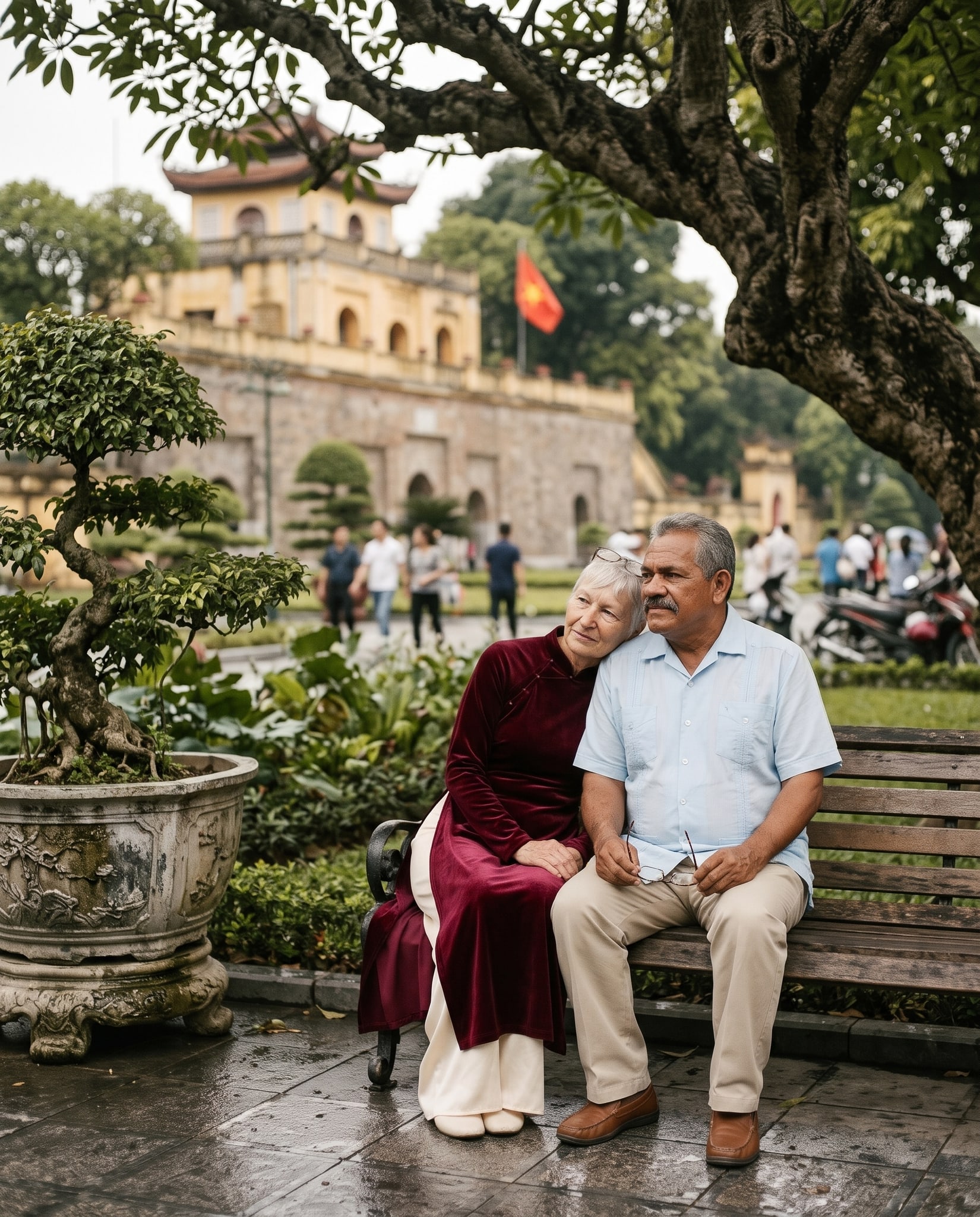
Han Market (Cho Han): Morning light 6–8 a.m. floods the narrow alleys with gold. We shoot narrow framings of your profile against stacked produce or flower vendors—soft chaos behind you. The market closes by 9 a.m., so we book early slots. Smell is strong (fish, flowers, spices), and the ground is wet; we warn guests in advance.
My Khe Beach: Best 5:30–7:00 a.m. or 4:30–5:30 p.m. The beach faces east–west, so midday light is flat and harsh. We avoid 10 a.m.–3 p.m. unless the guest insists on a specific look (hard shadows can read as dramatic). Morning shoots often mean fewer tourists; we book the 6:00 a.m. slot to shoot alone.
Dragon Bridge (Cau Rong): Dramatic silhouette backdrop at dusk. The bridge's lighting turns on at 6:00 p.m., so we time arrival for 5:45 p.m. to catch twilight. City traffic is heaviest then—we've lost 15 minutes to gridlock and now pad our timeline.
Da Nang Cathedral & French Colonial area: Soft, dappled shade 2–4 p.m. Architecture is symmetrical and "clean" for portraits. Fewer tourists than Hoi An. We use this as a second location if the first is too crowded or light shifts unexpectedly.
Hoa Minh Pagoda: Riverside temple, 20 min south of the city center. Spiritual, gold-trim backdrop. We book this when a guest wants a slower, meditative feel—fewer fast outfit changes. Access requires permission; we arrange it beforehand.
We choose the final itinerary based on tide times, sunrise/sunset forecasts, and your energy level. If you're doing pre-wedding and elopement package, we often add a second location for costume changes. If it's a solo vacation photoshoot, one location plus a travel moment (taxi, café) is standard.
See packages and prices on vietnamphotoshoot.com
What problems show up mid-shoot, and how do we solve them?
Wind knots the ao dai fabric: Da Nang's coastal breeze is beautiful but tangles the skirt. We carry hair clips and bobby pins to anchor the hem to your undergarment or shoes. We also reframe—instead of fighting the wind, we shoot into it so the fabric moves away from you, revealing clean lines.
Sweat shows on silk: Morning shoots are safer, but a 2-hour session in 28°C heat leaves dark patches on light-colored silk. We keep blotting papers and dry cloths in the van. Between locations, we let the ao dai air-dry in shade. If sweat is visible in the frame, we clone-stamp it in post-production (every image gets this check).
Tourist photobombs: Han Market and My Khe attract crowds. We scout 15 minutes early, identify quiet corners, and sometimes ask vendors or beach-goers politely to step out of a frame. 80% of the time, people are happy to help. If not, we shoot a wider framing and crop in post, or we move 10 meters away.
Ao dai hem drags in sand or algae: The skirt hem picks up seaweed or sand clumps. We carry a small brush and gently sweep it between poses. If the hem gets wet, we let it dry or reposition you so the wet section is away from the camera.
You freeze or lose energy after 2 hours: This is the top reason we add breaks into the schedule. We stop for water, snacks, and 10 minutes of sitting in shade every 90 minutes. If you're flagging, we shoot close-ups or detail shots (hands, embroidery) while you rest, then do energetic full-body poses when you've recovered.
We've shot 200+ ao dai sessions in Da Nang. Almost every shoot has one small hitch. The difference between an okay shoot and a great one is whether we expect hiccups and plan around them.
What to check before you book your Da Nang ao dai shoot
- Ao dai fit: If you're renting, confirm the measurements 3 days before. If you're bringing one, try it on in your home climate—humidity in Vietnam is 70–85%, so silk may cling differently than it did in a dry climate.
- Hair and makeup durability: Ask if your chosen makeup is waterproof if you're shooting near water. Updos should be pinned tight—we always do a "jump test" indoors before we head to the beach.
- Tide and weather: Da Nang's tide swings 1.5 m daily. Check the tide calendar for your shoot date. Rainy season is May–September; we have a rain plan (covered locations, timing shifts) but you should know this upfront.
- Location access: If you want a specific temple or private garden, confirm permissions exist. Some venues require permits or a guide.
- Editing timeline: Ask how many weeks before you receive final images. We deliver within 2 weeks; some studios take a month or more.
- Group size: If you're bringing family, decide in advance whether they're in some shots. More people = longer location transitions.
- Budget clarity: Ask us for a quote on WhatsApp that includes ao dai, makeup, and locations. Hidden add-ons frustrate everyone.
FAQ
Can we do an ao dai shoot in Da Nang if we only have a few hours?
Yes, but a half-day session (3 hours) limits you to one location and faster pacing. We recommend a full day to shoot sunrise at one beach or market, change location midday, and catch golden hour at a temple or monument. Ask us about our half-day options on WhatsApp.
Do we need to hire a separate videographer for an ao dai shoot in Da Nang?
Video is not included in the standard photoshoot package. Many couples book proposal and anniversary package and ask us to connect them with a videographer we trust. We can coordinate, or you can hire independently. Some venues require extra permissions for crews.
What if the weather is bad on our shoot date?
Rain in Da Nang often comes in short bursts, not all day. We scout covered locations (temples, French buildings, market alcoves) beforehand. If conditions worsen, we can reschedule to the next day at no extra cost. Typhoon season (August–October) carries higher risk; we recommend travel insurance that covers photography reschedules.
How many outfits or ao dai should we bring to a full-day shoot?
One ao dai is standard. If you want to change into a second garment, add 30 minutes to the timeline—hair and makeup touch-ups, wardrobe transition. Most guests shoot 80–120 images in one ao dai and feel satisfied. More outfits work best for pre-wedding and elopement package where the narrative spans multiple looks.
Can we add our family or partner to the ao dai shoot?
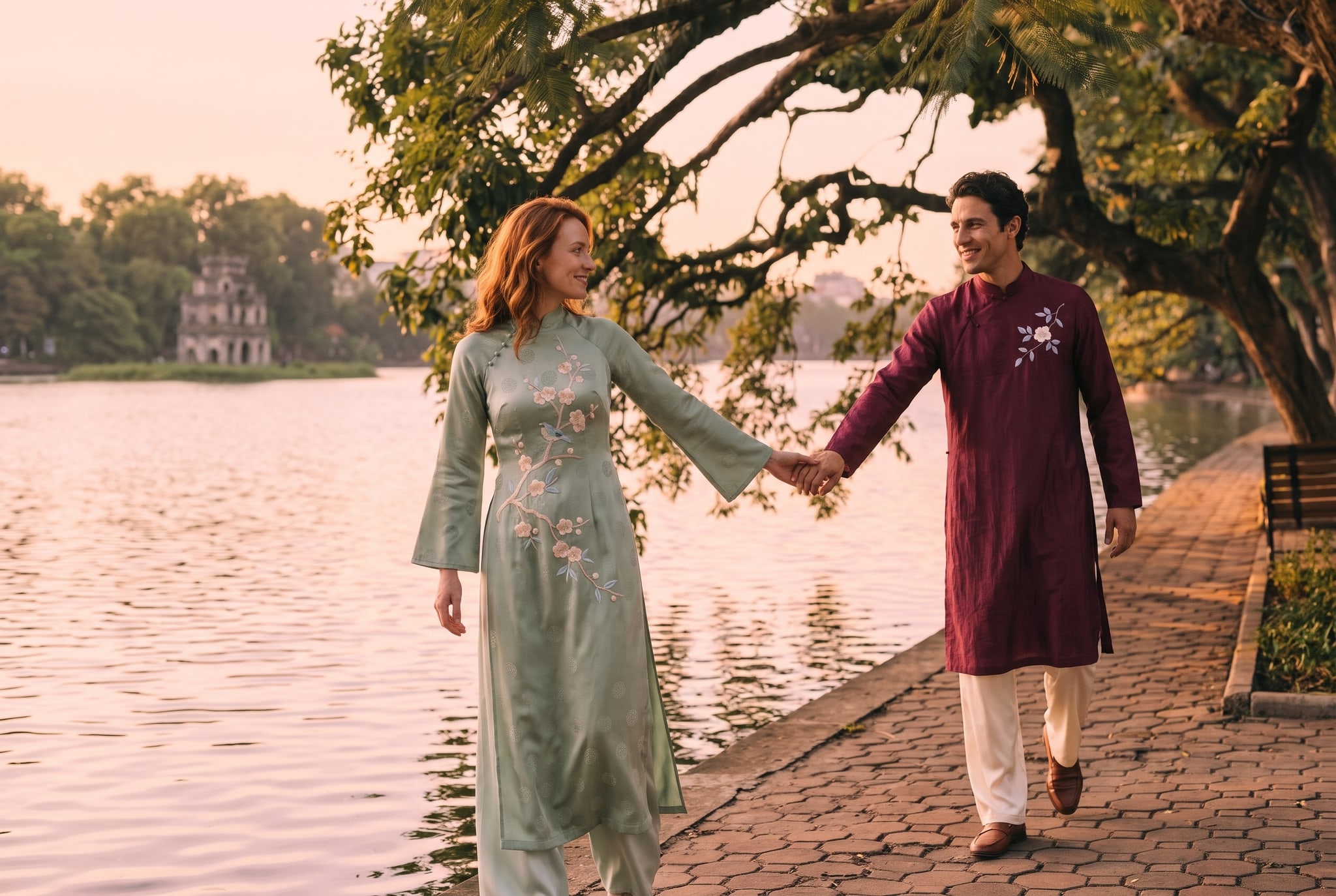
Yes. If your partner joins in their own traditional outfit, it becomes a couple photoshoot package. Family group shots add 30–60 minutes. Let us know in advance so we plan locations and timing accordingly. Pricing adjusts based on group size—ask us for a quote.
Do you shoot ao dai sessions for pre-wedding couples in Da Nang?
Yes. Pre-wedding and elopement package includes 1–2 full days, multiple locations, and outfit changes. Da Nang's beaches and temples are popular for pre-wedding couples. We often combine ao dai with Western dress or casual wear depending on your vision. Contact us on WhatsApp to discuss your story.
Ao Dai Photoshoot
Inclusions, prices and booking are on our booking site.
FAQ
Can we do an ao dai shoot in Da Nang if we only have a few hours?
Yes, but a half-day session (3 hours) limits you to one location and faster pacing. We recommend a full day to shoot sunrise at one beach or market, change location midday, and catch golden hour at a temple or monument. Ask us about our half-day options on WhatsApp.
Do we need to hire a separate videographer for an ao dai shoot in Da Nang?
Video is not included in the standard photoshoot package. Many couples book [proposal and anniversary package](/go/proposal-and-anniversary) and ask us to connect them with a videographer we trust. We can coordinate, or you can hire independently. Some venues require extra permissions for crews.
What if the weather is bad on our shoot date?
Rain in Da Nang often comes in short bursts, not all day. We scout covered locations (temples, French buildings, market alcoves) beforehand. If conditions worsen, we can reschedule to the next day at no extra cost. Typhoon season (August–October) carries higher risk; we recommend travel insurance that covers photography reschedules.
How many outfits or ao dai should we bring to a full-day shoot?
One ao dai is standard. If you want to change into a second garment, add 30 minutes to the timeline—hair and makeup touch-ups, wardrobe transition. Most guests shoot 80–120 images in one ao dai and feel satisfied. More outfits work best for [pre-wedding and elopement package](/go/pre-wedding-photoshoot) where the narrative spans multiple looks.
Can we add our family or partner to the ao dai shoot?
Yes. If your partner joins in their own traditional outfit, it becomes a [couple photoshoot package](/go/couple-photoshoot). Family group shots add 30–60 minutes. Let us know in advance so we plan locations and timing accordingly. Pricing adjusts based on group size—ask us for a quote.
Do you shoot ao dai sessions for pre-wedding couples in Da Nang?
Yes. [Pre-wedding and elopement package](/go/pre-wedding-photoshoot) includes 1–2 full days, multiple locations, and outfit changes. Da Nang's beaches and temples are popular for pre-wedding couples. We often combine ao dai with Western dress or casual wear depending on your vision. Contact us on WhatsApp to discuss your story.
More from the team
Ao dai wedding photos at Thanh Ha pottery village
Thanh Ha pottery village in Hoi An is a working craft site where red-brick kilns frame ao dai perfectly. We've shot dozens of couples there—here's what happens on the day, what to pack, and how to choose the right session length.
Ao dai wedding photos at Bay Mau coconut forest: our shoot day
Bay Mau coconut forest is one of Ninh Binh's most-requested backdrops for ao dai wedding and engagement photos. We share how our team structures these shoots, what to expect hour by hour, and how to prepare.
Ao dai for wedding photos in Hoi An: renting, fitting and styling
Hoi An's ancient streets demand an ao dai that fits perfectly and tells your story. We walk you through renting, fittings, and the decisions that transform a garment into your wedding photo.