 Cáo Studio
Home › Blog › Special Concept Shoot
Drone Photography Rules Vietnam for Travelers: Legal & Creative
By the Cáo Studio team · Hanoi & Saigon · 2026-11-01
Drone photography in Vietnam requires a civil aviation permit from the General Department of Civil Aviation (DGCA); you cannot fly commercially without one, and tourist drones are restricted in most urban areas including Hanoi, Saigon, Hoi An and Ninh Binh city centers. The process takes 5–10 business days and involves submitting flight plans, pilot credentials and aircraft registration. Cáo Studio does not operate drones independently; instead, we partner with licensed aerial operators or advise guests on legal alternatives like elevated hotel rooftops, drone-permitted private estates, and pre-cleared heritage sites. Flying without a permit risks fines up to 75 million VND and equipment confiscation. Most travelers book concept shoots at legal venues rather than attempt unauthorized flights.
We stopped trying to answer drone permit questions on WhatsApp after our first month. Too many guests arrived with Consumer DJI models, excited to film their wedding sunset over Hoan Kiem Lake—then felt gutted when we explained the reality. Now we lead with this: Vietnam's airspace is not open to casual tourism drones.
Can tourists legally fly drones in Vietnam at all?
Technically yes, but only on private land with written landowner consent and only for personal (non-commercial) use. The moment your photos or video appear on Instagram, a wedding website or any public platform, it becomes commercial—and commercial drone operations require a DGCA permit. Based on civil aviation guidance we've reviewed with legal advisors, even a solo traveler filming for their own travel vlog crosses into commercial territory. The reality: almost no tourists qualify. Most hotel rooftops, public parks and beaches are off-limits. Elevated shoots happen on private estates or with licensed partners only.
Why does Vietnam restrict drones so heavily in tourist areas?
The DGCA treats airspace as a security and air-traffic priority, not a tourism amenity. Hanoi and Saigon have dense commercial flight corridors; Ninh Binh and Hoi An preserve heritage zones where uncontrolled aircraft create liability risks. We've worked with local coordinators who confirmed: one unauthorized flight near Tan Son Nhat Airport in Saigon triggered a brief ground-stop. The no-fly radius around major airports extends 5–10 km and overlaps most central tourist districts. Heritage sites like the Hoi An Ancient Town and Ninh Binh's Mua Cave have blanket restrictions to protect cultural assets and prevent accidents near crowds. The short version: Vietnam prioritizes safety and heritage over Instagram aesthetics.
What happens if we get caught flying without a permit?
Penalties are serious enough that we warn every guest upfront. Confiscation of the drone, fines starting at 5 million VND (for first offense, minor violation) and escalating to 75 million VND for repeated or intentional commercial flights, plus possible detention or deportation for foreign nationals. We've heard secondhand accounts—never direct clients—of travelers who launched a quick flight at sunrise near Hoan Kiem Lake and were stopped by police within minutes. The DGCA publishes no-fly maps, but enforcement is unpredictable; it depends on whether local authorities are actively monitoring that day. Our approach: we never assume a location is safe just because we haven't heard of arrests there. We ask our licensed partners to verify every shoot site in writing before we confirm a booking.
What legal alternatives exist for aerial concept shoots?
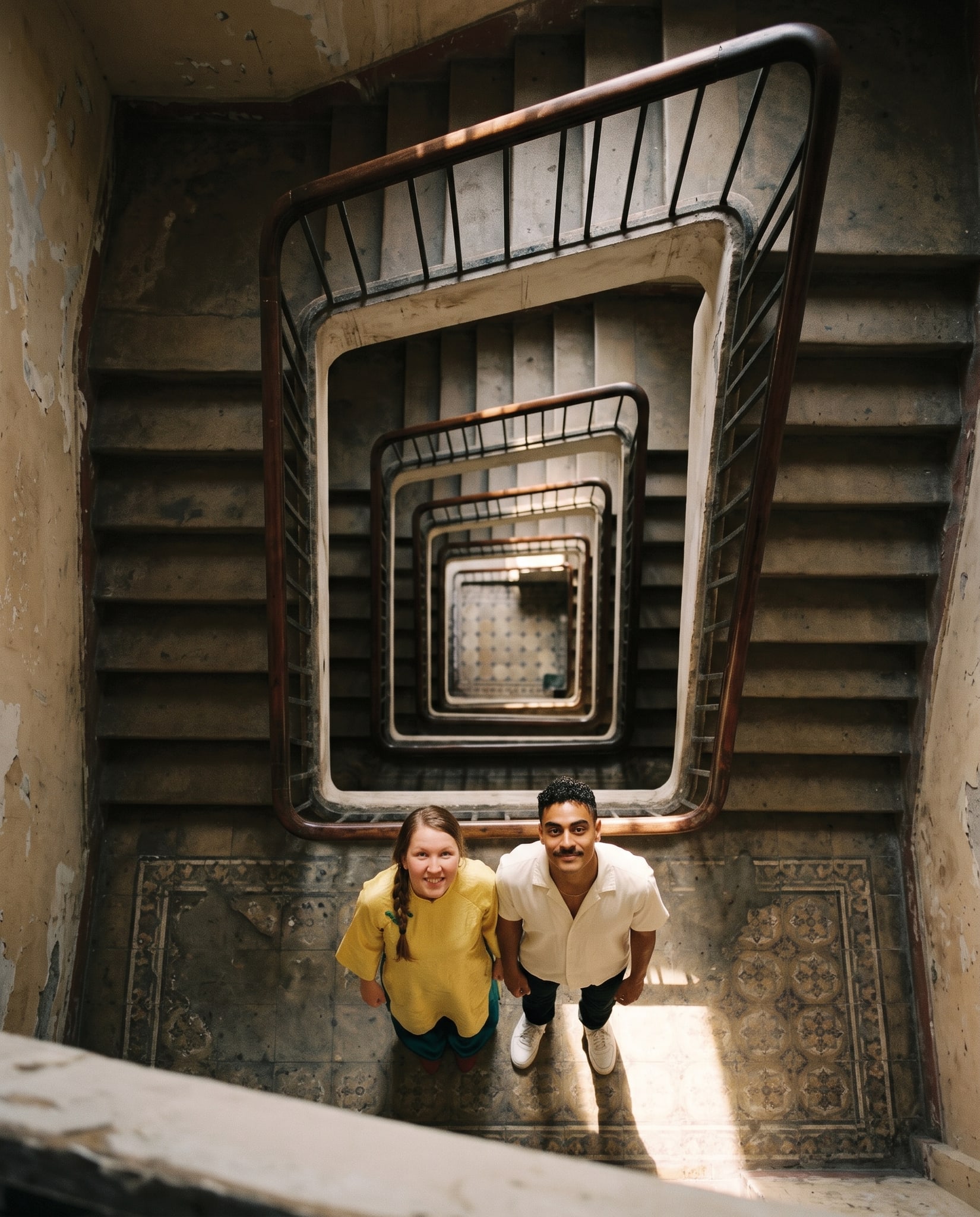
This is where we've built real solutions. Private estates in Hanoi's outskirts (Dong Mo, Ba Vi) and near Saigon (Cu Chi, Binh Chanh) allow drone flights with owner permission and advance notice to local authorities. well-made hotels sometimes permit elevated rooftop or balcony shoots on their grounds—we coordinate with their security teams. Heritage sites like Thang Long Citadel in Hanoi occasionally grant permits for professional productions; the process takes 2–4 weeks. Drone-permitted venues include some golf courses and private wedding estates. We also offer ground-level "elevation" through architectural framing: shooting from tall buildings' stairwells, using drone-footage stock libraries for cinematic transitions in edited videos, and combining ground-based wide-angle photography with telephoto compression to simulate altitude. For special concept shoots, we design around legal constraints rather than fight them—the creative outcome is often stronger because we're forced to innovate.
See packages and prices on vietnamphotoshoot.com
How do we book a legal aerial shoot with Cáo Studio?
We ask you three questions upfront: (1) What is the shoot location and exact date? (2) Is it private land, a hotel, or a heritage site? (3) Do you own or have written permission from the landowner? From there, we either confirm the site is permit-clear with our licensed aerial partner, or we pivot to legal alternatives. If you insist on a specific restricted location—say, a drone shot over Hoan Kiem Lake at sunset—we explore: Can we shoot from a licensed hotel's rooftop nearby? Can we use permitted drone footage from a stock library and composite it into your video? Can we frame the lake using architecture and natural elevation instead? Lead time matters: if you want aerial work, book at least 3–4 weeks ahead so we can coordinate permits with authorities or secure private estate access. Costs and timelines for permit applications vary; we'll quote you based on location complexity. Concept shoots with legal aerial components are possible—just not on a whim.
What should travelers check before attempting any drone work in Vietnam?
| Traveler Type | What to Check | Our Recommendation |
|---|---|---|
| Solo tourist with DJI Mini | DGCA no-fly map (online); local police presence; hotel liability rules | Skip drone flights; book elevated rooftop or architectural shoot instead |
| Couple on pre-wedding trip | Landowner consent + DGCA advance notice process | Pre-wedding shoots at cleared private estates; we coordinate permits |
| Wedding videographer (professional) | Full DGCA commercial permit, pilot license, insurance | Partner with us 4+ weeks ahead; we vet aerial operators |
| Family or vacation group | Hotel rooftop policy; private property rules | Ground-level elevated framing; telephoto wide-angle composition |
The common mistake: showing up with a drone and asking permission on the day. By then, it's too late. Permits take days or weeks. Landowners need advance notice. Local authorities move slowly. We've turned away three drone requests this year because guests didn't allow enough lead time—and we're honest about it rather than risk your money or our reputation.
What does Cáo Studio actually do with aerial requests?
We listen, diagnose the real need, and design a legal path. If you want sweeping landscape context, we use wide-angle lenses and elevated ground positions—a telephoto shot from a hillside can feel as expansive as a drone shot. If you want cinematic movement, our videographers compose multi-angle sequences that simulate motion without flying. If you genuinely need aerial perspective (say, a wedding venue's full layout for a film), we connect you with our licensed partners, clarify costs, and let you decide. We've shot couple photoshoots at private estates where aerial work was legal; we've also delivered stunning family sessions without a drone by using architectural composition and natural elevation. The shoot succeeds when you know what you're paying for and why—not when we overpromise and then disappoint on permit day.
Why Ninh Binh and Hoi An are stricter than you expect
We've run shoots in both towns. Ninh Binh's karst landscape looks perfect for drone sweeps—but the area around Mua Cave and Hang Mua is a protected cultural zone, and the DGCA maintains a tight no-fly perimeter. Hoi An's Ancient Town sits in a UNESCO heritage buffer; any aircraft overhead triggers heritage authority review. Local coordinators in both towns know the unwritten rules: fly early morning before police rotate shifts, or fly at all—the first approach is a gamble, the second is the only honest option. We book elevated rooftop shoots at heritage hotels in both towns instead, and the results are often more intimate and legally clean than any drone flight would be.
What to check before you book a drone component
- Confirm location and date: Give us a specific address and shoot date, not a vague region.
- Clarify ownership: Own the land, or have landowner written consent ready.
- Allow 3–4 weeks minimum: Permits and coordination don't happen overnight.
- Budget for complexity: Aerial permits and licensed operators add cost; ask us for a quote if you need exact numbers.
- Have a Plan B: If permits fall through, you'll pivot to elevated ground-based framing—we'll design it from the start so there's no disappointment.
FAQ
Is it illegal for me to fly my personal DJI drone in Vietnam as a tourist?
Flying for personal use on private land is technically legal, but the moment footage appears online—Instagram, wedding website, any public platform—it becomes commercial and requires a DGCA permit. Most tourist flights fall into the commercial gray area and risk confiscation or fines.
How much does a DGCA commercial drone permit cost and how long does it take?
Permit timelines are 5–10 business days; costs vary by location complexity and operator qualifications. Ask us for a quote based on your specific shoot location—we'll coordinate with our licensed partners and provide transparent pricing.
Can we shoot drones at private wedding estates or resort properties?
Yes, if the owner gives written consent and we notify local authorities in advance. This is why we ask for location details and 3–4 weeks lead time—we need to secure permissions before your shoot date.
What if we just fly early morning before anyone notices?
Enforcement is unpredictable, which makes the risk worse, not better. Fines reach 75 million VND; drones are confiscated; foreign nationals face potential detention. We never assume a location is unmonitored—we verify legally with operators or we don't fly.
What's the difference between a drone shoot and an elevated rooftop shoot?
Elevated rooftop shoots happen on hotel or private property with owner permission—no permit required. Drone shoots require DGCA permits for commercial use. Both deliver aerial perspective; rooftop shoots are legal, faster and often more intimate.
Can Cáo Studio book a drone operator for us?
Yes, for special concept shoots at permit-cleared locations. We partner with licensed aerial operators and handle coordination with authorities. Lead time and location verification are essential—contact us on WhatsApp with your shoot details.
Special Concept Shoot
Inclusions, prices and booking are on our booking site.
FAQ
Is it illegal for me to fly my personal DJI drone in Vietnam as a tourist?
Flying for personal use on private land is technically legal, but the moment footage appears online—Instagram, wedding website, any public platform—it becomes commercial and requires a DGCA permit. Most tourist flights fall into the commercial gray area and risk confiscation or fines.
How much does a DGCA commercial drone permit cost and how long does it take?
Permit timelines are 5–10 business days; costs vary by location complexity and operator qualifications. Ask us for a quote based on your specific shoot location—we'll coordinate with our licensed partners and provide transparent pricing.
Can we shoot drones at private wedding estates or resort properties?
Yes, if the owner gives written consent and we notify local authorities in advance. This is why we ask for location details and 3–4 weeks lead time—we need to secure permissions before your shoot date.
What if we just fly early morning before anyone notices?
Enforcement is unpredictable, which makes the risk worse, not better. Fines reach 75 million VND; drones are confiscated; foreign nationals face potential detention. We never assume a location is unmonitored—we verify legally with operators or we don't fly.
What's the difference between a drone shoot and an elevated rooftop shoot?
Elevated rooftop shoots happen on hotel or private property with owner permission—no permit required. Drone shoots require DGCA permits for commercial use. Both deliver aerial perspective; rooftop shoots are legal, faster and often more intimate.
Can Cáo Studio book a drone operator for us?
Yes, for [special concept shoots](/go/special-concept) at permit-cleared locations. We partner with licensed aerial operators and handle coordination with authorities. Lead time and location verification are essential—contact us on WhatsApp with your shoot details.
More from the team
Fishing Village Concept Photoshoot Vietnam: How We Shoot It
A fishing village photoshoot captures Vietnam's working waterfront—nets, boats, morning light, real people. We share how our team runs these shoots from location scout to final delivery.
Cruise Stop Saigon Photoshoot at Phu My Port: Studio Guide
Cruise passengers have 8–12 hours in Saigon. We photograph guests right from Phu My Port, handling transport and changing rooms so you step off the ship and into an áo dài or couple session.
Cinematic Film Look Photoshoot Vietnam: Our Studio Guide
Cinematic film aesthetics—muted colour grading, shallow depth of field, story-driven composition—have become the most requested look across our shoots in 2026. We run you through how we build this style on set, what goes wrong, and which packages genuinely deliver it.