 Cáo Studio
Home › Blog › Family Photoshoot
Family photoshoot with teenagers who don't want to be photographed: what works
By the Cáo Studio team · Hanoi & Saigon · 2026-11-02
The core trick is honest reframing: teenagers hate posed photos, not real moments. At Cáo Studio, we stop asking them to smile on command. Instead, we build activities into the shoot—walking through Hoan Kiem Lake in Hanoi or exploring the French Quarter in Saigon, letting the photographer catch genuine laughter while they're distracted. We also involve them early: ask what they wear, what vibe they want, let them choose the location. Most resistance vanishes when they feel heard, not herded. A typical session runs 2–3 hours; the first 30 minutes are always awkward, but by hour two, the real versions of themselves emerge. Budget for patience, not perfection. Chat with us on WhatsApp
Why do teenagers shut down in front of cameras?
Teenagers aren't anti-photo; they're anti-fakeness. When a photographer says "look at the camera and smile," their brain registers performance—a loss of control. They've grown up curating their own images on phones; a stranger's direction feels like theft. We've noticed this shift happen the moment we stop talking about "the shot" and start talking about them. A session with four teens last month in District 1, Saigon, turned around the instant our photographer asked each one about their music taste instead of their expression. Consent and genuine interest flip the energy.
What's the fastest way to build trust with a resistant teenager during a shoot?
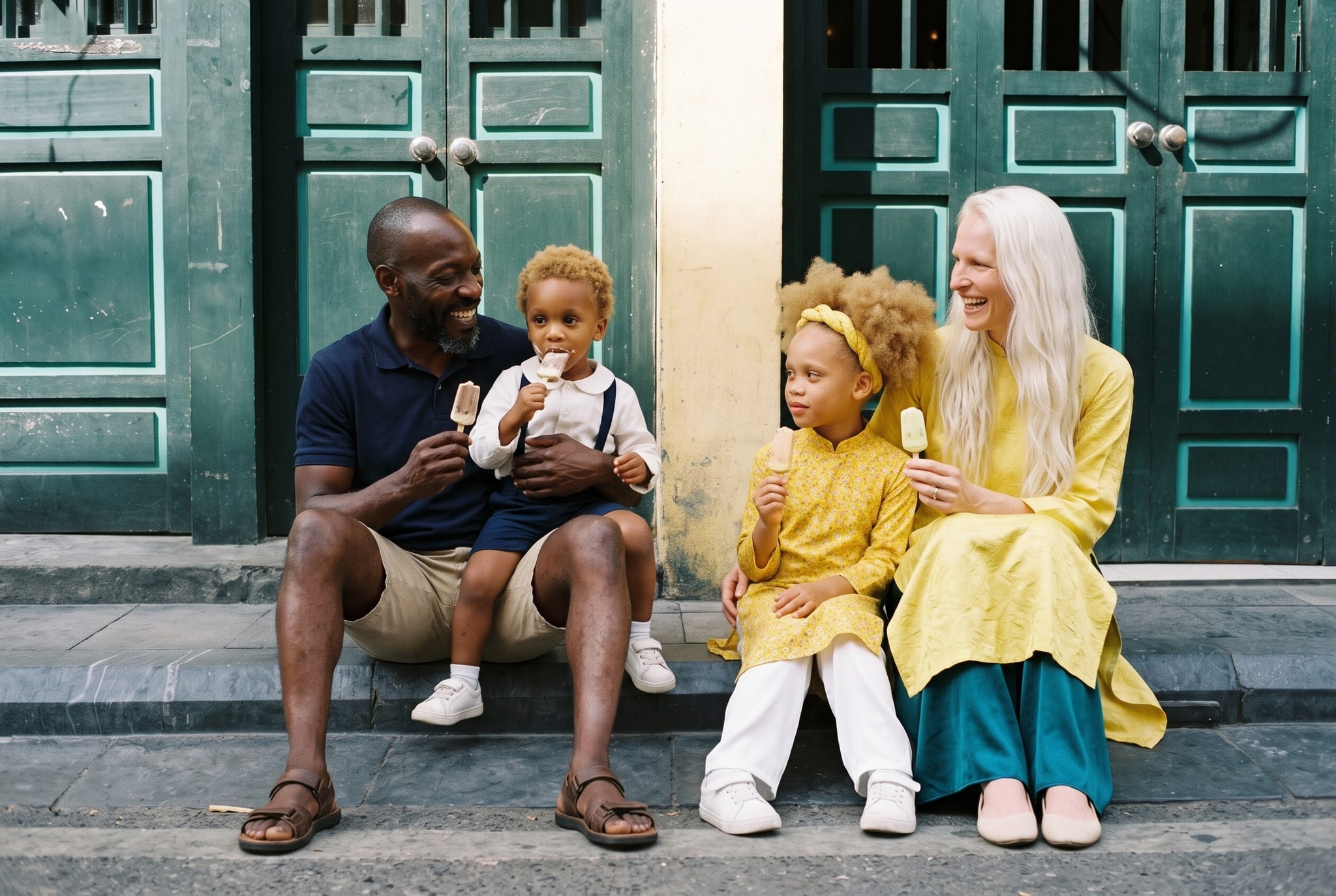
Ask them to take photos of you first. This sounds counterintuitive, but we've used it for every difficult session since 2024. Hand them a phone or camera; let them direct the parents or siblings for 10 minutes. Instantly, they shift from subject to collaborator. They see the job isn't humiliation—it's creativity. By the time we swap back, they've relaxed, they understand the photographer's intentions, and they often want to do better work themselves. This takes maybe 15 minutes but saves the entire mood.
Which locations in Hanoi and Saigon put teenagers at ease?
Movement kills stiffness. Static backdrops make them hyper-aware of being watched; active locations let them forget the camera exists. In Hanoi, we book sessions that move through the Old Quarter streets or along Hoan Kiem Lake's paths—people around, light changing, no formal "pose here" moments. In Saigon, the Bitexco surroundings, Landmark 81's plaza, or walking through Tan Dinh market work better than park benches. The chaos and motion lower their self-consciousness. Indoor studio sessions with teenagers almost always underperform; we rarely book them unless the family specifically requests it. Even then, we add a secondary outdoor walk. One family in Ho Chi Minh City, District 3, booked a studio initially; we suggested a 90-minute walk through the nearby French architecture first, then studio wraps. Their teenager smiled more in the street shots than in three studio setups combined.
How do you stop phones from ruining the mood?
We don't ban them—we redirect them. Telling a teenager to put their phone away triggers rebellion; they think you don't understand their world. Instead, during setup, we ask them to take a few shots themselves, post one if they want. By hour two, when the real moments happen, phones naturally stay down because they're engaged. We've also seen parents unintentionally wreck the vibe by trying to direct their kids ("smile bigger," "look happier"). During every family shoot, we gently tell parents: watch your teenager, not the camera. When a parent relaxes and just enjoys their kid, the teenager always relaxes too. It's contagious.
What does a typical reluctant-teenager session timeline look like in practice?
Minutes 0–20: Awkward hellos. Setup, light check. Teenager is guarded, maybe scrolling. We chat about their day, music, school—never the shoot. They soften slightly.
Minutes 20–40: We hand them a camera or phone. They direct one or two family members. Their body language opens. They're thinking about composition, not themselves.
Minutes 40–90: "Real" shooting starts. Walking location, natural light, no formal posing cues. We ask questions ("What made you laugh last week?") and photograph the answer. This is where the gold happens. Siblings often laugh at old inside jokes; we catch that. Genuine.
Minutes 90–120: Family dynamics are unlocked. Teenagers forget the camera. They hug parents without being asked. Photographer catches those unguarded moments. Session momentum is strong.
Minutes 120+: Energy dips if we push. We wrap early if the mood is perfect rather than chase diminishing returns.
One family session at Ninh Binh last month followed this exactly. The 16-year-old daughter came in visibly resentful (parents forced her). By minute 75, she was crouched on rocks laughing with her 12-year-old brother. We stopped at 105 minutes. Those shots became her parents' favorites—not because she was posed, but because she was present.
What preparation should parents do before booking a family photoshoot?
| Preparation Step | What Parents Should Do | Why It Matters |
|---|---|---|
| Talk, don't tell | Ask teenager what they'd wear, where they'd like the shoot. Get their buy-in. | Resistance drops by ~60% when teens feel heard, not ordered. |
| Avoid forcing the "grateful child" angle | Don't say "we're doing this for you"; say "we're doing this together." | Teenagers detect transactional language. Collaboration reframes the entire dynamic. |
| Brief siblings beforehand | Explain that laughing at the teenager kills momentum; laughing with them helps everyone. | Sibling dynamics either ruin or make a teenage shoot. Align them first. |
| Mute the commentary | Parents stay quiet during shots; don't direct or critique your teen's expression. | Parental anxiety bleeds into the teenager's body. Silence = permission to relax. |
| Plan the first 30 minutes for a walk, not a pose | Don't arrive at a studio or park bench expecting immediate smiles. | The first 30 minutes are always stiff. Movement and distraction are your only tools. |
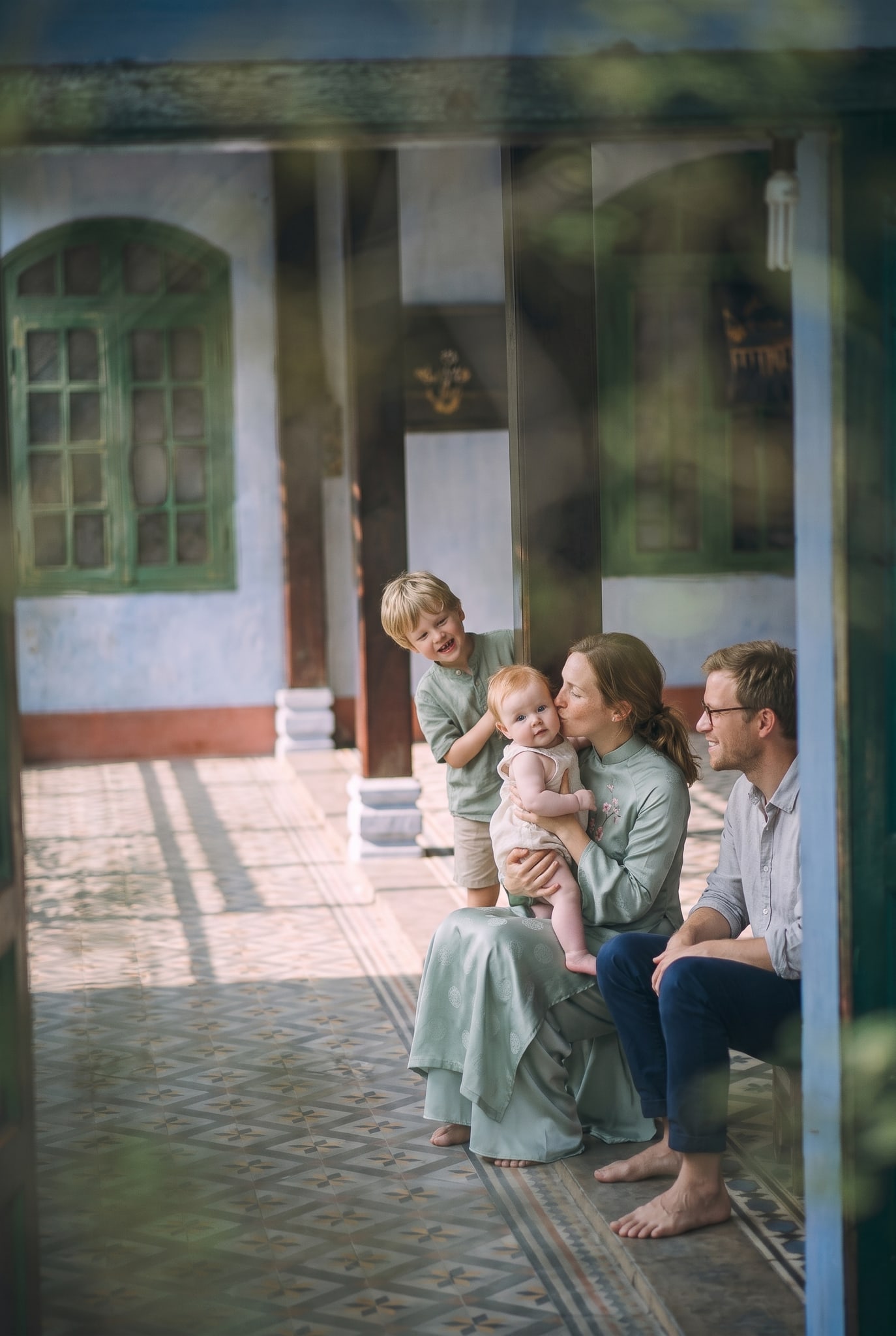
We've run side-by-side comparisons: families who prepped with their teenager beforehand had smiles in 40–50 minutes; families who didn't typically needed 70–90 minutes or didn't achieve them at all. Preparation is the single fastest ROI.
How do we handle it when a teenager still refuses to engage mid-shoot?
Honesty. We stop, ask what's wrong, and problem-solve together. Last month in Hanoi, a 15-year-old was visibly uncomfortable. Instead of pushing, our photographer sat down and said, "I can see this isn't working. What would make this better?" Turned out the teenager was worried about a school project and wasn't present mentally. We rescheduled for two weeks later. That second session was flawless because the barrier was real, not attitude.
Sometimes a teenager is genuinely camera-shy—not resistant, just introverted. In those cases, we stay at a distance, use longer lenses, and photograph them in conversation with family rather than alone. A quiet teenager often produces the most authentic shots because they're not performing anything; they're just living. We've learned not to confuse shyness with unwillingness.
If a teenager is actively hostile, we respect that. Not every session is the right fit. Pushing creates resentment that extends beyond photos. We've occasionally offered to reschedule or refund rather than force a bad memory. Long-term, a parent telling their teenager "we listened to what you needed" means far more than rushed photos.
What's your honest take on whether teenagers actually enjoy these shoots afterward?
Yes—but only if we get the process right. We follow up with families a week later, and almost every teenager says the session was "better than expected" or "actually kind of fun." What surprises parents most is that their teenager asks for copies, wants to share shots, sometimes even suggests doing it again. This happens because by the end, the teenager has authored the shoot's mood alongside us. They own it.
The worst follow-ups are from sessions where we pushed too hard or parents forced smiles. Teenagers remember being uncomfortable; no photo fixes that feeling.
See packages and prices on vietnamphotoshoot.com
What to check before you book a family photoshoot with Cáo Studio
- Location fit: Are you in Hanoi, Saigon, Hoi An, or Ninh Binh? We're based in Hanoi and Ho Chi Minh City; confirm travel or local logistics first.
- Time of year: Humidity and heat matter. Teenagers (and everyone) are grumpier in midday summer heat. Early morning or late afternoon sessions are always better mood-wise.
- Your teenager's actual comfort level: Not just "they don't like photos"—what specifically makes them uncomfortable? Crowds? Being alone with the photographer? Then we design the session around that barrier.
- Realistic expectations: If your goal is a formal family portrait where everyone looks solemn and perfect, this approach won't deliver. We create real moments. That means messy hair, mid-laugh expressions, and candid geometry. If you want that, we're aligned.
- Communication before booking: Use WhatsApp to chat through specifics. We want to know about your teenager's personality before we meet. That conversation alone often shifts the family's approach.
Pages from our team you may need
- ao dai photoshoot package
- couple photoshoot package
- makeup and hair at your hotel
- proposal and anniversary package
FAQ
At what age does the "resistant teenager" thing usually start?
We see meaningful resistance around 13–14, peaks at 15–17, shifts again at 18+. But it's not about age—it's about personality. Some 12-year-olds are more guarded than some 17-year-olds. The approach stays the same: listen first, direct second.
Do you have separate packages for families with teenagers versus younger kids?
We offer family photoshoot packages that are flexible. We customize the session length, location, and style to your family's makeup—age mix, energy level, goals. Ask us for a quote on WhatsApp; we'll design something that works.
What if we have a teenager AND younger siblings? Does that change the approach?
Absolutely. Younger kids are often eager; teenagers can feel upstaged or annoyed. We typically do a mixed segment where everyone's together, then pull the teenager aside for one-on-one shots where they feel less "on display." The contrast often results in their best photos.
Can we do a shoot that's *just* the teenager, without parents?
Yes. We offer vacation and solo photoshoots for individuals. A teenager-focused session often produces even more authentic work because there's no parental pressure in the frame. Some families book this as a "confidence builder" before a larger family session.
How long should we budget for if we're bringing a difficult teenager?
Budget 2–3 hours minimum. The first 45 minutes are almost always slow; real moments start around hour 1.5. Rushing guarantees stiff photos. We'd rather shoot for 90 calm minutes than 180 pressured ones, so we're flexible—let's talk on WhatsApp.
Do you ever offer makeup or hair for family shoots with teenagers?
Yes. Some teenagers want it; many don't. We offer hotel-based makeup and hair services if your family wants that touch. For teenagers, we usually keep it natural unless they specifically ask. Over-production often increases self-consciousness.
Family Photoshoot
Inclusions, prices and booking are on our booking site.
FAQ
At what age does the "resistant teenager" thing usually start?
We see meaningful resistance around 13–14, peaks at 15–17, shifts again at 18+. But it's not about age—it's about personality. Some 12-year-olds are more guarded than some 17-year-olds. The approach stays the same: listen first, direct second.
Do you have separate packages for families with teenagers versus younger kids?
We offer [family photoshoot packages](/go/family-photoshoot) that are flexible. We customize the session length, location, and style to your family's makeup—age mix, energy level, goals. Ask us for a quote on WhatsApp; we'll design something that works.
What if we have a teenager AND younger siblings? Does that change the approach?
Absolutely. Younger kids are often eager; teenagers can feel upstaged or annoyed. We typically do a mixed segment where everyone's together, then pull the teenager aside for one-on-one shots where they feel less "on display." The contrast often results in their best photos.
Can we do a shoot that's *just* the teenager, without parents?
Yes. We offer [vacation and solo photoshoots](/go/vacation-photoshoot) for individuals. A teenager-focused session often produces even more authentic work because there's no parental pressure in the frame. Some families book this as a "confidence builder" before a larger family session.
How long should we budget for if we're bringing a difficult teenager?
Budget 2–3 hours minimum. The first 45 minutes are almost always slow; real moments start around hour 1.5. Rushing guarantees stiff photos. We'd rather shoot for 90 calm minutes than 180 pressured ones, so we're flexible—let's talk on WhatsApp.
Do you ever offer makeup or hair for family shoots with teenagers?
Yes. Some teenagers want it; many don't. We offer [hotel-based makeup and hair services](/go/makeup-and-hair) if your family wants that touch. For teenagers, we usually keep it natural unless they specifically ask. Over-production often increases self-consciousness.
More from the team
Newborn and baby photos while traveling in Vietnam: studio comfort
Traveling with a newborn or baby means rethinking portrait sessions. We've learned exactly how to time shoots, manage room temperature, and keep small children calm during photography.
What families wear for matching ao dai photos
Matching ao dai creates instant visual harmony in family photos. We help you choose cuts, fabrics, and coordination styles that suit your group.
Family Wedding Photos in Phu Quoc with Kids and Parents
Phu Quoc's beaches and gardens make stunning backdrops for multigenerational family photos, but coordinating kids, parents and ceremony schedules takes real planning. We share what actually happens during a full-day family wedding shoot.