 Cáo Studio
Home › Blog › Special Concept Shoot
Film-look editing: why couples ask for grain and how we shoot for it
By the Cáo Studio team · Hanoi & Saigon · 2026-11-02
Film-look editing mimics analog film stocks used in 1990s–2000s photography, adding visible grain, muted saturation, and warm color casts to digital images. Couples request it because it feels timeless, emotional, and distinct from the hyper-sharpened digital default. At Cáo Studio, we shoot for film-look during special concept shoots, pre-wedding sessions, and couple photoshoots by lighting softer, avoiding harsh shadows, and choosing muted colors in styling. Grain works best on images with clean composition and soft skin tones—not in high-contrast backlit frames where grain looks like noise. Our retouchers assess each shot's tonal range before applying film stocks; if your session will include film-look editing, we discuss mood and location during your WhatsApp brief so lighting matches the aesthetic. Chat with us on WhatsApp | See packages and prices on vietnamphotoshoot.com
Why do couples specifically ask for film grain instead of clean digital?
Film grain feels like authenticity and memory combined. Digital photography, especially smartphone editing, produces over-processed sharpness that reads as artificial to the eye. Grain introduces texture and imperfection—it signals "this moment was real, not touched." On Instagram and wedding blogs, film-look images stand out because they're warmer and less clinical than contemporary clean editing. Couples in their 20s and 30s grew up with film cameras in their parents' albums; nostalgia is powerful. We've noticed that grain becomes more popular for sessions with emotional themes—proposals, elopements, intimate couple portraits—because softness feels more romantic than pristine detail. The aesthetic also hides minor skin texture, which couples with sensitive skin appreciate over hyper-detailed retouching.
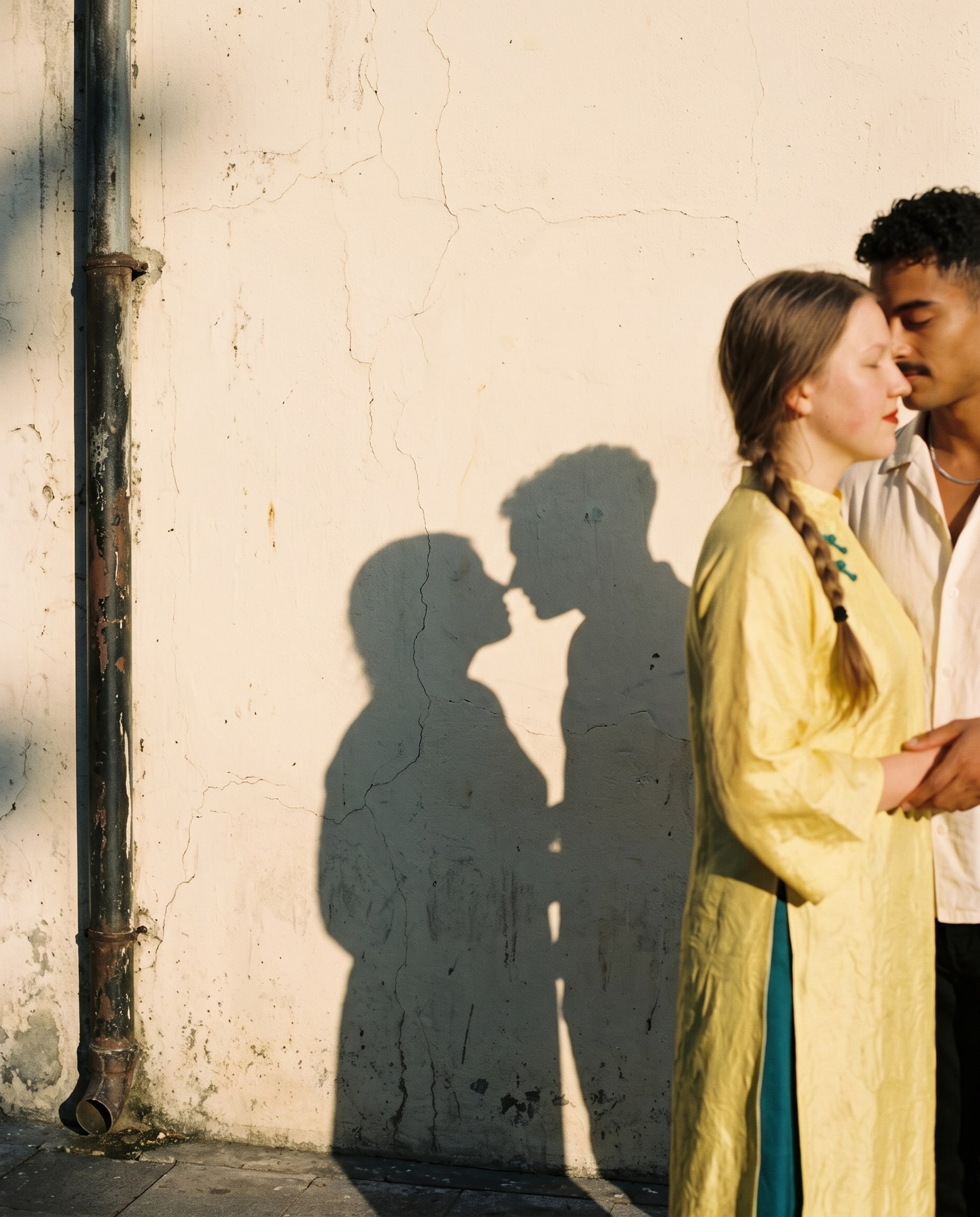
How does lighting change when we're shooting for film-look editing?
Film stocks handle shadows and midtones differently than digital sensors; they hold detail in shadows but blow highlights faster. On a couple photoshoot in Saigon's District 1, we light softer than usual—diffused reflectors instead of direct sun, golden hour instead of noon. We avoid hard shadows across faces because film grain is most visible in shadows, and harsh grain looks grainy; soft grain looks atmospheric. Our photographer checks the back of the camera for exposure and watches for clipping in highlights—blown skies don't recover well under film stock presets. In Hanoi's Old Quarter sessions, we position couples in shade or overcast light, then use a small fill flash bounced through a diffuser. Color saturation matters too: we avoid bright neon or saturated clothing when film-look is planned, because grain and color desaturation fight each other visually. Natural tones—cream, sage, rust—read cleaner under film filters than hot pink or electric blue.
What shooting conditions ruin a film-look aesthetic?
Harsh midday sun with contrasty shadows creates grain that looks like digital noise, not analog warmth. Backlit silhouettes—trendy but problematic for film—expose grain in pure black areas, creating a speckled, cheap effect. Indoor tungsten lighting (old hotel lamps, candles) combined with grain gives a muddy yellow cast we can't recover without losing the film feel. High-ISO shots taken indoors—say, a proposal in a dim Hanoi restaurant—show grain patterns that look digital rather than film, because real film grain at ISO 3200 has character while digital noise at that level looks like artifacts. Overly contrasty compositions (bright white dress against very dark background) break the film illusion because film stocks produce softer tonal separation. Shooting in heavy rain or fog with grain adds a layer of visual noise that reads as poor quality, not intentional. We advise clients on WhatsApp before sessions: if you want film-look, avoid harsh midday bookings and choose locations with even, directional light.

Which editing software and presets actually create film-look correctly?
Lightroom's built-in film emulation presets (Kodak Portra, Fuji Superia styles) are the baseline; they adjust white balance, reduce saturation 8–12%, and add subtle grain. Final Cut Pro and Adobe Premiere have similar tools but require manual tweaking. Expensive preset packs marketed as "authentic film" often oversaturate or grain too heavily; we test presets on our retouching computer and discard the overcooked ones. True film-look requires three layers: color grade (warm shift, crushed blacks, lifted shadows), desaturation (never pure black-and-white, always a tint), and grain (1.0–2.0 intensity depending on shot—not loud, not invisible). We've found that film-look looks best when applied in post-production during color grading, not as a filter in-camera or on-phone. On a recent pre-wedding photoshoot in Hoi An, our retoucher spent an extra hour per image matching grain intensity to the scene's lighting—bright outdoor shots got subtle grain, dimmer indoor shots got more visible texture. Generic presets can't adapt; custom grading makes the difference between "nice aesthetic" and "genuinely film."
| Editing approach | When to use it | Why couples choose it | Drawback |
|---|---|---|---|
| In-camera filter (iPhone/Lightroom app) | Quick previews, social media | Instant, no computer needed | Grain looks flat, colors oversaturated |
| Preset pack applied in Lightroom | Fast workflow, multiple images | Consistent look across a session | One-size-fits-all; may need tweaking per shot |
| Custom color grade + grain layer | Final retouching for prints/albums | Perfect match to vision, professional quality | Time-intensive, requires skilled retoucher |
| Hybrid (preset base + manual tweak) | Balanced approach, Cáo Studio standard | Efficient and tailored, best visual results | Needs experience to judge grain intensity |
See packages and prices on vietnamphotoshoot.com
How do we decide whether film-look matches your session's concept?
Not every shoot needs grain. A family photoshoot with young children often looks better clean and bright; film grain can feel moody for joyful content. Proposal packages in romantic settings—Ninh Binh's limestone cliffs, the riverside in District 1—suit film-look perfectly because the aesthetic reinforces intimacy. Minimalist couples who want crisp, modern imagery should skip film entirely. We ask on the brief WhatsApp call: "What do you see when you imagine your photos on your wall in five years?" If the answer is "warm, nostalgic, like my grandparents' wedding album," film-look fits. If it's "clear, sharp, contemporary," we keep digital clean. Location influences the choice too—Hoi An's ancient lantern streets and French architecture look stunning with film grain (echoes the town's age), while Saigon's modern cafés and glass architecture read better without it. Seasonal timing matters: autumn and winter light in Hanoi (cooler, softer) pair well with film-look's warmth; spring and summer's bright sun fights the muted palette. We also consider the couple's skin tone and the wedding dress color—cream and champagne silks photograph beautifully with film grain, while stark white dresses can look dingy under heavy desaturation.
Chat with us on WhatsApp | See packages and prices on vietnamphotoshoot.com
What to check before requesting film-look editing
- Confirm with your photographer before the shoot, not after. Shooting technique changes when grain is planned (softer light, color choices, exposure). Last-minute requests mean we can't optimize on-set.
- See examples on the studio's portfolio that match your aesthetic. Ask whether those images were shot specifically for film-look or had it added to originally clean files. The first approach usually delivers better results.
- Discuss the intensity of grain you want—subtle (barely visible), classic (noticeable texture), or heavy (vintage 1970s look). What you see on Instagram might be overdone in print.
- Ask about delivery timeline. Custom film-look color grading takes longer than batch-applying presets. Factor that into your deadlines.
- Verify the preset or LUT isn't available as a free download. Some studios buy cheap presets and claim them as signature style. Ask whether your editing is custom-created or preset-based.
- Check skin-tone results in the studio's samples, especially if you have darker or olive skin—poorly done film grain can desaturate skin tone to an unflattering degree.
FAQ
Is film-look editing the same as black-and-white editing?
No. Film-look retains color—usually warm, muted tones with reduced saturation. Black-and-white removes color entirely. Film-look mimics analog color stocks; black-and-white is a separate artistic choice. Both can appear in the same session if you request it.
Does film grain hide tattoos or acne better than clean digital?
Slightly, yes. Grain adds texture that breaks up skin detail, so minor acne reads less prominently. But heavy film grain on a close-up face portrait can also make skin texture more visible if the grain pattern is coarse. Retouchers balance this by using softer, finer grain on close-ups and slightly heavier grain on wider shots.
Can we add film-look in post if we didn't plan for it during the shoot?
Yes, but it works best when lighting was soft and exposure was exposed for shadows (not highlights). Contrasty, high-contrast images shot in harsh sun don't photograph well under film presets—grain looks artificial. The edit will be good, but not ideal. Planning ahead (in your WhatsApp brief) ensures better results.
Why do some studios charge more for film-look editing?
Custom film-look color grading is slower than batch presets. If a studio hand-grades each image to match your exact vision, it's labor-intensive. Preset-based film-look costs the same as any editing because it's applied automatically. Ask your photographer which method they use.
Which film stock (Portra, Fuji, Kodak) should I request for my photos?
None specifically—film stocks are references for the aesthetic, not literal formats. A retoucher doesn't use actual film; they use presets or manual color grades inspired by how real film looked. Different stocks had different color signatures: Portra is warm and forgiving, Fuji Superia is cool and vibrant, Kodak Gold is very warm. Ask your studio which "aesthetic" they recommend for your location and mood.
Will film-look editing look dated in 10 years?
Possibly, like all trends. Film-look feels fresh now because it's a reaction against over-sharpening; in a decade, something else may feel current. If you love the aesthetic, shoot it anyway—your personal favorite always trumps what's trendy. True film photographs from the 1970s and 1980s still look beautiful, so well-done film-look should age gracefully.
Special Concept Shoot
Inclusions, prices and booking are on our booking site.
FAQ
Is film-look editing the same as black-and-white editing?
No. Film-look retains color—usually warm, muted tones with reduced saturation. Black-and-white removes color entirely. Film-look mimics analog color stocks; black-and-white is a separate artistic choice. Both can appear in the same session if you request it.
Does film grain hide tattoos or acne better than clean digital?
Slightly, yes. Grain adds texture that breaks up skin detail, so minor acne reads less prominently. But heavy film grain on a close-up face portrait can also make skin texture *more* visible if the grain pattern is coarse. Retouchers balance this by using softer, finer grain on close-ups and slightly heavier grain on wider shots.
Can we add film-look in post if we didn't plan for it during the shoot?
Yes, but it works best when lighting was soft and exposure was exposed for shadows (not highlights). Contrasty, high-contrast images shot in harsh sun don't photograph well under film presets—grain looks artificial. The edit will be good, but not ideal. Planning ahead (in your WhatsApp brief) ensures better results.
Why do some studios charge more for film-look editing?
Custom film-look color grading is slower than batch presets. If a studio hand-grades each image to match your exact vision, it's labor-intensive. Preset-based film-look costs the same as any editing because it's applied automatically. Ask your photographer which method they use.
Which film stock (Portra, Fuji, Kodak) should I request for my photos?
None specifically—film stocks are references for the *aesthetic*, not literal formats. A retoucher doesn't use actual film; they use presets or manual color grades inspired by how real film looked. Different stocks had different color signatures: Portra is warm and forgiving, Fuji Superia is cool and vibrant, Kodak Gold is very warm. Ask your studio which "aesthetic" they recommend for your location and mood.
Will film-look editing look dated in 10 years?
Possibly, like all trends. Film-look feels fresh now because it's a reaction against over-sharpening; in a decade, something else may feel current. If you love the aesthetic, shoot it anyway—your personal favorite always trumps what's trendy. True film photographs from the 1970s and 1980s still look beautiful, so well-done film-look should age gracefully.
More from the team
Fishing Village Concept Photoshoot Vietnam: How We Shoot It
A fishing village photoshoot captures Vietnam's working waterfront—nets, boats, morning light, real people. We share how our team runs these shoots from location scout to final delivery.
Cruise Stop Saigon Photoshoot at Phu My Port: Studio Guide
Cruise passengers have 8–12 hours in Saigon. We photograph guests right from Phu My Port, handling transport and changing rooms so you step off the ship and into an áo dài or couple session.
Cinematic Film Look Photoshoot Vietnam: Our Studio Guide
Cinematic film aesthetics—muted colour grading, shallow depth of field, story-driven composition—have become the most requested look across our shoots in 2026. We run you through how we build this style on set, what goes wrong, and which packages genuinely deliver it.