 Cáo Studio
Home › Blog › Ao Dai Photoshoot
How to Choose an Ao Dai Color for Photos
By the Cáo Studio team · Hanoi & Saigon · 2026-11-04
The ao dai color you choose shapes your entire shoot's mood and how you appear on film. At Cáo Studio, we help guests pick from classic silk palettes—deep reds, whites, navy, emerald, gold—by matching skin undertone, location backdrop, and light quality. A warm-toned guest often glows in coral or apricot; cool-toned skin reads beautifully in jewel tones. Morning light in Hanoi's French Quarter demands different colors than afternoon golden hour in Hoi An. Ask us for a quote on WhatsApp once you've narrowed your choice, and we'll confirm whether stock aligns with your preferred date and styling. Avoid neon or overly matte fabrics on first consultation—we test these on set. Chat with us on WhatsApp
Does your skin tone guide color choice?
Yes. Skin undertone—warm (golden), cool (pink), or neutral—determines which colors photograph naturally versus tired. Warm undertones photograph best in terracottas, peaches, champagne, and warm reds; they risk looking washed out in icy blues or pure whites. Cool undertones shine in deep navy, jewel greens, cool purples, and true reds; warm golds can read yellow on them. We ask guests about their natural hair color and what they wear daily—these reveal undertone faster than any test. Once we know, we pull two or three silk options and test them on camera with the same lighting we'll use during the shoot. A guest who looks uncertain about their undertone often feels confident once they see themselves in fabric on the monitor. This saves second-guessing on shoot day.
How does location light affect color?
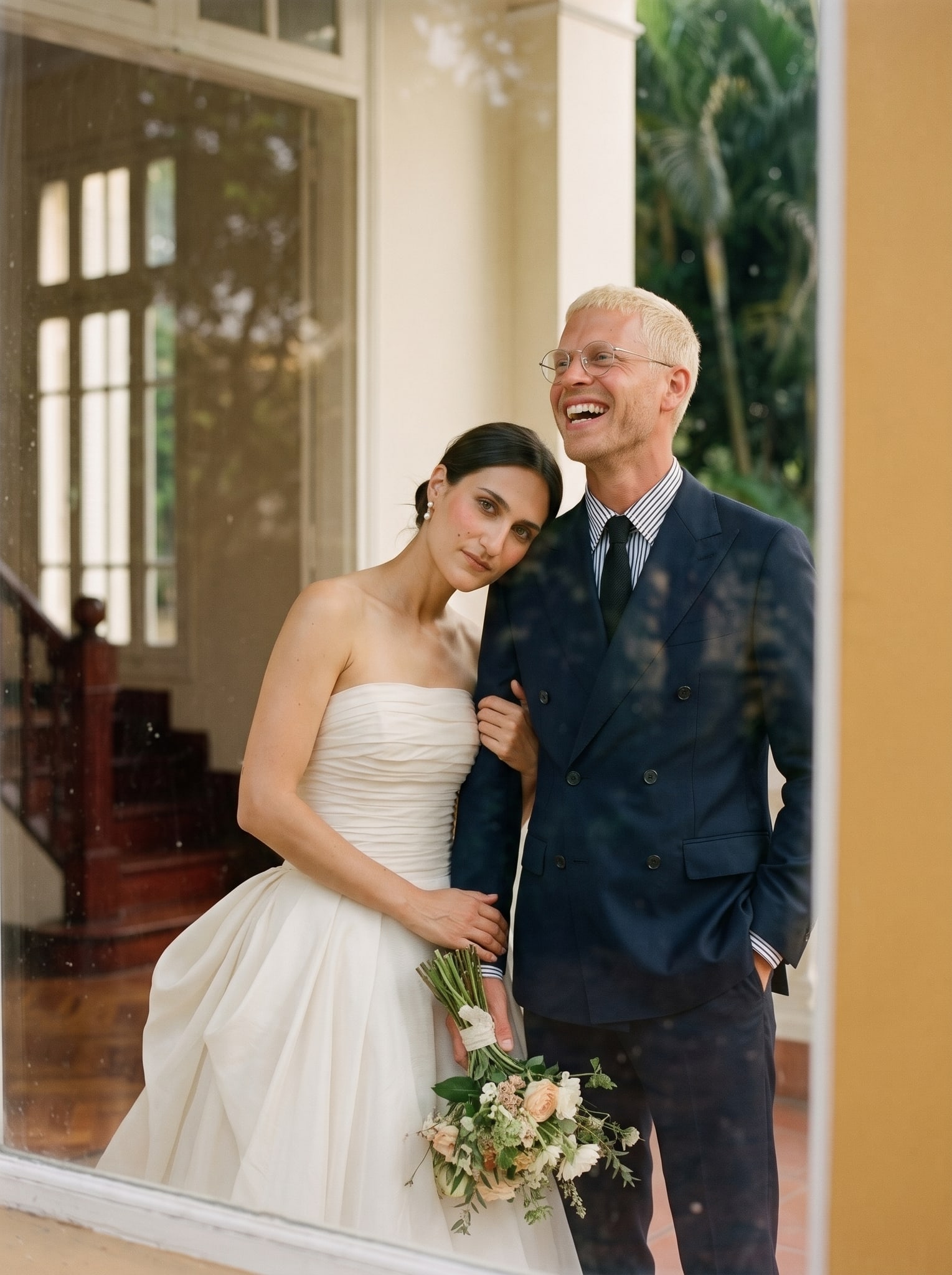
Light quality and color temperature shift dramatically between shoots. Hanoi's morning light in the Old Quarter is cool and flat; Hoi An's lantern-lit riverside is warm and golden; Ninh Binh's midday sun bleaches everything. We always scout the exact time and place before recommending color. A bright red ao dai pops at dawn in Saigon but risks glare or pink cast at 3 p.m. in full sun. Soft jewel tones and metallics (champagne, blush gold) photograph well in most conditions because they diffuse light rather than reflect it harshly. White reads crisp in shade but can blow out (lose detail) in direct midday sun. Emerald and navy hold depth across all times. When guests book an ao dai photoshoot package, we confirm the exact location, time, and weather forecast before finalizing the color choice. This prevents arriving on set only to realize the shade clashes with the real-world light.
What colors work best for couples and family shoots?
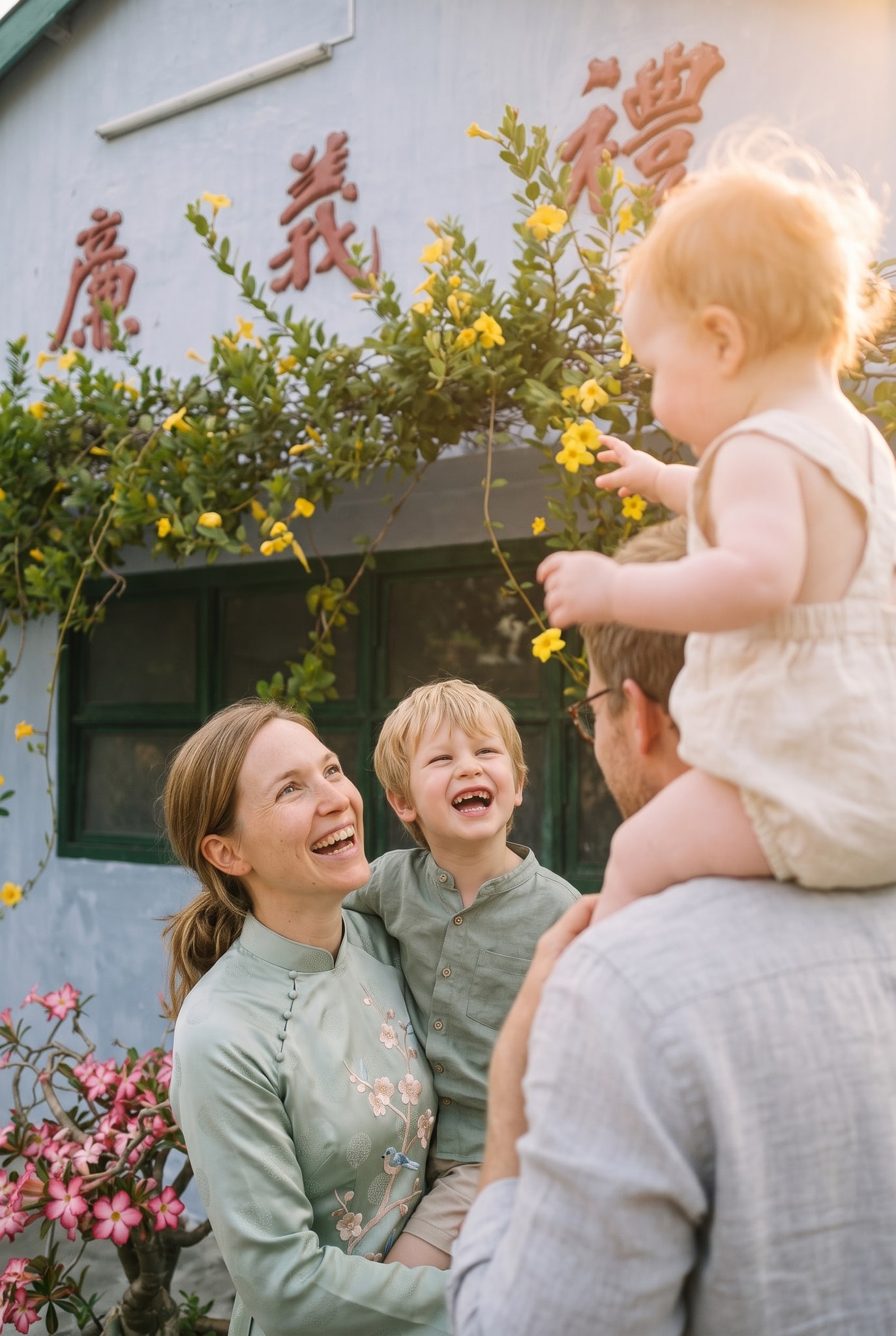
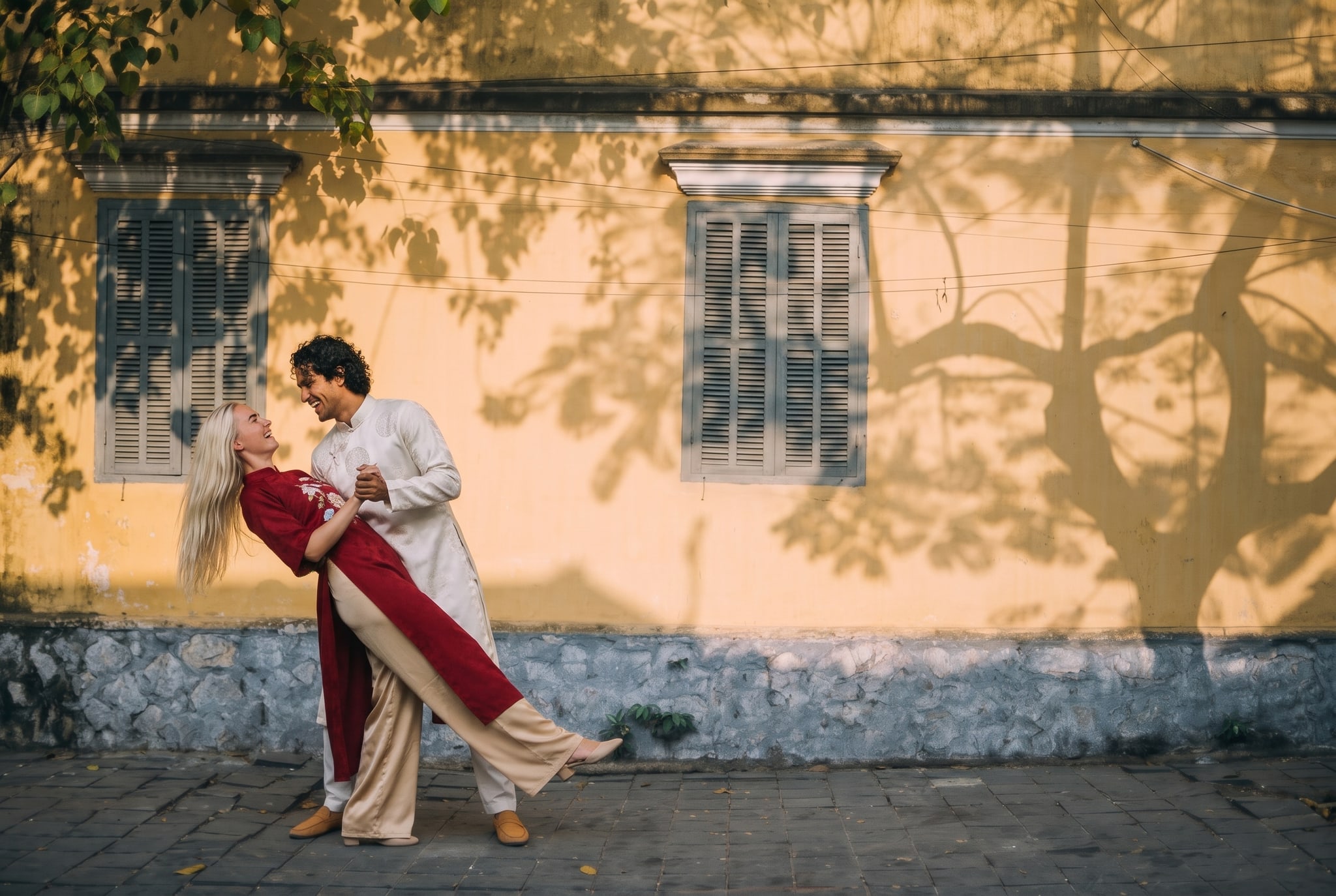
Complementary ao dai colors create visual harmony without matchy sets. One partner in a jewel tone (navy, emerald) pairs beautifully with the other in a warm metallic (champagne, soft gold) or coral. When we style couple photoshoots, we avoid identical colors—it flattens composition and feels staged. For family photoshoots, we suggest one anchor color (e.g., navy) worn by different family members in different fabrics or fits, so they read as a unit but each person retains individuality. A mother in navy silk often looks elegant next to her daughter in navy cotton with different embroidery. Grandparents in warm metallics ground the frame. We lay out all options on the studio table and photograph the group in each combination before the real shoot. This removes doubt and lets guests see themselves together on screen.
Which colors photograph well in black and white?
If you plan black-and-white edits, color choice becomes about tone and texture contrast rather than hue. Matte and shiny fabrics read differently when desaturated: a glossy champagne silk becomes a luminous mid-gray; a dull navy becomes deep charcoal; white stays bright. Texture matters more than color—embroidery, sequins, and beading catch light and pop in monochrome. We ask guests upfront: "Do you want color in final images, or mostly black and white?" This changes our palette. For mostly monochrome work, we often recommend white or cream (highest contrast), charcoal or navy (deep and rich), or metallics with heavy embroidery (texture translates to visual interest). When booking a pre-wedding photoshoot, many couples request 50/50 color and B&W coverage, so we pick a shade that holds tone in both. Reds and blues are your friends here; pastels risk looking flat and washed out.
What should you check before ordering an ao dai?
Before you confirm a color, verify three things: (1) Stock and delivery time—custom-made ao dai take 3–4 weeks in Hoi An; off-the-shelf rentals have immediate or 2–3 day availability. Ask your tailor or rental shop how many days before your shoot the piece needs to arrive for alterations. (2) Fabric finish and weight—silk holds color brilliantly and moves gracefully on camera; linen and cotton wrinkle faster and read more casual. Glossy finishes (charmeuse silk, satin) photograph with more dimension than matte cotton. (3) Alterations and fit—bring your ao dai to us at least one day before the shoot so we can assess how it fits under our studio lights and suggest last-minute styling tweaks (tucking, pinning, layering with a shawl). A poorly fitted ao dai reads loose and uncertain on camera. When you book makeup and hair at your hotel or any studio session, mention the color choice in your initial WhatsApp message so we can pull reference images and confirm our styling approach matches your ao dai.
| Color | Best Undertone | Best Light | Best Backdrop | Fabric Tip |
|---|---|---|---|---|
| Deep red / burgundy | Warm + cool | Dawn, golden hour | Old architecture, green foliage | Silk; matte reads regal, glossy reads ceremonial |
| Navy / dark blue | Cool + neutral | Midday, overcast | Lanterns, water, night scenes | Silk or linen; cool shade holds depth all day |
| Emerald / jewel green | Cool undertone | Golden hour, shade | Hoi An gardens, riverside | Silk; green shifts toward yellow in harsh sun; test on camera |
| White / cream | All undertones | Golden hour, shade | Contrasts with dark backgrounds | Silk; risks blowing out in direct noon sun |
| Champagne / pale gold | Warm undertone | Morning light, shade | French colonial, neutral walls | Metallic finish photographs best; matte can read beige |
| Coral / apricot | Warm undertone | Golden hour | Brick, stone, natural landscape | Cotton or silk blend; test saturation; risks looking costume-y if too bright |
| Blush / dusty rose | Cool + neutral | Soft light, overcast | Modern urban, minimalist | Silk; flatters most skin tones; reads gentle and timeless |
| Black / charcoal | All undertones | All times (texture matters) | High-contrast backdrops | Embroidery essential for visual interest; plain black reads flat |
How do we test color on your body?
Our standard approach: bring two preferred options to the first consultation or studio visit (or describe them in WhatsApp photos). We photograph you in each shade under our studio lights and the light conditions of your chosen location (we have reference gallery of Hanoi, Saigon, Hoi An, Ninh Binh at different times). You see yourself on screen and decide. If you're booking remotely, we schedule a 15-minute WhatsApp video call where we hold fabric samples against our skin and describe how they photograph. We never push color; we show data (the monitor). Most guests choose within two rounds. If you're uncertain, we recommend scheduling the shoot and bringing both options; we'll test on location at sunrise or your chosen time, then decide together.
See packages and prices on vietnamphotoshoot.com
What color pairs well with proposal or anniversary moments?
Significant occasion shoots call for color that reads emotional, not loud. For proposal and anniversary packages, we often recommend warm, soft metallics (champagne, rose gold) or jewel tones (sapphire, emerald) because they photograph as intimate and timeless, not costume. Red reads powerful and romantic but demands careful fit and grooming—a wrinkled red ao dai photographs dramatically wrong. White symbolizes purity and reads serene, but requires immaculate styling. We ask couples: "What do you want to feel when you look at these photos in 10 years?"—that emotional intent guides color. A woman who says "I want to feel cherished" often glows in blush or champagne; one who says "I want to feel powerful" finds her match in deep emerald or navy. Color psychology matters as much as photography technique here.
Can you wear a different color ao dai for different scenes?
Absolutely. Our special concept shoots and extended vacation photoshoots often include 2–3 outfit changes. A guest might start in emerald at sunrise in Hoi An, change to white for midday riverside, then wear coral for golden hour. Each color reads best in its own light and location. Logistically, you'll need time to change, re-do hair and makeup (or touch up), and move to the next location. We factor this into timing—a half-day shoot usually accommodates one outfit change; a full-day shoot comfortably handles two or three. Bring each ao dai on hangers in a garment bag; we keep them in the car and steamer-ready. The first outfit change often feels rushed; by the second, everyone relaxes and we capture better candids. Ask us to build a custom vacation or concept shoot itinerary if you want to maximize outfit variety.
What to check before you buy or rent
- Fit: Does the áo (tunic) sit level at the shoulders? Do the side slits fall evenly? Loose fit photographs as unfocused; overly tight reads uncomfortable. Bring the ao dai to our studio 1–2 days before your shoot for a quick fit check.
- Fabric quality: Run your hand over it. Silk should feel smooth and slightly cool; cotton or linen should feel crisp, not limp. Cheap satin can look costume-y on camera.
- Color accuracy: Photos of fabric online often render darker or warmer than real life. Request a physical swatch or video call before committing to a custom order.
- Alterations timeline: Custom ao dai from Hoi An take 3–4 weeks minimum. Rentals usually available within 3–7 days. Confirm the deadline with your tailor or shop immediately after booking your shoot date.
- Seams and embroidery: Check for loose threads, missing sequins, or stains. A wrinkled ao dai is fixable with a steamer; embroidery damage is not.
FAQ
Does the ao dai color need to match my skin tone exactly?
No. Matching undertone (warm, cool, or neutral) matters far more than shade intensity. A cool-toned guest can wear pale blue or deep navy; a warm-toned guest looks equally good in pale peach or dark terracotta. Test on camera if unsure.
Will my ao dai color look the same in photos as it does in real life?
Not always. Camera sensors and lighting adjust color temperature. A white ao dai under midday sun may look slightly blue in photos; a champagne silk may shift yellow. We always test in the actual location and time before the final shoot.
Can I wear a pattern or embroidered ao dai, or does it have to be solid?
Both work beautifully on camera. Embroidery adds dimension and catches light. Patterns matter most with color—a busy red and gold brocade reads differently than a simple red silk. Avoid very fine or high-contrast patterns; they can create moiré (flickering) on camera.
How much does an ao dai cost to rent or custom-order?
Ask us for a quote on WhatsApp. Rental prices and custom-tailoring fees vary by location and designer. We can connect you with trusted rental and tailor partners in Hanoi, Saigon, Hoi An, and Ninh Binh.
What if I hate the color I chose once I see the photos?
We do edit color grading in post-production—slight shifts toward warmer or cooler tone, saturation adjustments. Drastic changes (turning red into blue) are not possible without looking artificial. This is why we test before the shoot. If you're deeply unhappy, we can discuss another shoot with a different color.
Can I bring multiple ao dai to the same shoot?
Yes. For vacation photoshoots or special concept shoots, multiple outfits are common. Plan 15–20 minutes per outfit change, including travel time between locations. We'll coordinate hair and makeup touch-ups between sets.
Ao Dai Photoshoot
Inclusions, prices and booking are on our booking site.
FAQ
Does the ao dai color need to match my skin tone exactly?
No. Matching undertone (warm, cool, or neutral) matters far more than shade intensity. A cool-toned guest can wear pale blue or deep navy; a warm-toned guest looks equally good in pale peach or dark terracotta. Test on camera if unsure.
Will my ao dai color look the same in photos as it does in real life?
Not always. Camera sensors and lighting adjust color temperature. A white ao dai under midday sun may look slightly blue in photos; a champagne silk may shift yellow. We always test in the actual location and time before the final shoot.
Can I wear a pattern or embroidered ao dai, or does it have to be solid?
Both work beautifully on camera. Embroidery adds dimension and catches light. Patterns matter most with color—a busy red and gold brocade reads differently than a simple red silk. Avoid very fine or high-contrast patterns; they can create moiré (flickering) on camera.
How much does an ao dai cost to rent or custom-order?
Ask us for a quote on WhatsApp. Rental prices and custom-tailoring fees vary by location and designer. We can connect you with trusted rental and tailor partners in Hanoi, Saigon, Hoi An, and Ninh Binh.
What if I hate the color I chose once I see the photos?
We do edit color grading in post-production—slight shifts toward warmer or cooler tone, saturation adjustments. Drastic changes (turning red into blue) are not possible without looking artificial. This is why we test before the shoot. If you're deeply unhappy, we can discuss another shoot with a different color.
Can I bring multiple ao dai to the same shoot?
Yes. For [vacation photoshoots](/go/vacation-photoshoot) or [special concept shoots](/go/special-concept), multiple outfits are common. Plan 15–20 minutes per outfit change, including travel time between locations. We'll coordinate hair and makeup touch-ups between sets.
More from the team
Ao dai wedding photos at Thanh Ha pottery village
Thanh Ha pottery village in Hoi An is a working craft site where red-brick kilns frame ao dai perfectly. We've shot dozens of couples there—here's what happens on the day, what to pack, and how to choose the right session length.
Ao dai wedding photos at Bay Mau coconut forest: our shoot day
Bay Mau coconut forest is one of Ninh Binh's most-requested backdrops for ao dai wedding and engagement photos. We share how our team structures these shoots, what to expect hour by hour, and how to prepare.
Ao dai for wedding photos in Hoi An: renting, fitting and styling
Hoi An's ancient streets demand an ao dai that fits perfectly and tells your story. We walk you through renting, fittings, and the decisions that transform a garment into your wedding photo.