 Cáo Studio
Home › Blog › Ao Dai Photoshoot
Modern Ao Dai vs Traditional: Which to Wear for Your Shoot
By the Cáo Studio team · Hanoi & Saigon · 2026-11-04
Modern ao dai features looser panels, asymmetrical cuts, bold solid or metallic fabrics, and sits higher on the body—designed for movement and contemporary aesthetics. Traditional ao dai clings to the silhouette with a fitted bodice, high slit, and silk in jewel tones or classic white—rooted in 1960s Hanoi elegance. Both work beautifully in front of the camera; the choice depends on your venue (urban loft vs. temple), body comfort, and the mood you're creating. At Cáo Studio, we see guests succeed with either because we match the design to the setting and pose accordingly. Ask us for a quote on WhatsApp to discuss which cut suits your shoot. Chat with us on WhatsApp
Modern and traditional ao dai sit at opposite ends of a spectrum we navigate every shoot day. Neither is "better"—they're different tools for different stories. Understanding the real difference helps you feel confident and photograph authentically.
What silhouette changes between modern and traditional cuts?
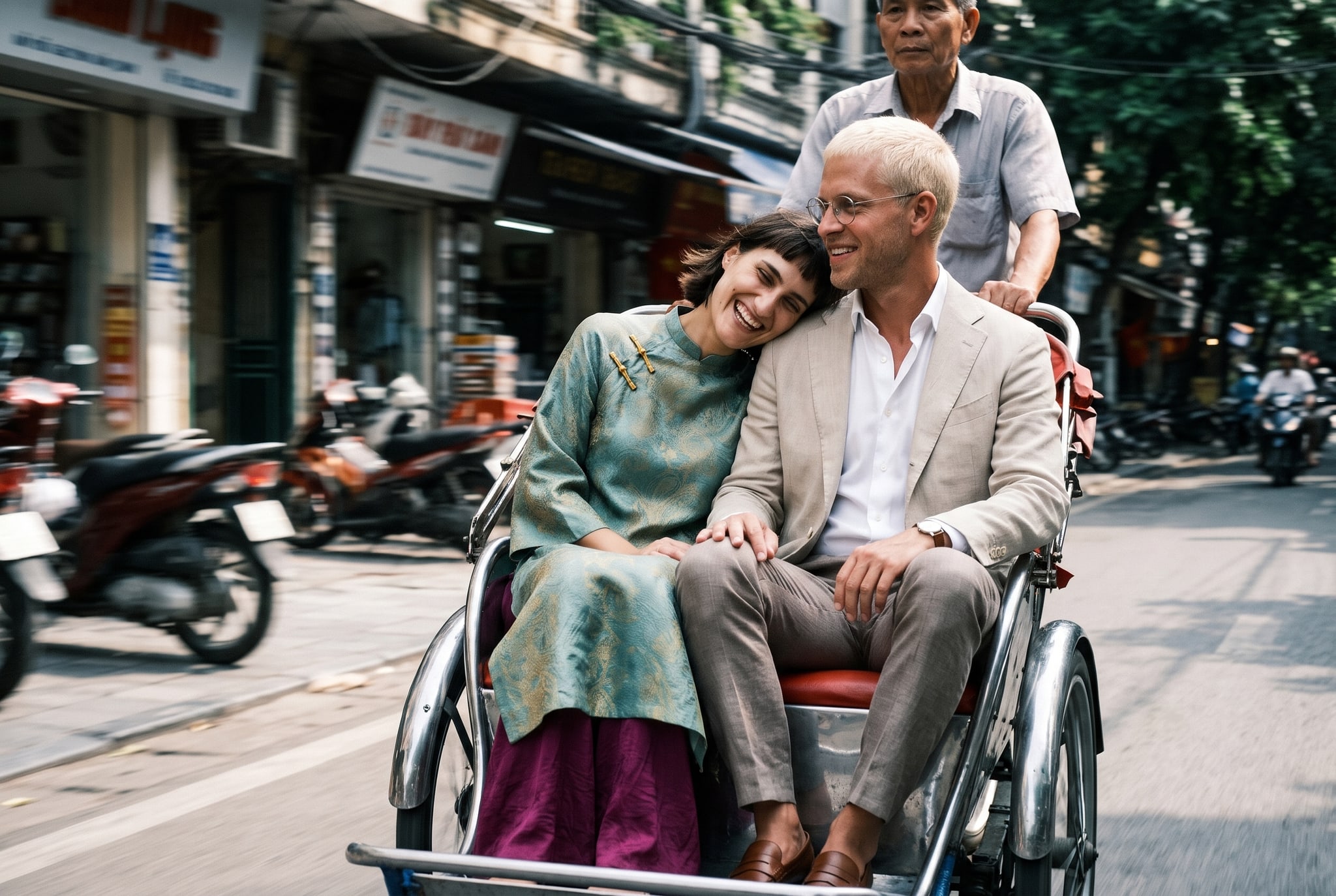
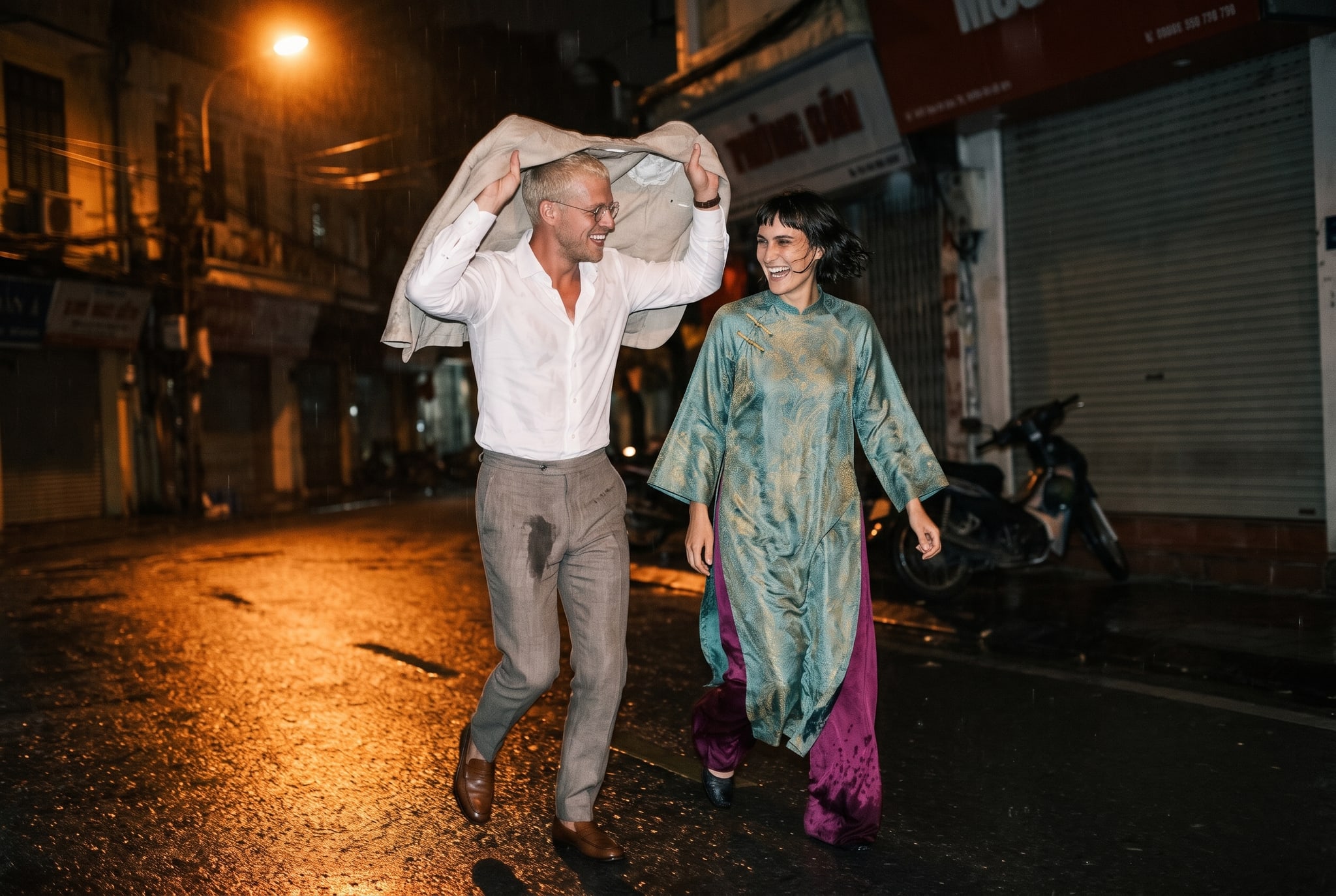
Traditional ao dai hugs the body from shoulder to hip with a fitted bodice, then flows over wide trousers. The front slit runs from waist to ankle; the back panel is longer. Modern versions loosen the bodice, widen the side panels, raise the slit to mid-thigh, and sometimes split the back panel. We've noticed traditional silhouettes photograph best in stillness—standing, sitting, posed—while modern cuts shine during movement: walking through alleyways, dancing, turning. If your shoot includes motion or documentary-style moments, modern drapes better; if it's a formal portrait session, traditional's defined lines read sharper on camera.
How do fabrics and colors differ?
Traditional ao dai relies on silk or silk blends in jewel tones (emerald, sapphire, burgundy) or timeless white. Patterns are subtle: self-tones, small florals, or brocade. Modern ao dai embraces polyester blends, cotton linen, matte fabrics, and bold solids—black, gold, silver, blush, deep navy. We've shot modern pieces in geometric prints and metallic finishes that read beautifully in afternoon light but can flatten skin tone if the color clashes. Traditional silk catches light differently: it glows warmly but requires careful handling because it wrinkles. On set, we often steam traditional pieces between takes; modern fabrics are more forgiving. If your shoot runs 3+ hours and budget allows, traditional silk is worth the extra care; otherwise, modern blends save stress.
| Aspect | Traditional Ao Dai | Modern Ao Dai | Best for |
|---|---|---|---|
| Bodice fit | Fitted, sculptural | Loose, flowing | Fitted suits formal portraits; loose suits candid movement |
| Slit height | Waist to ankle | Mid-thigh or asymmetrical | Higher slit favors motion; full slit adds formality |
| Fabric | Silk, silk blends | Polyester, cotton linen | Silk glows but wrinkles; blends are practical |
| Color range | Jewel tones, white | Pastels, metallics, bold solids | Jewels photograph warmly; neutrals suit mixed lighting |
| Wear time comfort | 2–4 hours (fitted waist) | 4+ hours (loose waist) | Modern suits longer shoots |
| Cost basis | Mid to high-end | Typically lower | Ask for quote based on designer |
Which venues and seasons suit each style?
We shoot traditional ao dai at pagodas, heritage sites, and formal studios—the tailored fit honors the architecture. Jewel tones pop against temple gold and aged brick. In winter (November–February), heavy silk in emerald or burgundy grounds you visually and keeps you warm. Modern ao dai thrives in urban settings: rooftop bars in Saigon's District 1, cafés in Hanoi's Old Quarter, contemporary hotels. We often pair modern pieces with minimalist backdrops because the silhouette itself is the statement. Spring and autumn (March–April, September–October) suit both; summer heat makes modern fabrics more bearable because they breathe. If you're choosing between styles and unsure of your venue, tell us the location on WhatsApp and we'll recommend which cut photographs better there.
How does body shape influence the choice?
We notice this every session: traditional ao dai's fitted bodice flatters pear and apple shapes because the structure defines the waist and hides the midsection. The high slit elongates legs. Petite guests often look best in traditional because the proportions feel balanced; the structured bodice prevents a "swallowed" look. Modern ao dai's loose panels suit rectangular and athletic builds—the width adds curves visually. Curvier guests sometimes prefer modern too because there's no waist grip; comfort on camera reads as confidence. Neither style is off-limits to any body; it's about what you feel strongest in. When you book our ao dai photoshoot package, we ask about body concerns during the consultation and steer you toward the cut that flatters you most. That conversation happens before you buy—never after.
What happens on shoot day when you choose wrong?
We've been there. A guest arrives in a modern ao dai she thought was playful, discovers she's uncomfortable in the loose waist during a 3-hour session, and tenses up in frames. Another chooses traditional silk without realizing the fitted bodice restricts arm movement for the poses she wants. On set, we adapt: we change the tunic if she brought backup, we adjust posing to work with the silhouette, we steam and re-drape between takes. But the best outcome is choosing right beforehand. Before ordering, ask yourself: Do I feel strongest sitting still or moving? Will I shoot indoors or outdoors? Is this for a single session or multiple outfits? How warm is the season? If you're unsure, talk to us on WhatsApp—we've styled hundreds of bodies in both cuts and can predict what will photograph best for you.
What to check before you order
- Fabric weight: Hold it up to light. Traditional silk should be smooth and dense; modern blends shouldn't feel papery.
- Slit opening: Sit down. Does it ride up too high or restrict your legs? You'll sit in frames; test it.
- Waist fit: You should fit two fingers inside the waist. Too tight = discomfort and visible tension; too loose = shapeless on camera.
- Sleeve length: Modern cuts often have shorter sleeves. Raise your arms. Do they still cover your shoulders?
- Hem length: Stand barefoot. The hem should graze your ankle or your shoe top. Uneven hems read crooked in photos.
- Color against your skin: Video-call the vendor or visit in person. Hold it under natural light next to your face. Does it enhance or drain you?
- Designer or tailor reputation: Ask for photos of their work on real bodies, not just hangers. We work with tailors in Hanoi and Saigon; ask us for referrals.
See packages and prices on vietnamphotoshoot.com
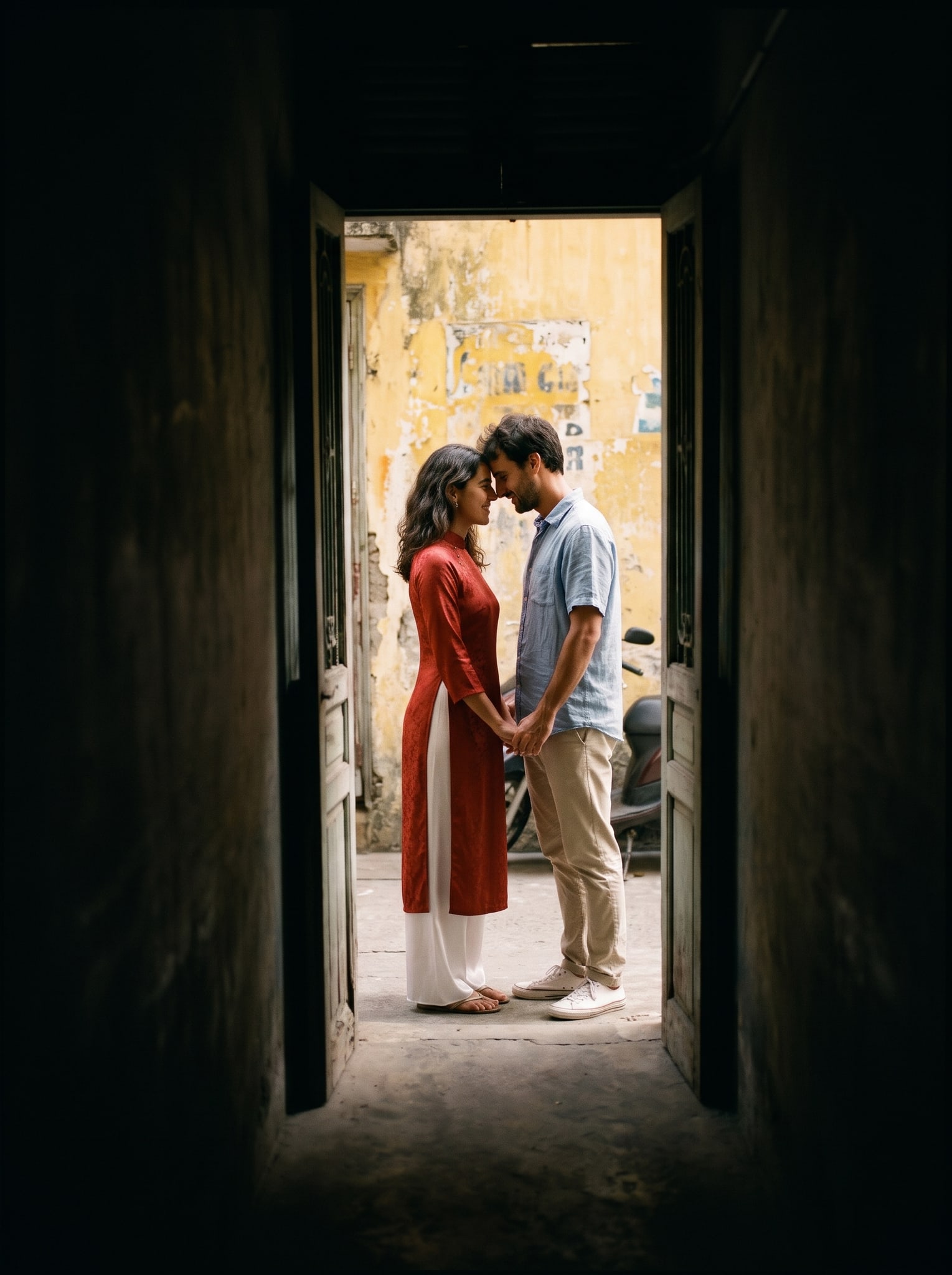
For couple shoots, we often recommend one guest in traditional and one in modern to create visual contrast—especially if you're mixing heritage and contemporary settings. For pre-wedding sessions, brides typically choose traditional for ceremony aesthetic and modern for playful moments. For family photoshoots, we mix cuts across generations—grandmother in classic white, mother in jewel tone traditional, younger members in modern solids—and it reads beautifully because each silhouette feels authentic to that person.
The decision between modern and traditional ao dai isn't about fashion rules; it's about comfort, venue, and how you want to feel in front of the camera. We've shot thousands of frames in both and we've learned this: guests photograph best when they're not thinking about their clothes. That means choosing right the first time. Reach out on WhatsApp, describe your shoot vision, and we'll recommend the cut that makes you forget the camera exists.
FAQ
Can I wear a modern ao dai to a temple shoot?
Yes, if the color is respectful (avoid black; jewel tones or pastels work). The fit won't disappoint—modern's loose panels actually photograph well in ornate settings because they won't compete with the architecture. We've shot both successfully at Tran Quoc Pagoda in Hanoi and Jade Emperor Pagoda in Saigon.
How long does a traditional ao dai take to tailor?
A custom stitch from a skilled tailor in Hanoi Old Quarter or Ben Thanh Market in Saigon takes 7–14 days for fitting and finishing. Rush tailors can do 3–5 days but may miss details. If you're visiting Vietnam, we recommend ordering 2–3 weeks before your shoot date.
Will a modern ao dai show sweat stains during a long session?
Light colors show moisture, whether modern or traditional. We recommend testing your chosen piece in warm conditions beforehand. Bring a backup undergarment or ask your stylist about moisture-wicking layers beneath the tunic. At Cáo Studio shoots, we have touch-up supplies and can retouch frames if needed.
Is traditional or modern ao dai easier to move in for candid shots?
Modern ao dai allows wider strides and arm movement because of loose panels and higher slits. Traditional restricts your gait but creates more elegant lines in standing poses. For a full session mixing both energy levels, modern is safer; if you're mostly stationary, traditional photographs more refined.
What's the cost difference between modern and traditional?
Ask us for a quote on WhatsApp—both range widely based on fabric, designer, and tailoring. Custom pieces cost more than ready-made. We work with vendors in multiple price brackets and can match your budget. When you book a package with us, we advise on value based on how many wears you plan.
Can I rent instead of buying an ao dai for my shoot?
Yes. Rental shops in Hanoi (Old Quarter) and Saigon (District 1) offer both cuts for short-term use. Rentals cost less upfront but offer fewer customization options. If you want a specific fit or color, buying or commissioning a tailor is better. We can connect you with trusted tailors if you decide to buy.
Ao Dai Photoshoot
Inclusions, prices and booking are on our booking site.
FAQ
Can I wear a modern ao dai to a temple shoot?
Yes, if the color is respectful (avoid black; jewel tones or pastels work). The fit won't disappoint—modern's loose panels actually photograph well in ornate settings because they won't compete with the architecture. We've shot both successfully at Tran Quoc Pagoda in Hanoi and Jade Emperor Pagoda in Saigon.
How long does a traditional ao dai take to tailor?
A custom stitch from a skilled tailor in Hanoi Old Quarter or Ben Thanh Market in Saigon takes 7–14 days for fitting and finishing. Rush tailors can do 3–5 days but may miss details. If you're visiting Vietnam, we recommend ordering 2–3 weeks before your shoot date.
Will a modern ao dai show sweat stains during a long session?
Light colors show moisture, whether modern or traditional. We recommend testing your chosen piece in warm conditions beforehand. Bring a backup undergarment or ask your stylist about moisture-wicking layers beneath the tunic. At Cáo Studio shoots, we have touch-up supplies and can retouch frames if needed.
Is traditional or modern ao dai easier to move in for candid shots?
Modern ao dai allows wider strides and arm movement because of loose panels and higher slits. Traditional restricts your gait but creates more elegant lines in standing poses. For a full session mixing both energy levels, modern is safer; if you're mostly stationary, traditional photographs more refined.
What's the cost difference between modern and traditional?
Ask us for a quote on WhatsApp—both range widely based on fabric, designer, and tailoring. Custom pieces cost more than ready-made. We work with vendors in multiple price brackets and can match your budget. When you book a package with us, we advise on value based on how many wears you plan.
Can I rent instead of buying an ao dai for my shoot?
Yes. Rental shops in Hanoi (Old Quarter) and Saigon (District 1) offer both cuts for short-term use. Rentals cost less upfront but offer fewer customization options. If you want a specific fit or color, buying or commissioning a tailor is better. We can connect you with trusted tailors if you decide to buy.
More from the team
Ao dai wedding photos at Thanh Ha pottery village
Thanh Ha pottery village in Hoi An is a working craft site where red-brick kilns frame ao dai perfectly. We've shot dozens of couples there—here's what happens on the day, what to pack, and how to choose the right session length.
Ao dai wedding photos at Bay Mau coconut forest: our shoot day
Bay Mau coconut forest is one of Ninh Binh's most-requested backdrops for ao dai wedding and engagement photos. We share how our team structures these shoots, what to expect hour by hour, and how to prepare.
Ao dai for wedding photos in Hoi An: renting, fitting and styling
Hoi An's ancient streets demand an ao dai that fits perfectly and tells your story. We walk you through renting, fittings, and the decisions that transform a garment into your wedding photo.