 Cáo Studio
Home › Blog › Special Concept Shoot
Photoshoot Outfit Color Palette for Hanoi Streets
By the Cáo Studio team · Hanoi & Saigon · 2026-11-01
A photoshoot color palette for Hanoi streets means choosing 2–3 hues that photograph well against ochre-stained colonial walls, jewel-toned silk storefronts, and dappled shade in the Old Quarter's narrow lanes. Neutrals (cream, soft grey, caramel) work reliably; jewel tones (emerald, sapphire, terracotta) stand out if the light is strong; pastels fade unless you shoot in shade. We guide guests to bring one primary outfit (áo dài, dress or tailored set), one accent piece (scarf, blazer), and comfortable shoes—because Hanoi's streets are uneven. Most sessions run 2–3 hours across 3–4 locations; ask us for a quote on WhatsApp and we'll advise on fabrics, fit, and what the light will do to your chosen colors on the day.
Why Hanoi's Light Changes Your Color Choice
Hanoi's Old Quarter light is not neutral. Morning sun bounces off brass shop signs and pale limestone; by noon, narrow alleys turn cool and shadowed. We've noticed that colors that sing under golden 8 a.m. light go flat by 1 p.m. in the same street.
This matters because fabric saturation shifts with angle. A crimson silk áo dài glows against the terracotta Hoan Kiem Lake shore at sunrise, but turns muddy under the harsh midday sun on Hang Bong Street. Pastels (blush, sage, powder blue) hold tone better in shade—the kind you find under the stone archways near St. Joseph Cathedral—but disappear into blown highlights if you stand in direct sun.
We always ask guests: When do you want to shoot? Early morning (6–8 a.m.) lets us use soft, warm light and smaller crowds. Late afternoon (4–6 p.m.) gives golden backlight but means narrower windows before dark. Midday shoots work only if you accept shade locations and cooler palettes.
Your color choice locks in before we scout, so pick hues that hold saturation in both strong and dim light. That means: skip true pastels unless your shoot is entirely shaded; favor fabrics with slight texture (linen, cotton-silk blends) so light doesn't flatten them.
See packages and prices on vietnamphotoshoot.com
Which Neutral Tones Photograph True in Hanoi?
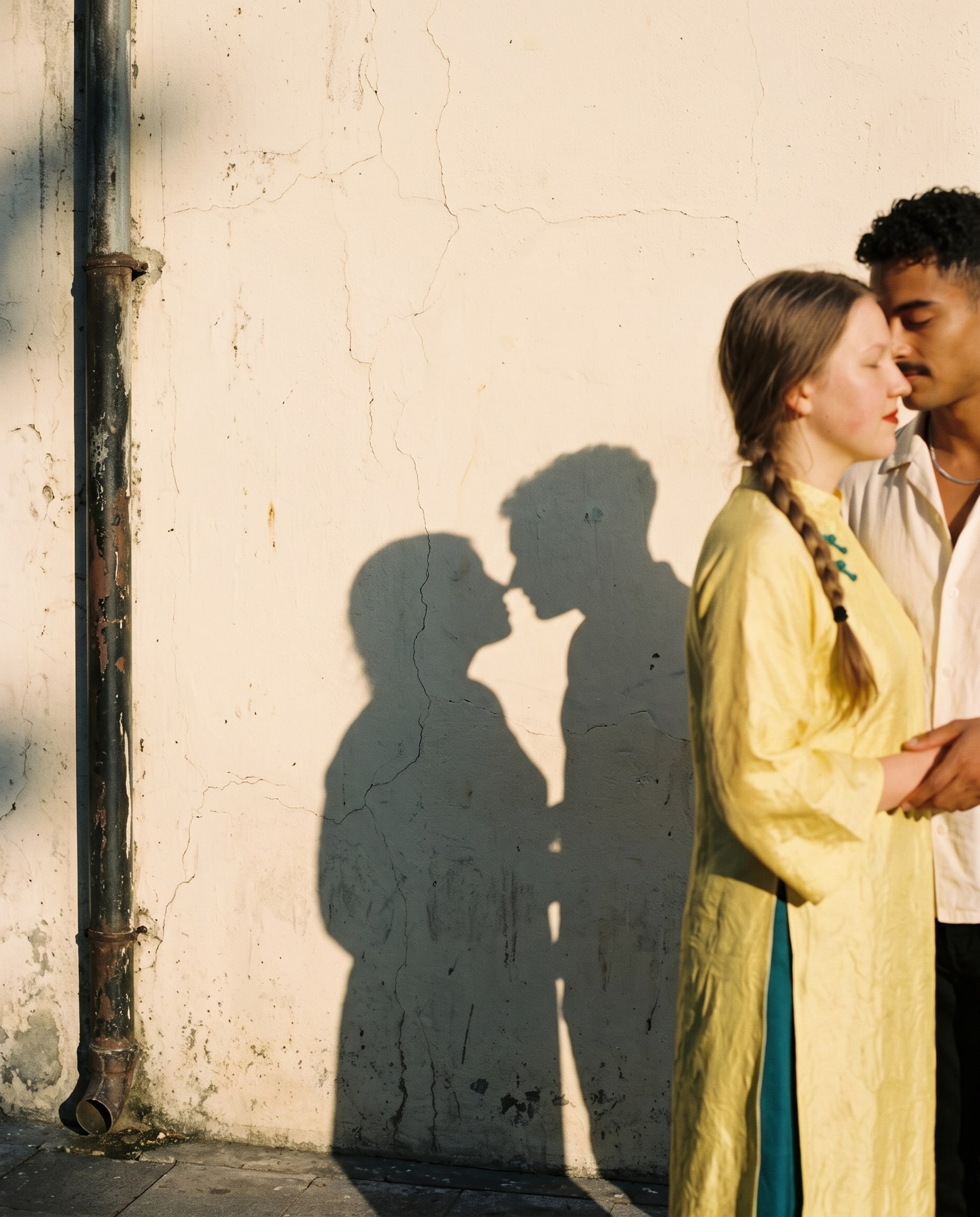
Neutrals are safest, but not all neutrals are equal on camera. Cream, ivory, and warm beige read clean against Hanoi's yellow-grey colonial walls; cool greys and taupe blend in and disappear.
We've dressed hundreds of guests for vacation and solo photoshoots and learned that off-white works everywhere. Cream (not pure white—that blows out in sun) pairs with almost any accent and doesn't fight the background. Warm caramel and honey tones photograph richer than grey, especially in morning light. Cool taupe and greige sound modern but vanish against the aged plaster and stonework that make Hanoi's streets photogenic.
Here's the test: does the fabric have warmth (yellow, red, brown undertone) or coolness (blue, grey undertone)? Hanoi's architecture is warm. Match the warmth, and your outfit frames the scene. Fight it, and you look miscast.
Fabric weight matters too. A heavy linen cream pantsuit holds texture and depth. A thin silk cream blouse can look washed-out. Touch samples before you commit—synthetic fabrics flatten under sun, while natural fibers (cotton, linen, silk blends) photograph with dimension.
What Jewel Tones Work, and When?
Emerald, sapphire, rust, and deep plum are Hanoi's best-kept secret for photoshoots. These tones pop against the faded backdrop, but only in strong, clear light.
We reserve jewel-tone outfits for morning or late afternoon shoots, never midday. A deep emerald áo dài under the shade of the French Quarter's shuttered windows reads like luxury; in noon sun on a traffic-heavy street, it looks heavy and dark. Sapphire works beautifully if you shoot near water—Hoan Kiem Lake, the Red River banks, or the ornamental ponds near the Temple of Literature—because the color echoes the water and creates cohesion.
Rust and terracotta are our secret weapon for Hanoi shoots. They're warm, they're earthy, and the city's own walls echo them. A rust linen dress feels native, not foreign. It photographs warm without appearing orange, and it flatters most skin tones across 2–3 hours as light changes.
The trap: saturation. A neon-bright jewel tone looks synthetic on camera. Reach for deep, muted versions—forest green instead of kelly, navy instead of cobalt, rust instead of orange. If the fabric looks slightly dusty or aged to your eye, it will photograph as rich and intentional.
How to Build a 3-Piece Outfit Stack That Works All Session
We always tell guests: bring one primary outfit, one accent layer, one backup option. This lets us adapt to changing light and location without you feeling repetitive in photos.
Primary outfit: This is your anchor—the thing you feel most confident in. For most of our guests, it's a tailored dress, a silk áo dài, or a neutral pantsuit. Pick one color, one cohesive fabric. Avoid bold patterns (they tire the eye across 100+ photos) and clashing textures (silk + wool + velvet in one look reads chaotic).
Accent layer: A scarf, blazer, or shawl in a contrasting or complementary tone. If your primary is neutral, use this to introduce jewel tone or warmth. If your primary is jewel tone, layer a neutral or metallic accent. This layer lets us reframe you for different backdrops—Hoan Kiem Lake needs different energy than a narrow alley on Hang Buom Street.
Backup option: Honestly, this saves the shoot. A second dress or a change of shirt means if light turns harsh or a location doesn't suit your primary color, we pivoting within 10 minutes instead of reshooting. We've had guests arrive in a color they loved in their apartment's lighting only to discover it clashes with the backdrop. The backup lets us adapt without frustration.
| Outfit Layer | Best For | Color Rule | Practical Notes |
|---|---|---|---|
| Primary outfit | Main location block (40 min) | One core tone, neutrals or jewels—not both | Wear shoes you can walk in for 20+ min |
| Accent layer | Transition between locations | Contrasts primary; shows as detail/full change | Shawls photograph better than heavy coats |
| Backup option | Harsh light or mismatched backdrop | Swap primary if color feels wrong on test shot | Keep it packed in studio car, not on foot |
Fabrics matter enormously. We see guests arrive in wrinkled cotton or stretchy polyester expecting camera magic. Cotton and linen wrinkle visibly (bring a steamer or hang overnight). Polyester blends don't breathe in Hanoi heat (36–38 °C, April–September) and show sweat. Silk, linen-cotton blends, and structured cotton hold shape through 2–3 hours. Ask us which fabrics work before you pack.
Color Combos We See Work (and Which Ones Fail)
After hundreds of shoots across Hanoi—the Old Quarter, the French Quarter, Truc Bach Lake, the Temple of Literature, Hoan Kiem Park—we've built mental maps of what combinations sing.
Cream + emerald. Warm neutral base, jewel accent. Works in any light. This is our most recommended pair. Cream reads clean and timeless; emerald adds richness without looking costumey. Photograph together: cream clothing, emerald scarf or blazer.
Caramel + sapphire. Warm neutral + cool jewel tone. Trickier than cream + emerald, but stunning if your skin tone has warm undertones. The pairing feels intentional and modern. Test this before your shoot if you're not sure.
Rust + cream. Both warm, both earthy. If you want subtle richness without contrast, this works—but it photographs as muted. Best if fabric texture is high (linen, raw silk). Avoid if both pieces are flat, thin fabric; they'll read as one pale, indistinct color.
Sage + warm grey. Both cool-toned, both muted. This looks elegant in photos, but it's risky for skin tones with warm undertones (it can cast you as sallow). If you have cool undertones, this pairs beautifully with silver jewelry and works in shade or overcast light.
What fails: Pastels together (pale pink + pale blue reads washed-out), jewel tones clashing (emerald + sapphire in equal amounts reads confused), very warm + very cool without a neutral bridge (hot terracotta + icy lavender looks jarring), and small prints with large prints in the same outfit (busy, chaotic in photos).
The rule we follow: one tone is dominant, one is accent. If they're equal in saturation and area, the eye doesn't know where to land.
See packages and prices on vietnamphotoshoot.com
What to Check Before You Buy or Pack Your Outfit
This is where small decisions prevent reshoot disasters. We've compiled a real checklist from sessions where guests wished they'd known this before arrival.
Fabric check. Touch it. Does it hold shape after sitting in a car for 20 minutes? Does it show wrinkles? Hold a sample in noon sunlight and in shade. How does color shift? Synthetic materials often flatten; natural blends photograph richer. Ask the shop: "Will this photograph well in bright sunlight?" Most won't know, so test yourself.
Fit check. You'll move, climb steps, sit in cars, stand on tilted alley pavement. Tight waistbands and restrictive sleeves show in posture. Wear the outfit for 2–3 hours before your shoot if possible. Can you breathe? Can you raise your arms for a candid embrace? Can you walk on uneven ground without stumbling? If not, adjust before the session.
Shoe check. Hanoi's Old Quarter streets are centuries old. They're uneven, sometimes slippery, often narrow. Heels work for short location blocks (10–15 minutes), but walking 20+ minutes in heels is visible pain. We often shoot shoes off near water or in doorways. Bring comfortable backup shoes you don't mind wearing on camera.
Wrinkle and care. Linen wrinkles dramatically. If you're packing, hang the outfit in a shower overnight and the steam will release most wrinkles. Cotton can be refreshed with a travel steamer (ask your hotel). Silk sometimes needs touch-up ironing. Plan for this before your shoot day.
Undergarments. Visible panty lines, bra straps, or bunching kills the shot. Wear seamless or nude options. Padding and shaping should be invisible—we can see it on camera even if you can't see it in the mirror.
Jewelry and accessories. Less is more. A statement necklace, earrings, or bracelet in silver or gold works. Multiple pieces compete for attention and can look costume-y. We usually advise: pick jewelry that doesn't jingle (sound picks up on some video playback) and doesn't catch sunlight in a distracting way.
Before your shoot, send us a photo of your outfit on your phone via WhatsApp. We can spot color or fit issues and suggest tweaks. Most of our guests do this, and it's prevented last-minute scrambles.
What Makes a Color Work for Your Skin Tone?
This is personal, but there are quick tests. Hold fabric swatches near your face in natural light. Does the color brighten your eyes or does it cast a shadow under your chin? Warm undertones (most East Asian, South Asian, and Latinx skin) usually photograph better in warm colors (cream, caramel, rust, warm jewel tones). Cool undertones (some East Asian, Northern European, African skin) sometimes photograph better in cool tones (cool grey, sapphire, jewel tones without warmth). But rules blur fast in photography—strong makeup and confidence outweigh the theory.
We guide our couple photoshoot guests this way: if you feel beautiful in the color, you are. The camera reads confidence and presence more than color theory. That said, test in natural light, not indoor artificial light—it lies about color temperature.
What to Check Before You Buy or Pack Your Outfit
Fabric sample touch-test: Does it hold shape? Will it wrinkle? Does color shift in bright sun vs. shade?
Fit and movement check: Wear it for 2–3 hours before the shoot. Can you raise your arms? Climb steps? Sit and stand without discomfort?
Shoe suitability: Hanoi's streets are old and uneven. Heels work for 10–15 minutes, not hours. Bring comfortable backup shoes.
Undergarment invisibility: No visible panty lines, bra straps, or bunching. Use seamless or nude options.
Wrinkle readiness: Linen wrinkles heavily (steam overnight). Cotton needs a travel steamer. Silk may need touch-up ironing.
Jewelry restraint: One statement piece (necklace, bracelet, earrings) in silver or gold. Multiple pieces compete for attention.
Send WhatsApp preview: Snap a photo of the outfit in natural light and send it to us 24 hours before your shoot. We'll spot color, fit, or backdrop clashes and suggest tweaks.
How We Adapt Your Color Choice on the Day
Real talk: things change. A location you loved in a scout photo might feel cramped at 2 p.m. with crowds. Light might be harsher than forecast. Your primary outfit might photograph differently than you imagined.
We bring a second eye. Our photographers and stylists see thousands of outfits across Hanoi's streets. When we arrive at the first location, we'll take a test shot and show you—not to critique, but to adapt. If your cream outfit is reading too pale under the noon light on Hang Buom Street, we suggest the emerald accent layer to frame your face instead. If the rust dress is too warm against the pink-ochre wall, we move to a shadier alley where rust glows instead of clashing.
This is why we ask guests to pack layers. It's not overthinking—it's adapting to conditions you can't predict from home.
For vacation and solo photoshoots, we also work with what we call "location color theory." Hanoi Kiem Lake's blue-grey water looks best with warm or jewel-tone outfits. The Temple of Literature's dark wood and green gardens suit creams and cool jewel tones. The French Quarter's yellow colonial walls sing with sapphire, rust, or warm neutrals. As we move between locations in a 2–3 hour session, your outfit might shift from primary to accent or vice versa—not a full wardrobe change, but a layering adjustment that reframes you against the new backdrop.
We'll WhatsApp you the test shot before we move on. If it doesn't feel right, we troubleshoot together.
For outfit color palette advice specific to your skin tone, light preference, and Hanoi location, reach out on WhatsApp. We'll help you nail the choice before you arrive.
Pages from our team you may need
FAQ
What color shows best in Hanoi's Old Quarter narrow alleys?
Jewel tones (emerald, sapphire, rust) and warm neutrals (cream, caramel) photograph well in shade. Pastels wash out. We usually pair a neutral base with a jewel-tone accent layer so you adapt as light changes between tight alleys and open squares.
Do I need to match my outfit color to Hoan Kiem Lake's water?
Not strictly, but it helps. Sapphire and blue-grey tones echo the water and create visual cohesion. Warm neutrals and rust also work beautifully against the blue backdrop. Avoid very cool greys—they blend into the water instead of standing out. Test your choice near the lake before the full shoot if possible.
Can I wear white for a Hanoi photoshoot?
Pure white blows out (overexposes) in midday sun. Off-white, cream, or ivory work better and read cleaner on camera. If your heart is set on white, shoot early morning (6–8 a.m.) or late afternoon (4–6 p.m.) when light is softer, or choose shade-heavy locations like covered markets or French Quarter courtyards.
My outfit wrinkles badly—how do I fix it the morning of the shoot?
Hang it in a steamy bathroom overnight (close the bathroom door and run hot water for 10 minutes, then hang the garment for 2+ hours). Most wrinkles release without ironing. Cotton and linen respond best to steam. If you have access to a travel steamer at your hotel, use it 30 minutes before leaving. Synthetic fabrics hold wrinkles less, but they also photograph flatter.
Should I wear jewelry in bright colors to match my outfit?
Keep jewelry metallic (silver, gold, rose gold) or simple. Bright-colored jewelry (colored gemstones, enamel, plastic) competes with your outfit and can look costume-y in photos. A simple silver bracelet, gold earrings, or a delicate necklace lets your outfit and the Hanoi backdrop be the stars.
What if I get sweaty in my outfit during the session?
Bring a small absorbent towel and a face blotter (oil-blotting sheets). We'll take a 5-minute break between location blocks so you can cool down and refresh. Sweat shows in close-ups, especially on silk. Cotton and linen blends breathe better in Hanoi heat. Avoid very fitted or thick fabrics if you're sensitive to heat.
Can I wear a patterned outfit for a Hanoi photoshoot?
Small, subtle patterns (fine stripes, delicate florals, geometric checks) work. Large, bold patterns tire the eye across 100+ photos and compete with the scenic backdrop. We usually advise a patterned accent piece (scarf, blazer) over a solid primary outfit so patterns don't overwhelm the composition. Ask us via WhatsApp if you're unsure about a specific print.
How do I know if a color I love at home will photograph well in Hanoi's light?
Test it in natural sunlight outdoors, not under indoor lights (which are warmer/yellower and lie about color). Hold fabric swatches in shade, under sun, and at different angles. Photograph a sample in strong light on your phone. If it looks good under those conditions, it'll likely work in Hanoi. When you've chosen, send us a WhatsApp photo of the outfit in natural light 24 hours before your shoot so we can advise on fit and backdrop compatibility.
Special Concept Shoot
Inclusions, prices and booking are on our booking site.
FAQ
What color shows best in Hanoi's Old Quarter narrow alleys?
Jewel tones (emerald, sapphire, rust) and warm neutrals (cream, caramel) photograph well in shade. Pastels wash out. We usually pair a neutral base with a jewel-tone accent layer so you adapt as light changes between tight alleys and open squares.
Do I need to match my outfit color to Hoan Kiem Lake's water?
Not strictly, but it helps. Sapphire and blue-grey tones echo the water and create visual cohesion. Warm neutrals and rust also work beautifully against the blue backdrop. Avoid very cool greys—they blend into the water instead of standing out. Test your choice near the lake before the full shoot if possible.
Can I wear white for a Hanoi photoshoot?
Pure white blows out (overexposes) in midday sun. Off-white, cream, or ivory work better and read cleaner on camera. If your heart is set on white, shoot early morning (6–8 a.m.) or late afternoon (4–6 p.m.) when light is softer, or choose shade-heavy locations like covered markets or French Quarter courtyards.
My outfit wrinkles badly—how do I fix it the morning of the shoot?
Hang it in a steamy bathroom overnight (close the bathroom door and run hot water for 10 minutes, then hang the garment for 2+ hours). Most wrinkles release without ironing. Cotton and linen respond best to steam. If you have access to a travel steamer at your hotel, use it 30 minutes before leaving. Synthetic fabrics hold wrinkles less, but they also photograph flatter.
Should I wear jewelry in bright colors to match my outfit?
Keep jewelry metallic (silver, gold, rose gold) or simple. Bright-colored jewelry (colored gemstones, enamel, plastic) competes with your outfit and can look costume-y in photos. A simple silver bracelet, gold earrings, or a delicate necklace lets your outfit and the Hanoi backdrop be the stars.
What if I get sweaty in my outfit during the session?
Bring a small absorbent towel and a face blotter (oil-blotting sheets). We'll take a 5-minute break between location blocks so you can cool down and refresh. Sweat shows in close-ups, especially on silk. Cotton and linen blends breathe better in Hanoi heat. Avoid very fitted or thick fabrics if you're sensitive to heat.
Can I wear a patterned outfit for a Hanoi photoshoot?
Small, subtle patterns (fine stripes, delicate florals, geometric checks) work. Large, bold patterns tire the eye across 100+ photos and compete with the scenic backdrop. We usually advise a patterned accent piece (scarf, blazer) over a solid primary outfit so patterns don't overwhelm the composition. Ask us via WhatsApp if you're unsure about a specific print.
How do I know if a color I love at home will photograph well in Hanoi's light?
Test it in natural sunlight outdoors, not under indoor lights (which are warmer/yellower and lie about color). Hold fabric swatches in shade, under sun, and at different angles. Photograph a sample in strong light on your phone. If it looks good under those conditions, it'll likely work in Hanoi. When you've chosen, send us a WhatsApp photo of the outfit in natural light 24 hours before your shoot so we can advise on fit and backdrop compatibility.
More from the team
Fishing Village Concept Photoshoot Vietnam: How We Shoot It
A fishing village photoshoot captures Vietnam's working waterfront—nets, boats, morning light, real people. We share how our team runs these shoots from location scout to final delivery.
Cruise Stop Saigon Photoshoot at Phu My Port: Studio Guide
Cruise passengers have 8–12 hours in Saigon. We photograph guests right from Phu My Port, handling transport and changing rooms so you step off the ship and into an áo dài or couple session.
Cinematic Film Look Photoshoot Vietnam: Our Studio Guide
Cinematic film aesthetics—muted colour grading, shallow depth of field, story-driven composition—have become the most requested look across our shoots in 2026. We run you through how we build this style on set, what goes wrong, and which packages genuinely deliver it.