 Cáo Studio
Home › Blog › Special Concept Shoot
Studio concept shoots in Hanoi: lighting setups our photographers use
By the Cáo Studio team · Hanoi & Saigon · 2026-10-31
Concept shoots in Hanoi rely on five core lighting setups: key light (main fill), three-point studio rigs, natural window diffusion, reflector-bounce for bounce-back, and mixed ambient-to-flash ratios. Cáo Studio's photographers choose based on location, time of day, and the ao dai or outfit colour. A key light placed 45° left or right at eye level sculpts cheekbones and jaw; three-point adds a rim and back light to separate the subject from background. Window light works best 10–15 metres from a large glass wall in the late morning (08:00–10:30) when sun angle is low and diffused; on overcast days, any window becomes a softbox. Reflectors bounce fill light into shadows—silver for punch, white for subtle. Mixed setups combine natural + flash at 1:1 or 2:1 ratios to hold skin detail and background. Each setup takes 15–20 minutes to dial in; expect test frames to be darker or brighter than you'd guess. Concept shoots typically run 2–3 hours in studio or on location; studio shoots cost less because we control all variables. Outdoor shoots in Hanoi face heat haze mid-day and colour casts under trees. The most common mistake: overpowering ambient light with flash, which kills depth and looks flat. Underexpose slightly, then lift in post—it preserves detail in highlights and shadows. Chat with us on WhatsApp
How do we choose between studio flash and natural light?
Natural light is free, portable, and forgiving on skin tone—but it moves. Studio flash locks the output and lets you work all day at the same brightness. In Hanoi, we shoot concept work in studio on humid or hazy days, and on location near Tay Ho or the Red River when the morning (06:30–09:00) is clear and cool. Natural window light gives soft, flattering edges; studio flash gives precision. If the client wants dreamy, we use window + one reflector. If they want defined shadows and high contrast, we bring a 600Ws monolight and softbox. The choice is not about which is "better"—it's about the mood. On location shoots that run into midday, we switch to mixed mode: natural as fill, flash as key. This cuts contrast, protects highlights, and keeps the background exposed. Most concept shoots we book include both, depending on the hour and the concept.
See packages and prices on vietnamphotoshoot.com
Why do we place the main light 45 degrees, not straight on?
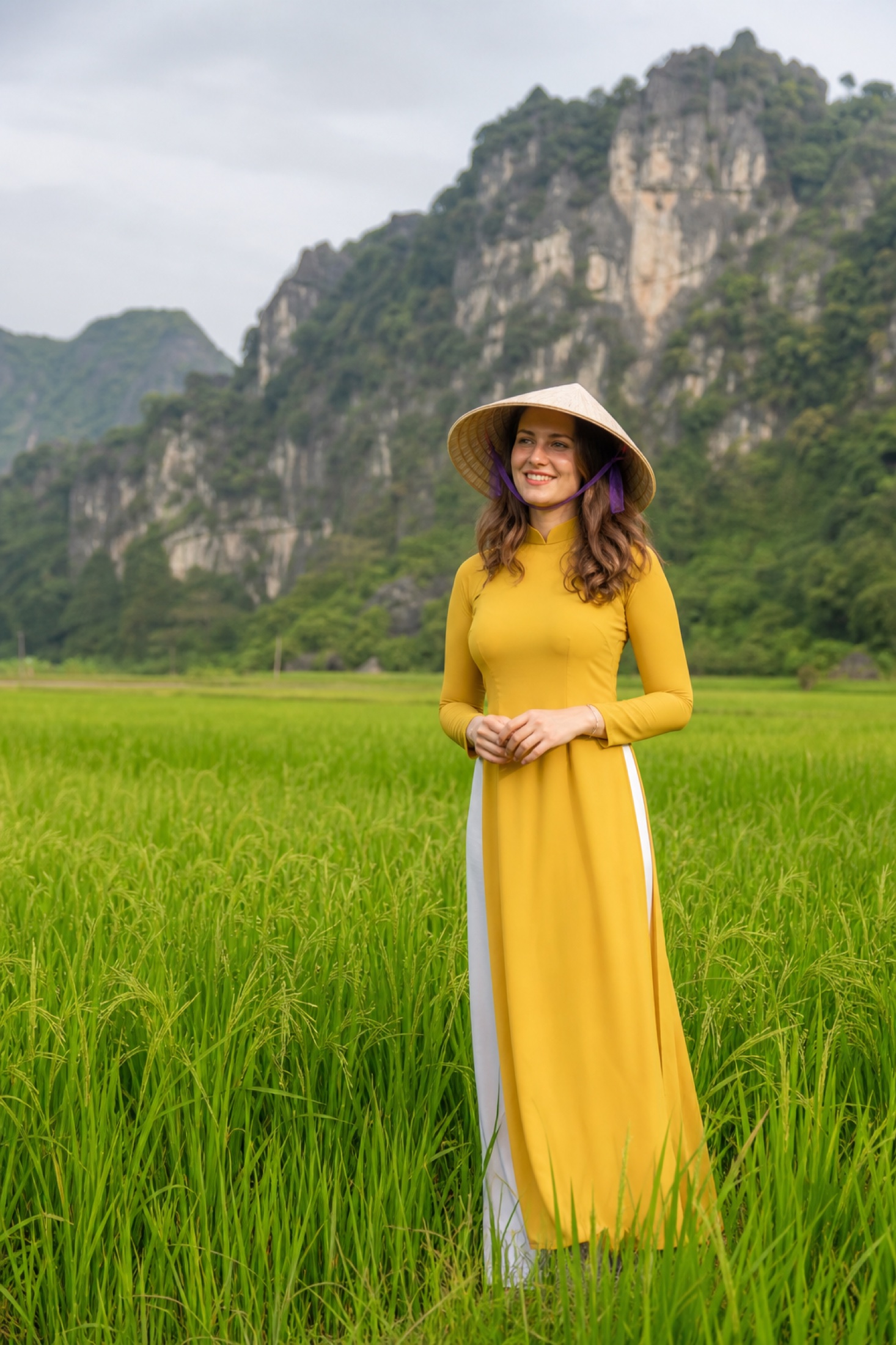
Straight-on light flattens the face and erases dimension. A 45° angle (left or right, high or low) sculpts cheekbones, defines the jaw, and creates a shadow that tells the viewer the face has shape. This is true for every skin tone and age. We place the key light 30–45 cm above eye level, aimed down and across; this mirrors how flattering outdoor light hits the face in late afternoon. If the client has a strong nose or angular jaw, we angle the light away from their preferred profile; if they're round-faced, we angle toward the fuller side to create shadow and taper. The reflector on the opposite side fills the shadow to 60–80% of the key light—not full brightness, or the shadow disappears and you lose that sculpting. Test frames at 15–20 stops teach us the exact angle; most photographers skip this and regret it. A 45° setup takes 8–10 minutes to lock in. Straight-on takes 30 seconds and fails every time.
What is a three-point rig and when does Hanoi concept work need it?
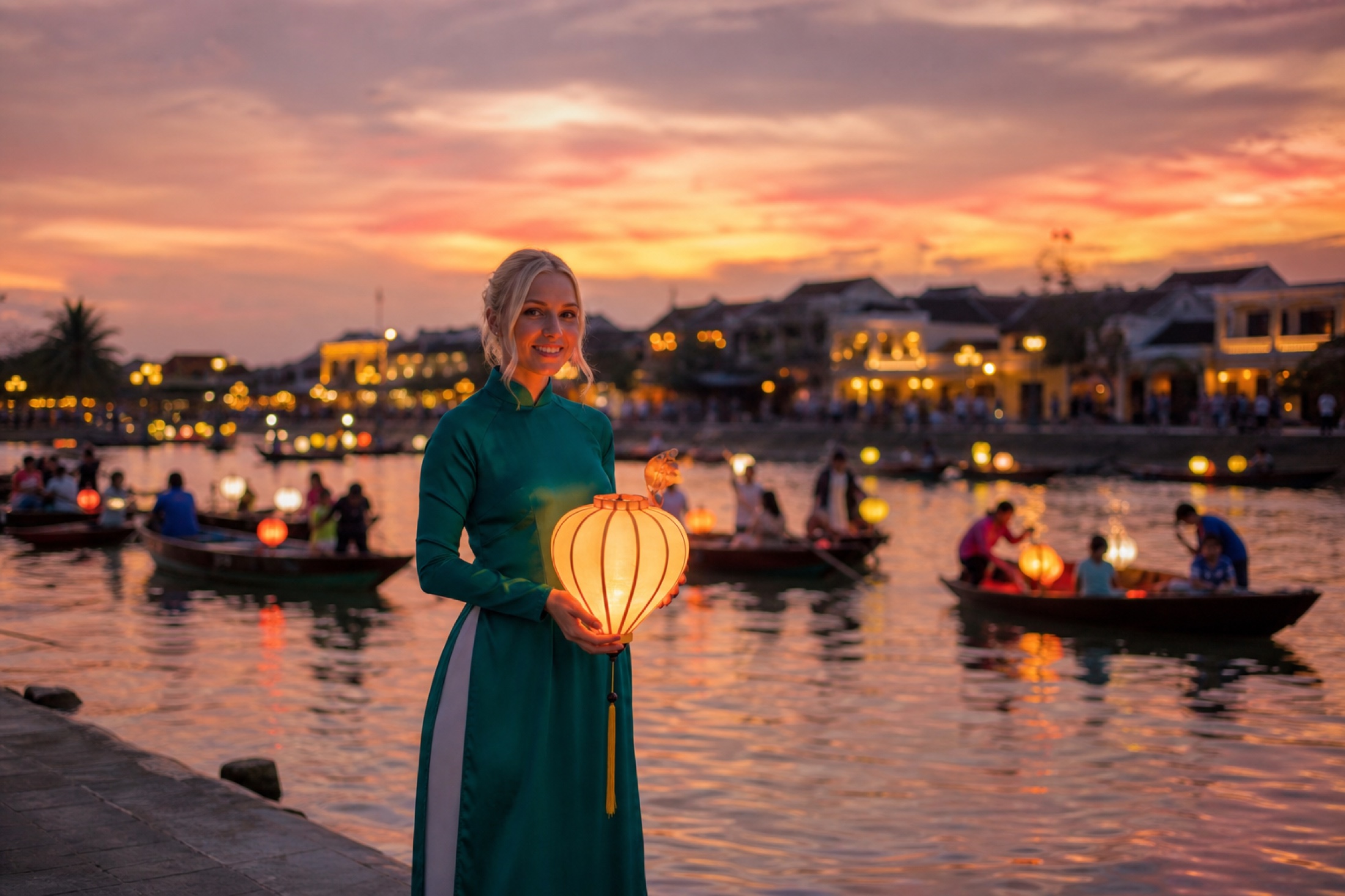
A three-point rig is key light + fill/reflector + rim or back light. The rim light sits behind and to the side, skimming the hair and shoulder edge to separate the subject from the background. This is essential for concept shoots against textured walls, gardens, or hoi an's lantern districts—places where subject and background would otherwise blend. The back light can be a second monolight (600Ws or less) or a reflector held by an assistant. Key light stays at 45°; rim light sits 60–90° to the back, at shoulder or ear height. We dial the rim light to 30–50% of the key light brightness; too bright and the subject looks backlit and unnatural. The three-point rig adds 12–15 minutes to setup and requires either a second light or a patient assistant. It's standard for our concept shoot packages when the backdrop needs definition. Without a rim light, indoor concept work against white or textured walls often fails—the subject melts into the background, and the image feels two-dimensional.
How do we handle Hanoi's humid air and afternoon heat haze?
Heat haze above concrete creates shimmer and washes out contrast after 11:00 in summer. We solve this by shooting early (05:30–08:30), when the Red River embankment and Tay Ho lake are mist-soft and cool. Humidity doesn't affect light—it affects makeup longevity and the way the camera focuses through thick air. Autofocus can hunt if there's dust or haze; we switch to manual focus after the first 10 frames and mark the distance. Skin appears shinier in humid conditions, so we use a powder-matte foundation over primer and blot every 20 minutes. We also bring a small bounce reflector to kill glare on the forehead and cheekbones. Concept shoots booked for 14:00–16:00 in June–August are risky; we recommend early morning or late afternoon (17:00–19:00) when haze lifts and angle softens. If the client insists on midday, we move to deep shade under trees (but watch for green colour cast) or into a covered market or warehouse with large doors for diffused sidelight. Hanoi's old quarter—Hoan Kiem, Ba Trieu—has narrow alleys and shopfronts that work well in summer because overhead cover creates soft, even light.
What is the reflector-bounce ratio and why does it matter?
A reflector placed opposite the key light fills shadow and reduces contrast. A 1:1 ratio (reflector bounce = key light brightness) gives flat, shadowless light—good for beauty or editorial, bad for concept work that needs mood. A 2:1 ratio (key light twice the reflector) keeps shadow definition while softening it—this is our standard for most Hanoi concept shoots. A 3:1 ratio (key light three times brighter) keeps strong shadow and drama—good for moody, high-contrast concepts. We meter shadow and key with a light meter, or we eyeball it: if the shadow is too black, the ratio is too high; if it's invisible, the ratio is too low. White reflectors are subtle and natural; silver reflectors punch and add contrast. Gold reflectors warm the fill and flatter older clients. For concept shoots in our studios or on-location sessions, we always bring a 5-in-1 reflector (white, silver, gold, and diffuser). The reflector-bounce ratio is the easiest way to control mood without changing the main light. Most amateurs skip the reflector and wonder why one side of the face is black. This is the single most common fix we make in the first five minutes of setup.
| Lighting Rig | Key Light Angle | Fill Ratio | Mood | Setup Time | Best For |
|---|---|---|---|---|---|
| Key + reflector | 45° high | 2:1 | Natural, flattering | 10 min | Studio portraits, indoor concept |
| Three-point | 45° high + 60° rim | 2:1 key, 40% rim | Defined, editorial | 20 min | Textured backgrounds, separation needed |
| Window + reflector | Perpendicular to glass | 2:1 to 3:1 | Soft, moody | 5 min | Morning shoots, dreamy concepts |
| High-key (beauty) | 45° + overhead fill | 1:1 or fill overhead | Bright, even | 12 min | Makeup focus, beauty shoots |
| Mixed ambient + flash | 45° key flash + ambient | 1:1 ratio | Balanced, natural | 15 min | Outdoor midday, holds background |
What goes wrong in Hanoi concept shoots and how do we fix it?
Underexposed frames happen when we overestimate flash power or meter in shadow. We meter in the highlight (the cheek or forehead where light is brightest), not in shadow. If the histogram is bunched to the left, we open aperture by half a stop or increase flash power. Overexposed frames—blown-out highlights—happen when we use too much reflector fill or flash too close to the subject. We reduce reflector distance to 60 cm or further, or dial flash down to 1/2 or 1/4 power. Skin colour shifts happen under tungsten (warm) or HMI (cool) sources mixed with daylight. We use a grey card and white-balance to the card in the first few frames, then lock white balance. We never rely on auto white balance in concept work. Shadows too dark happen when the reflector is too far or too small; we move it to arm's length and use the silver side. Hair blown out (backlit rim too bright) happens when we over-emphasize the rim light; we keep it to 30–40% of key brightness. Flat, emotionless frames happen when the key light is too high or too straight-on; we angle it 45° and lower it to eye level. These fixes are standard in our makeup and hair session planning—our stylists know the lighting before they apply makeup, so they choose textures and colours that work with the rig.
How do we nail window light in Hanoi without a studio?
Large north-facing windows are ideal—they never get direct sun and give soft, consistent light all morning. South and west windows work only before 10:00 or after 16:00; direct sun at midday is too harsh. We position the subject 1–2 metres from the window (the closer, the softer the shadow transition). We place a white reflector or foam board 2–3 metres away on the opposite side to bounce fill back into shadow. Sheer white curtains diffuse direct sun; heavy drapes block too much light. In Hanoi's Tay Ho district and around Truc Bach Lake, we scout locations for large east-facing windows that give warm, low-angle light 06:30–08:00. The Red River's northern bank has several old villas with floor-to-ceiling windows perfect for concept work. Overcast days are our secret weapon—the whole sky becomes a softbox, and the client can move freely without chasing the light. We shoot concept work indoors on overcast mornings and trust the window entirely. No reflector needed; the ambient light is so even that shadow ratio is already 1:1 to 2:1. This is why we often recommend booking Hanoi concept shoots for overcast Mondays and Tuesdays in winter (November–February).
What to check before you book a concept shoot
Before confirming, ask yourself: Do I know the concept (fashion, editorial, beauty, lifestyle)? Have I chosen the location (studio, outdoor, specific landmark)? Do I know the time of day and season? Do I have outfits or props picked? This lets our team prepare the right rig and avoid surprises. Tell us if you need a specific mood (moody and dark, bright and airy, high-contrast). If you're unsure, send reference images—our photographers will build a lighting plan from them. Confirm how many outfit changes; each change costs 10–15 minutes of setup time. If you want a pre-wedding concept shoot or couple session, confirm whether you want studio light (controlled, precise) or natural light (soft, romantic). Mixed rigs take longer and cost more setup time. Budget 2–3 hours for any concept shoot; 1 hour is too tight. Bring a light meter or download a light meter app; it speeds up setup by 50%. Trust our team to nail the lighting—we've lit thousands of concept frames in Hanoi studios and on location. The more information you share upfront, the fewer test frames we waste and the faster we deliver the mood you imagined.
See packages and prices on vietnamphotoshoot.com
Why Cáo Studio's Hanoi team can execute these rigs in any location
We've lit concept shoots in hotel rooms (tight spaces need small reflectors and lower key-light angles), rooftop gardens (wind moves reflectors and fills, so we sandbag or use assistants), old-quarter alleyways (narrow, green-tinted walls need white balance lock and slightly higher fill), lakeside venues (water reflects and intensifies light—watch for flare), and indoor markets (tungsten overhead sources demand colour correction gels). Each location teaches us something about Hanoi's light. We carry modular gear—softboxes fold, light stands lock tight, and reflectors roll into bags. Our makeup and hair team prepares makeup formulas that hold under heat and humidity. Our Hanoi studio is equipped with a three-point rig and a full colour-corrected wall for backup. We've shot concept work for ao dai photoshoots, couple sessions, and family portraits—each has a lighting standard we know and execute fast. If you're booking a concept shoot in Hanoi, you're working with a team that owns the city's light challenges and has solved them hundreds of times. The goal is not to fight Hanoi's light; it's to use it, and when nature doesn't cooperate, to build it.
FAQ
Can we do a concept shoot outdoors at noon in Hanoi?
Yes, but expect harsh shadows and blown-out sky. Move to deep shade (under large trees or building overhangs), use a reflector for fill, and dial flash to 1–2 power to fill shadow without looking artificial. Better: shoot 06:30–09:00 or 17:00–19:00 when angle is low and soft.
What's the minimum gear needed for a professional concept rig?
One monolight (600Ws or less), one softbox (80 cm or larger), one light stand, one white reflector, and a light meter app. This costs a quoted pricetotal. Add a second light and rim kit fora quoted pricemore. Studio rental in Hanoi isa quoted priceper hour with gear included.
How long does window light stay usable in Hanoi during winter?
North-facing windows stay soft and even from 06:00 to 16:00 (10 hours) November–February. East-facing windows work 06:00–10:00 (4 hours). South-facing only before 09:00 or after 17:00. Overcast days extend all windows by 2–3 hours.
If I hire Cáo Studio for a concept shoot, will you scout the location first?
Yes, we scout on WhatsApp via photos and video, or in person if you're in Hanoi. We measure light direction, identify power outlets, note reflective surfaces, and confirm weather patterns for your booked date. This is included in our special concept shoot package.
What reflector colour works best for skin tone in Hanoi's light?
White works for all skin tones and is our first choice indoors. Silver punches contrast and suits darker skin tones well. Gold warms and flatters mature or cool skin tones. We bring all three and test in the first five frames.
Special Concept Shoot
Inclusions, prices and booking are on our booking site.
FAQ
Can we do a concept shoot outdoors at noon in Hanoi?
Yes, but expect harsh shadows and blown-out sky. Move to deep shade (under large trees or building overhangs), use a reflector for fill, and dial flash to 1–2 power to fill shadow without looking artificial. Better: shoot 06:30–09:00 or 17:00–19:00 when angle is low and soft.
What's the minimum gear needed for a professional concept rig?
One monolight (600Ws or less), one softbox (80 cm or larger), one light stand, one white reflector, and a light meter app. This costs roughly $400–600 total. Add a second light and rim kit for $300 more. Studio rental in Hanoi is $50–120 per hour with gear included.
How long does window light stay usable in Hanoi during winter?
North-facing windows stay soft and even from 06:00 to 16:00 (10 hours) November–February. East-facing windows work 06:00–10:00 (4 hours). South-facing only before 09:00 or after 17:00. Overcast days extend all windows by 2–3 hours.
If I hire Cáo Studio for a concept shoot, will you scout the location first?
Yes, we scout on WhatsApp via photos and video, or in person if you're in Hanoi. We measure light direction, identify power outlets, note reflective surfaces, and confirm weather patterns for your booked date. This is included in our [special concept shoot package](/go/special-concept).
What reflector colour works best for skin tone in Hanoi's light?
White works for all skin tones and is our first choice indoors. Silver punches contrast and suits darker skin tones well. Gold warms and flatters mature or cool skin tones. We bring all three and test in the first five frames.
More from the team
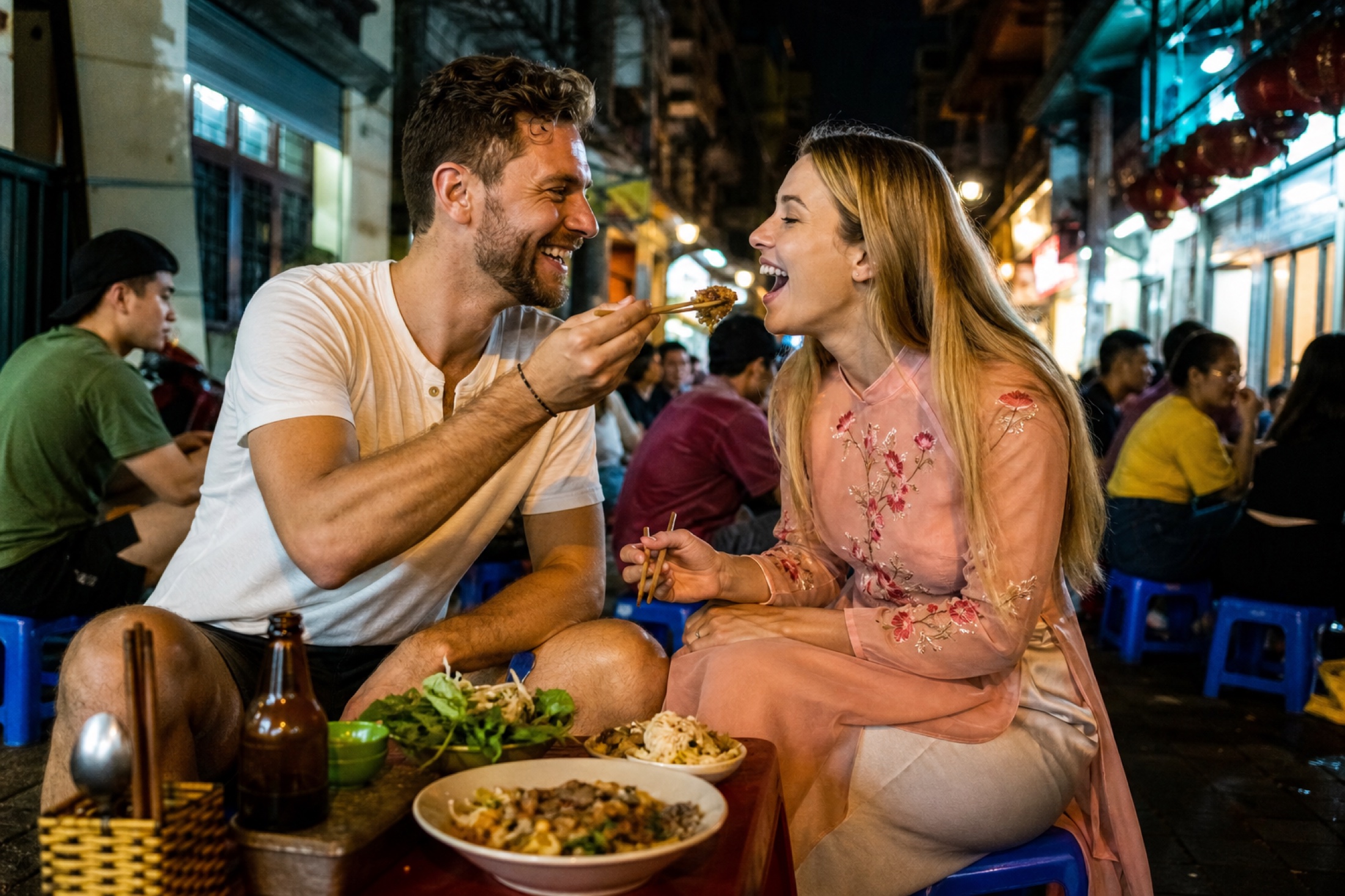
Cosplay and Themed Photoshoots in Vietnam: What We Can Build
Themed and cosplay photoshoots demand skill, location scouting, and clear expectations. We walk through what works in Vietnam, what doesn't, and how to plan yours.
Vespa and ao dai: the Saigon concept shoot explained
A Vespa and ao dai concept shoot is a Saigon-specific photoshoot that blends vintage Italian scooters with Vietnamese traditional dress. We'll walk you through the shoot hour by hour, what the location scout finds, and how to prepare.
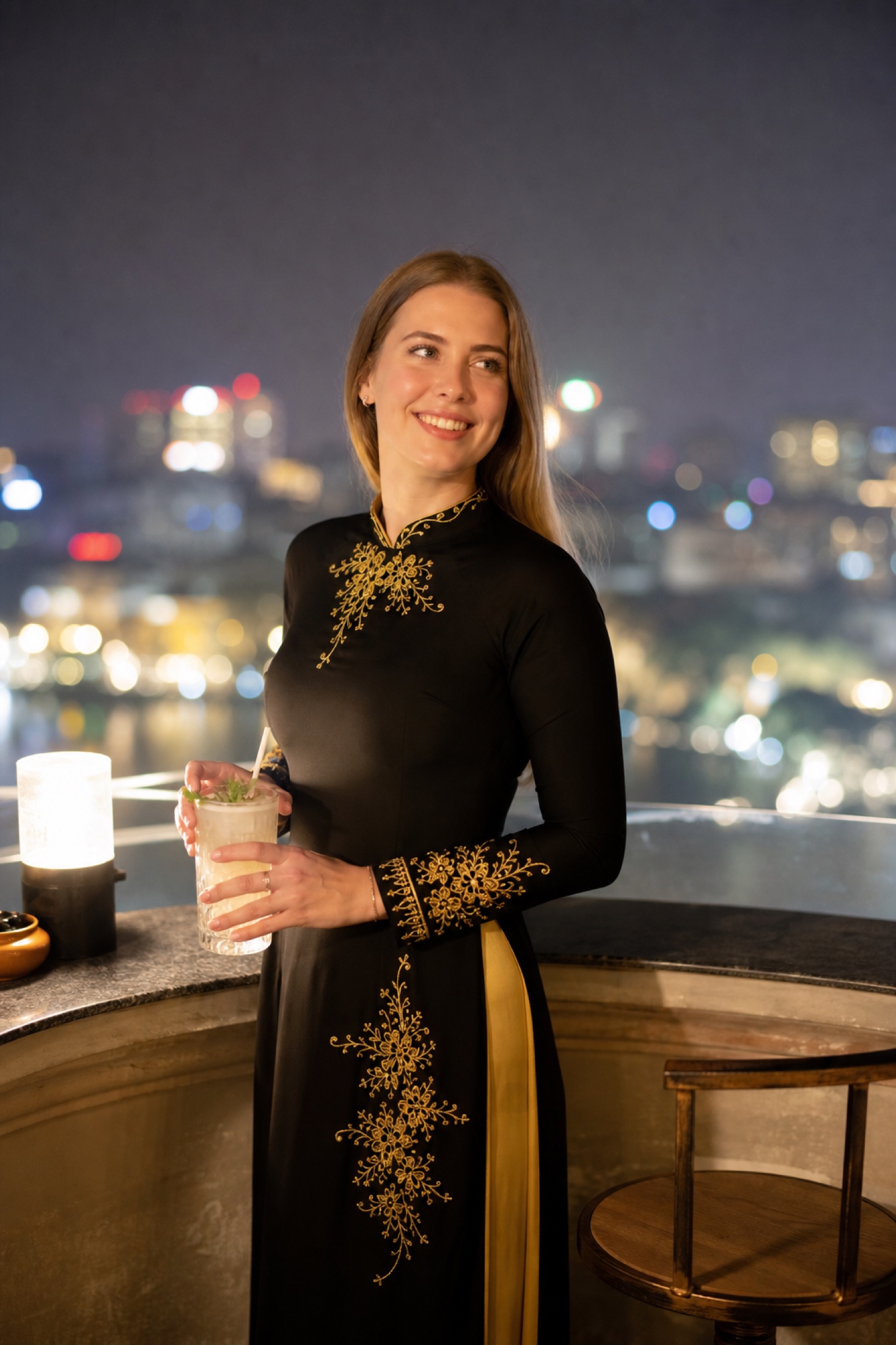
Vintage Hanoi 1960s Concept: Cafés, Props, Photoshoot Guide
Vintage Hanoi concept shoots blend real heritage locations with carefully curated props. We walk through how we build these shoots, what works, and how to book.