 Cáo Studio
Home › Blog › Special Concept Shoot
Sunflower Field Photoshoot Vietnam: Our Studio Guide
By the Cáo Studio team · Hanoi & Saigon · 2026-11-01
A sunflower field photoshoot in Vietnam is a half-day to full-day session in blooming agricultural fields, typically in Ninh Binh (Yen Trang, Tam Diep), Hanoi suburbs, or Hoi An districts. The shoot takes 2–4 hours of active photography with breaks for wardrobe changes and repositioning. Sessions usually start at 5–6 a.m. to catch golden-hour light on the flowers and your outfit. Cáo Studio books you a private field access window (arranged through local farmers or land-use agreements), provides a stylist, makeup artist and photographer, and delivers edited images within 14 days. Shoots work best for couples, families, solo travelers and concept shoots like ao dai or pre-wedding themes. No fixed price per se—your cost depends on team size, field rental, travel to site, and wardrobe; ask our team via WhatsApp for a tailored quote. The main risk: rain ruins both light and field access, so we always have a backup location and reschedule clause in your contract.
We've shot in sunflower fields during peak bloom (August–October in Ninh Binh, July–September in the north) on every weather pattern imaginable. Here's what our team actually does—and what you need to know before you book.
When do sunflower fields bloom in Vietnam and how does that affect booking?
Ninh Binh sunflower fields peak in mid-August through late September; Hanoi suburbs (Yen Hung, Song Phuong) bloom July–August; Hoi An region hills spike in July and again in November. We check the farmer's planting calendar and recent photos every June and September because bloom dates shift 2–3 weeks depending on rain and temperature. If you're arriving in late August, book now—the best fields book out 3–4 weeks ahead because couples and international travelers all want the same 2-week window. One couple from Australia booked us in late July for an early-September shoot in Tam Diep; the flowers were in peak golden stage with still-soft petals, and their ao dai shots were stunning. If you arrive during a low-bloom month (May, June, December), we'll either delay your shoot or pivot to a concept shoot at a different location entirely. Always confirm the field status in writing on WhatsApp before your flight lands—we've had farmers cut flowers early for seeds, which erases the aesthetic in 48 hours.
Chat with us on WhatsApp | See packages and prices on vietnamphotoshoot.com
What happens on the morning of a sunflower field shoot—hour by hour?
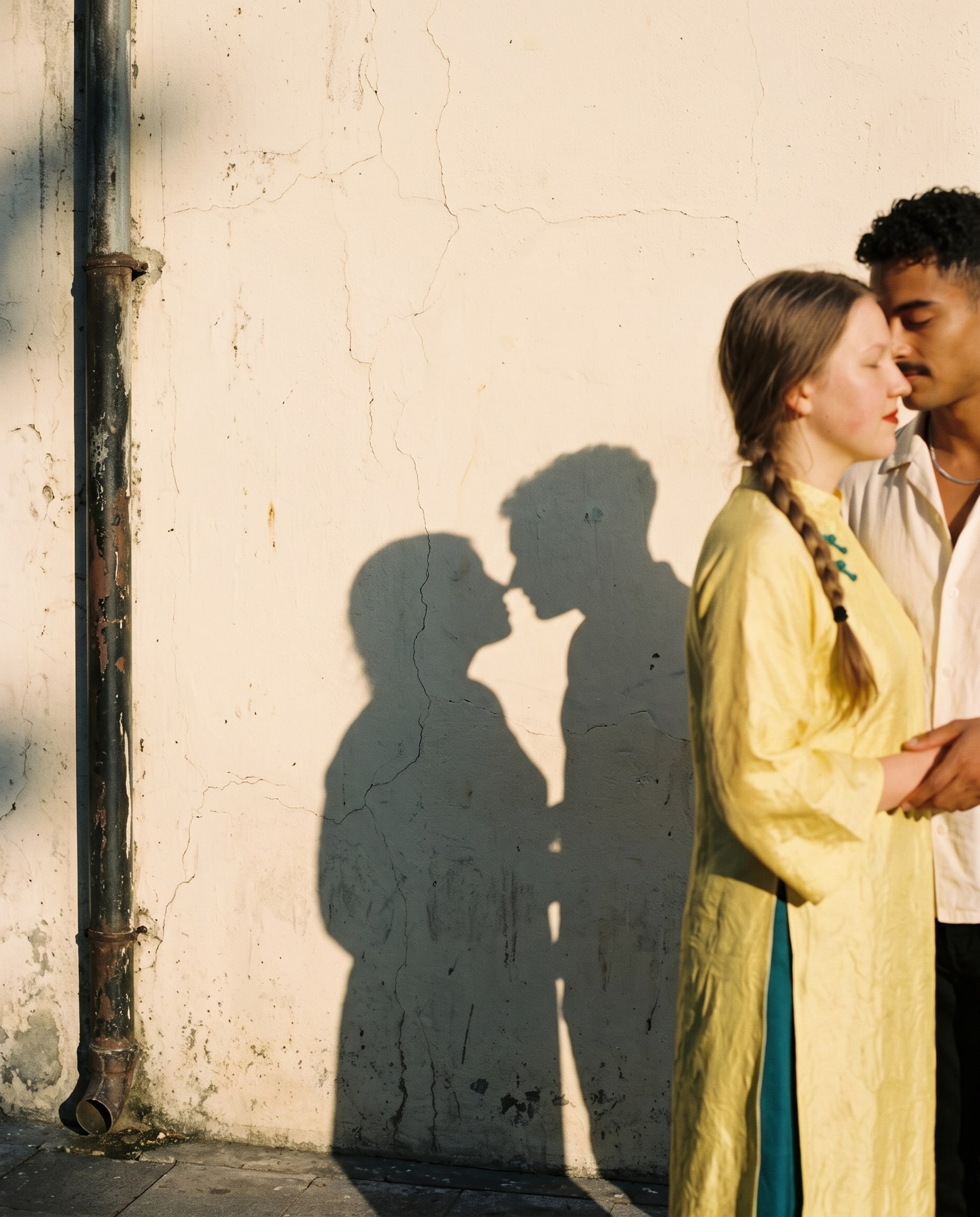
You meet our team at your hotel (if in Hanoi or Saigon) or at a central point (Ninh Binh town) at 4:45 a.m. Our makeup artist does your base and touch-ups in the car or a small guest house near the field—this takes 25–35 minutes depending on the look. Our stylist irons your ao dai or concept outfit while you're in makeup. We arrive at the field by 5:45 a.m., before the sun clears the horizon. The first shot window is 6:00–7:30 a.m.: soft sideways light, minimal shadows, flowers fresh with dew. Around 7:45 a.m., you change into outfit two (if booked) while our photographer scouts for shade and secondary backdrops—a small tree line, a farmer's cottage, or an irrigation canal. By 8:30 a.m., direct sun hardens the light and the field gets hotter; we switch to backlit rim-light shots or move to shade. A typical 4-hour session ends by 9:15–9:30 a.m. in the field, then 30 minutes back to town. We've learned to pack electrolyte drinks, umbrellas for sun, and a small changing tent because modesty and heat matter more than we expected in our first year.
How do we choose between Ninh Binh, Hanoi suburbs and Hoi An for your shoot?
| Location | Best for | Bloom peak | Travel from Hanoi | Our pick when |
|---|---|---|---|---|
| Tam Diep, Ninh Binh | Couples, concept, classic look | Aug–Sep | 2 hours | You want iconic scale and farmer access |
| Yen Trang, Ninh Binh | Families, groups | Aug–Sep | 2 hours | You need wider field, easier parking |
| Hanoi suburbs (Yen Hung) | Solo, short day trip | Jul–Aug | 45 min | You're on a tight schedule, prefer Hanoi base |
| Hoi An foothills | Ao dai, romantic couples | Jul, Nov | 3 hours from Saigon | You're already in central Vietnam |
Ninh Binh dominates because the fields are larger, more reliably maintained by tourism-aware farmers, and the light is consistent—no hills blocking sunrise. Hanoi suburbs save time if you're in the capital and bloom is good, but we've had shoots scrapped there because a farmer harvested early or a second-growth field looked patchy. Hoi An is spectacular for ao dai work because the mountain backdrop and tea plantations create layered depth, but the fields are smaller and bloom is shorter. When a couple books us for a pre-wedding photoshoot with ao dai, we almost always recommend Ninh Binh over Hoi An because the field scale matches the formal styling. When a solo traveler or family session books short notice (10 days), we default to Hanoi suburbs if they're in the north, even though Ninh Binh is more photogenic—logistics win over aesthetics in that case.
What goes wrong in sunflower fields and how do we fix it?
Rain and muddy access: We've arrived at a field only to find a thunderstorm the night before has turned the main path into a muddy creek. Our fix: we scout alternate entry routes (through a neighboring farm, via the long road), wear waterproof boots, and have backup fields within 30 km. If the field is genuinely inaccessible or flooded, we invoke the reschedule clause and shift to a covered concept shoot at a hotel or makeup and hair session in town—never force the shoot in poor conditions.
Wilted or discolored flowers: Mid-September heat sometimes stresses the flowers; petals brown or hang limp by 7:30 a.m. We manage this by (a) shooting earlier (5:15 a.m. instead of 5:45), (b) using backlit and rim-light angles to hide imperfect blooms, and (c) reframing shots to isolate the healthiest patches rather than panoramic wide shots.
Unexpected crowds: A local school group or another photographer crew arrives at "your" field. We've contracted private access, but enforcement is loose. Our solution: we move 200–300 meters along the field's edge where the light is still golden but the crowd is out of frame, or we finish early and do outfit changes in a nearby tea house.
Makeup melt and sweat: Morning dew plus exertion plus 28°C by 8 a.m. means your makeup runs. Our stylist carries oil blotting sheets, powder and setting spray. The makeup artist does a quick touch-up every 45 minutes. We also brief guests to avoid heavy bronzer or blush—keep it minimal and matte for field shoots.
Outfit wrinkles and dust: Ao dai hems get dusty and creased. We pack a small steamer, touch-up iron and a lint roller in the car. Before each wardrobe change, the stylist does a 5-minute refresh while you're in the makeup chair.
What package type fits a sunflower field shoot and how do we book it?
A sunflower field shoot is a special concept shoot booking, not a standard package. You choose:
- Solo or couple session: Our couple photoshoot package adapted to a field concept (2–3 hours, one location, one outfit per person).
- Ao dai concept: Ao dai photoshoot with field backdrop—we arrange traditional styling + makeup + the field session.
- Family session: Family photoshoot package in the field (4+ hours to give each family member moment time).
- Pre-wedding: Pre-wedding and elopement session combining engagement and ao dai work in peak-bloom landscape.
Your quote includes: photographer (1), stylist (1), makeup artist (1), field access rental, 2-vehicle transport, 200+ edited images, cloud gallery link. It does NOT include your flights, hotel, or any wardrobe you don't already own (though we recommend local ao dai rental in Hanoi or Hoi An—budget-friendly). You pay a deposit to confirm the date and field, then the balance on shoot day. We accept Visa, Mastercard, bank transfer or online payment link; overseas guests pay from abroad with no fees.
Chat with us on WhatsApp | See packages and prices on vietnamphotoshoot.com
What to check before you book a sunflower field shoot.
- Confirm bloom status in writing on WhatsApp at least 2 weeks before your arrival date. Ask for a photo of the field taken in the last 7 days.
- Check your dates against our calendar. Peak season (August–September) fills fast; we need 3–4 weeks' notice for Ninh Binh fields.
- Decide on wardrobe: ao dai rental (we recommend local shops in Hoan Kiem, Hanoi), your own outfit, or mix. Discuss with our stylist before shoot day.
- Confirm travel logistics: Are you staying in Hanoi or Ninh Binh? We'll arrange pickup and drop-off; confirm with the photographer on WhatsApp the evening before.
- Ask about reschedule terms: If weather forces a cancellation, we shift to another date within 30 days at no extra cost. Read the terms before you pay the deposit.
- Clarify image count and timeline: We deliver 200+ edited photos within 14 days. Confirm you have cloud storage or USB drive ready.
FAQ
Can we do a sunflower field shoot in winter (November–February)?
No. Sunflower fields are a summer crop in Vietnam; blooms die off by October in the north and November in central areas. Winter shoots are possible only in rare second-harvest fields (Hoi An foothills in November), and availability is unpredictable. We recommend pivoting to a rice-terrace, tea-plantation, or urban concept shoot if you're visiting in winter.
How early do we need to wake up, and is it worth it?
4:45 a.m. pickup is standard. Yes—the golden light from 6:00–7:30 a.m. is irreplaceable. Direct sun after 8:00 a.m. creates harsh shadows and washes out flower color. We've tried late-morning shoots (8:30 a.m. start) and the images lack the luminosity. Early is non-negotiable for this concept.
What if it rains the night before the shoot?
We check the forecast the night before. If heavy rain is certain, we contact you by 8:00 p.m. to reschedule. If it's light rain or clearing skies, we proceed—mud happens, but the flowers are still photogenic and wet petals sometimes look better in backlighting. We advise against shooting if the field is underwater or the access road is impassable.
Do we need special shoes or clothing underneath the ao dai?
Yes. Wear slip-on flat shoes (not sandals—mud) and a simple tank or t-shirt under the ao dai for wardrobe changes. Bring a small bag with a phone, tissues and a water bottle; we can't carry much while shooting. Avoid heavy jewelry—it photographs dark and shifts during movement.
How many outfits can we fit into a 4-hour session?
Typically 2 outfits per person (4-hour session). Each outfit takes 40–50 minutes of actual shooting time, with 20–30 minutes for change, makeup touch-up and repositioning. Three outfits is possible if you're fast and organized—discuss this when you book so we can adjust the schedule.
Will the images look natural or over-edited?
We edit for color accuracy and mood, not fantasy. Flowers stay true-color; your skin is brightened but not smoothed beyond recognition; the sky is enhanced if it's blown out. We send you a cloud gallery link; if you dislike the edit style, tell us within 7 days and we'll re-edit a set for free.
Special Concept Shoot
Inclusions, prices and booking are on our booking site.
FAQ
Can we do a sunflower field shoot in winter (November–February)?
No. Sunflower fields are a summer crop in Vietnam; blooms die off by October in the north and November in central areas. Winter shoots are possible only in rare second-harvest fields (Hoi An foothills in November), and availability is unpredictable. We recommend pivoting to a rice-terrace, tea-plantation, or urban concept shoot if you're visiting in winter.
How early do we need to wake up, and is it worth it?
4:45 a.m. pickup is standard. Yes—the golden light from 6:00–7:30 a.m. is irreplaceable. Direct sun after 8:00 a.m. creates harsh shadows and washes out flower color. We've tried late-morning shoots (8:30 a.m. start) and the images lack the luminosity. Early is non-negotiable for this concept.
What if it rains the night before the shoot?
We check the forecast the night before. If heavy rain is certain, we contact you by 8:00 p.m. to reschedule. If it's light rain or clearing skies, we proceed—mud happens, but the flowers are still photogenic and wet petals sometimes look better in backlighting. We advise against shooting if the field is underwater or the access road is impassable.
Do we need special shoes or clothing underneath the ao dai?
Yes. Wear slip-on flat shoes (not sandals—mud) and a simple tank or t-shirt under the ao dai for wardrobe changes. Bring a small bag with a phone, tissues and a water bottle; we can't carry much while shooting. Avoid heavy jewelry—it photographs dark and shifts during movement.
How many outfits can we fit into a 4-hour session?
Typically 2 outfits per person (4-hour session). Each outfit takes 40–50 minutes of actual shooting time, with 20–30 minutes for change, makeup touch-up and repositioning. Three outfits is possible if you're fast and organized—discuss this when you book so we can adjust the schedule.
Will the images look natural or over-edited?
We edit for color accuracy and mood, not fantasy. Flowers stay true-color; your skin is brightened but not smoothed beyond recognition; the sky is enhanced if it's blown out. We send you a cloud gallery link; if you dislike the edit style, tell us within 7 days and we'll re-edit a set for free.
More from the team
Fishing Village Concept Photoshoot Vietnam: How We Shoot It
A fishing village photoshoot captures Vietnam's working waterfront—nets, boats, morning light, real people. We share how our team runs these shoots from location scout to final delivery.
Cruise Stop Saigon Photoshoot at Phu My Port: Studio Guide
Cruise passengers have 8–12 hours in Saigon. We photograph guests right from Phu My Port, handling transport and changing rooms so you step off the ship and into an áo dài or couple session.
Cinematic Film Look Photoshoot Vietnam: Our Studio Guide
Cinematic film aesthetics—muted colour grading, shallow depth of field, story-driven composition—have become the most requested look across our shoots in 2026. We run you through how we build this style on set, what goes wrong, and which packages genuinely deliver it.