 Cáo Studio
Home › Blog › Special Concept Shoot
What Not to Wear for a Vietnam Photoshoot
By the Cáo Studio team · Hanoi & Saigon · 2026-11-02
Vietnam photoshoots fail not because of location but because guests wear heavy fabrics, logos, and patterns that overexpose skin in 32°C heat, read poorly in humid light, or compete with the backdrop. At Cáo Studio, we guide clients away from polyester blends, busy prints, neon colors, and oversized cuts that trap sweat and flatten the body in photos. Instead, we recommend natural fibers (cotton, linen, silk), jewel tones and pastels, fitted silhouettes, and minimal text or branding. For ao dai shoots, formal wear is expected; for couples and solo vacation sessions, simple layers and neutral bases let you move freely. Humidity wrinkles synthetic fabric within minutes—linen and cotton crease intentionally, reading as texture, not sloppiness. Before booking, check our ao dai photoshoot and vacation packages to see real guest outfits in our photo galleries. Chat with us on WhatsApp
Why Synthetic Fabrics Fail in Tropical Heat
Polyester and acrylic blends don't breathe; in 32°C Vietnamese heat, they cling to skin and show sweat patches by frame ten. Our stylists notice guests in fast-fashion jersey or poly-cotton emerge visibly uncomfortable, moving stiffly to hide moisture. Cotton and linen release heat, wrinkle naturally (which reads as intentional texture on camera), and dry faster between outfit changes. Silk feels luxury and photographs with subtle sheen without looking plasticky. When you try on at home, choose one-hundred percent fiber or natural blends labeled 70%+ cotton minimum. If your garment says "easy-care" or "wrinkle-free," it's silicone-coated synthetic—skip it. We've had guests change into borrowed linen shirts halfway through sessions because their polyester tops became uncomfortable and unphotogenic within an hour.
Which Colors Fade or Dominate in Tropical Light
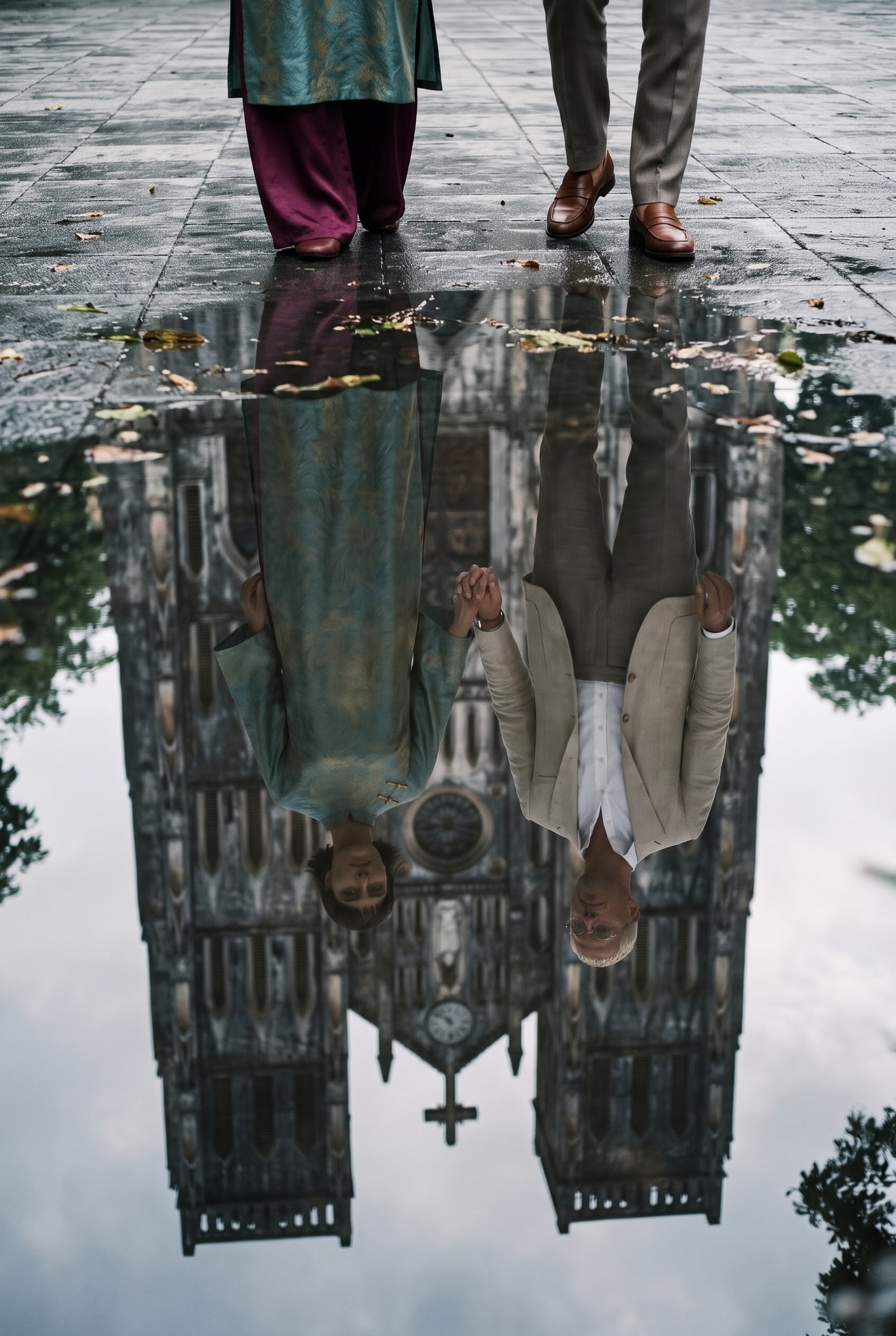
Neon, electric pink, and bright orange saturate in Vietnam's intense midday sun and flatten skin tone. Jewel tones—emerald, sapphire, burgundy—photograph rich and let your face breathe visually. Whites and pale pastels work only if the fabric is heavyweight (linen, cotton), because thin white shows undergarments and body outline too clearly. Blacks absorb heat and read as formless shadows unless the silhouette is tailored. At our Hanoi studio and Saigon studio, we steer couples toward sage, terracotta, soft gold, and navy because these colors complement warm-toned Vietnamese backdrops—ancient brick, golden temple walls, green rice paddies—without clashing. Avoid wearing logos, slogans, or large text on the chest or back; even small brand names distract from your face and date the photo. We've seen guests regret wearing their gym brand or travel company shirt because it became the main focus. Solid color or subtle all-over print is always safer than blocked logos.
Fitted vs. Oversized: What Actually Flatters on Camera
Oversized silhouettes hide the body's shape and read as formless in photos. Fitted does not mean tight—it means the garment follows your natural shoulder, waist, and hip line without bunching or gaping. When you sit down (we do this in every session), an oversized top pools on your lap and creates horizontal folds. A fitted cut with a little stretch allows movement, sits cleanly when seated, and defines your frame without discomfort. For men, a fitted short-sleeve shirt or linen overshirt over a plain t-shirt works better than baggy streetwear. For women, a fitted wrap dress, structured midi, or tailored shirt pairs well with simple trousers or a skirt. If you're unsure about fit, order from retailers with a fifteen-day return window and try the garment sitting, walking, and turning side-on before the shoot. We've had guests arrive in oversized vacation wear meant for resort comfort, not photography, and watched them regret it when they saw previews.
See packages and prices on vietnamphotoshoot.com
What to Avoid: A Checklist Before Booking
Before you pack:
- Check the fiber content on the label; if it says "polyester" or "acrylic" as the main fiber, replace it.
- Avoid logos larger than two inches or text across the chest.
- Try the outfit sitting, bending, and turning; if it bunches, gaps, or rides up, it won't work on camera.
- Hold the garment up to a window in daylight; if the fabric is transparent or shows a tan line, bring a slip or layer.
- For warm-weather shoots (March–October), stick to sleeveless, short-sleeve, or thin long-sleeve linen; avoid heavy knits or fleece.
Shoot-day logistics:
- Arrive with two backup pieces (a simple scarf, a plain overshirt, a second top) in case the first choice wrinkles badly or feels uncomfortable in person.
- If you're unsure about color, email us a photo of your outfit before the session via WhatsApp; our stylists will advise.
- Bring a lint roller and small iron (or ask our team—we have both on site at Hanoi and Saigon).
- Do not wear wrinkle-release spray on linen; it stiffens the fabric and negates the texture.
| Garment type | Fabric to choose | Fabric to avoid | Why it matters | Suitable for |
|---|---|---|---|---|
| Shirt/top | 100% linen, cotton, silk | Polyester blend, acrylic | Breathes in heat; reads texture in photos | Vacation, couple, family shoots |
| Dress | Cotton, linen, cotton-blend | Jersey knit, viscose | Holds shape when sitting; doesn't cling when damp | Solo, pre-wedding, anniversary |
| Trousers | Linen, cotton, cotton-linen blend | Polyester, tight denim | Moves freely; wrinkles intentionally on camera | Couple, formal concept |
| Áo dài | Silk, silk-blend (ordered through studio) | Synthetic, thin polyester | Studio provides or sources; synthetic shows sweat | Ao dai photoshoot package |
| Accessory (scarf, shawl) | Linen, silk, cotton | Acrylic, microfiber | Drapes naturally; doesn't slip or bunch | All session types |
How Heat and Humidity Change What You See in Previews
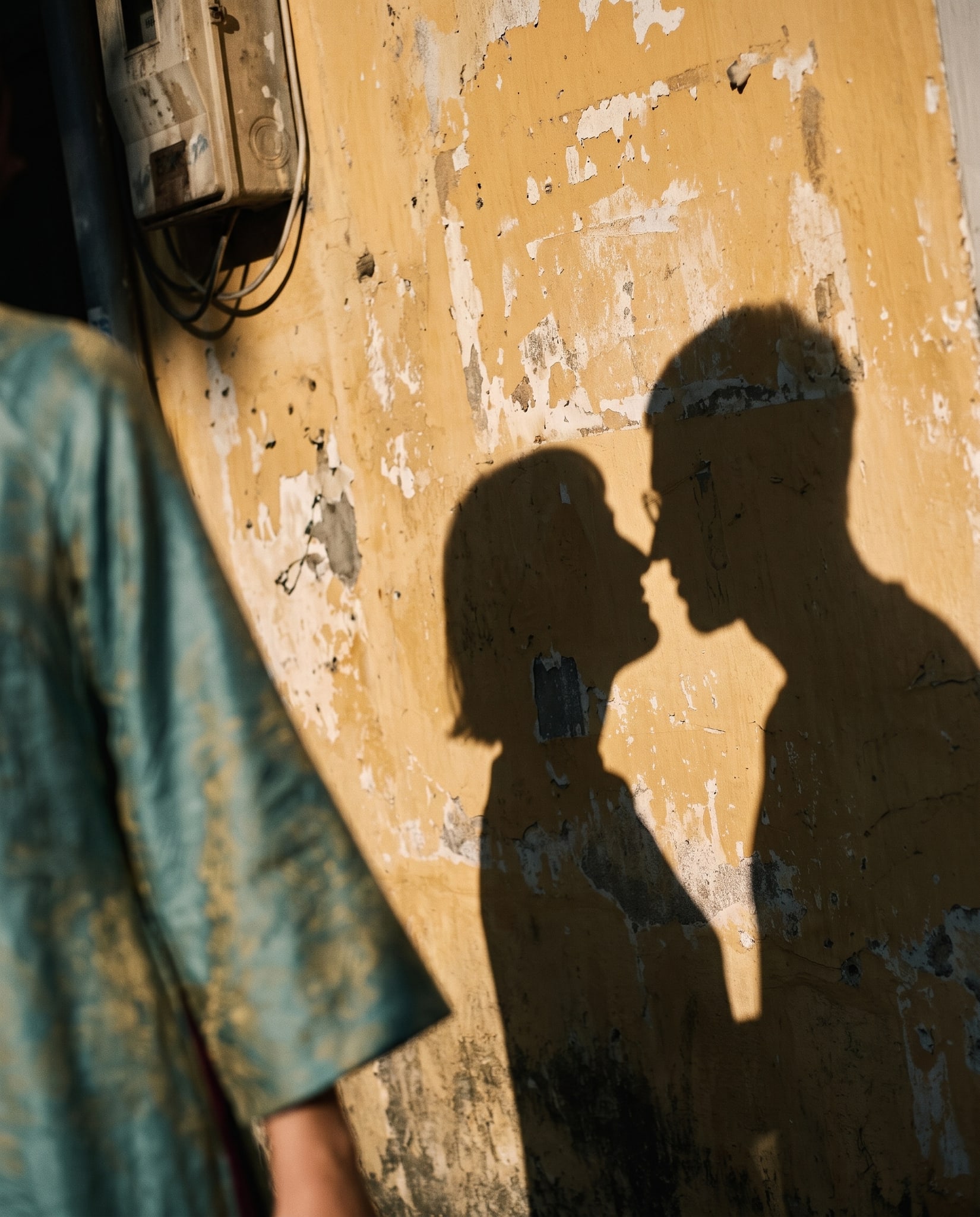
A linen shirt that looked crisp in your hotel mirror will show darker damp patches under the arms by your fourth outfit change. This is normal, not a failure. Our photographers shoot around sweat marks and adjust posture to minimize visible moisture. Humidity also causes synthetic curling and pilling; we comb these out between frames. Cotton and linen wrinkle within minutes of sitting, especially if the room or outdoor shade is warm—this reads as intentional texture in photos, not neglect. If you're concerned, bring a lightweight cotton wrap or ask our team to drape a scarf to shade damp areas. For multi-hour shoots (typical in our pre-wedding and couple packages), we schedule outfit changes in air-conditioned spaces so you can cool down and refresh between locations. We've learned that guests feel more confident and move more naturally when they're not hot; confidence shows on camera.
Specific Guidelines for Each Session Type
Ao dai and formal shoots: The studio sources or guides you to silk or silk-blend áo dài tailored to your measurements. We handle this—you don't buy retail. Underneath, wear simple white or neutral undergarments (visible in the neckline) and avoid anything flashy or uncomfortable for long-term wear. See our ao dai photoshoot package for details.
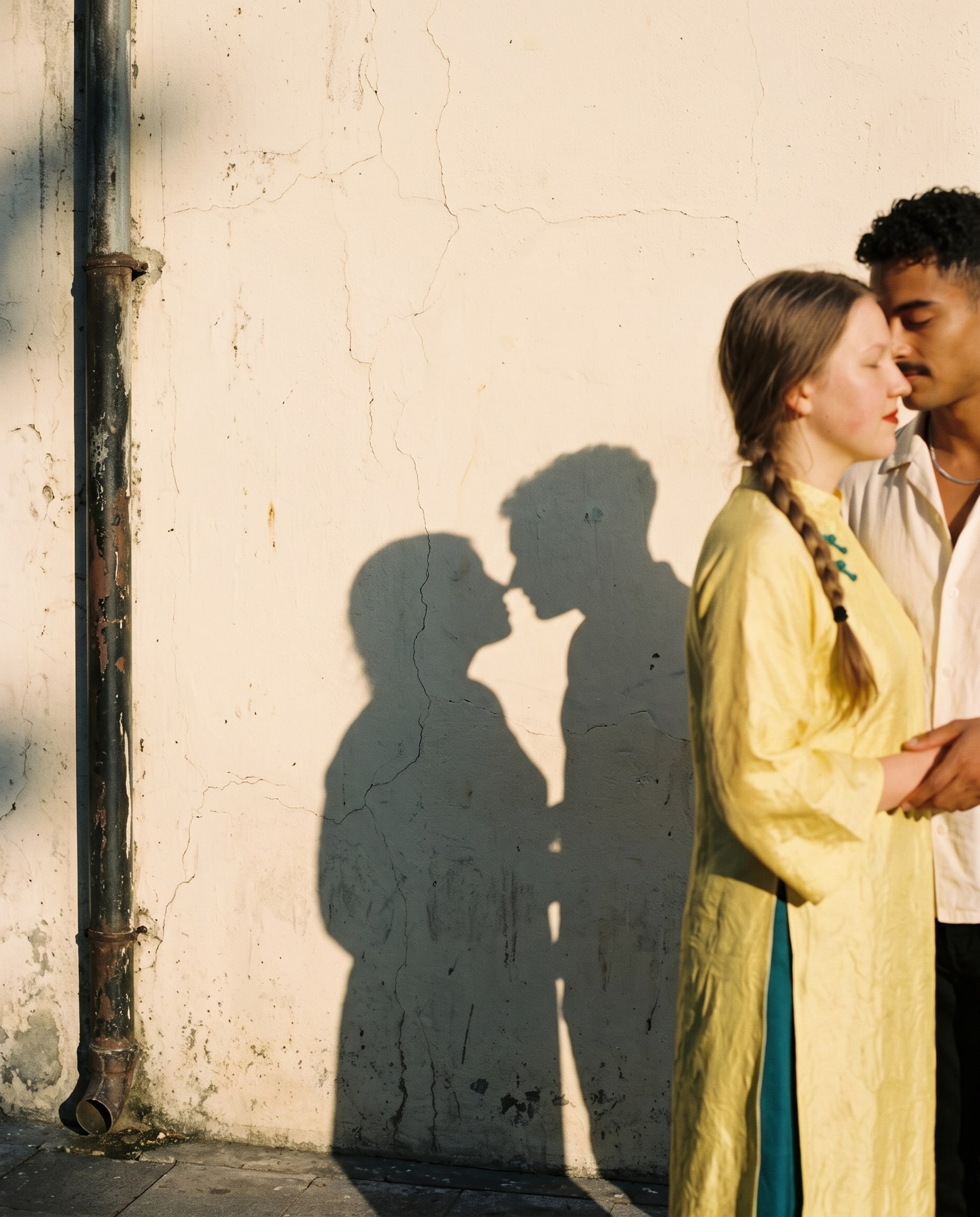
Couple and family sessions: Coordinate colors without matching exactly. One person in emerald, the other in cream or soft gold works better than both in the same color. Avoid logos and busy patterns that distract from connection. Simple, fitted basics let chemistry and emotion show.
Vacation and solo shots: Wear what makes you feel confident—your energy translates to camera. Avoid anything borrowed or uncomfortable. Pack one lightweight layer (a linen shirt or cotton overshirt) to add or remove as light changes.
Proposal and anniversary sessions: Formal wear is common but not required. If choosing casual, stick to solids and natural fibers; a proposal in a logo-covered t-shirt can feel inauthentic in photos. Wear something you'd be happy seeing in a frame ten years from now. Check our proposal and anniversary package for inspiration.
What to Check Before You Order Online
If ordering new pieces for your shoot, buy from retailers with clear fiber content labels and generous returns. Avoid fast-fashion sites where "model fits true to size" contradicts customer reviews saying items are tight or translucent. Order one size larger than usual if the fabric is described as "delicate" or "semi-sheer." Check the return window; most retailers offer fifteen to thirty days. Try pieces in natural daylight, not indoor lighting, and assess transparency by holding them to a window. If you're shopping specifically for a session with us, describe the shoot type (tropical, formal, couple) to customer service and ask for recommendations. Many guests order one outfit and bring a plain backup top or accessory from their home closet—this is smart, not overthinking. We've seen guests change their mind about a color or cut on arrival day and swap in something from their suitcase, which is why we build in a thirty-minute buffer before the first frame.
FAQ
Should I wear white in Vietnam heat?
White works only if the fabric is heavy cotton or linen; thin white shows skin and undergarments clearly. Lightweight white also shows sweat and dirt faster than darker colors.
Can I wear denim jeans to a photoshoot in Vietnam?
Tight or thick denim traps heat, restricts movement, and reads as bulky on camera. Light-wash cotton or linen pants are far better. If denim is your choice, wear a looser fit and plan to change sooner.
What if my outfit wrinkles badly on the flight?
Humidity causes all fabrics to wrinkle, especially synthetics. Linen wrinkles intentionally, which reads as texture. Bring a small handheld steamer or ask our team—we have irons on-site at both studios. Most wrinkles disappear in photos.
Can I wear patterned or printed clothes?
Small, all-over patterns work (tiny florals, subtle geometric). Large blocks, bold prints, and logos distract from your face. Solid colors let emotion and connection dominate the frame, especially in couple and family shoots.
Should I buy new clothes for the shoot or wear what I own?
Wear what makes you feel confident. If you own nothing in natural fibers or jewel tones, order pieces with a return window. Most guests mix one or two new items with beloved pieces from home—this feels authentic on camera.
What happens if I wear the wrong outfit on shoot day?
Our stylists and photographers assess your outfit on arrival. If it's too synthetic, too tight, or visually problematic, we discuss options: change into a backup, adjust posing to minimize issues, or reschedule (rare). This is why we ask for outfit previews via WhatsApp before the session.
Is linen actually better than cotton for tropical photography?
Both breathe equally well. Linen wrinkles more noticeably and costs more, but reads as intentional texture. Cotton is easier to care for and less expensive. Choose based on budget and how you feel in each fabric.
Special Concept Shoot
Inclusions, prices and booking are on our booking site.
FAQ
Should I wear white in Vietnam heat?
White works only if the fabric is heavy cotton or linen; thin white shows skin and undergarments clearly. Lightweight white also shows sweat and dirt faster than darker colors.
Can I wear denim jeans to a photoshoot in Vietnam?
Tight or thick denim traps heat, restricts movement, and reads as bulky on camera. Light-wash cotton or linen pants are far better. If denim is your choice, wear a looser fit and plan to change sooner.
What if my outfit wrinkles badly on the flight?
Humidity causes all fabrics to wrinkle, especially synthetics. Linen wrinkles intentionally, which reads as texture. Bring a small handheld steamer or ask our team—we have irons on-site at both studios. Most wrinkles disappear in photos.
Can I wear patterned or printed clothes?
Small, all-over patterns work (tiny florals, subtle geometric). Large blocks, bold prints, and logos distract from your face. Solid colors let emotion and connection dominate the frame, especially in couple and family shoots.
Should I buy new clothes for the shoot or wear what I own?
Wear what makes you feel confident. If you own nothing in natural fibers or jewel tones, order pieces with a return window. Most guests mix one or two new items with beloved pieces from home—this feels authentic on camera.
What happens if I wear the wrong outfit on shoot day?
Our stylists and photographers assess your outfit on arrival. If it's too synthetic, too tight, or visually problematic, we discuss options: change into a backup, adjust posing to minimize issues, or reschedule (rare). This is why we ask for outfit previews via WhatsApp before the session.
Is linen actually better than cotton for tropical photography?
Both breathe equally well. Linen wrinkles more noticeably and costs more, but reads as intentional texture. Cotton is easier to care for and less expensive. Choose based on budget and how you feel in each fabric.
More from the team
Fishing Village Concept Photoshoot Vietnam: How We Shoot It
A fishing village photoshoot captures Vietnam's working waterfront—nets, boats, morning light, real people. We share how our team runs these shoots from location scout to final delivery.
Cruise Stop Saigon Photoshoot at Phu My Port: Studio Guide
Cruise passengers have 8–12 hours in Saigon. We photograph guests right from Phu My Port, handling transport and changing rooms so you step off the ship and into an áo dài or couple session.
Cinematic Film Look Photoshoot Vietnam: Our Studio Guide
Cinematic film aesthetics—muted colour grading, shallow depth of field, story-driven composition—have become the most requested look across our shoots in 2026. We run you through how we build this style on set, what goes wrong, and which packages genuinely deliver it.