 Cáo Studio
Home › Blog › Ao Dai Photoshoot
Áo Dài for Foreigners: Cultural Appropriation or Respectful Wear?
By the Cáo Studio team · Hanoi & Saigon · 2026-10-31
Wearing an áo dài as a foreigner is not cultural appropriation—Vietnamese people generally welcome respectful visitors wearing the dress. Cultural appropriation involves mockery or commercial exploitation without credit; wearing an áo dài for a photoshoot, wedding, or celebration shows cultural appreciation. The key is intent: dress for the occasion (áo dài is formal, not costume), avoid wearing it carelessly, and understand it represents Vietnamese identity and history. Cáo Studio sees this regularly—foreign guests who wear áo dài thoughtfully report that Vietnamese friends and strangers respond positively. Respect the garment, learn its context, and wear it as you would formal wear in your own country.
Why Do Vietnamese People Actually Welcome Foreign Visitors in Áo Dài?
Visitors wearing áo dài with genuine interest almost always encounter warmth from Vietnamese people. The dress represents a shared cultural identity that extends an invitation to understand Vietnam more deeply. When a foreigner chooses to wear áo dài, locals interpret it as curiosity and respect—not theft. Our team has coordinated hundreds of shoots with foreign guests wearing áo dài, and we've only ever seen encouragement. The distinction is simple: appreciation and learning are always welcome; mockery and carelessness are not.
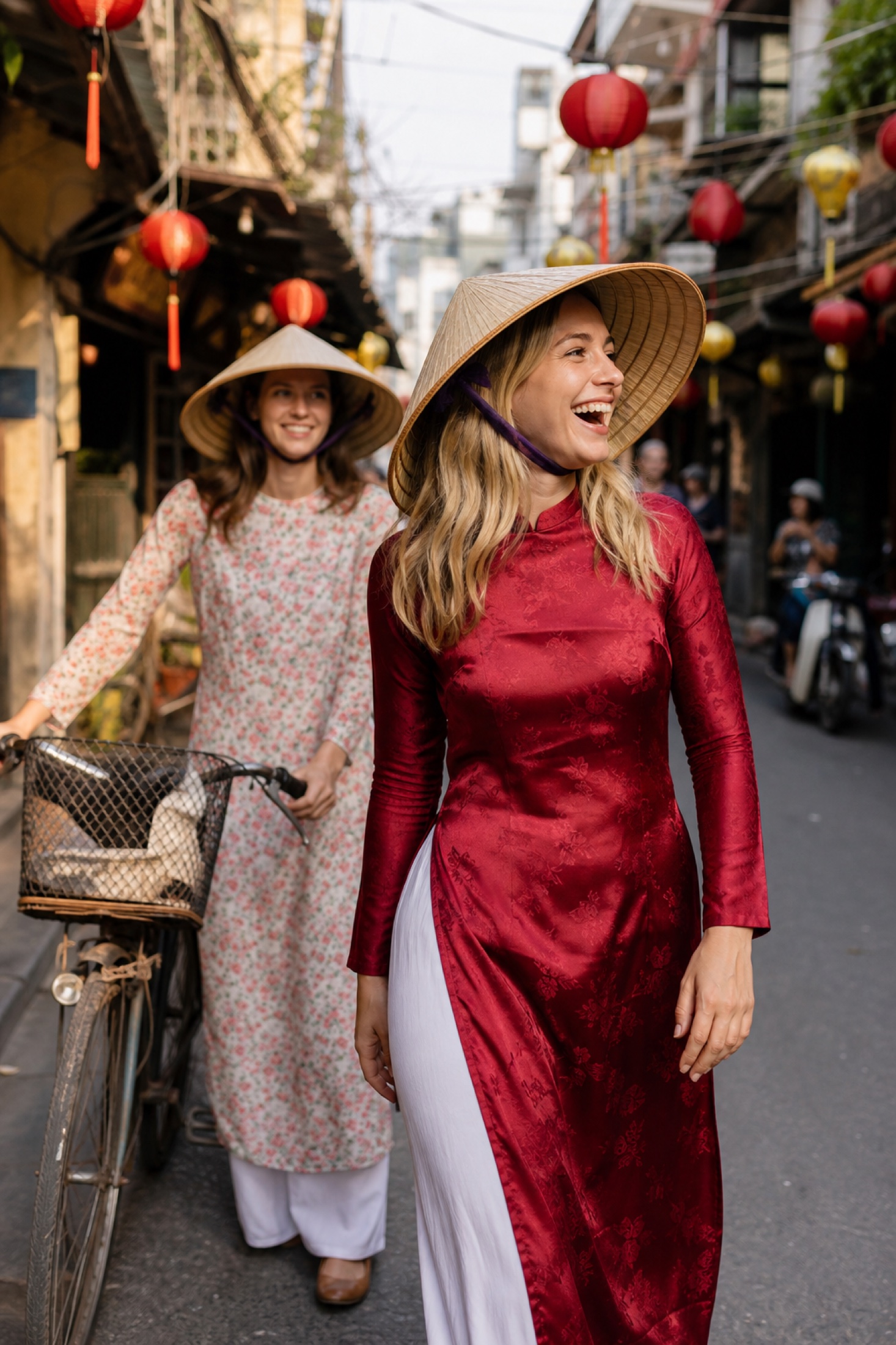
What's the Real Difference Between Appropriation and Appreciation?
Cultural appropriation involves taking elements from another culture without permission, understanding, or credit—often for profit or as a joke. Appreciation means learning the context, wearing the item respectfully, and acknowledging its origin. An áo dài worn for a formal photoshoot, wedding, or cultural event is appreciation. An áo dài worn as a Halloween costume or cheap novelty is appropriation. Vietnamese people distinguish clearly between these. The difference lies in your intention and the occasion—if you're asking these questions, you're already on the appreciation side.
How Should Foreigners Wear Áo Dài Without Causing Offense?
| Approach | When It Works | When It Doesn't |
|---|---|---|
| Photoshoot or professional session | Formal setting, styled correctly, documented | Casual wearing without understanding context |
| Wedding or celebration invite | Guest at a Vietnamese event, invited to wear it | Wearing it to a non-Vietnamese event as costume |
| Cultural tour or historical site visit | Learning context, respectful dress code | Taking selfies without knowledge of its meaning |
| Fashion experiment at home | Private, after learning, not mocking | Public mockery or stereotyping |
Wear áo dài as formal wear—because that's what it is. Pair it with respect for the occasion. Understand that the áo dài evolved over centuries and represents Vietnam's history, wars, independence, and identity. Never wear it as a casual joke. If you're invited by a Vietnamese friend or attending a Vietnamese event, ask what style and color are appropriate. During a photoshoot with us, we guide you completely—fabric choice, fit, color meaning, posture—so you wear it correctly. That guidance is part of what a professional session includes.
What Colors and Styles Are Appropriate for Foreign Guests?
White and pastels are traditional for unmarried women; married women historically wore deeper colors. Men wear áo dài in jewel tones, blacks, or whites. For foreigners, jewel tones (emerald, sapphire, crimson) and white are safe choices that photographers love and fit most skin tones. Avoid wearing red and gold together (that's specifically for Tết celebrations and weddings) unless you're attending those events. The fabric matters too—silk is formal; synthetic blends are everyday. Our team helps you choose during the booking process so you feel confident and look authentic. The style—traditional or modern silhouette—depends on the occasion and your comfort.
When Should a Foreigner NOT Wear an Áo Dài?
Never wear an áo dài as a costume for Halloween, a party, or entertainment without cultural context. Don't wear it to mock Vietnamese people or their history. Avoid wearing it carelessly, overly casual, or damaged—that signals disrespect. Don't wear it at events where it's inappropriate (a beach party, a casual cafe hangout where locals are in t-shirts). Don't wear it and then make light of Vietnamese culture or treat the dress as a novelty. If you're unsure whether the occasion is right, ask a Vietnamese person you trust or ask us during WhatsApp consultation. Respect the formality of the garment, and you're safe.
---
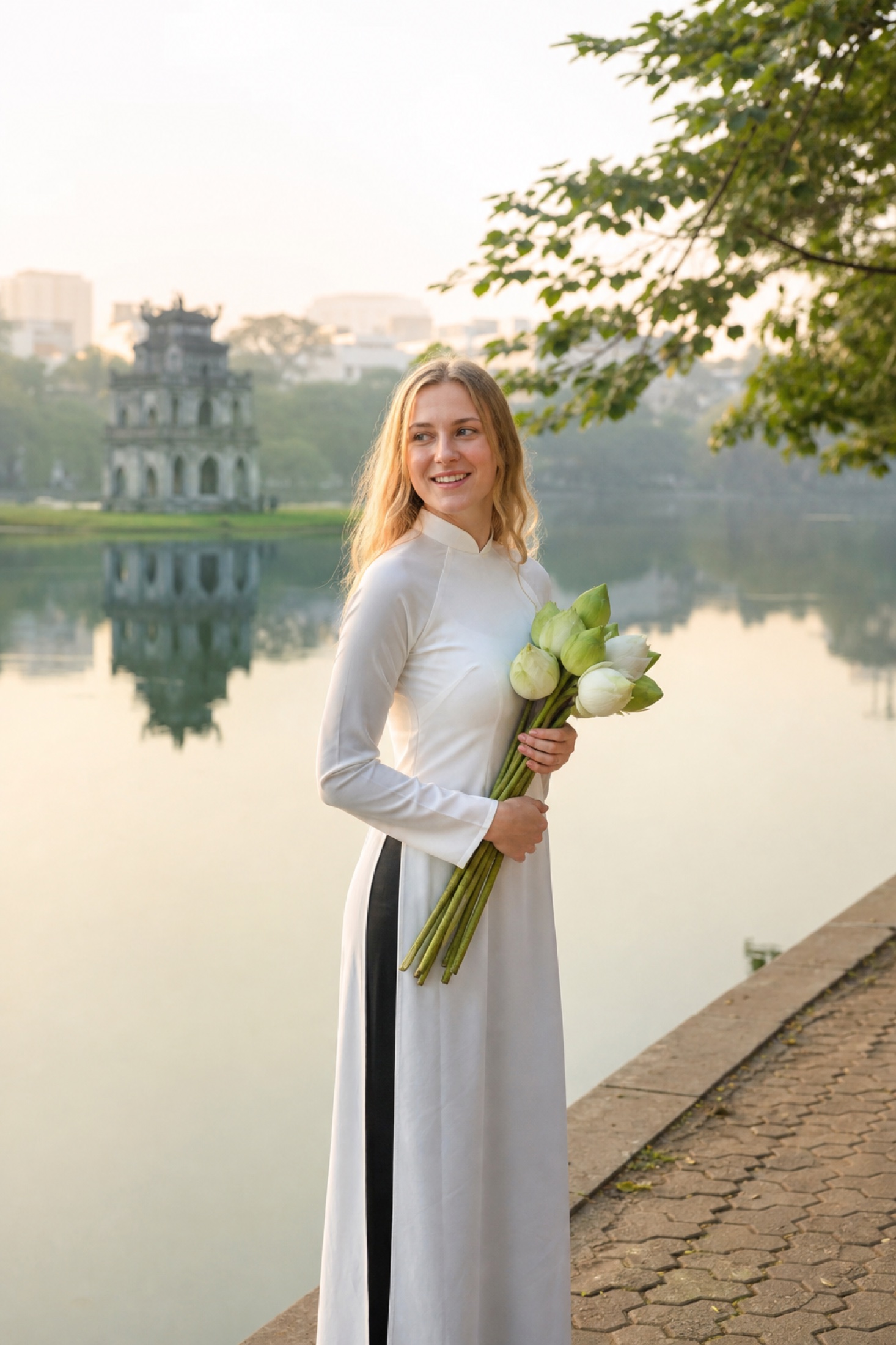
The Right Way: Áo Dài Photoshoots for Foreigners
The safest, most respectful way for a foreigner to wear áo dài is during a guided photoshoot. Our áo dài photoshoot packages include expert styling, fabric and color selection, proper fitting, posture guidance, and professional photography—all designed so you wear the dress correctly and feel the cultural significance. Our stylists in Hanoi and Saigon walk you through meaning and etiquette during the session. You're learning, being photographed respectfully, and creating a memory that honors the garment.
We also coordinate pre-wedding and elopement photoshoots where foreign couples wear áo dài as part of their Vietnamese wedding celebration. These sessions acknowledge the dress's role in Vietnamese matrimony. For couple photoshoots, foreign pairs can wear áo dài or other traditional wear—our team ensures the styling respects the garment and the occasion.
If you're visiting Vietnam for a special event—proposal, anniversary, family reunion—we offer packages that include áo dài styling. The dress becomes part of your story in Vietnam, not a costume.
---
What Vietnamese Photographers and Stylists Actually Tell Foreign Guests
Our team has styled thousands of foreign visitors in áo dài. The message we consistently give is: "You're honored to wear this. Wear it like formal wear in your own country—with care, on the right occasion, and with curiosity about its meaning." Vietnamese people see a foreigner in áo dài and think, "They're showing respect to our culture." The same person, if they wore the dress mockingly or carelessly, would be met with disappointment. The difference is visible and felt instantly.
During shoots in Hanoi at temples like Trấn Quốc Pagoda or on the banks of the Red River, foreign guests in áo dài are often approached by locals who want photos with them—a sign of welcome. In Saigon, at the Bitexco Financial Tower or along Nguyen Hue Walking Street, the same happens. In Hoi An, where áo dài is still worn daily by locals, foreigners in the dress are seen as visitors honoring the town's living history. These reactions come from respectful wearing.
---
A Practical Checklist Before You Wear Áo Dài
- Have you learned what an áo dài is and its role in Vietnamese culture?
- Is the occasion formal enough (photoshoot, celebration, event, tour)?
- Have you been invited, or is it appropriate to wear it?
- Did you choose the color and style with guidance (from a stylist, local friend, or us)?
- Does the fit feel correct and comfortable?
- Will you wear it with respect and seriousness, not as a joke?
- Are you prepared to answer respectful questions about why you're wearing it?
- Have you avoided wearing it carelessly, casually, or damaged?
If yes to all, you're ready. If unsure on any point, reach out to us or a trusted Vietnamese person before the occasion.
---
See packages and prices on vietnamphotoshoot.com
---
Where Foreigners in Áo Dài Actually Look Best
Áo dài photographs beautifully in formal settings. Our shoots in Hanoi use temple grounds, lakeside, and old-quarter backdrops—áo dài suits these spaces perfectly. In Saigon, we shoot in gardens, colonial architecture, and riverside locations. In Hoi An, the ancient town is an áo dài photoshoot destination because locals still wear it daily. In Ninh Binh, the natural limestone backdrop makes the dress's silhouette dramatic. The garment is designed to be photographed and worn formally—so a professional session, with proper styling and setting, is where you'll feel most confident and respectful.
---
FAQ
Is wearing an áo dài as a foreigner disrespectful to Vietnamese culture?
No, if worn respectfully for the right occasion. Vietnamese people generally welcome foreign visitors showing interest in their culture. Disrespect comes from mockery, carelessness, or wearing it as costume, not from genuine, formal wear.
What should I do if a Vietnamese person seems uncomfortable with me wearing áo dài?
Ask them directly: "Is this disrespectful?" Most will clarify—usually they're concerned about fit, color choice, or occasion appropriateness, not the fact that you're wearing it. Our team handles these conversations constantly and can guide you.
Can I wear áo dài to a regular restaurant or casual outing?
Technically yes, but it's overly formal. Áo dài is for formal events, celebrations, and photoshoots. Wearing it casually might attract confused attention. Save it for the right occasion—your impact will be much stronger.
How do I choose the right áo dài color if I'm a foreigner?
Jewel tones (emerald, sapphire, crimson, gold) and white are universally appropriate and flattering. Avoid red-and-gold combinations (reserved for Tết and weddings) unless invited. Our stylists choose colors based on your skin tone and the shoot theme.
What's the best way for a foreign couple to wear áo dài respectfully?
Wear it for a formal photoshoot or if invited to a Vietnamese wedding. A professional session with styling guidance is ideal—you'll learn meaning, be photographed correctly, and create a memory that honors the garment. Check our pre-wedding packages.
Should I buy an áo dài from Vietnam or have one made abroad?
Both work. Vietnamese tailors in Hoi An and Saigon create custom áo dài (often within days) at good value. Wearing one you've commissioned locally is a form of supporting Vietnamese artisans. For a photoshoot, we can source or recommend tailors if you prefer custom.
What if I'm visiting Vietnam for a short time—is a photoshoot worth it?
Yes. A single session gives you professional photos, cultural guidance, and a memory of wearing áo dài respectfully. Vacation photoshoots are designed for travelers—half-day or full-day sessions that fit your schedule.
Ao Dai Photoshoot
Inclusions, prices and booking are on our booking site.
FAQ
Is wearing an áo dài as a foreigner disrespectful to Vietnamese culture?
No, if worn respectfully for the right occasion. Vietnamese people generally welcome foreign visitors showing interest in their culture. Disrespect comes from mockery, carelessness, or wearing it as costume, not from genuine, formal wear.
What should I do if a Vietnamese person seems uncomfortable with me wearing áo dài?
Ask them directly: "Is this disrespectful?" Most will clarify—usually they're concerned about fit, color choice, or occasion appropriateness, not the fact that you're wearing it. Our team handles these conversations constantly and can guide you.
Can I wear áo dài to a regular restaurant or casual outing?
Technically yes, but it's overly formal. Áo dài is for formal events, celebrations, and photoshoots. Wearing it casually might attract confused attention. Save it for the right occasion—your impact will be much stronger.
How do I choose the right áo dài color if I'm a foreigner?
Jewel tones (emerald, sapphire, crimson, gold) and white are universally appropriate and flattering. Avoid red-and-gold combinations (reserved for Tết and weddings) unless invited. Our stylists choose colors based on your skin tone and the shoot theme.
What's the best way for a foreign couple to wear áo dài respectfully?
Wear it for a formal photoshoot or if invited to a Vietnamese wedding. A professional session with styling guidance is ideal—you'll learn meaning, be photographed correctly, and create a memory that honors the garment. [Check our pre-wedding packages.](/go/pre-wedding-photoshoot)
Should I buy an áo dài from Vietnam or have one made abroad?
Both work. Vietnamese tailors in Hoi An and Saigon create custom áo dài (often within days) at good value. Wearing one you've commissioned locally is a form of supporting Vietnamese artisans. For a photoshoot, we can source or recommend tailors if you prefer custom.
What if I'm visiting Vietnam for a short time—is a photoshoot worth it?
Yes. A single session gives you professional photos, cultural guidance, and a memory of wearing áo dài respectfully. [Vacation photoshoots](/go/vacation-photoshoot) are designed for travelers—half-day or full-day sessions that fit your schedule.
More from the team
Ao dai for plus-size travelers: how we fit and style from the studio w
Plus-size travelers often worry that áo dài won't fit their body. We show how proper tailoring, fabric choice, and styling transform the experience—and why it works.
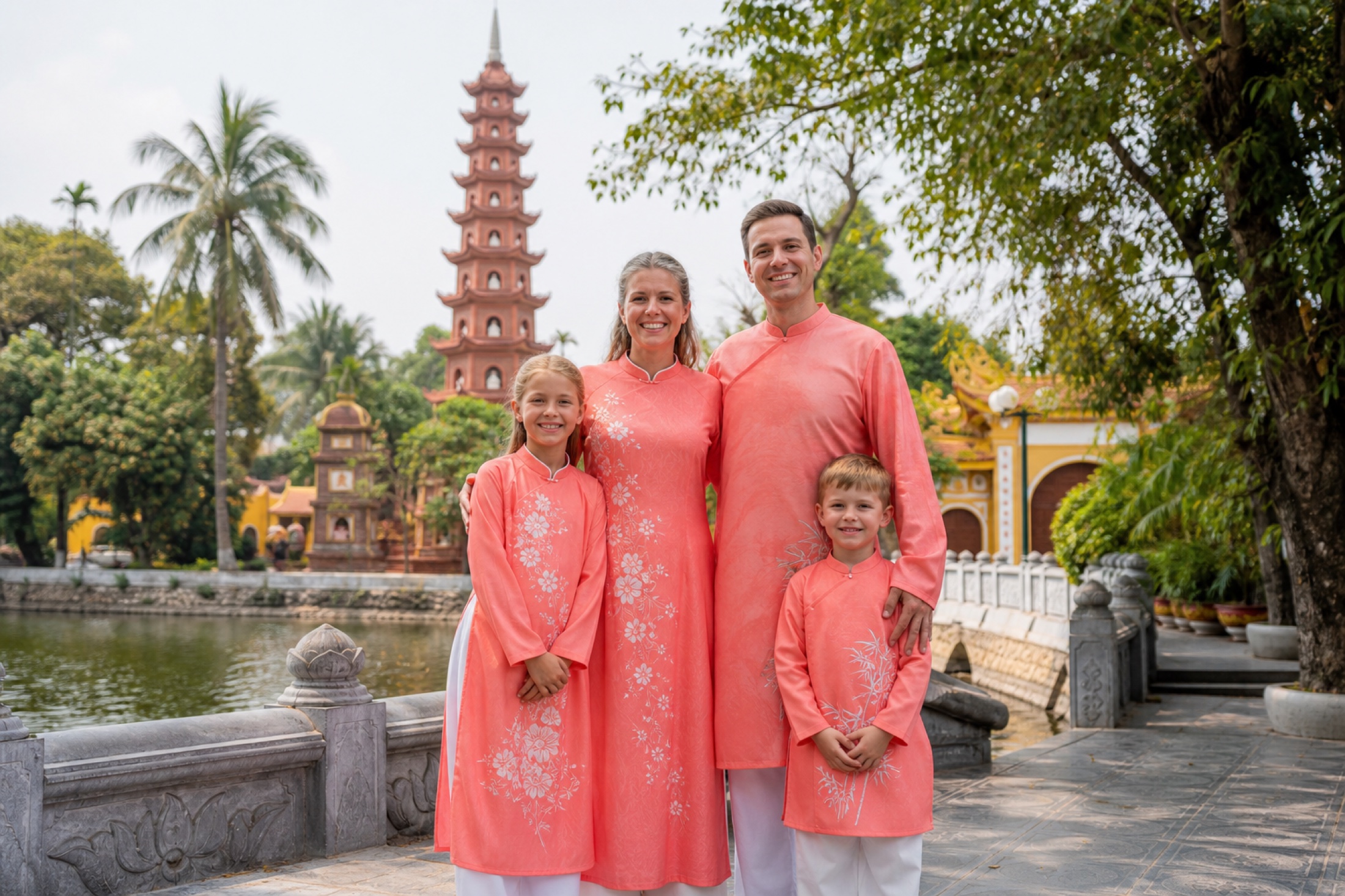
Áo Dài for Men: Cuts, Colors & How Travelers Wear It
Áo dài isn't just for women. Men's áo dài is a formal, elegant garment with distinct cuts and color rules—and travelers who wear it well have the best photo memories in Vietnam.
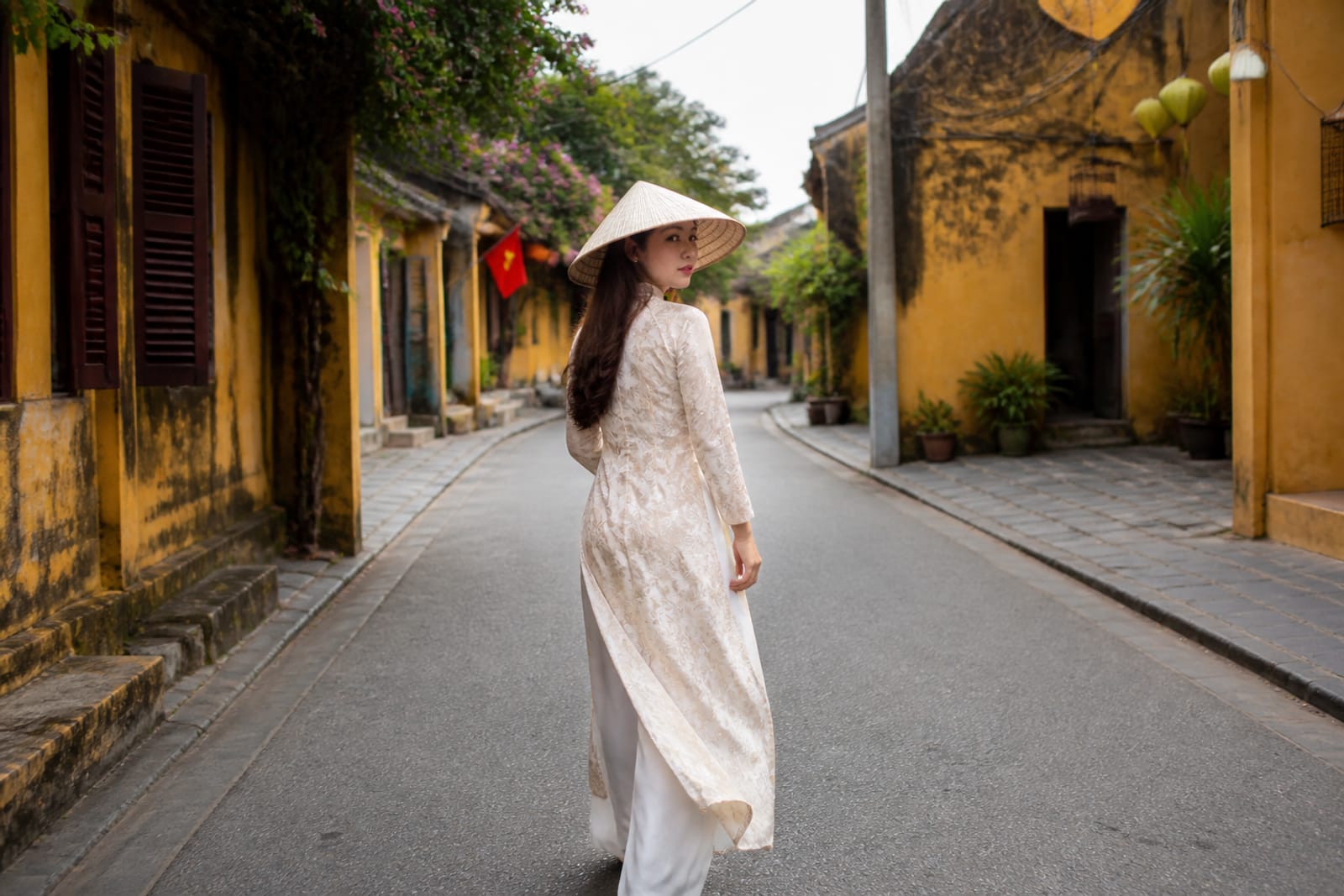
How to Choose Your Ao Dai Color for Photos: Skin Tone, Location, Seaso
Choosing an ao dai color is not just about preference—it shapes how you appear in every frame across Hanoi's temples, Hoi An's riverside, or Saigon's urban streets. We'll walk you through skin tone, season, and location so you book with confidence.