 Cáo Studio
Home › Blog › Ao Dai Photoshoot
Ao dai for plus-size travelers: how we fit and style from the studio w
By the Cáo Studio team · Hanoi & Saigon · 2026-10-31
At Cáo Studio, we fit plus-size guests into áo dài by working with tailors who understand modern sizing, not historical proportions. Most travelers wear sizes XL–3XL (bust 40–48 inches); our tailors in Hanoi and Saigon add length to the áo (the tunic), relax the side panels for comfort, and lengthen the bottom hem. We stock warm, heavyweight fabrics (silk blends, cotton-linen mixes) that drape rather than cling; loose-fitting styles with deeper armholes suit broad shoulders. Fittings take 20–30 minutes and happen 3–5 days before your shoot, leaving time for adjustments. We recommend booking ao dai photoshoot packages at least 10 days ahead so tailors have breathing room. Avoid thin rayon and overly fitted designs—they highlight rather than flatter. Your áo should skim your body without pulling. Chat with us on WhatsApp | See packages and prices on vietnamphotoshoot.com ---
How do tailors adjust áo dài for larger body frames?
Traditional áo dài patterns assume a narrow chest and slender waist. Our Hanoi and Saigon teams reconstruct these patterns by increasing side seam allowances (adding 2–4 inches per side), extending shoulder width by 0.5–1 inch per shoulder, and lengthening the tunic body by 2–6 inches depending on your torso length. We never pinch fabric inward—instead, we move seams outward and add panels if needed. The fitting conversation matters most: we ask about your comfortable chest and hip ease, not your dress size. Most plus-size guests need their áo let out 1–2 sizes from stock; this is standard tailoring, not "special." Conclusion: proper tailoring makes the áo drape elegantly on all body types.
Which fabrics and colors look best on plus-size frames?
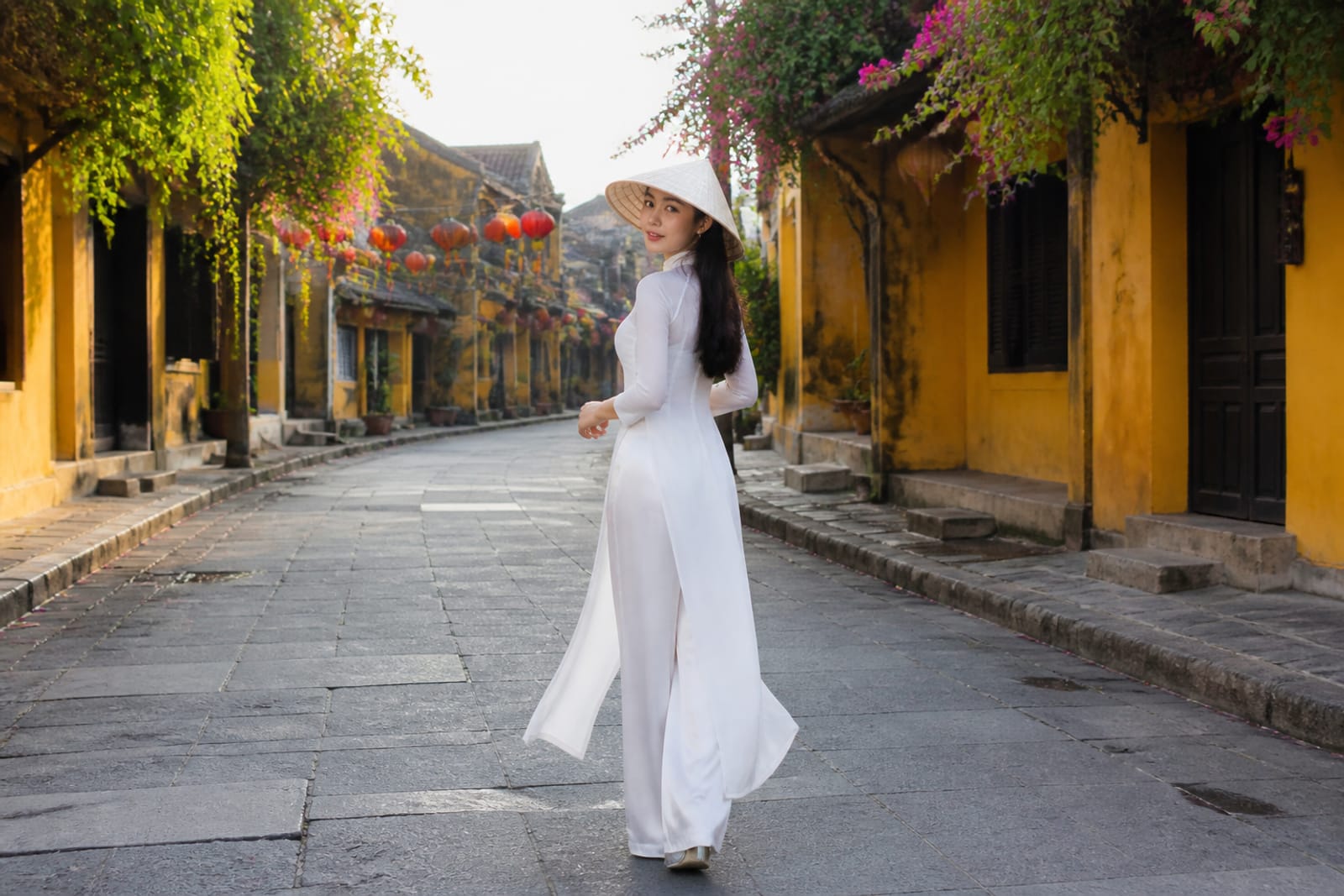
Thin rayons and polyesters betray every curve; heavyweight silks, silk–linen blends, and quality cotton hold their shape and move fluidly. Deep jewel tones (emerald, sapphire, burgundy, navy) and earth neutrals (cream, taupe, charcoal) visually ground a larger frame better than pastels. Horizontal seaming or contrasting panels can be flattering if placed thoughtfully—ask your stylist during fitting. Avoid all-over pattern prints smaller than 1 inch; bold, spaced prints work better. Metallic or shiny finishes add dimension; matte or silk-finish fabrics feel more elegant. We carry warm-season (cotton-blend) and cool-season (heavier silk) áo in our studios. Conclusion: fabric weight and color psychology matter more than size itself.
What does a plus-size áo dài fitting appointment actually involve?
You arrive 10–15 minutes early with a list of any fit concerns (shoulder width, armhole depth, sleeve length, tunic length). Our stylist takes five measurements: bust, waist, hips, shoulder width, and torso length. We drape you in a sample áo closest to your size and note all gaps and pulls. If there's significant gap at the shoulders or armholes, we mark those zones for tailors to adjust. You try on two or three áo styles to see which proportions feel best on your frame. This takes 20–30 minutes. Tailors in our partner workshops receive detailed notes and your measurements; they return the áo in 4–5 days, and we do a final fitting 2–3 days before your shoot. Conclusion: the appointment is collaborative, not rushed—we involve you in every decision.
How much extra time should plus-size travelers allow for tailoring?
Book your ao dai photoshoot or vacation session at least 10 days before your shoot date. The timeline: fitting appointment happens days 1–3 after your booking; tailoring happens days 3–8; final check and any tweaks happen days 8–10. If you arrive in Vietnam and want same-week áo dài photos, we can rush some standard sizes (XL, 2XL) with 24 hours' notice, but custom tailoring cannot be rushed without quality loss. International guests arriving with fitted áo dài in luggage: we can adjust in 3–5 days if you arrive 1 week before your shoot. Conclusion: plan ahead; rushing tailoring guarantees stress and poor fit.
What styling and posing tips help plus-size guests look confident on camera?
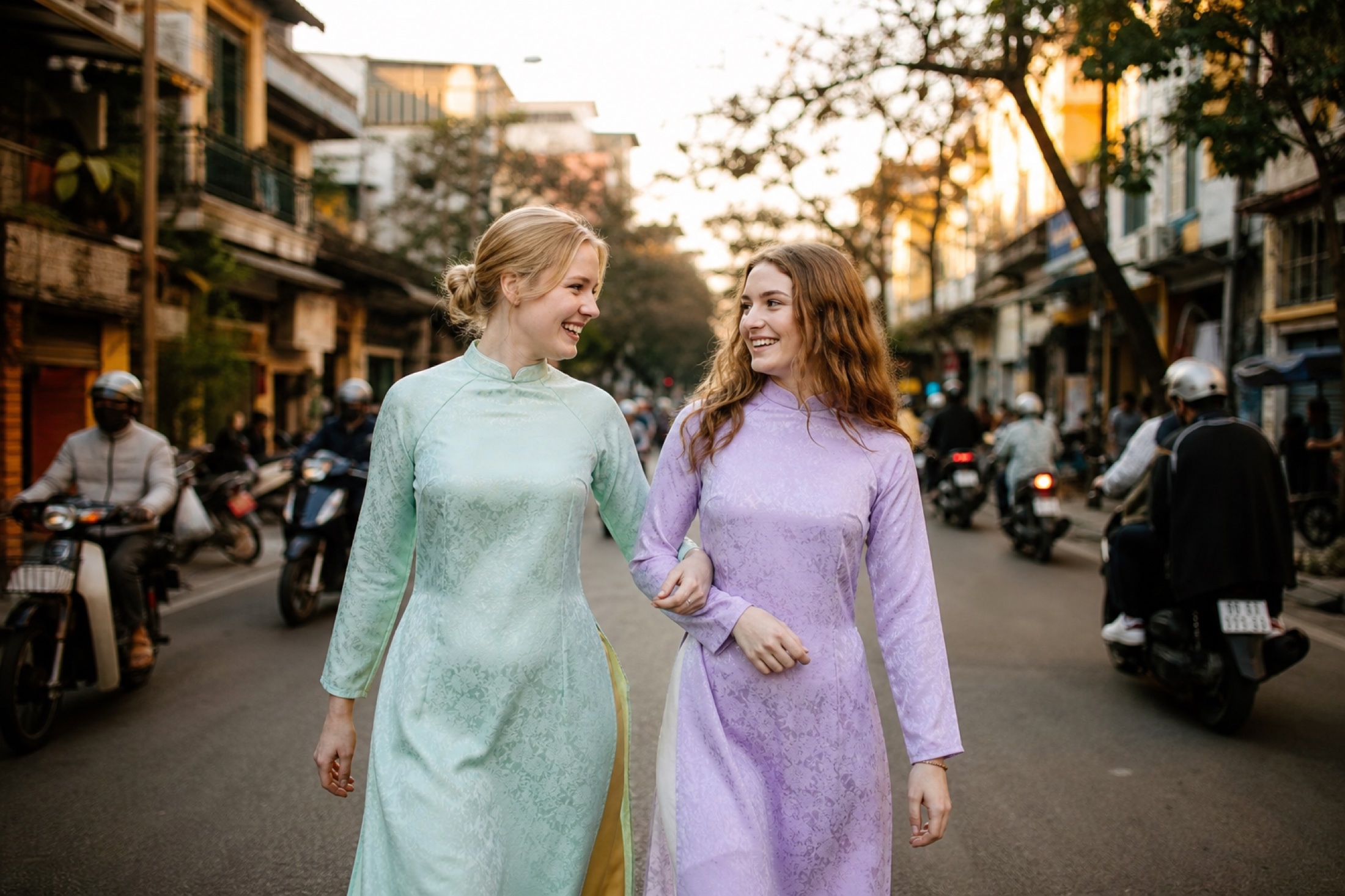
Confidence reads first. We position you straight-on or at three-quarter angles rather than full side profile, which elongates your frame. Hands matter: resting hands on your áo's front panel or near your hip creates vertical lines. Sitting: perch slightly forward rather than sinking into a chair, which bunches fabric. Áo styling: if your áo has a tunic that ends mid-hip, we tuck it gently under your sash (if worn) for definition; if it's longer, we let it fall freely. Layers work: a lightweight overshirt or shawl adds dimension and breaks up the silhouette. For couples or family shoots, we angle so your partner's body isn't directly behind yours—stagger positions instead. Our makeup and hair team (book makeup and hair services alongside) keeps styling clean and minimal so the áo is the star. Conclusion: good posing and proportion matter far more than size.
Comparison: Studio áo dài vs. bringing your own garment
| Aspect | Studio wardrobe | Your own áo dài |
|---|---|---|
| Fit timeline | 10 days, measured + tailored by our team | 3–5 days if adjustments needed, or wear as-is |
| Fabric quality | Carefully curated silk blends, linens; proven on camera | Unknown performance in photos; may cling or wrinkle badly |
| Styling support | Stylist advises during fitting and shoot | You style alone; no real-time guidance |
| Backup options | Multiple sizes and styles available same-day | Single garment; if it tears or doesn't fit, no fix |
| Tailoring risk | Adjusted by our trusted tailors; we own the result | Adjusted by unknown tailors; we cannot guarantee quality |
| Best for | First-time wearers, international guests, peace of mind | Returning guests, specific family heirlooms, sentimental pieces |
---
What should plus-size travelers check before committing to an áo dài photoshoot?
- Measure yourself honestly. Bust, natural waist, hip, and torso length from shoulder to hip. Do not guess; do not use your dress size. Use a soft measuring tape and compare to our size guide during booking consultation.
- Mention any mobility concerns. If you have shoulder tightness, limited arm movement, or back pain, tell us during your initial WhatsApp conversation. Tailors can adjust armholes and neckline depth for comfort.
- Choose your shoot concept early. Solo áo dài sessions, couple photoshoots, or family sessions each need different styling. This affects which áo style suits you best.
- Share reference images. If you love a particular áo style or color, send photos. We'll match your preference if we have it in stock and your size range.
- Confirm your shoot date 7 days before fitting. Tailors schedule based on our event calendar; last-minute date shifts can delay fittings.
- Allow 3 hours for the shoot day itself. Makeup, hair, multiple áo changes, and location moves take time. Rushing ruins photos.
---
Our studios and booking process
Cáo Studio operates from Hanoi and Saigon. Hanoi guests often book shoots in the Old Quarter or near Long Biên Bridge; Saigon guests choose central or riverside locations. Once you contact us on WhatsApp or our booking site, we schedule your fitting within your travel window and tailor your áo dài in-house or with verified partners. International guests pay via Visa, Mastercard, online payment link, or bank transfer before arrival; cash is also accepted. See our full package details and availability on vietnamphotoshoot.com.
See packages and prices on vietnamphotoshoot.com
---
FAQ
Can I wear my own áo dài if it doesn't fit perfectly?
Yes, if it's close. We adjust during fitting. If it's more than one size off, we recommend using our studio wardrobe instead—tailoring someone else's garment risks damage and delays. We'll be honest during your first appointment.
What's the difference between cotton and silk áo dài for plus-size wear?
Cotton-blend áo (summer-weight) breathes better in heat but wrinkles faster on camera. Silk or silk-blend áo drapes more elegantly and photographs better, especially in strong light. For video and high-resolution photos, silk wins.
How much does tailoring usually cost?
Tailoring fees vary by adjustment complexity. Standard letout (widening seams) costs less than adding panels or reconstructing shoulders. We quote exact fees during your fitting appointment once we see the work needed. Payment options include card, bank transfer, and cash.
Can I book a fitting without committing to a full photoshoot?
No—fitting is part of the ao dai photoshoot package. We schedule fittings for guests who've booked a shoot date and paid the session fee. If you're unsure about the shoot, we suggest booking a short solo session first to build confidence.
What if I'm nervous wearing áo dài for the first time?
Most international guests are nervous. We walk you through movement, sitting, and posing during the shoot. Our team photographs hundreds of first-time wearers every year. Nervousness disappears once the camera starts rolling—trust the process.
Do you offer plus-size áo dài rental instead of tailoring?
We don't rent; we tailor and use garments in our studio wardrobe. Rental áo dài in Vietnam are usually one-size-fits-most and fit poorly. Tailored garments from our studio feel custom and photograph far better. This is the standard at Cáo Studio.
Can my partner or family member wear áo dài too, even if they're plus-size?
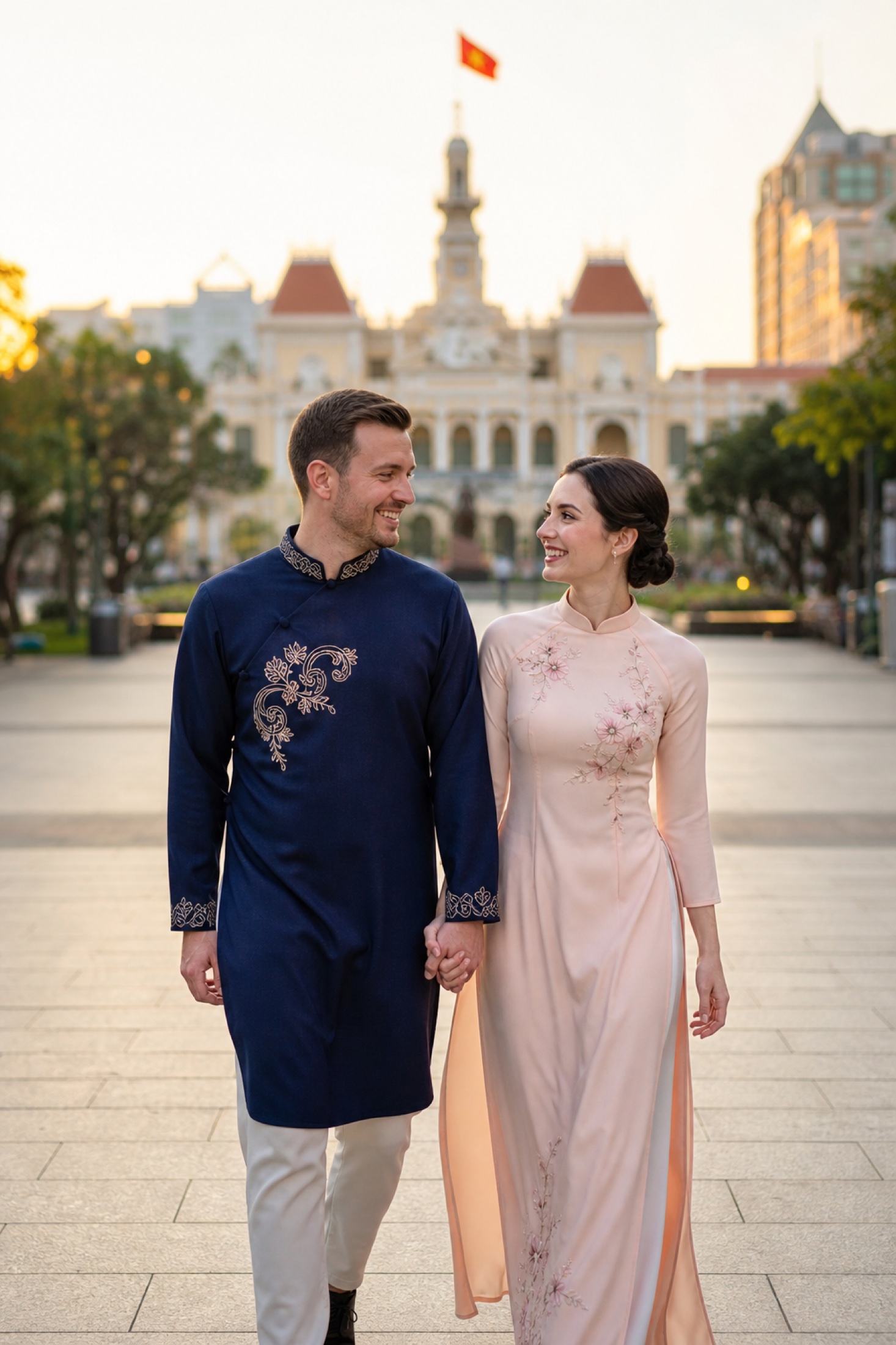
Absolutely. We tailor for all body types. Couples and family shoots work best when everyone feels comfortable. Book couple or family packages and we tailor everyone's áo dài to fit properly.
Ao Dai Photoshoot
Inclusions, prices and booking are on our booking site.
FAQ
Can I wear my own áo dài if it doesn't fit perfectly?
Yes, if it's close. We adjust during fitting. If it's more than one size off, we recommend using our studio wardrobe instead—tailoring someone else's garment risks damage and delays. We'll be honest during your first appointment.
What's the difference between cotton and silk áo dài for plus-size wear?
Cotton-blend áo (summer-weight) breathes better in heat but wrinkles faster on camera. Silk or silk-blend áo drapes more elegantly and photographs better, especially in strong light. For video and high-resolution photos, silk wins.
How much does tailoring usually cost?
Tailoring fees vary by adjustment complexity. Standard letout (widening seams) costs less than adding panels or reconstructing shoulders. We quote exact fees during your fitting appointment once we see the work needed. Payment options include card, bank transfer, and cash.
Can I book a fitting without committing to a full photoshoot?
No—fitting is part of the [ao dai photoshoot package](/go/ao-dai-photoshoot). We schedule fittings for guests who've booked a shoot date and paid the session fee. If you're unsure about the shoot, we suggest booking a short solo session first to build confidence.
What if I'm nervous wearing áo dài for the first time?
Most international guests are nervous. We walk you through movement, sitting, and posing during the shoot. Our team photographs hundreds of first-time wearers every year. Nervousness disappears once the camera starts rolling—trust the process.
Do you offer plus-size áo dài rental instead of tailoring?
We don't rent; we tailor and use garments in our studio wardrobe. Rental áo dài in Vietnam are usually one-size-fits-most and fit poorly. Tailored garments from our studio feel custom and photograph far better. This is the standard at Cáo Studio.
Can my partner or family member wear áo dài too, even if they're plus-size?
Absolutely. We tailor for all body types. Couples and family shoots work best when everyone feels comfortable. Book [couple](/go/couple-photoshoot) or [family packages](/go/family-photoshoot) and we tailor everyone's áo dài to fit properly.
More from the team
Áo Dài for Foreigners: Cultural Appropriation or Respectful Wear?
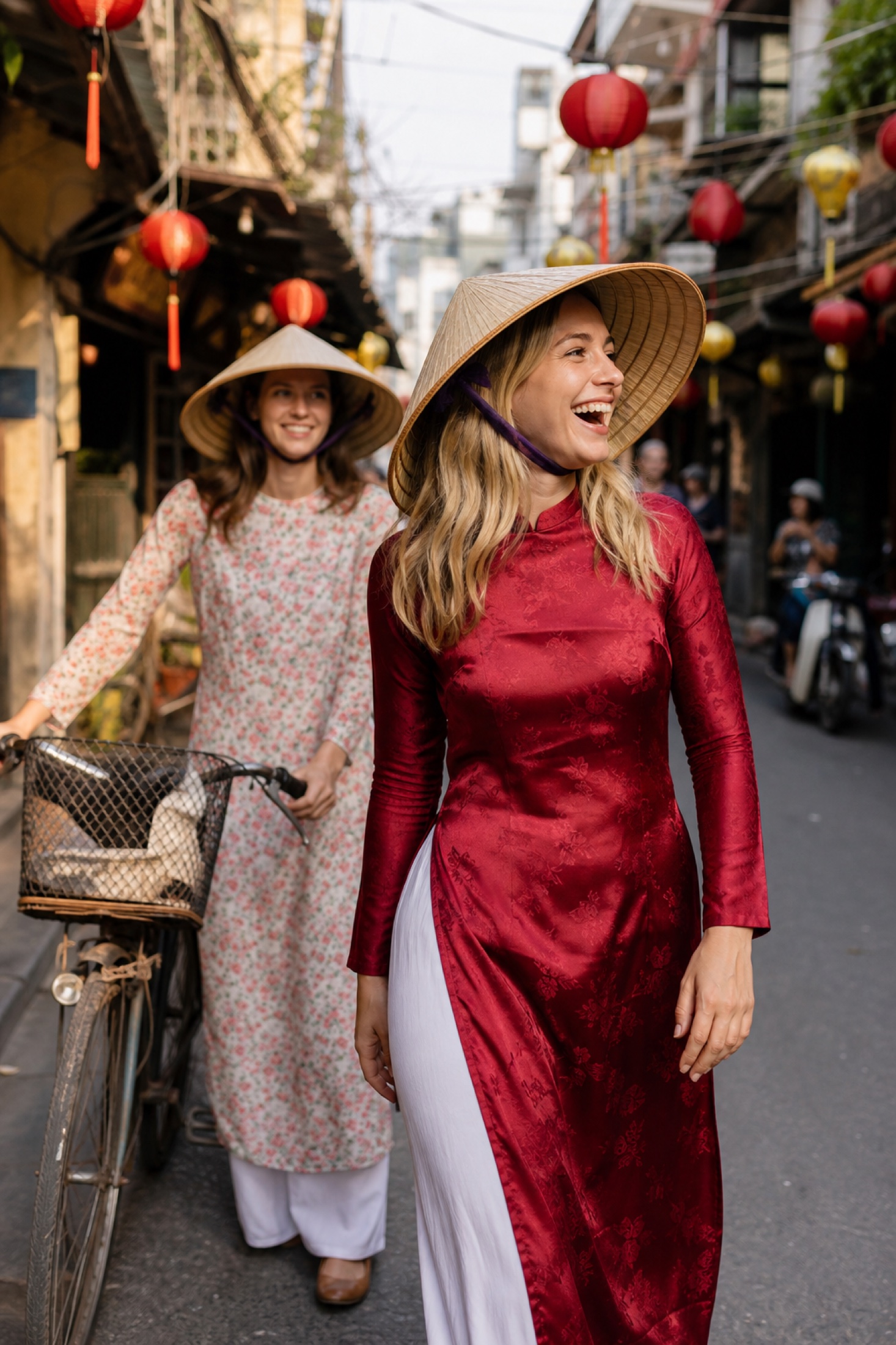
Wearing an áo dài isn't cultural appropriation when you approach it with genuine respect. We help foreign guests understand Vietnamese etiquette and find their perfect áo dài for a meaningful photoshoot.
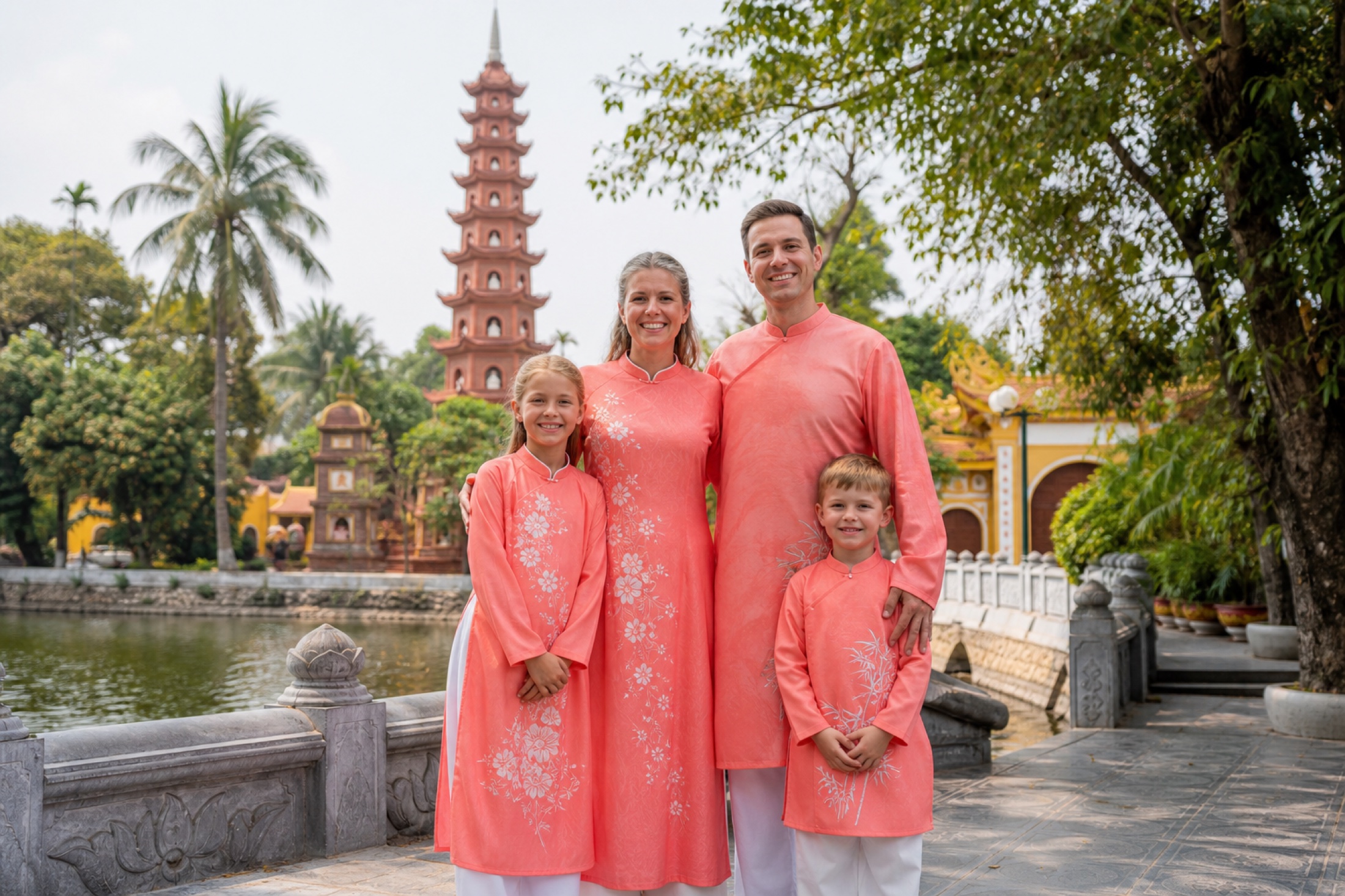
Áo Dài for Men: Cuts, Colors & How Travelers Wear It
Áo dài isn't just for women. Men's áo dài is a formal, elegant garment with distinct cuts and color rules—and travelers who wear it well have the best photo memories in Vietnam.
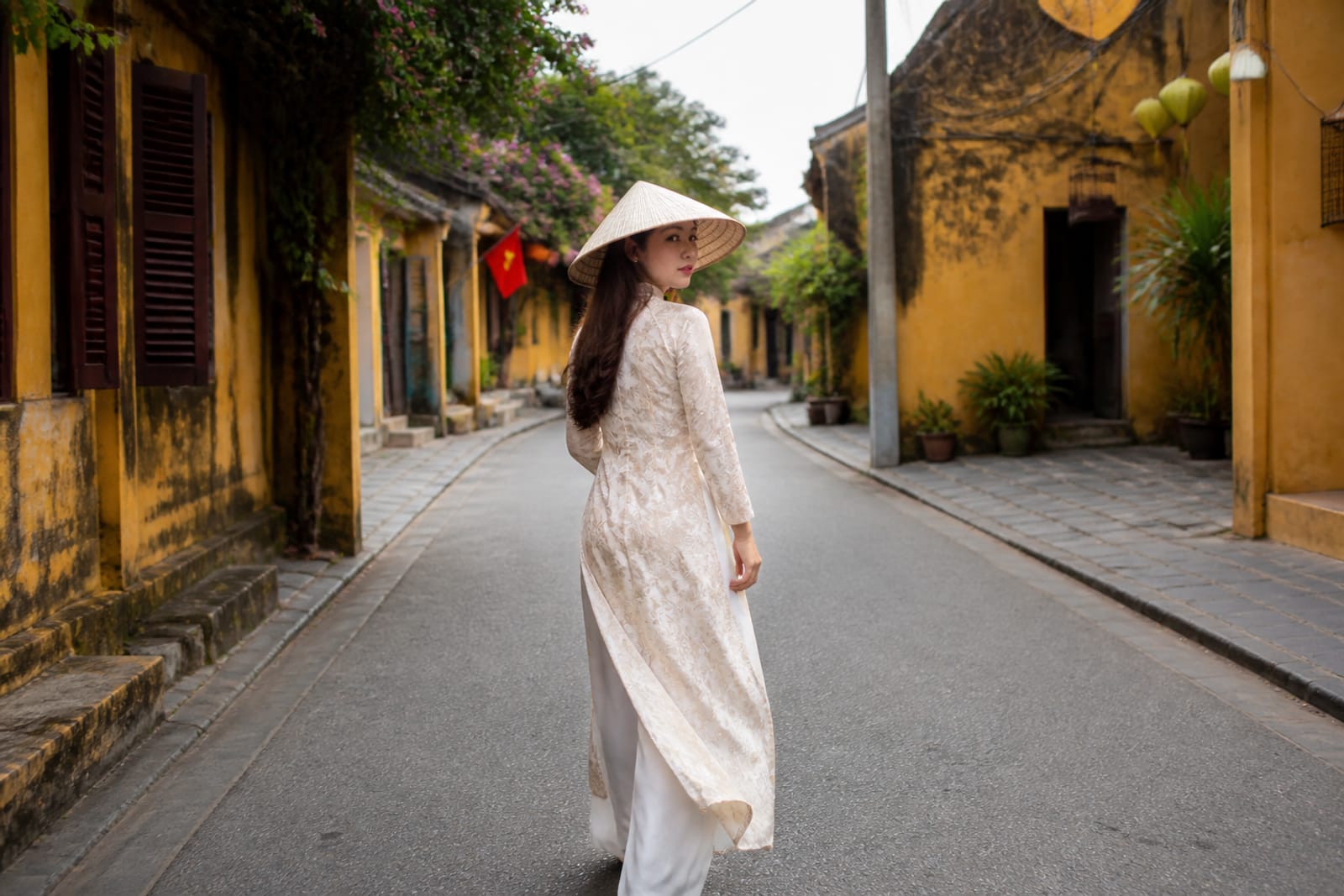
How to Choose Your Ao Dai Color for Photos: Skin Tone, Location, Seaso
Choosing an ao dai color is not just about preference—it shapes how you appear in every frame across Hanoi's temples, Hoi An's riverside, or Saigon's urban streets. We'll walk you through skin tone, season, and location so you book with confidence.